

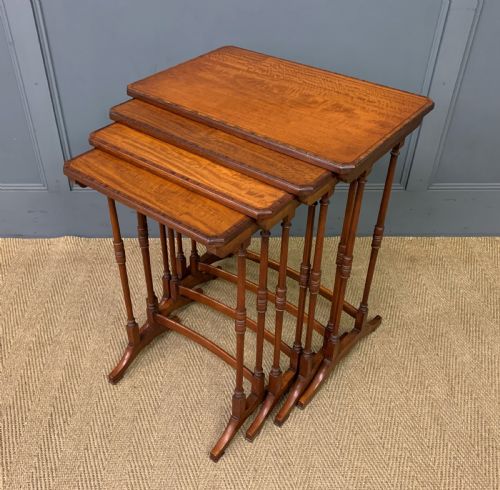


Edwardian Inlay Nest Tables
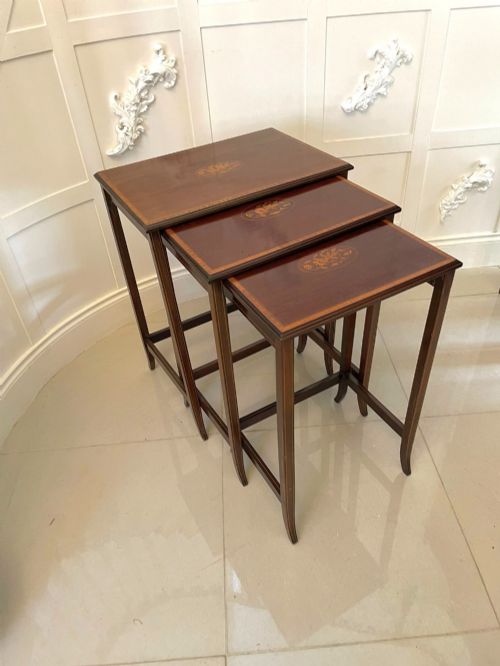
Edwardian inlay nest tables are compact sets of stacking occasional furniture, prized for their versatility and delicate satinwood and boxwood details.
Edwardian Inlay Nest Tables
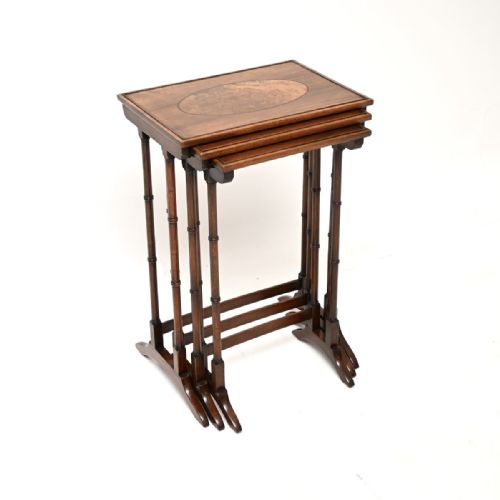
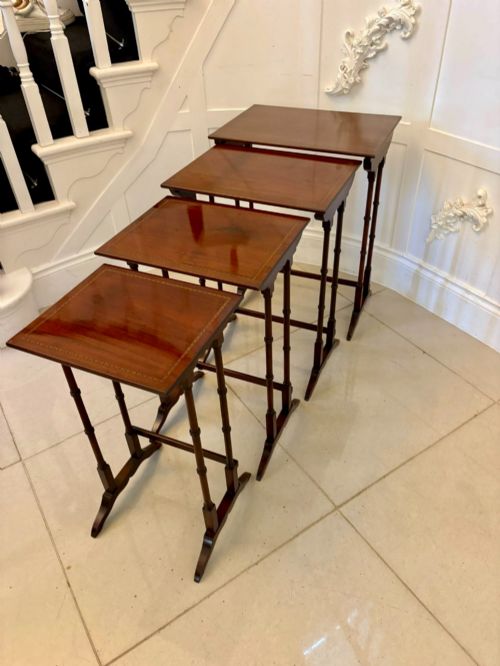
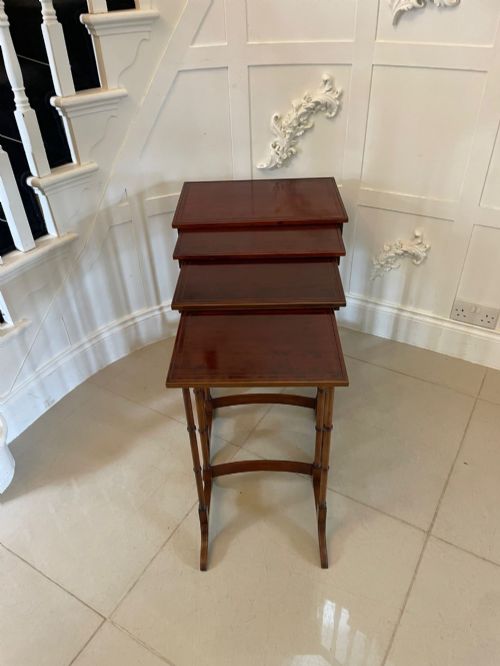
Edwardian inlay nest tables are sets of graduating occasional tables designed to slide neatly beneath one another when floor space is needed. Most examples found here date from the Edwardian period or the late Victorian era, appearing predominantly in forms of three or four stacked tables known historically as quartetto sets.
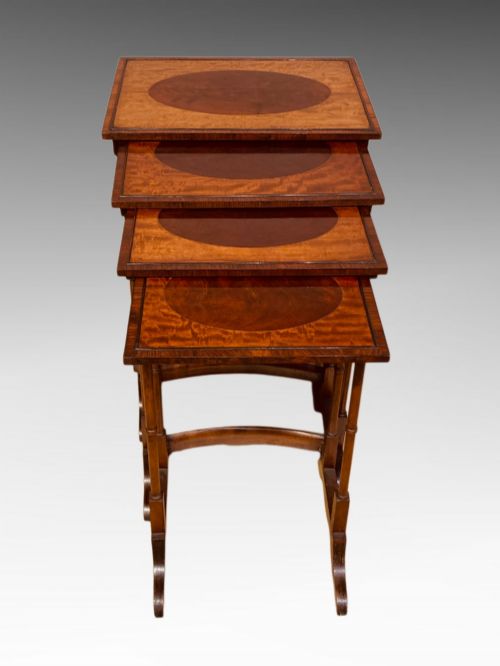
The primary forms utilise mahogany as a base timber, frequently accompanied by satinwood, walnut, and rosewood. These pieces serve as practical tea, coffee, or lamp tables, offering multiple surfaces that expand instantly across a room without cluttering the interior.
How they were made
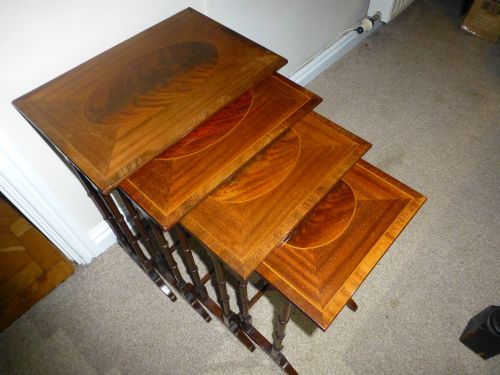
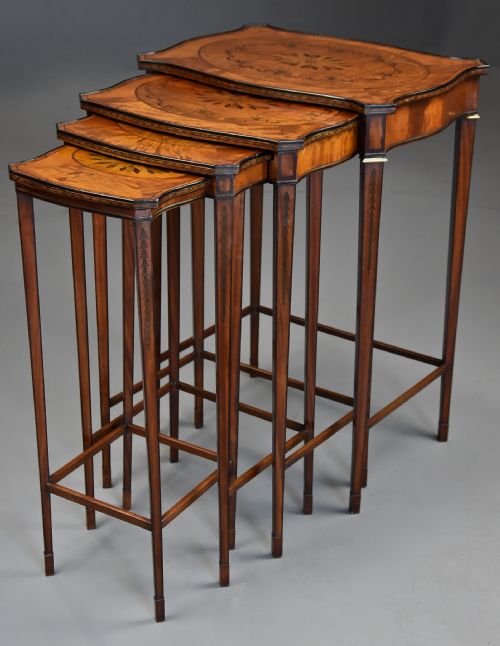
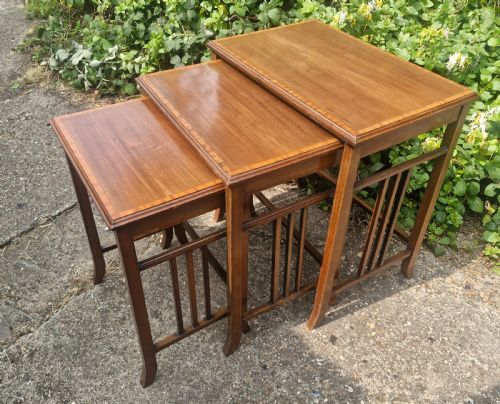
Cabinetmakers constructed these tables using solid timbers and fine veneers, mounting them on slender turned or tapered legs. Marquetry and stringing techniques introduced contrasting woods like boxwood and satinwood into the tops and borders.
Inlayers applied delicate floral or geometric motifs directly into the timber surfaces, while French brass elements occasionally reinforced specific French style or Regency influenced designs.
Edwardian Inlay Nest Tables Retail Price Guide 2026
Typical asking prices for edwardian inlay nest tables among the pieces listed under this phrase on Sellingantiques today, from the lower quarter to the upper quarter. They describe what is for sale here now, not the wider market.
Some nests cleverly conceal four coffee tables in the space usually occupied by just one tea tray.
What varies in quality
The standard of an edwardian inlay nest tables set depends largely on the crispness of the cabinetwork and the precision of the wood inlay. Finer examples display intricate satinwood or marquetry details executed with tight joints and well-figured mahogany grains.
Proportion and structural rigidity set apart superior quartetto tables from simpler iterations. The top model sets maintain stability across every graduating tier without looseness in the leg joints or buckling in the veneered surfaces.
Gillows
The Edwardian Inlay Nest Tables Glossary
- Quartetto
- A set of four graduating tables designed to nest together. This term appears frequently in Edwardian and Victorian furniture descriptions.
- Inlay
- A technique where pieces of contrasting timber, such as satinwood or boxwood, are inserted into a recessed surface to create decorative patterns.
- Sheraton Revival
- A late nineteenth and early twentieth century style drawing inspiration from eighteenth century designer Thomas Sheraton, characterised by refined classical motifs.
- Marquetry
- Elaborate decorative veneer work forming pictorial or geometric designs using various coloured woods.
- Parquetry
- Geometric mosaic woodwork forming repeating patterns across a table top.
Edwardian Inlay Nest Tables: Frequently Asked Questions
What is a quartetto table set?
A quartetto set consists of four graduating tables designed to slide neatly inside one another. They provide multiple surfaces for drinks or lamps while occupying the footprint of a single small table.
Craftsmen built these sets predominantly in mahogany during the Edwardian and Victorian periods. Each smaller table steps down in height and width to fit the tier above.
How were these tables used originally?
Owners pulled out the individual tiers as needed for serving tea, holding books, or placing small lamps around a reception room. When not in use, the smaller tables remained tucked away to save floor space.
This functional adaptability made them popular in Edwardian drawing rooms where flexibility in furniture arrangement mattered.
How do I distinguish Edwardian from Victorian sets?
Edwardian tables often feature lighter satinwood framing, brighter mahogany tones, and more delicate Sheraton Revival inlay patterns. Victorian examples tend to show slightly heavier timbers and darker finishes.
Both periods produced quartetto nests, but the overall lightness of construction typically points toward the Edwardian era.
Are these tables suitable for daily use?
These occasional tables handle everyday items like cups, books, and small lamps comfortably. Their slender frames require sensible handling rather than heavy loading.
Placing them away from direct heat sources helps preserve the delicate boxwood and satinwood inlay work across the tops.