



Edwardian Inlaid Work Table
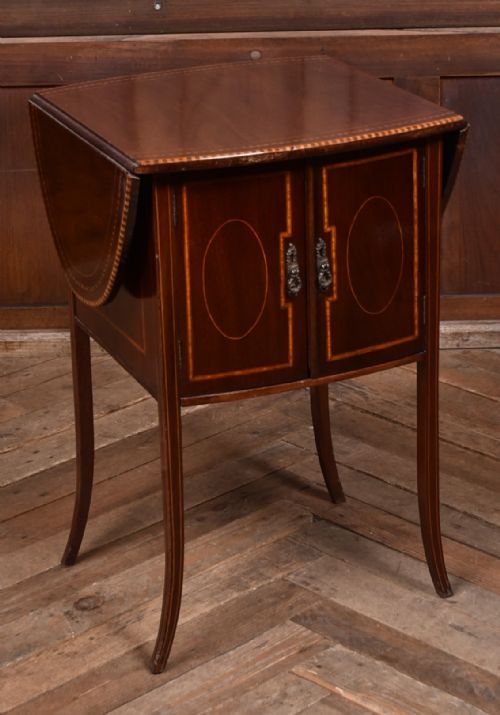
An edwardian inlaid work table brings delicate craftsmanship and clever interior fittings into the sitting room.
Edwardian Inlaid Work Table
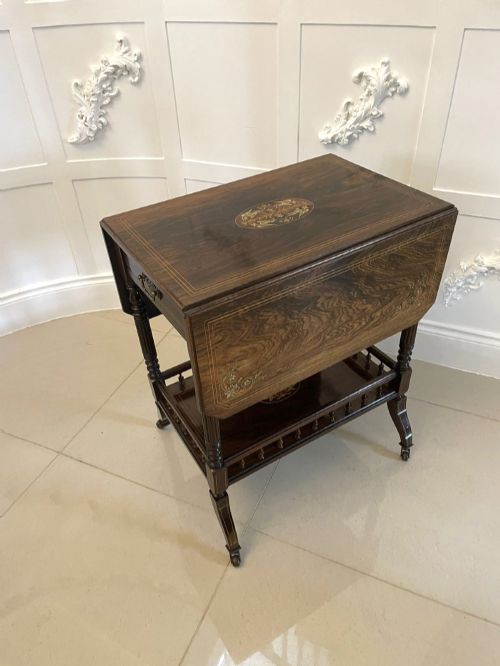
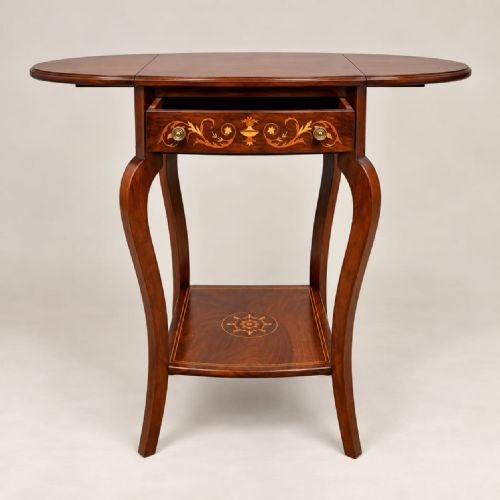
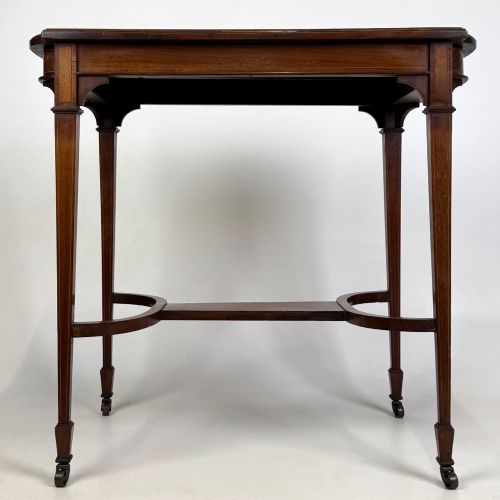
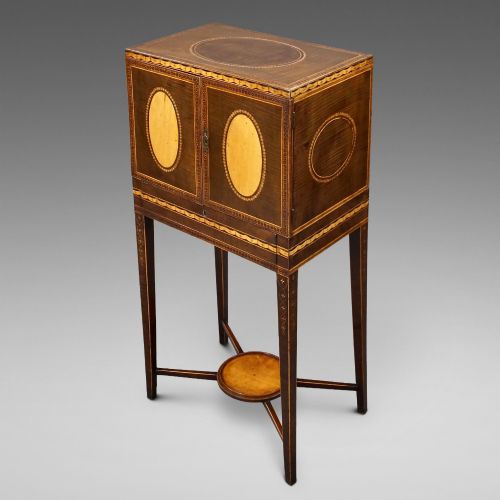
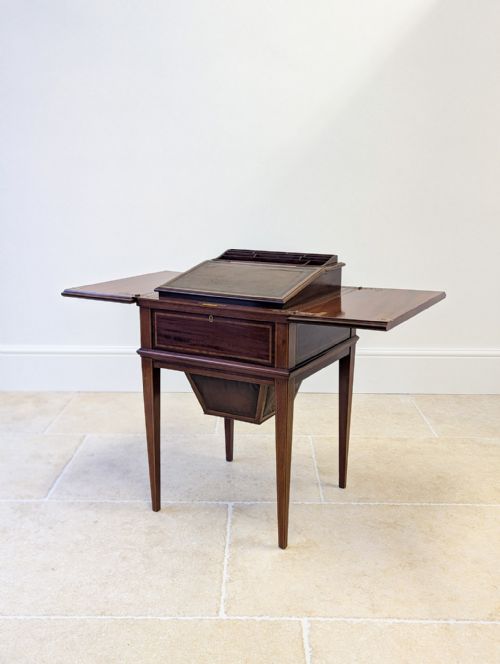
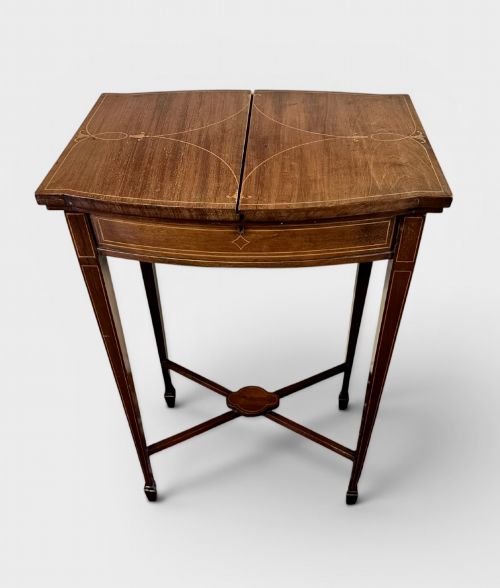
An edwardian inlaid work table combines a compact writing or occasional surface with specialised storage for needlework, threads, and personal papers. The surviving examples on this page are predominantly Edwardian and Victorian pieces, often shaped with serpentine edges, octagonal tops, or kidney contours.
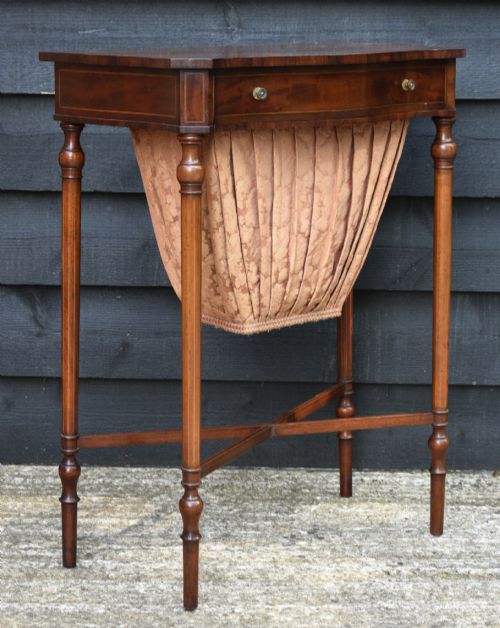
Makers of the period adapted earlier Georgian and Sheraton Revival vocabulary into lighter, domestic formats. Buyers encounter sewing tables featuring fitted interiors, lift-up lids, and suspended silk baskets alongside multi-functional writing and games combinations.
Materials and Construction
Makers utilised dense timbers such as mahogany, rosewood, and satinwood as the primary carcase and veneer materials, accented with contrasting boxwood and brass details. Marquetry and shell inlays provide decorative motifs across table tops and drawer fronts, demonstrating precise woodworking techniques.
Internal components incorporate fitted wooden compartments, leather writing surfaces, and gathered silk work bags. Structural joints rely on period joinery methods to support hinged tops and sliding compartments without heavy metal framing.
Listings feature mahogany, satinwood, and rosewood alongside boxwood stringing and brass fittings.
Judging the Standard
The standard of an edwardian inlaid work table rests on the crispness of the marquetry and the integrity of the timber veneers. Examples with complex serpentine or kidney shapes and intricate boxwood stringing show greater ambition from the workshop.
Completeness of the interior fittings, such as original silk baskets, divided trays, and working locks with keys, elevates an individual piece above altered or stripped alternatives.
Edwards and Roberts·Ollivant and Botsford·Asprey and Co
The Edwardian Inlaid Work Table Glossary
- Marquetry
- Decorative patterns formed by fitting together thin slices of wood veneer into a larger design. This technique covers table tops with floral or geometric motifs.
- Boxwood
- A pale, hard timber frequently used for stringing and fine inlay lines. It creates sharp contrast against darker woods like mahogany and rosewood.
- Satinwood
- A lustrous, yellowish timber prized for its golden sheen in cabinetmaking. It forms the primary surface of many refined tables.
- Stringing
- Thin inlaid lines of contrasting wood set into channels on a furniture surface. This outlines geometric shapes and panels.
- Serpentine
- A gently curving edge that sweeps inward and outward in a continuous wave. It requires precise hand-shaping of the timber.
Edwardian Inlaid Work Table: Frequently Asked Questions
What is an edwardian inlaid work table used for?
These tables served as versatile parlour furniture for holding sewing materials, writing letters, or playing games. Lift-up lids and internal compartments kept small domestic tasks organised out of sight.
Today, they function effectively as bedside tables, lamp stands, or decorative occasional pieces in smaller modern rooms.
How do I spot a reproduction?
Examine the timber shrinkage, secondary woods inside the drawers, and the uniformity of the inlay work. Genuine period pieces show natural ageing, hand-cut joinery, and slight irregularities in the marquetry.
Modern copies often use machine-cut veneers, modern adhesives, and lack the characteristic patina built up over a century of use.
Are the silk baskets original?
Original silk or fabric baskets beneath the work tables are uncommon due to the fragile nature of textiles over time. Many surviving examples feature expert replacement linings that match historical precedents.
When a piece retains its original fitted interior compartments and trays, it holds greater interest for collectors.
How do I care for satinwood and rosewood?
Keep these tables away from direct sunlight and strong heat sources to prevent the delicate veneers from lifting or fading. Periodic dusting with a dry, soft cloth preserves the polished surface.
Avoid liquid furniture polishes and instead consult a specialist for occasional wax maintenance.