




Edwardian Inlaid Side Chair
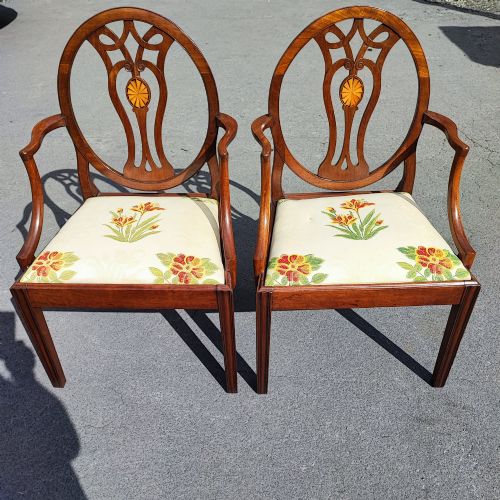
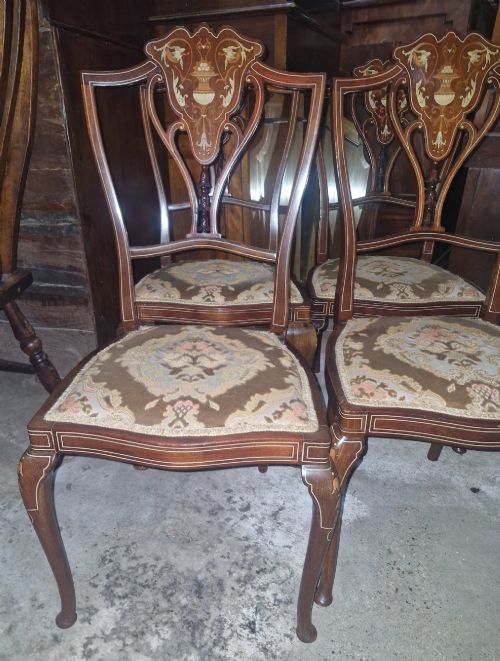
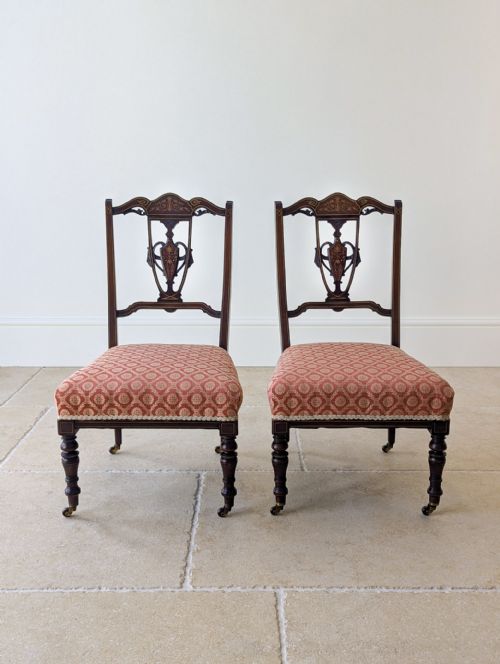
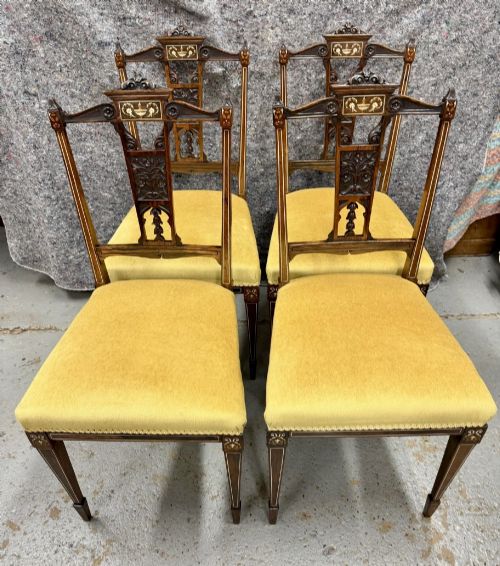
When you handle an Edwardian inlaid side chair, you find a delicate mastery of mahogany and satinwood that defined the period.
Edwardian Inlaid Side Chair
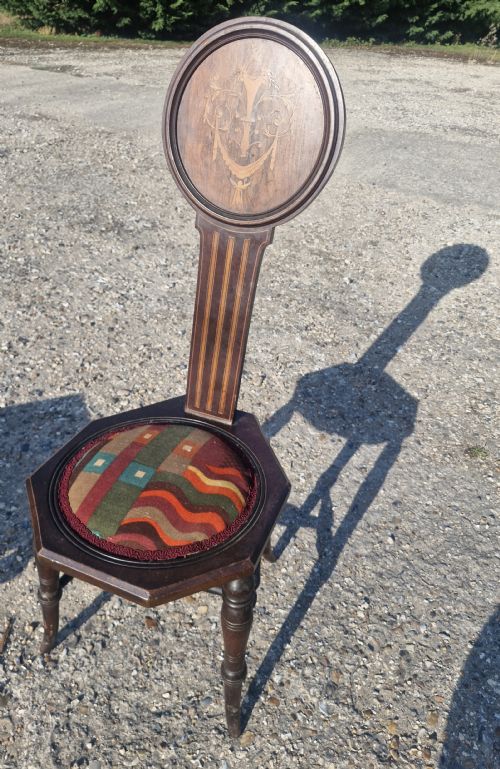
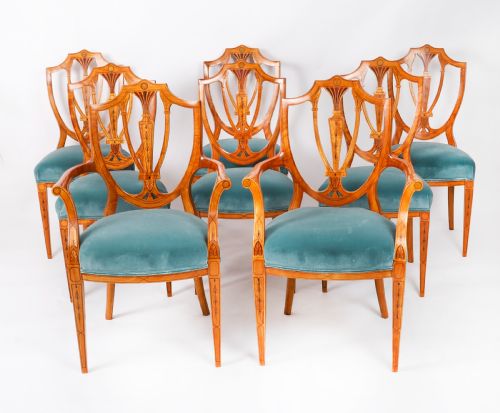
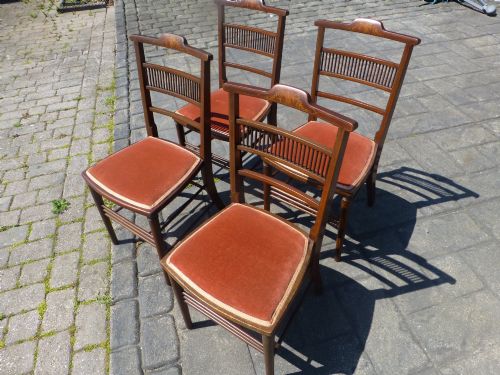
An edwardian inlaid side chair represents the lighter domestic seating of the early twentieth century, appearing frequently alongside armchairs, salon seats, and bedroom chairs in the records. These pieces often draw upon Sheraton Revival or Art Nouveau aesthetics, shifting away from heavier Victorian forms towards more slender proportions.
The forms range from straightforward bedroom and hall seating to elaborate marquetry-adorned salon chairs with pierced backs. Most examples combine structural timber frames with decorative woodwork, occasionally incorporating upholstered silk, velvet, or fabric pads.
How They Were Made
Cabinetmakers constructed these frames primarily using solid mahogany, rosewood, walnut, or beech, often pairing darker woods with contrasting satinwood stringing and geometric borders. The decoration relies heavily on meticulous wood inlay and marquetry, setting delicate floral or ribbon motifs directly into the primary timber surfaces.
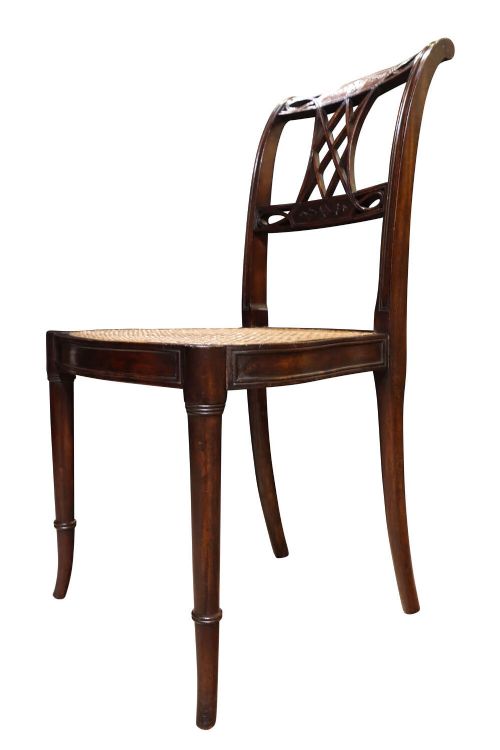
Many variants integrate cane panels, brass fittings, and silk or velvet upholstery secured to the seat frames. Joinery techniques from the period ensured slender legs and curved backrests maintained structural integrity without requiring bulky framework.
Spinning chairs and high-backed Art Nouveau pieces occasionally slip into the lineup to keep things interesting.
What Varies in Quality
The distinction between ordinary and superior pieces rests on the precision of the cabinetwork and the complexity of the decorative elements. Fine examples display crisp, multi-toned marquetry and intricate wood inlay that remains flush with the surrounding timber.
Construction solidity also dictates standing, as top-tier pieces retain rigid joints and balanced proportions across delicate elements like pierced splats and slender tapered legs. The choice of primary timber, such as figured rosewood or dense mahogany, further separates standard production from exceptional craftsmanship.
Cowtan And Sons·Shoolbred
The Edwardian Inlaid Side Chair Glossary
- Inlay
- A decorative technique where pieces of contrasting wood, shell, or metal are inserted into recessed cavities in the base timber to form a flat surface.
- Marquetry
- An elaborate form of inlay assembling fitted veneer patterns to create pictorial or decorative scenes across furniture panels.
- Sheraton Revival
- A design movement inspired by late eighteenth-century neoclassical furniture, characterised by straight tapered legs, satinwood, and classical urn or floral motifs.
- Side Chair
- An upright chair without arms, traditionally used at a dining table or placed against a room perimeter.
- Satinwood
- A lustrous, yellow-toned timber utilised extensively for decorative banding, stringing, and veneer work on late period furniture.
- Bergere
- An enclosed upholstered armchair featuring exposed wooden framing and woven cane sides or back panels.
Edwardian Inlaid Side Chair: Frequently Asked Questions
What is an edwardian inlaid side chair used for?
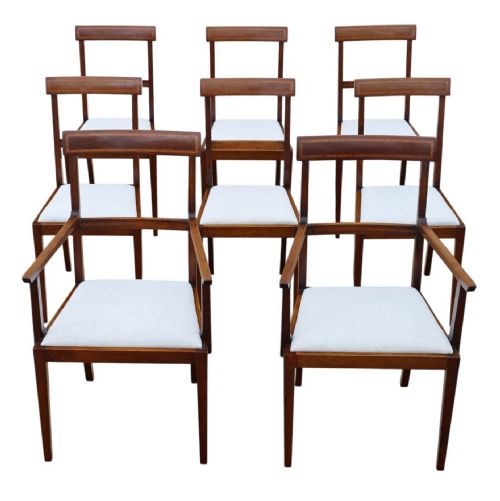
These pieces served multiple domestic functions across the home, from occasional seating in reception rooms to functional furniture in bedrooms and parlours. Their lightweight build allowed them to be moved easily between rooms as needed.
While some matched larger dining sets, others functioned as decorative pieces designed to complement a desk, dressing table, or hallway corner.
How do you distinguish edwardian from victorian examples?
Edwardian seating typically displays lighter proportions, brighter timber tones, and a preference for neoclassical Sheraton Revival motifs. The construction leans toward slender members and refined decorative stringing rather than heavy carving.
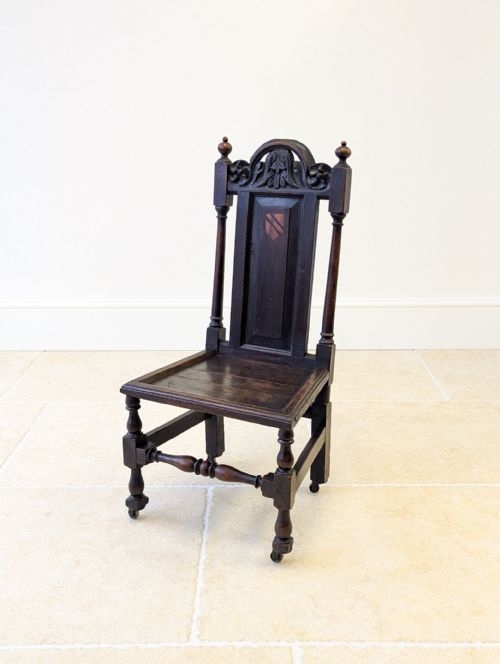
Victorian predecessors often utilise darker, denser timbers with more robust frames and pronounced revival styles such as Jacobean or heavy Victorian dark woods.
Are these chairs suitable for daily dining?
Many sturdy examples function reliably for regular seating, particularly those constructed from solid mahogany or walnut with reinforced frames. Careful attention must be paid to delicate satinwood inlay and slender legs during everyday use.
Set configurations often survive from the period, allowing buyers to assemble matching dining arrangements or select singular accent pieces for lighter daily tasks.
What woods appear most often in the construction?
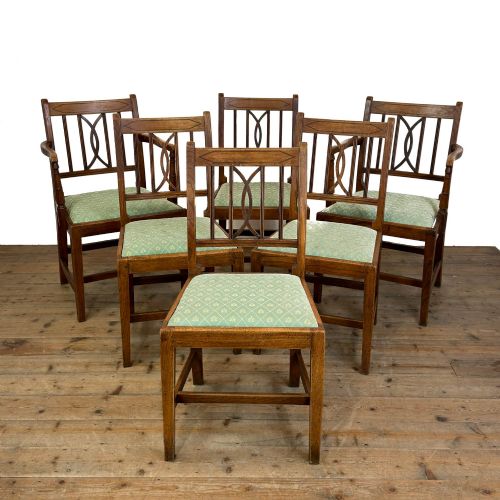
Mahogany forms the structural core for a large portion of these pieces, frequently accompanied by rosewood, walnut, and satinwood veneers. Beech and oak also appear, particularly in country dining chairs and secondary framing components.
Decorative surfaces rely on contrasting wood inlay, utilising lighter satinwood and exotic timbers to create botanical or geometric patterns against dark backdrops.