






Antique Fretwork Splat Chair
An antique fretwork splat chair brings architectural grace to a room through openwork carved timber.
Antique Fretwork Splat Chair
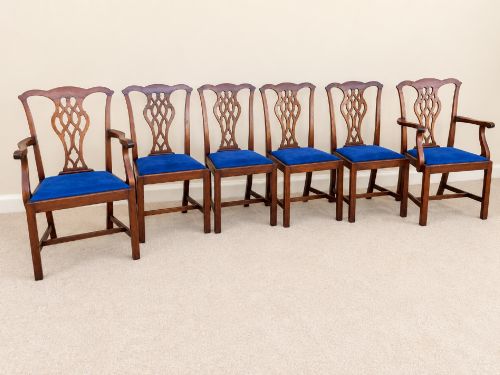
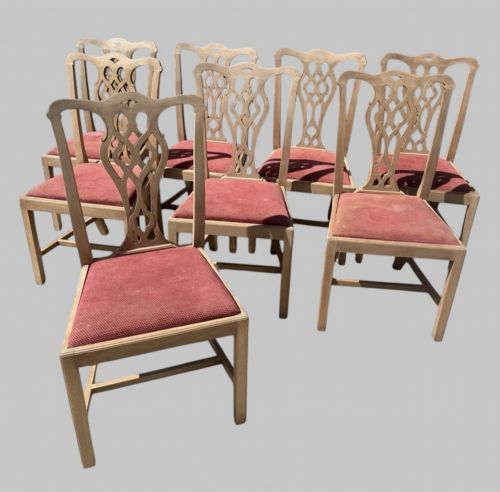
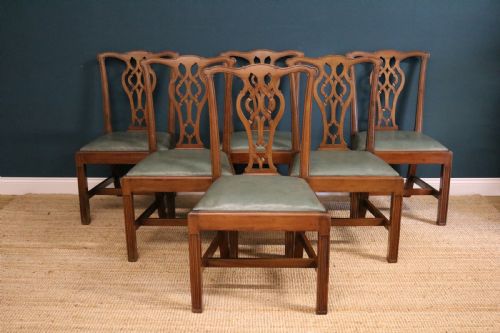
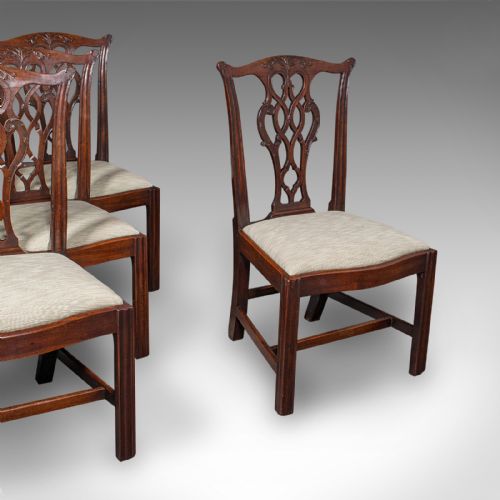
An antique fretwork splat chair centres on a pierced wooden upright in the middle of the backrest, giving the timber a lighter, decorative profile. Buyers examining this page encounter pieces ranging from 18th Century originals to Edwardian revivals, taking the form of dining chairs, armchairs, and low nursing chairs.
The styles recorded in these listings span Georgian and Chinese Chippendale designs alongside later Chippendale Revival interpretations. Mahogany predominates as the primary timber, occasionally paired with boxwood inlay, fabric, leather, or velvet upholstery.
The configurations vary from single elbow chairs and pairs to sets of dining chairs and an unusual late Georgian porters or masonic chair. Each iteration adapts the central pierced splat to different seating requirements across several centuries.
Construction and materials
Cabinetmakers built these chairs primarily from solid mahogany, utilising its dense grain to support intricate piercing without snapping. Workshops shaped the central splats using fretsaws to cut away internal sections of the wood, creating geometric or interlaced patterns.
Joinery relied on mortise and tenon construction to secure the uprights and rails under daily weight. Seat frames were traditionally dropped in or upholstered over webbing, integrating materials like leather, fabric, velvet, and brass details.
Antique Fretwork Splat Chair Retail Price Guide 2026
Typical asking prices for fretwork splat chair among the pieces listed under this phrase on Sellingantiques today, from the lower quarter to the upper quarter. They describe what is for sale here now, not the wider market.
Among the formal dining seats sits a very unusual late Georgian porters or masonic chair, proving that fretwork could shelter a sitter in private mystery.
Judging quality and execution
The refinement of the carved fretwork distinguishes superior examples, where the pierced edges remain crisp and symmetrical. Lesser pieces display thicker timber sections and simplified apertures that lack the depth of master carving.
Timber selection and surface figure govern the visual appeal, with well-chosen mahogany grain enhancing the silhouette. The integration of secondary woods and the precision of the joinery mark the distinction between standard workshop output and exceptional craftsmanship.
Robert Manwaring
The Antique Fretwork Splat Chair Glossary
- Splat
- The vertical wooden upright in the centre of a chair back. It receives decorative piercing or carving in various regional and period styles.
- Fretwork
- Openwork ornamental carving created by cutting patterns through thin boards. This technique defines the airy, pierced designs of Chippendale-inspired seating.
- Elbow chair
- An armchair featuring wooden arms flanking the seat. These frames often accompany sets of dining chairs at the head of a table.
- Bleached mahogany
- Timber treated to lighten its natural reddish-brown tone. This finish appears on specific period pieces to achieve a paler aesthetic.
- Chippendale revival
- Furniture produced in later eras reproducing 18th-century designs. These pieces emulate the proportions and carving motifs of Thomas Chippendale's original pattern books.
Antique Fretwork Splat Chair: Frequently Asked Questions
What is an antique fretwork splat chair?
It is a seating piece featuring a pierced wooden upright in the backrest, designed for both visual lightness and structural support. These chairs utilise carved timber to create intricate open patterns.
They appear across Georgian, 19th-century, and Edwardian periods in forms ranging from dining chairs to open armchairs.
How do I date an antique fretwork splat chair?
Dating relies on examining the timber species, joinery methods, and the style of the carved splat. 18th-century originals display hand-cut joinery and period patination, while later revivals often incorporate 19th-century or Edwardian construction traits.
Secondary woods and upholstery techniques also help pinpoint the era of manufacture.
Were these chairs used for dining?
Many examples on this page are dining chairs made to stand around a table in sets or pairs. Their open backs provided decorative elegance while remaining functional for formal meals.
Other variations served as elbow chairs, open armchairs, or low nursing chairs for bedroom and parlour use.
How should I care for mahogany fretwork?
Protect the wood from direct sunlight and sudden temperature shifts to prevent timber splitting or fading. Regular dusting with a dry cloth maintains the surface without building up heavy wax residues.
Avoid placing delicate pierced sections under heavy physical strain or pressure.