

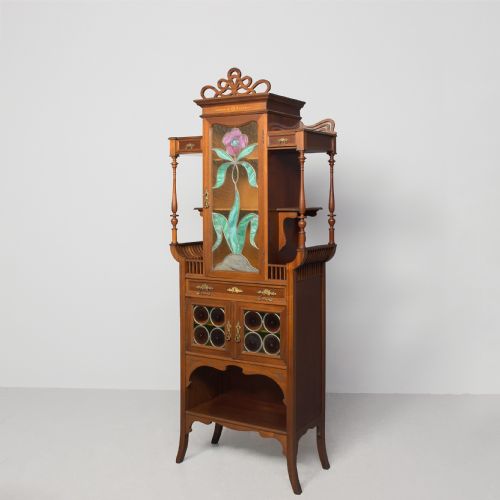
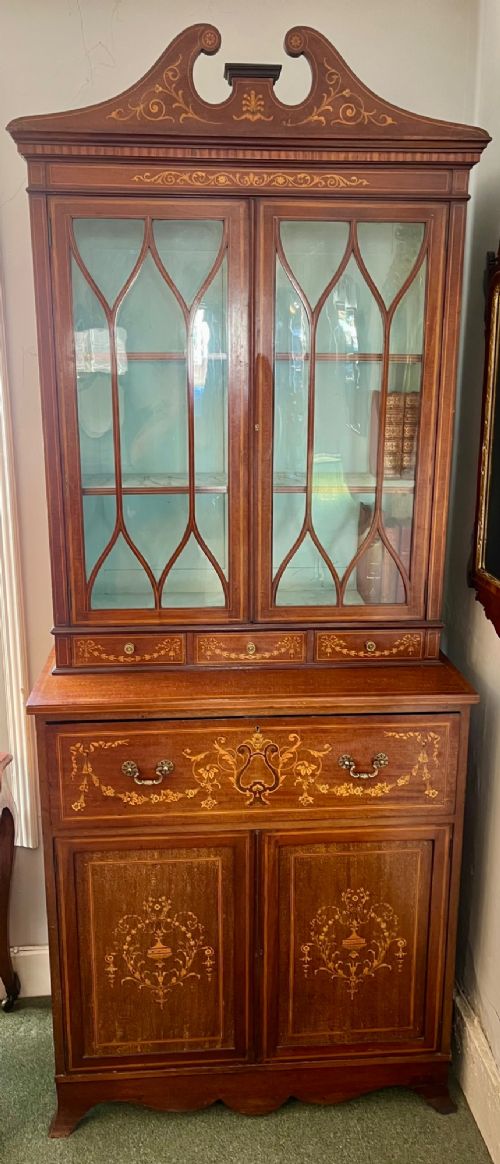
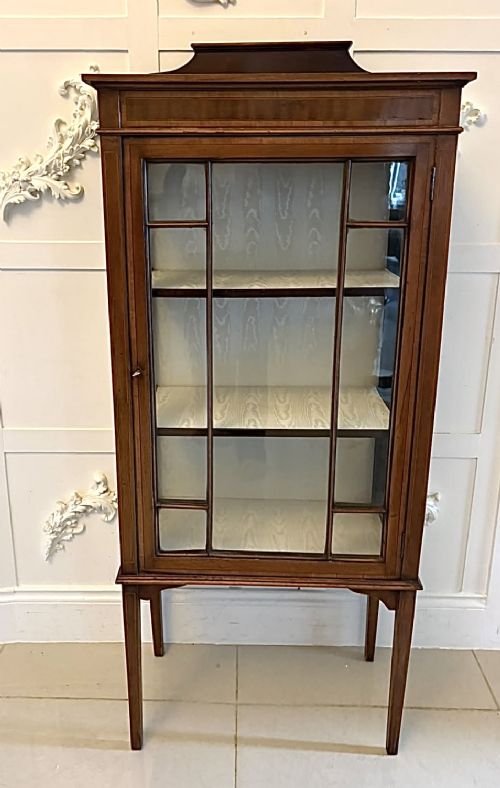
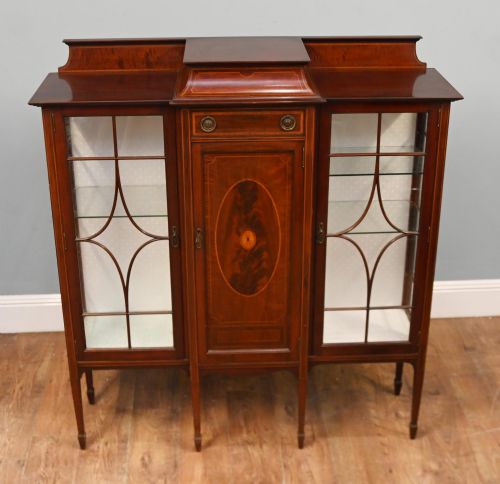
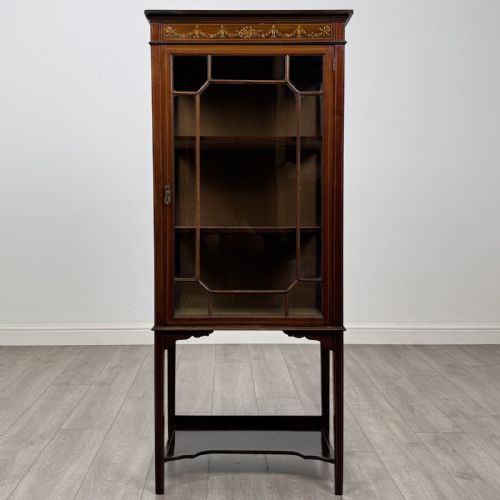
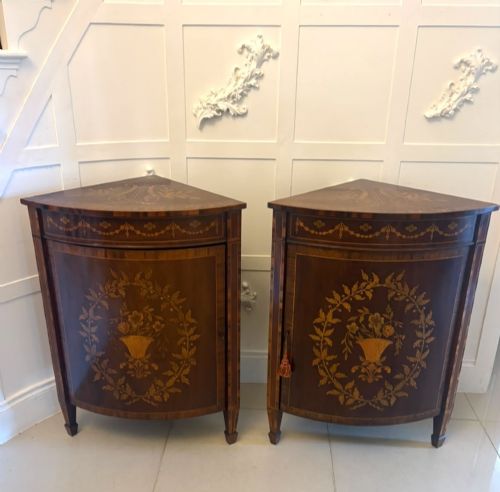
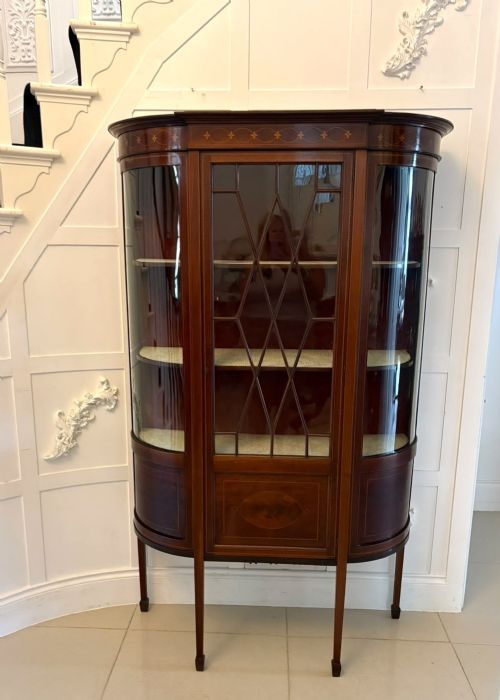
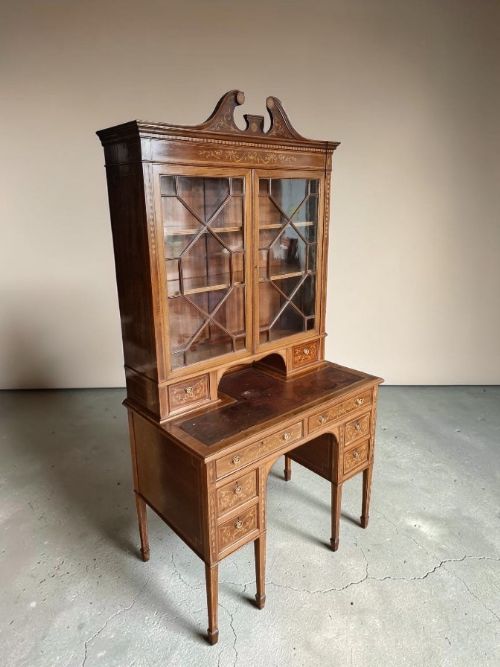
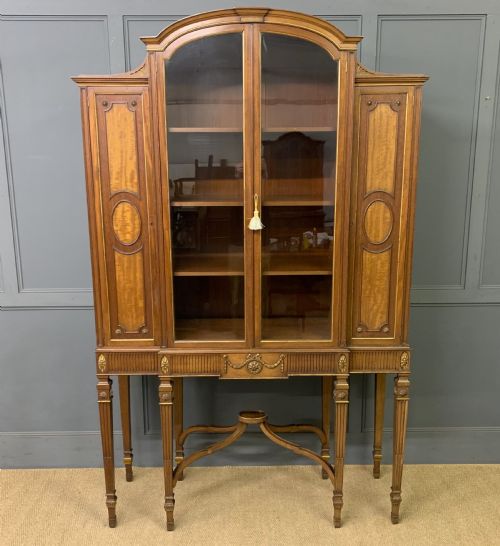
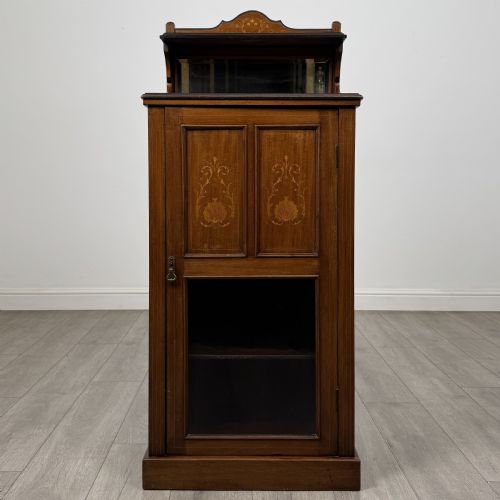
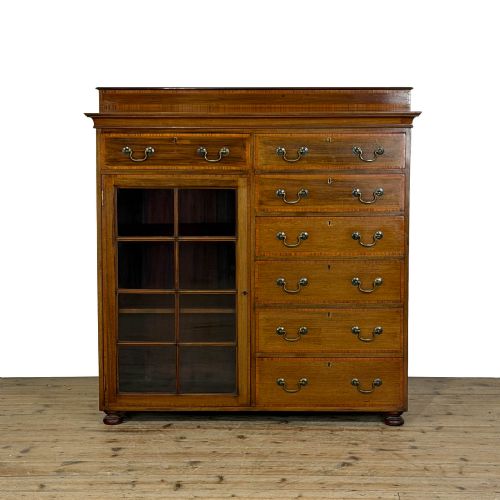
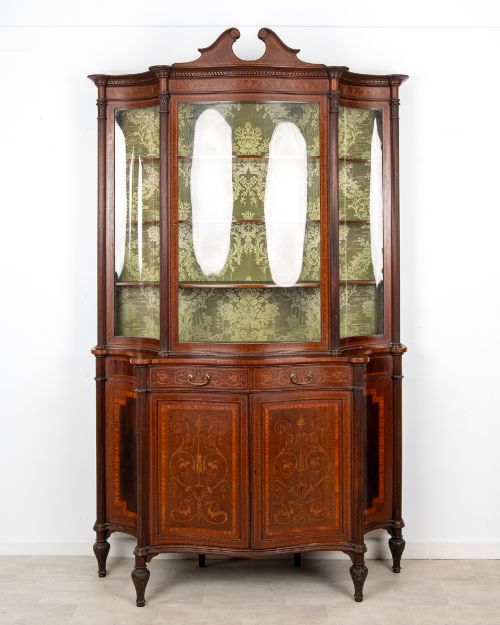
Edwardian Inlaid Mahogany Display Cabinet
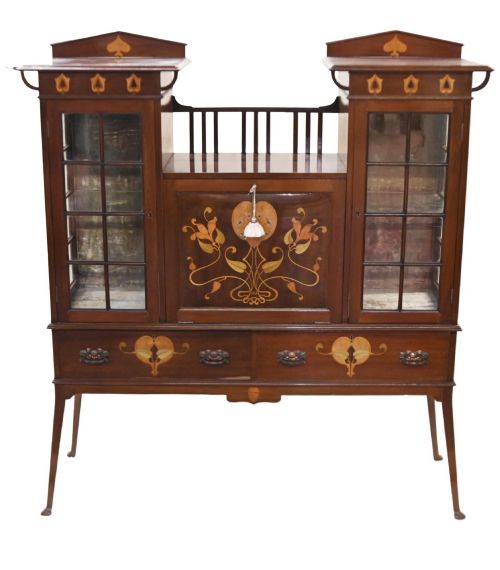
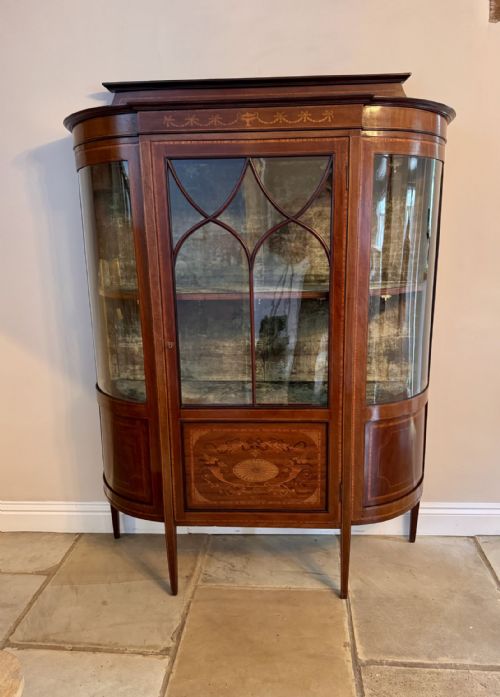
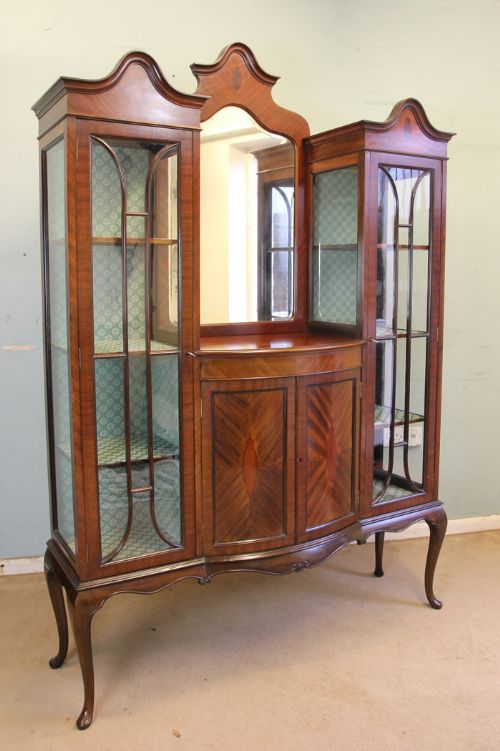
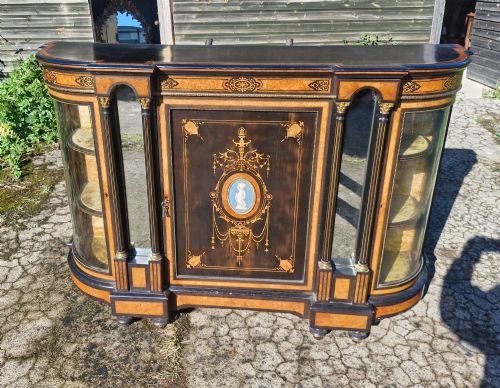
An edwardian inlaid mahogany display cabinet brings structured elegance to a room, holding cherished objects behind glass while catching the eye with delicate woodwork.
Edwardian Inlaid Mahogany Display Cabinet
An edwardian inlaid mahogany display cabinet is primarily a glazed piece designed to exhibit porcelain, silver, and small collections within a domestic interior. These pieces date principally from the Edwardian period and the late Victorian era, spanning into the early twentieth century.
The versions most commonly found here take the form of freestanding cabinets, bowfront shapes, and corner units. Makers utilised mahogany carcasses enriched with contrasting satinwood inlay, often incorporating mirrored backs and raised galleries.
Alongside standard glazed display cabinets, the selection includes related forms such as bookcase cabinets, side cabinets, and corner cupboards. These share the characteristic use of mahogany and fine decorative inlay seen across the period.
Materials and Construction
Cabinet makers built the primary carcass using solid and veneered mahogany, chosen for its stable grain and deep warm colour. Artisans applied contrasting satinwood inlay to form geometric borders, swags, and classical motifs across doors and friezes.
Glazing bars divided the glass panels into multiple panes, while interior shelves often featured fabric linings to display objects safely. Brass hardware, such as hinges, handles, and castors, completed the construction of these refined domestic furnishings.
Edwardian Inlaid Mahogany Display Cabinet Retail Price Guide 2026
Typical asking prices for edwardian inlaid mahogany display cabinet among the pieces listed under this phrase on Sellingantiques today, from the lower quarter to the upper quarter. They describe what is for sale here now, not the wider market.
Several pieces include delicate brass castors, designed so housemaids could easily wheel the heavy display cabinets out of the way during routine sweeping.
Distinctions in Quality
The fineness of the marquetry and satinwood inlay separates standard production from exceptional examples. Skilled workshops executed precise, intricate botanical and neoclassical designs that remained crisp and secure within the mahogany surface.
Structural refinement also defines the better pieces, seen in balanced proportions, well-fitted bowfront doors, and substantial brass mounts. The presence of secondary timbers of high grade and thoughtful architectural details like mirrored backs or raised galleries indicates superior maker output.
Waring and Gillow·Maple and Co·Edwards and Roberts·Shapland and Petter
The Edwardian Inlaid Mahogany Display Cabinet Glossary
- Bowfront
- A convex, curved front shape common in these cabinets. This configuration softens the room and provides a wider viewing angle for the interior contents.
- Satinwood Inlay
- A contrasting light yellow timber inlaid into darker mahogany surfaces. It creates decorative banding and classical motifs.
- Marquetry
- Elaborate patterns formed by fitted veneers of various coloured woods. Artisans used this technique to depict floral sprays and symmetrical panels.
- Raised Gallery
- A low decorative railing positioned on the top surface of a cabinet. It provides a finished architectural profile to the piece.
- Pier Cabinet
- A narrow piece designed to stand against a wall pier between windows. These often feature glazed doors and internal shelving.
Edwardian Inlaid Mahogany Display Cabinet: Frequently Asked Questions
What is an edwardian inlaid mahogany display cabinet used for?
These cabinets were originally designed to house prized collections of ceramics, glassware, and decorative ornaments in a drawing room or parlour. The glass doors protected delicate items from dust while allowing guests to admire them.
Today, they serve the same practical function in modern homes. They provide secure display space for personal collections without overwhelming the surrounding room.
How do I identify an edwardian inlaid mahogany display cabinet?
Look for the characteristic combination of rich mahogany timber paired with pale satinwood inlay. The styling often reflects Sheraton Revival or late Victorian taste, featuring clean structural lines alongside classical decorative motifs.
Hardware details and construction methods also help confirm the period. Brass castors, individual glazed panes, and mirrored backs frequently appear in pieces originating from this era.
Where should I place a corner display cabinet?
Corner units work well in rooms where wall space is limited or where an awkward angle needs softening. They draw the eye into unused corners while maximising storage and display capacity.
Pairing a corner cabinet with neutral walls helps the mahogany timber and contrasting inlay stand out effectively.
How do I care for antique mahogany furniture?
Keep the wood away from direct sunlight and strong heat sources to prevent the mahogany and its delicate satinwood inlay from drying out or fading. Regular dusting with a soft, dry cloth maintains the polished surface without damaging the finish.
Apply a traditional beeswax polish sparingly when the timber appears dry. Avoid using modern silicone sprays, which can penetrate the grain and alter the sheen permanently.