

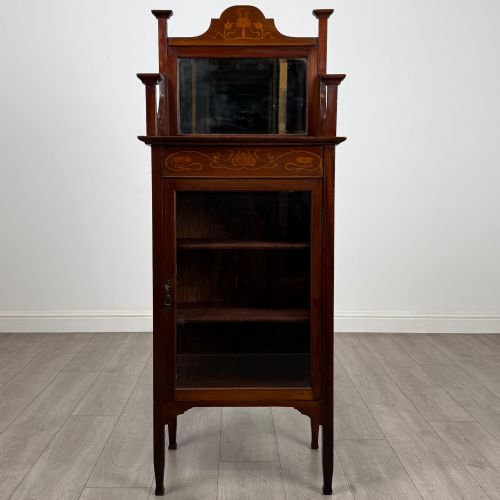
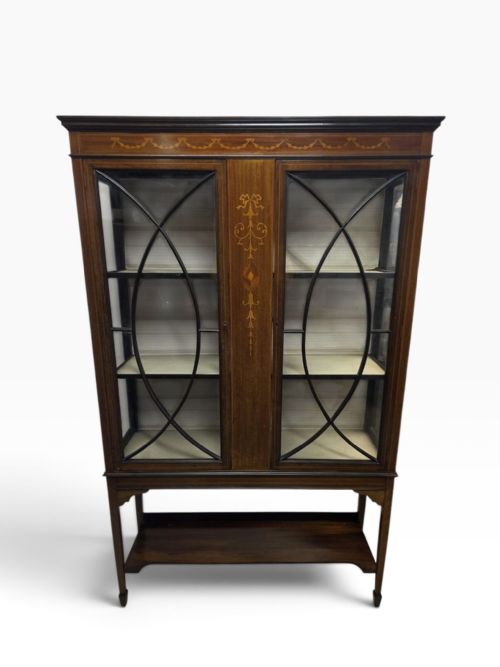
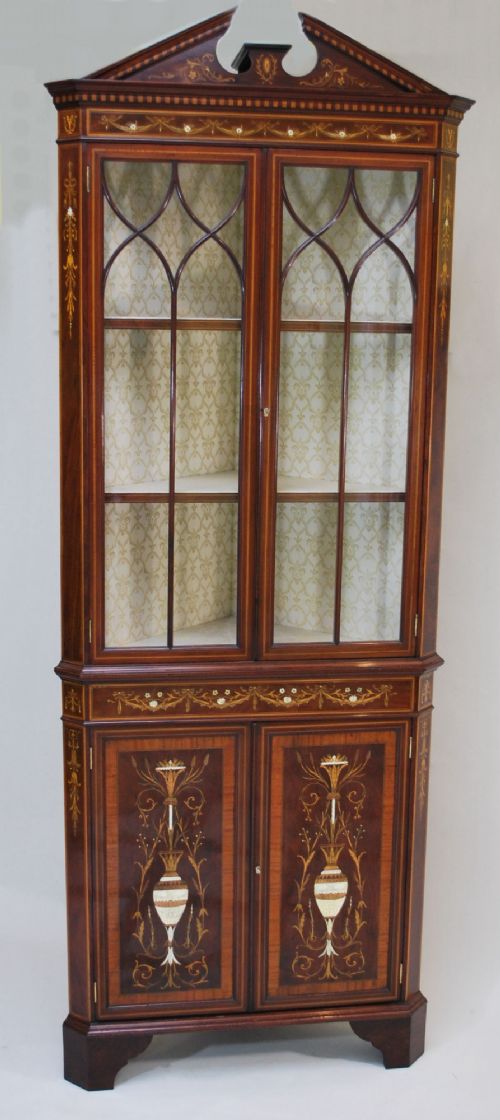
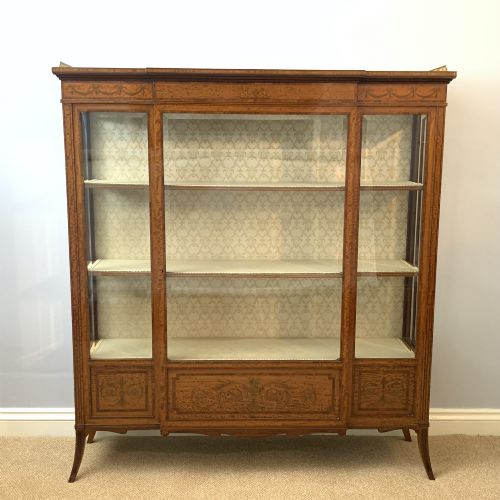
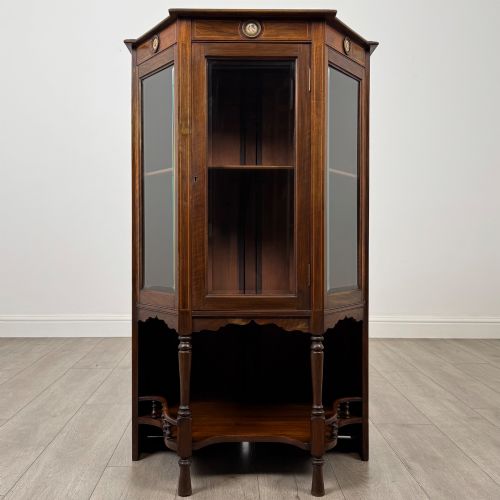
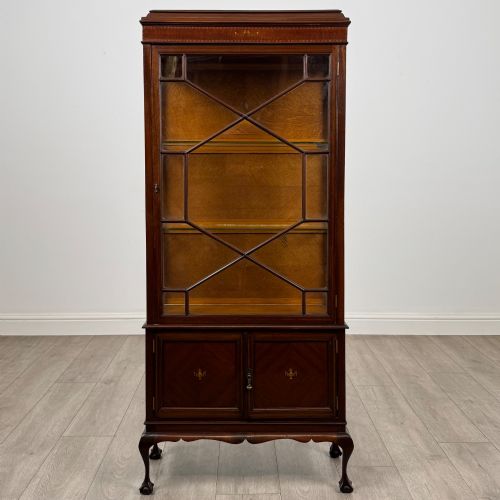
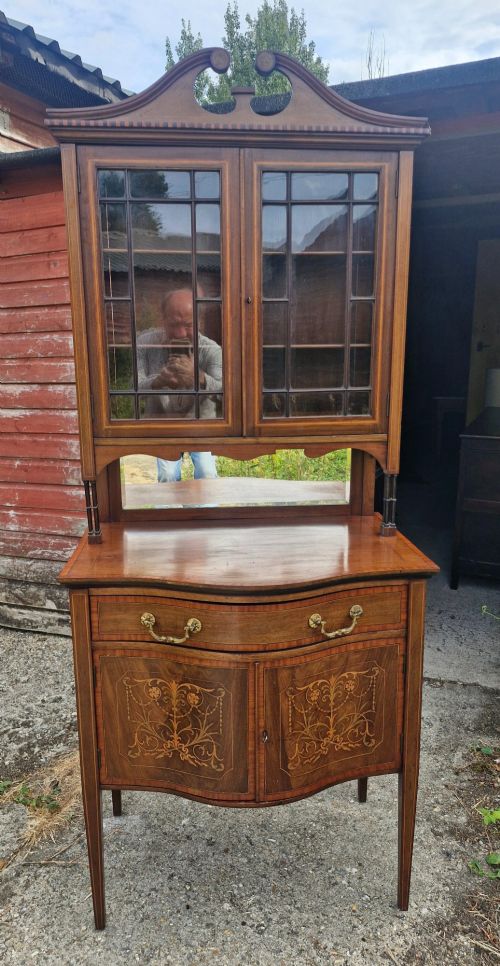
Edwardian Inlaid Display Vitrine
An Edwardian inlaid display vitrine brings refined glazed storage and delicate marquetry to a room, showing prized collections to full advantage.
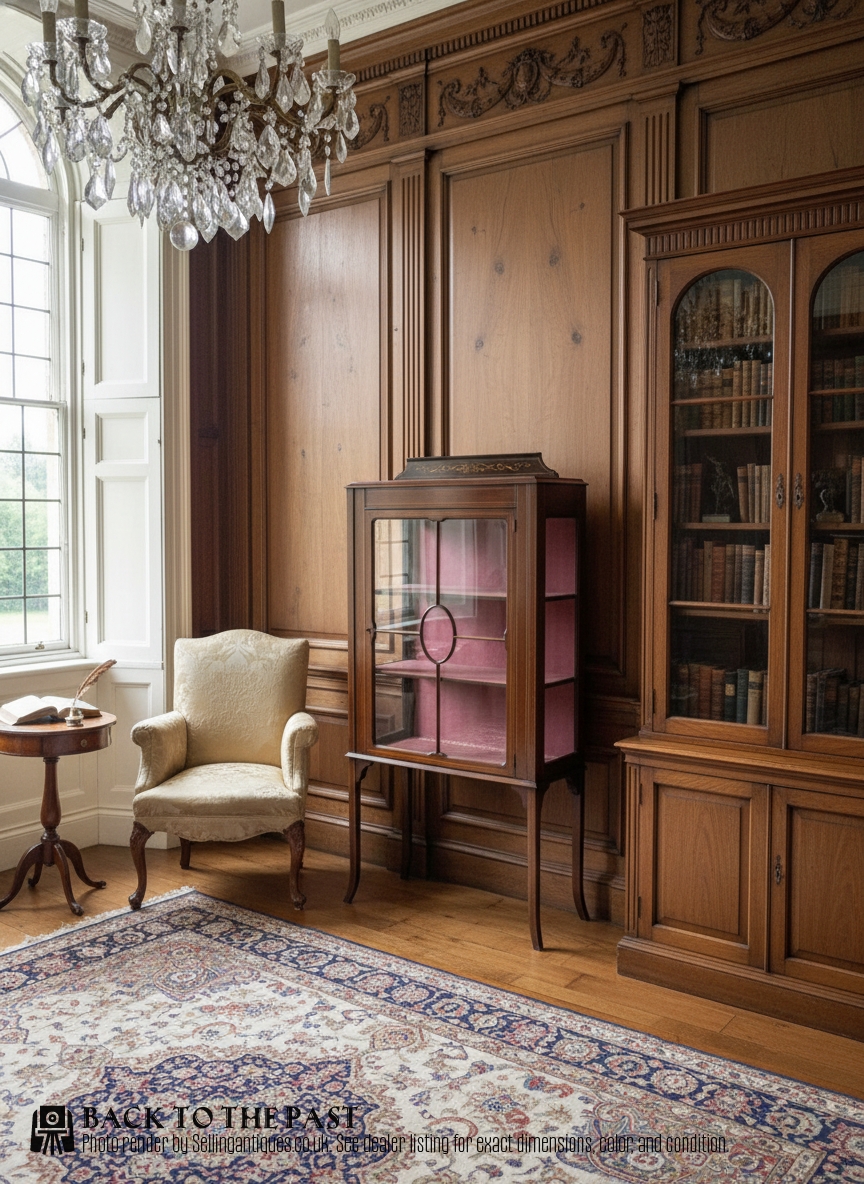
Edwardian Inlaid Display Vitrine
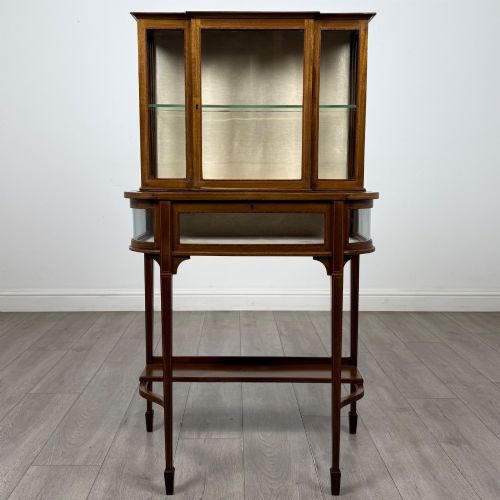
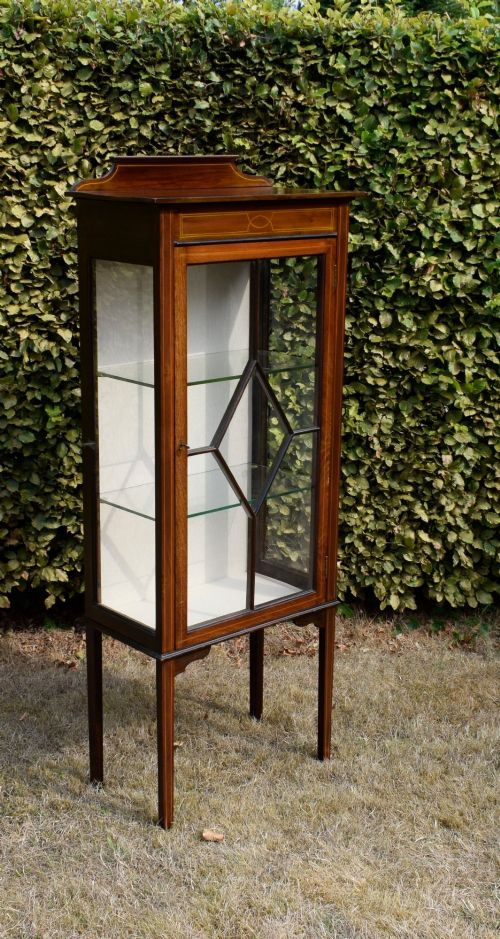
When you search for an edwardian inlaid display vitrine, you look at glazed freestanding cabinets, corner units, and table vitrines designed to showcase decorative objects. These pieces originate predominantly from the Edwardian period and the late nineteenth century.
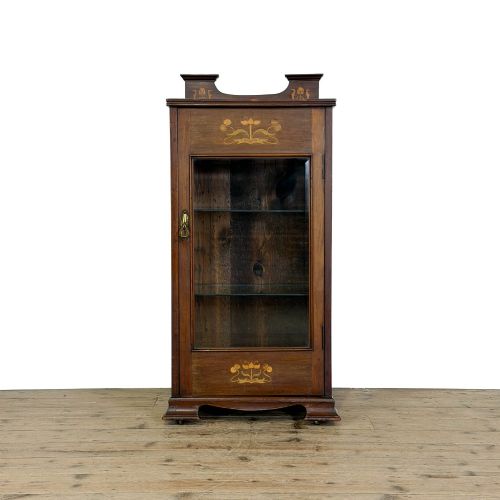
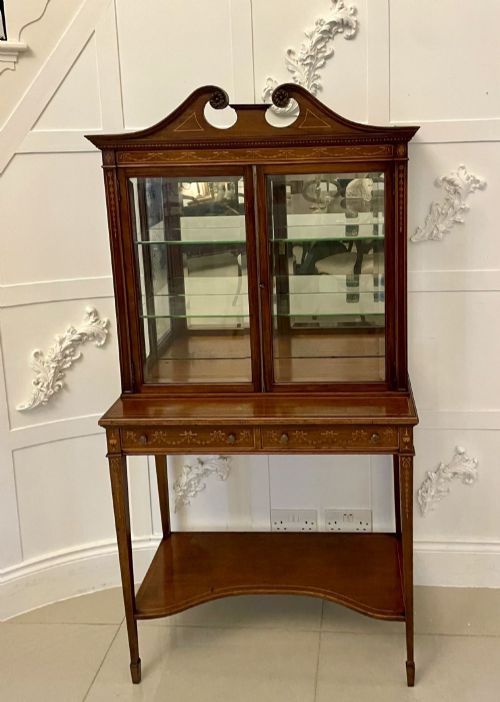
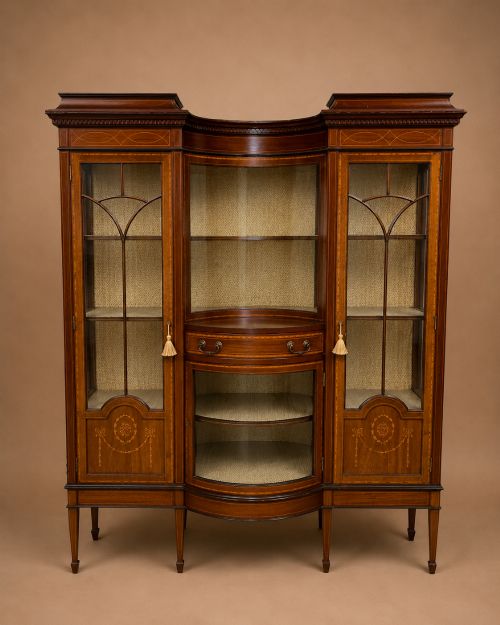
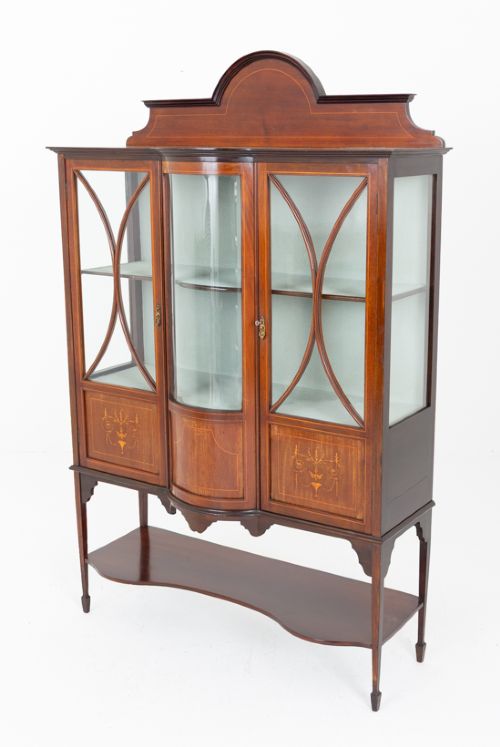
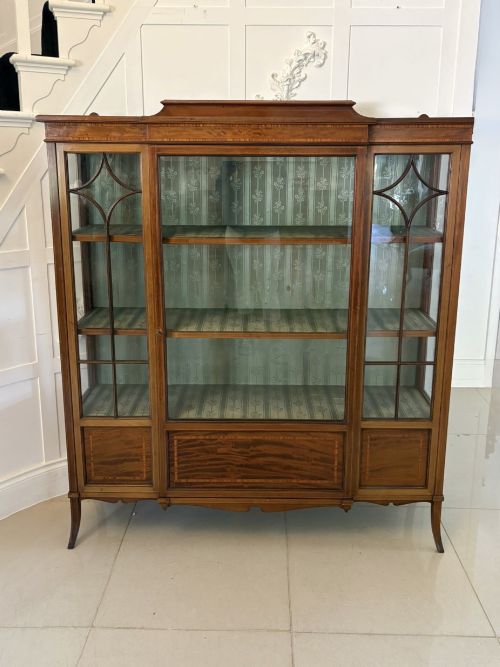
Mahogany forms the primary structural timber across most examples, frequently complemented by satinwood inlay and floral marquetry. The pieces span upright two-part cabinets, bow-fronted designs, and kidney-shaped display tables with glass panels.
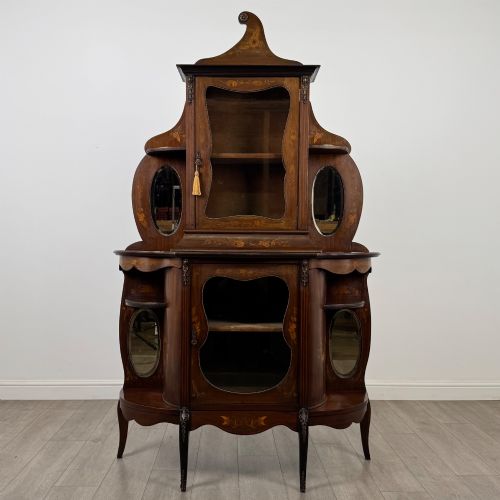
The aesthetic leans heavily on Sheraton Revivalism and Art Nouveau influences, uniting classical symmetry with delicate decorative motifs. Buyers meet everything from tall freestanding storage to small pedestal collectors cabinets.
How they were made
Cabinetmakers utilised solid mahogany and rich veneers as the foundational carcase materials, setting timber frames around large expanses of glass. Satinwood inlay and intricate marquetry decorated the door panels and cornices with contrasting botanical motifs.
Glazing techniques incorporated timber astragal bars or delicate brass frameworks to secure the viewing panes. Interior surfaces often integrated mirror backs and fabric linings to reflect light through displayed objects.
The site records display cabinets, corner units, pedestal stands, and bijouterie tables.
What varies in quality
Quality rests upon the crispness of the wood inlay and the precision of the marquetry details. Finer iterations display hand-cut botanical motifs with varied timber tones rather than uniform printed substitutes.
Structural finesse distinguishes superior examples, seen in curved bow-front doors, serpentine shapes, and well-balanced proportions. The integration of original glass, mirror backs, and functional brass hardware elevates a piece above standard utility furniture.
Edwards & Roberts·Shapland and Petter·Maple & Co.
The Edwardian Inlaid Display Vitrine Glossary
- Vitrine
- A glass-panelled cabinet or table designed for displaying fine objects and curiosities. These pieces use glazed doors and sides to maximise light exposure for the contents.
- Marquetry
- Decorative woodwork where pieces of coloured veneer form pictorial or floral patterns. Craftsmen fit these thin wood sections precisely into the main carcase surface.
- Bijouterie table
- A glass-topped display table created to exhibit jewellery, medals, and small collectables. They feature hinged or glazed lids for easy viewing from above.
- Astragal glazing
- Wooden bars dividing glass panes within a door or window frame. This technique creates a geometric grid pattern across the front of the cabinet.
- Sheraton Revival
- A design style drawing inspiration from late eighteenth-century classical furniture. It relies on symmetrical forms, satinwood contrast, and delicate painted or inlaid details.
Edwardian Inlaid Display Vitrine: Frequently Asked Questions
What is a vitrine?
A vitrine is a glazed cabinet built specifically for displaying porcelain, glassware, and small ornaments. The glass panels on the front and sides allow light to enter from multiple angles.
These pieces served a primary role in Edwardian drawing rooms where hosts exhibited their finest decorative possessions to visiting guests.
How do I use a display table?
Display tables, or bijouterie tables, provide a glass-topped surface to lay out flat items, medals, and jewellery. They turn tabletop space into an eye-level viewing cabinet.
Placing one in a sitting room creates a focal point for inspecting delicate items without handling them directly.
What is Sheraton Revival style?
Sheraton Revival furniture echoes the lighter, more graceful designs of the late eighteenth century. These pieces favour mahogany and satinwood with symmetrical proportions and delicate inlay.
Edwardian cabinetmakers embraced this aesthetic to bring a sense of historical elegance and refinement to modern homes.
Where should I place a corner cabinet?
A corner cabinet fits directly into room junctions to utilise empty architectural angles. They provide display space without dominating the floor area of smaller rooms.
Curved or bow-front doors soften the hard lines of a corner, making the cabinet feel integrated into the surrounding interior.