


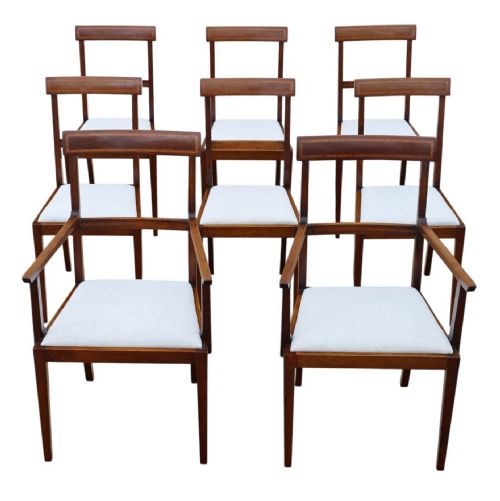


Edwardian Inlaid Carver Chairs
Edwardian inlaid carver chairs combine upright elegance with delicate woodwork, offering sturdy seating for a desk or parlour.
Edwardian Inlaid Carver Chairs
When you examine Edwardian inlaid carver chairs, you encounter seated furniture designed for drawing rooms, desks, and dining spaces. The pieces appearing most frequently here date from the Edwardian era, alongside related examples from the late nineteenth century and the early twentieth century.
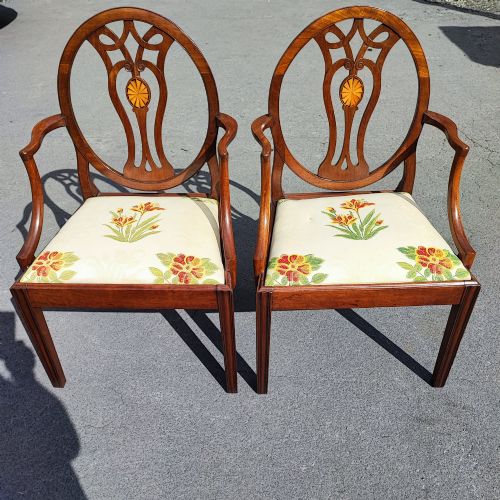
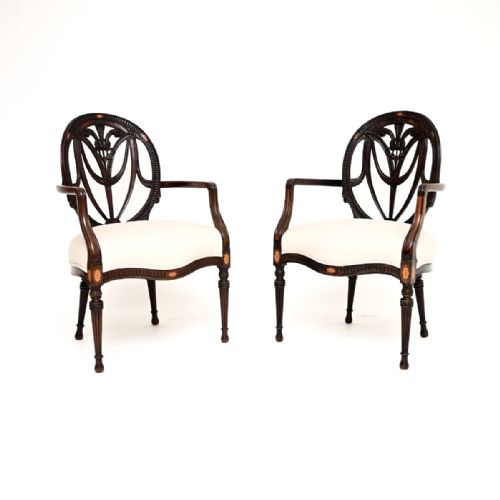
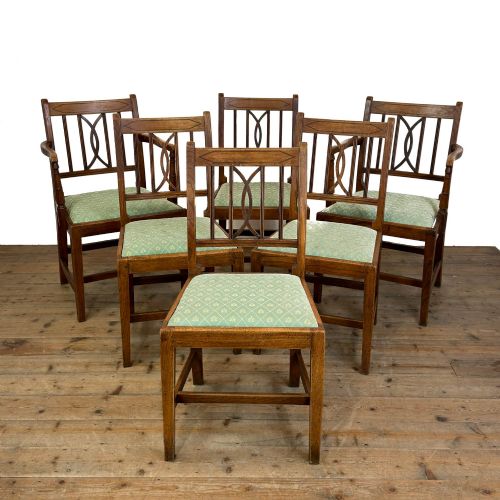
Makers constructed these chairs primarily as armchairs, elbow chairs, and salon seats intended to sit comfortably at a desk or a dining table. The forms range from simple slat back carvers to refined armchairs bearing delicate string inlay.
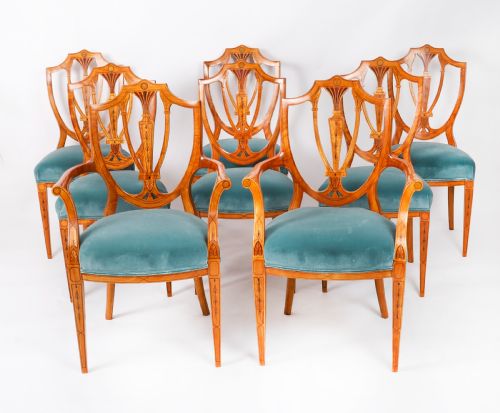
The style spans Edwardian cabinet work, Sheraton Revival forms, and occasional Art Nouveau flourishes. Buyers find both individual armchairs and pairs suited for matching a study or parlour.
Materials and Construction
The framework relies heavily on mahogany, alongside supplementary uses of oak, walnut, and satinwood. Cabinetmakers integrated wood inlay and satinwood inlay to decorate splats, crest rails, and legs.
Upholstery appears on many seats, utilising fabric and velvet to provide comfort. Joinery techniques from the period ensured sturdy frames capable of daily use in sitting rooms and libraries.
Listings feature mahogany, oak, walnut, and satinwood, alongside upholstered surfaces in velvet and fabric.
Evaluating the Craftsmanship
The refinement of the wood inlay separates standard production from finer workshop output. Crisp, tightly fitted string inlay and varied timber tones indicate superior cabinet work.
Frame solidity and the retention of original upholstery materials influence the standing of an individual chair. Pieces exhibiting clean lines in the Sheraton Revival or Art Nouveau manner hold particular distinction.
Cowtan & Sons·Shoolbred·Jenks & Wood
The Edwardian Inlaid Carver Chairs Glossary
- Carver chair
- An armchair, traditionally placed at the head of a dining table or utilised at a desk. These pieces feature integrated armrests attached to the main seat frame.
- String inlay
- A narrow strip of contrasting timber inlaid flush into the surface of the chair. Cabinetmakers used this technique to outline panels and legs.
- Sheraton Revival
- A late nineteenth and early twentieth century design movement replicating the lighter, neoclassical forms associated with George Sheraton. It favours satinwood, mahogany, and symmetrical inlaid motifs.
- Art Nouveau
- A decorative style emerging around nineteen hundred characterised by flowing, organic lines. In chair design, it manifests in whiplash curves and stylised floral inlay.
- Elbow chair
- An alternative term for an armchair with low arms, frequently found in libraries or bedrooms. These chairs provide compact support without the bulk of a full-scale armchair.
Edwardian Inlaid Carver Chairs: Frequently Asked Questions
What is a carver chair?
A carver chair is an armchair traditionally positioned at either end of a dining table. These seats include supportive armrests integrated into the upper frame.
In domestic settings, they also served as desk chairs or parlor seating. The form offers a comfortable seat while maintaining a slender profile.
How do I identify Edwardian furniture?
Edwardian furniture dates from the reign of King Edward the Seventh, spanning the first decade of the twentieth century. Pieces from this period often blend neoclassical revival styles with lighter construction.
Makers frequently employed mahogany and satinwood, decorated with delicate string inlay. The aesthetic favors brightness and refined proportions over heavy Victorian bulk.
Where should I place these chairs?
These armchairs suit studies, bedrooms, and drawing rooms as occasional seating. Their compact proportions allow them to sit comfortably beside a desk or writing table.
Pairs function well flanking a fireplace or positioned near a window. The upholstered pads provide practical comfort for daily reading or writing.
How do I care for inlaid wood?
Maintain inlaid furniture by keeping it away from direct sunlight and sudden temperature changes. Excessive heat can dry out the timber and loosen delicate wood veneers.
Apply a traditional beeswax polish occasionally to nourish the mahogany or satinwood surface. Avoid liquid cleaners that might seep into the inlaid joints.