


Wood Frame Accent Armchairs
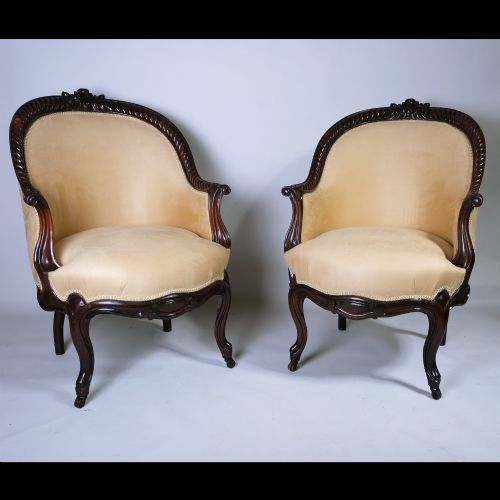
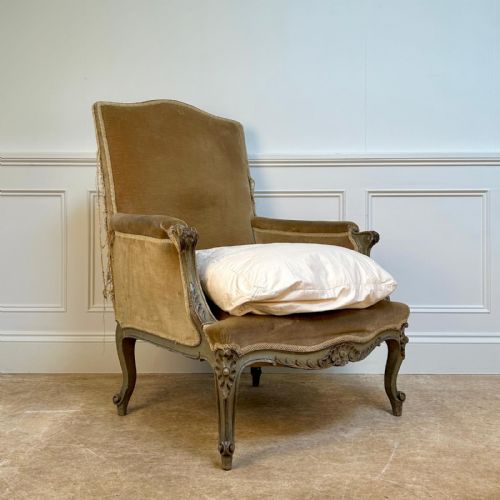
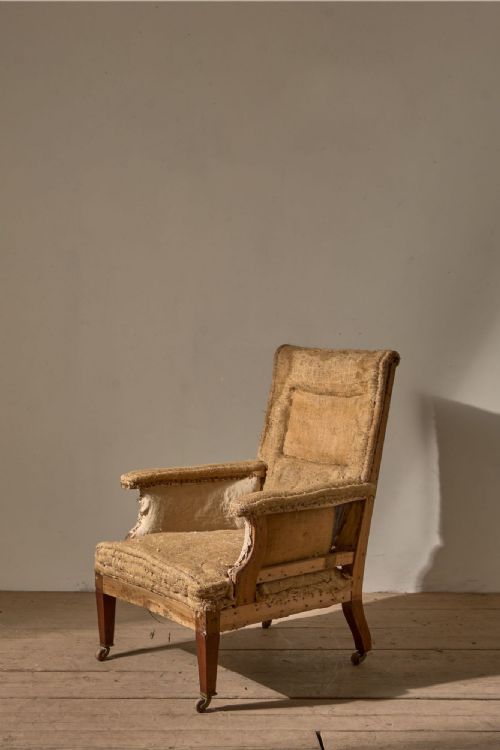
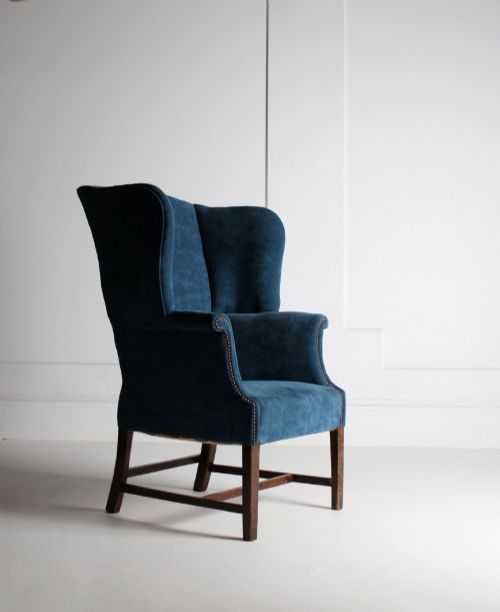
These wood frame accent armchairs span centuries of seating design, offering sculptural timber frames paired with tactile upholstery to anchor a room.
Wood Frame Accent Armchairs
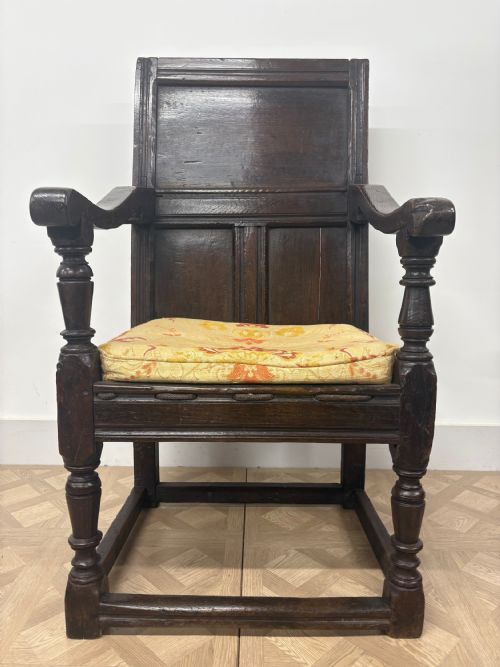
When buyers search for wood frame accent armchairs, they look for structural seating where exposed timber forms the primary visual character of the piece. The selection ranges from robust seventeenth century oak wainscot chairs to nineteenth century French painted bergères and Victorian walnut fireside seats.
The most frequent examples on this page date from the nineteenth century, encompassing diverse global influences from Anglo-Indian carvings to Chinese folding chairs and Black Forest novelties. These pieces function as individual statement seating rather than part of a standard dining suite.
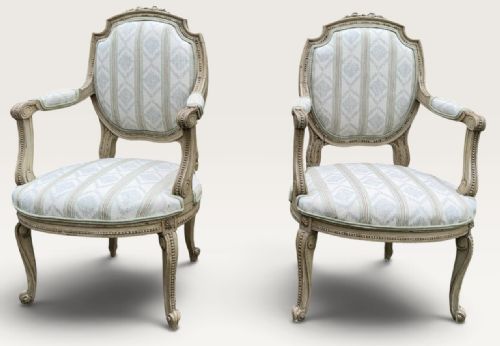
Makers drew on historical revivals, producing pieces in Louis XV, Louis XVI, Gothic and Renaissance styles that utilised exposed wooden skeletons to frame upholstered pads. Buyers encounter both single statement chairs and matched pairs suitable for balancing a fireplace or study.
Materials and Construction
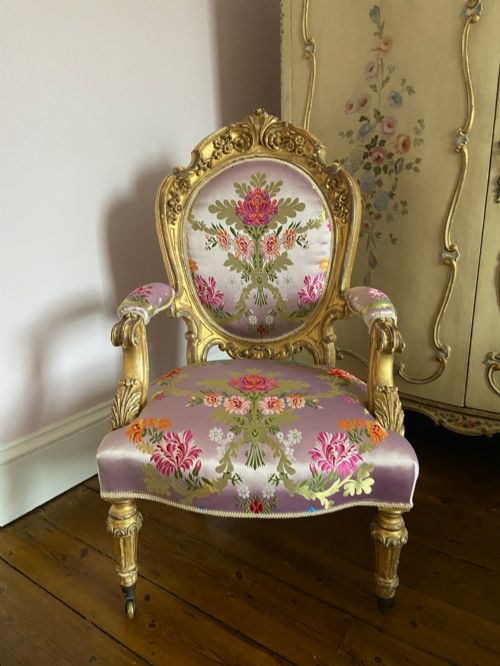
Cabinetmakers constructed the supportive skeletons primarily from dense hardwoods like walnut, mahogany, oak, and beech, often applying gilding, ebonisation, or original paint directly to the timber. Selected pieces incorporate decorative turnings such as bobbin legs or intricate hand-carved motifs along the crest rails and open arms.
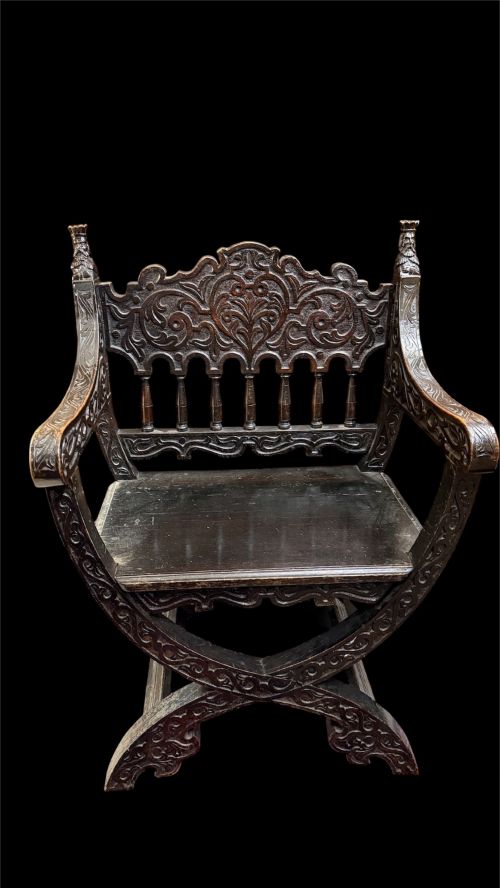
Upholstery techniques varied widely according to period and regional origin, utilising traditional stuffing housed beneath velvet, silk, leather, or patterned fabric. Folding and X-frame variants, including Savonarola and Glastonbury designs, relied on hinged wooden lattice construction for portability.
The inventory records global chair forms including French bergères, Chinese folding chairs, and Anglo-Indian carved armchairs alongside standard Victorian fireside seats.
Evaluating the Build and Finish
Quality rests in the crispness of the timber carving and the integrity of the underlying joinery within the exposed wooden frame. Superior examples display thoughtful proportions where the timber grain complements the sweeping curve of an open arm or a petal back.
The preservation of original surface treatments, whether aged gilding, painted finishes, or polished walnut, separates finer survivals from heavily altered pieces. Upholstery choices also influence character, with period textile selections or careful traditional restoration maintaining the integrity of the design.
The Wood Frame Accent Armchairs Glossary
- Bergère
- An enclosed upholstered armchair with wooden framing, typically featuring cane or fabric sides. This French form prioritises comfortable lounging.
- Fauteuil
- An open-framed upholstered armchair originating in France, characterised by exposed wooden armrests and legs. The arms usually feature padded elbow rests.
- Wainscot chair
- An early heavy wooden armchair constructed primarily of oak with solid panelled backs. These sturdy seats date back to the seventeenth century.
- Curule chair
- An ancient Roman-derived X-shaped folding chair design revived in later centuries. It relies on crossing curved legs for structural support.
- Giltwood
- Timber coated with a thin layer of gold leaf or gesso. This decorative finish appears frequently on revival armchairs.
Wood Frame Accent Armchairs: Frequently Asked Questions
How do I style a wood frame accent armchair?
Position the chair as a standalone piece in a corner, bedroom, or paired opposite a sofa to create a defined conversation area. Allow the exposed wood frame and upholstery texture to contrast with surrounding modern furniture.
Choose a spot where the side profile and carved details remain visible rather than pushed against a flat wall.
Can these antique armchairs handle daily sitting?
Most seventeenth to nineteenth century frames are built from dense hardwoods like oak, walnut, and mahogany, providing sturdy structural foundations for regular use. Traditional joinery holds the components firmly together over generations. N/A
How do I identify the period of an armchair?
Examine the timber species, turning styles, and carved decorative motifs against known historical revival periods like Louis XV, Victorian, or Gothic. Tool marks, joint construction methods, and the wear patterns on the wood reveal the age of the frame.
Upholstery fabrics often reflect later restorations, so dating relies primarily on the structural woodwork rather than the outer textile covering.