




Marquetry Inlaid Arm Chairs
Marquetry inlaid arm chairs bring floral and geometric patterns into seating through contrasting wood veneers.
Marquetry Inlaid Arm Chairs
The forms range from open armchairs and desk chairs to corner chairs, low armchairs, and companion settees. These seating pieces function equally well as functional furniture or decorative focal points in a morning room or salon.
How they were made
Cabinetmakers constructed the foundational frames using solid hardwoods such as mahogany, walnut, and rosewood, often pairing them with supporting elements of satinwood and fruitwood. Upholstered variants integrated fabric seating surfaces alongside exposed wooden framing.
Surface decoration relied on wood inlay and marquetry inlay techniques, slicing fine veneers to assemble pictorial or geometric motifs. Brass fittings occasionally reinforced structural stress points on specific desk and corner chairs.
The listings feature pieces spanning the 18th Century through the Edwardian period, utilising mahogany, satinwood, and walnut.
What varies in quality
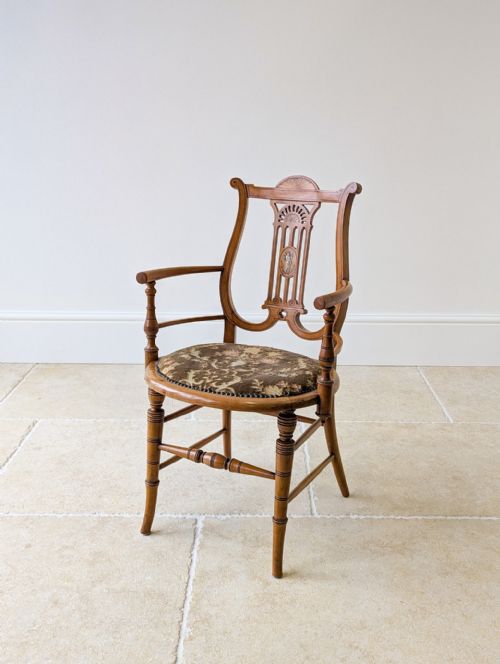
Quality reveals itself in the precision of the veneer cutting and the complexity of the contrasting woods selected for the inlay work. Finer examples display tight, seamless joins within the marquetry motifs and articulate sculptural elements like lyre-backs or petal backs with greater fluency.
The underlying timber selection also dictates the hierarchy of pieces, moving from standard utility frames to substantial satinwood and walnut constructions with refined carving and balanced proportions.
Shoolbred
The Marquetry Inlaid Arm Chairs Glossary
- Marquetry inlay
- An ornamental technique of applying cut veneers of various woods to a structural surface to form decorative patterns. This method defines the primary visual characteristic of these chairs.
- Sheraton Revival
- A late 19th and early 20th century design style drawing inspiration from the lighter neoclassical furniture of the late 18th century. It frequently incorporates satinwood and delicate inlay.
- Corner chair
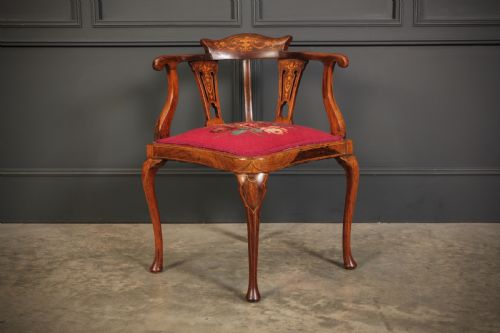
- A seating form designed to fit into the corner of a room, typically featuring a diagonal orientation with a continuous curved armrest rail supported by multiple posts.
- Satinwood
- A durable, yellowish-brown hardwood prized for its lustrous sheen and used extensively for contrasting veneers and stringing in inlaid furniture.
Marquetry Inlaid Arm Chairs: Frequently Asked Questions
How do I date a marquetry armchair?
Dating relies on observing structural framing traits, timber choices, and stylistic cues such as Edwardian Sheraton Revival motifs or earlier 18th century Dutch proportions.
Comparing the primary wood, such as walnut or mahogany, alongside the complexity of the veneer work helps place the piece within its correct historical era.
Where should I place a corner chair?
Corner chairs suit angles of rooms, small entryways, or writing desks where standard rectangular seating proves too cumbersome.
Their angled design allows them to sit comfortably against walls while exposing the decorative inlay on the top rail and splats.
What is the difference between marquetry and inlay?
Inlay generally involves inserting pieces of wood into a recessed solid base, whereas marquetry assembles an entire pictorial mosaic of veneer before applying it to the surface.
Both techniques appear across these seating forms to create contrasting floral and geometric ornamentation.
Are these chairs suitable for daily use?
Most antique seating functions well for normal sitting, provided the joints remain tight and the frame integrity stays sound.
Desk chairs and salon armchairs built with solid mahogany or walnut frames offer sturdy support for everyday environments.