


Edwardian Inlaid Bedside Cabinet
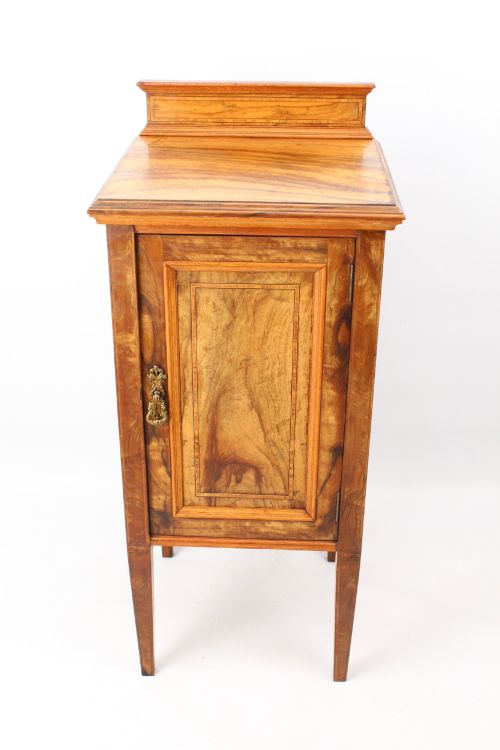
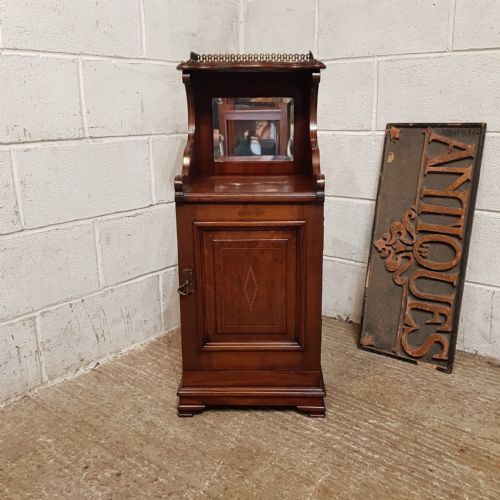
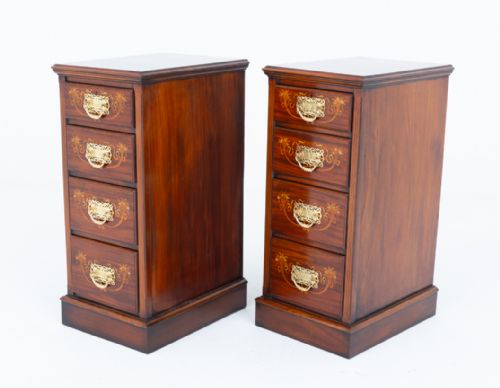
An edwardian inlaid bedside cabinet brings disciplined marquetry and compact timber construction directly beside the sleeping quarters.
Edwardian Inlaid Bedside Cabinet
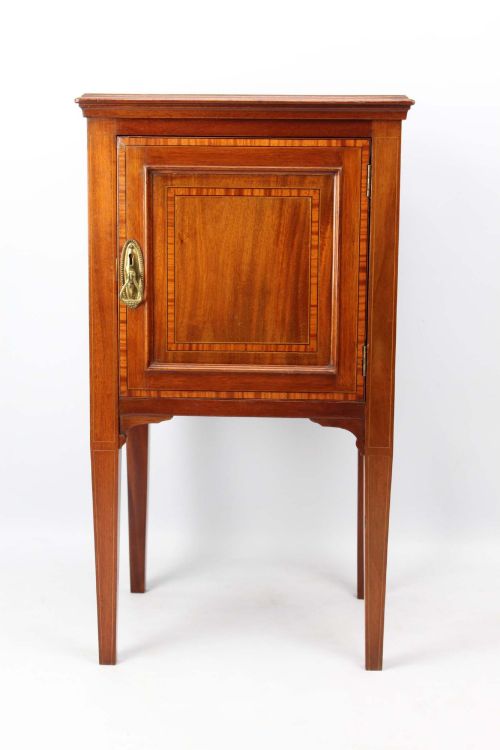
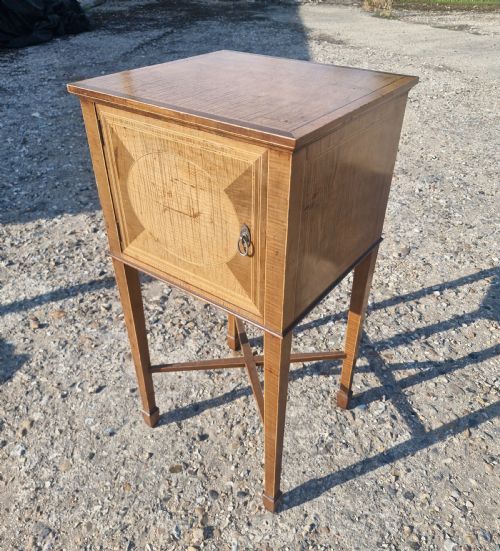
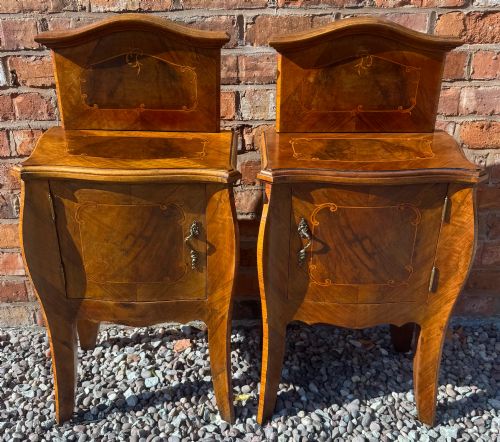
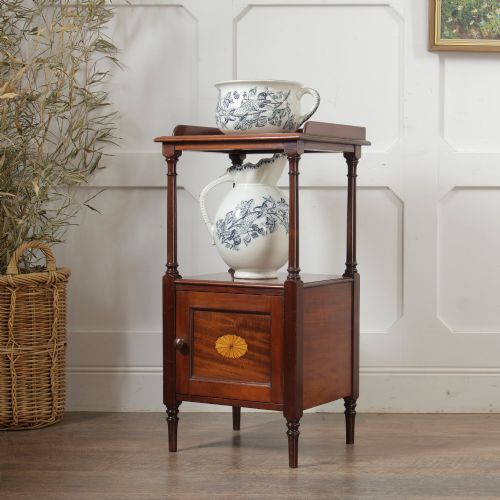
The search for an edwardian inlaid bedside cabinet leads directly to compact bedroom storage pieces produced around the turn of the twentieth century. These small cupboards and tables frequently appear in mahogany, often paired with contrasting satinwood or boxwood stringing.
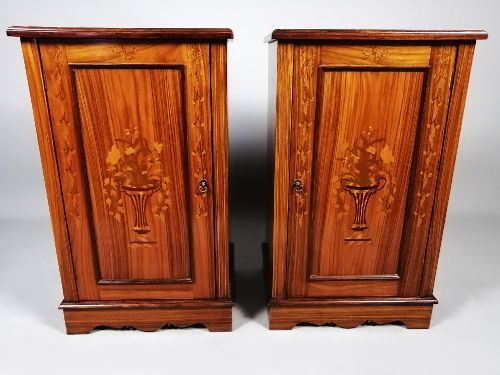
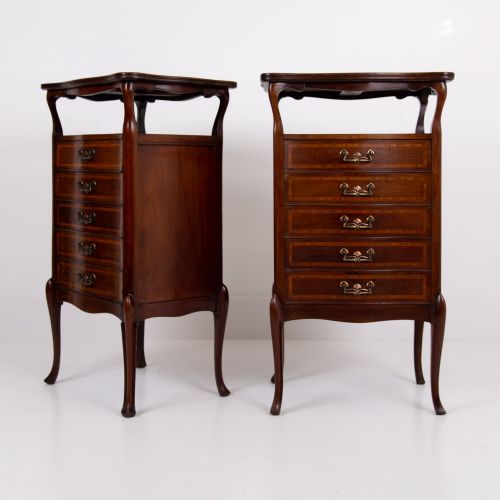
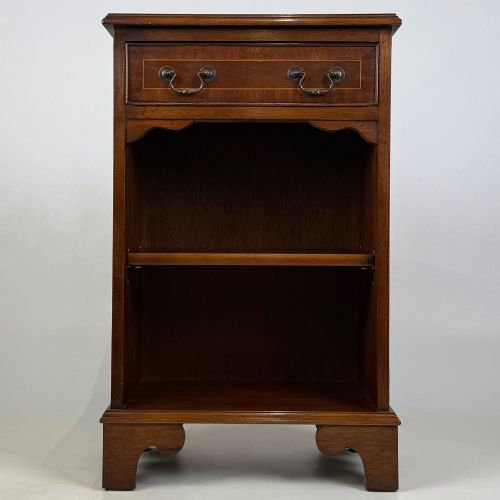
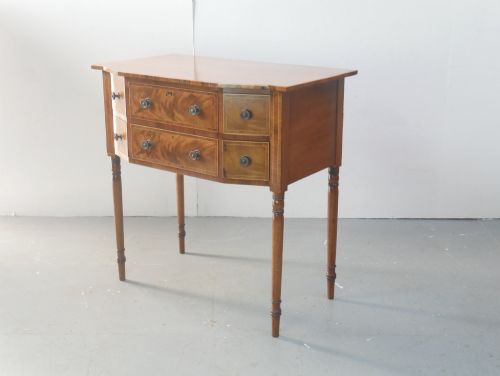
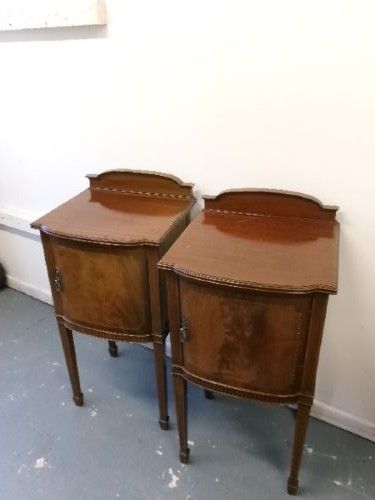
Makers of the period drew heavily on earlier vocabularies, resulting in frequent examples executed in the Sheraton Revival style. Alongside standard single cupboards, the listings reveal pairs and variants featuring drawers or open compartments.
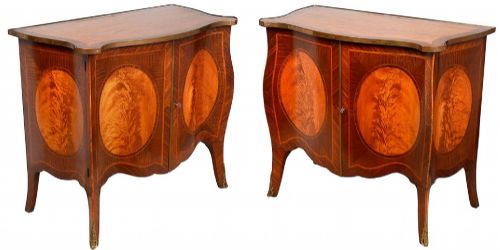
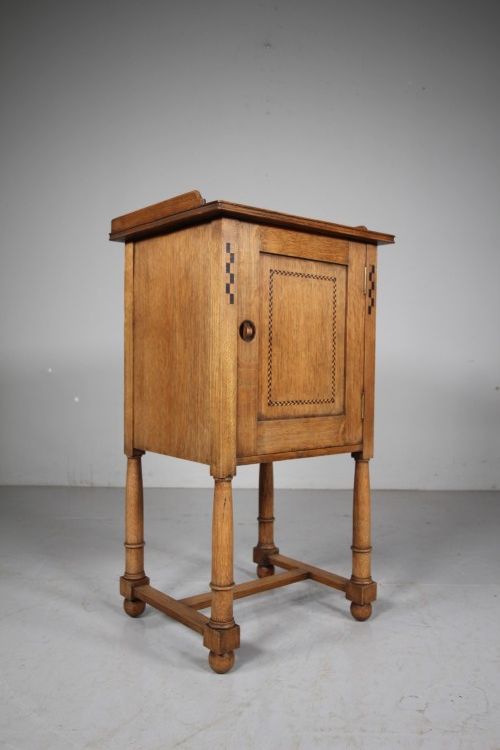
While the core of the material dates to the Edwardian era, related pieces stretch across the late nineteenth century into the early twentieth century. These incorporate forms ranging from simple Victorian pot cupboards to serpentine commodes.
Materials and construction
Makers relied principally upon dense hardwoods such as mahogany, rosewood, and walnut for the primary carcase construction. Surfaces were then enriched with delicate contrasting veneers, utilising satinwood, boxwood, and marquetry panels.
Inlay techniques defined the aesthetic, relying on precision cutting to insert decorative lines and floral motifs into the primary timber. Brass handles, hinges, and occasional gallery rails completed the hardware specification.
Judging execution
Quality rests upon the crispness of the timber selection and the precision of the inlay work. Finer examples display tightly grained mahogany paired with meticulously fitted stringing that sits completely flush with the surrounding surface.
Construction methods distinguish standard utility pieces from high workshop production. Superior cabinets show thoughtful detailing in the drawer linings, timber thickness, and the integration of hardware such as stamped maker plates.
Maple and Co·Morant and Co·Edwards and Roberts·Gillows·Heals
The Edwardian Inlaid Bedside Cabinet Glossary
- Stringing
- A narrow strip of contrasting timber inlaid into the surface of a cabinet to form delicate linear borders.
- Marquetry
- The art of forming decorative patterns using fitted pieces of veneer applied to a timber carcase.
- Pot Cupboard
- A traditional term for a small bedside cabinet originally designed to house a chamber pot.
- Sheraton Revival
- A late nineteenth and early twentieth century design movement inspired by the neoclassical furniture of George Sheraton.
- Serpentine
- A furniture front curved in a concave-convex-concave wave shape, demanding high skill from the cabinetmaker.
Edwardian Inlaid Bedside Cabinet: Frequently Asked Questions
How can I date an edwardian inlaid bedside cabinet?
Dating relies on examining the timber species, construction methods, and stylistic cues present in the marquetry and hardware.
Edwardian pieces often combine mahogany carcases with Sheraton Revival satinwood inlay, while late Victorian examples tend to show heavier proportions and darker rosewood or walnut.
Are these cabinets usually found in pairs?
Bedside storage from this period frequently survives in matched pairs, though single examples appear regularly.
Pairs often command greater interest among collectors seeking symmetry on either side of a larger bed frame.
What woods were commonly used in Edwardian bedside furniture?
Mahogany served as the primary structural timber for the vast majority of these bedside cabinets and cupboards.
Cabinetmakers embellished these dark surfaces using lighter contrasting woods like satinwood and boxwood for decorative stringing and inlaid motifs.