
Marquetry Inlaid Nightstands
Marquetry inlaid nightstands bring patterned wood surfaces and practical bedside storage into a room, uniting eighteenth-century continental cabinet-making with twentieth-century French design.
Marquetry Inlaid Nightstands
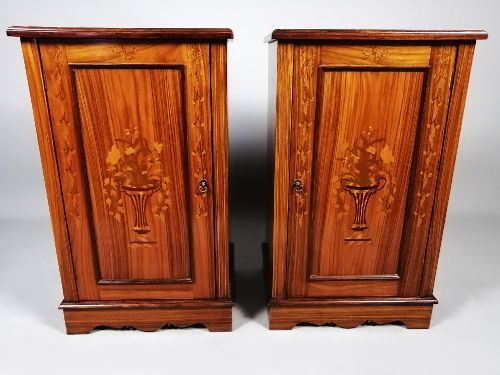
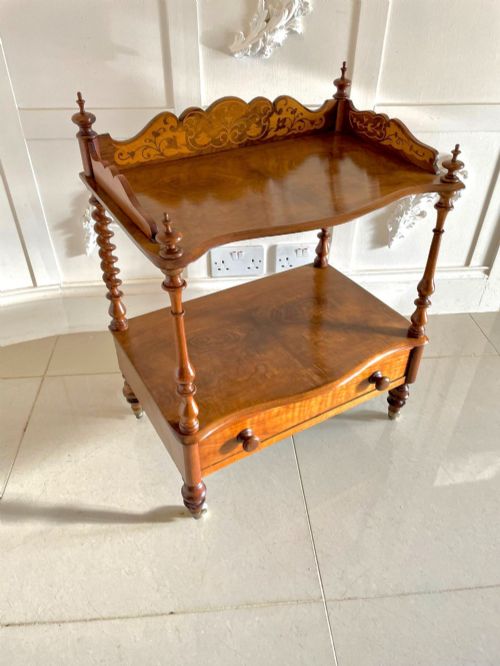
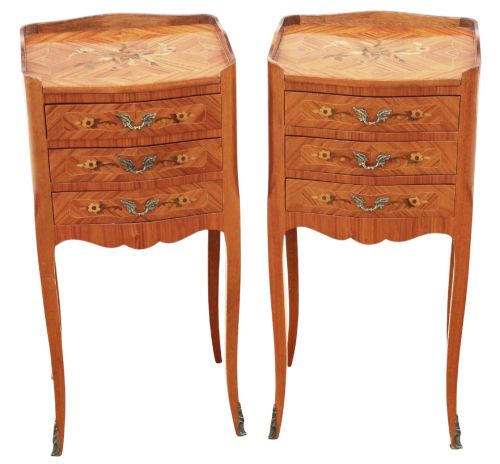
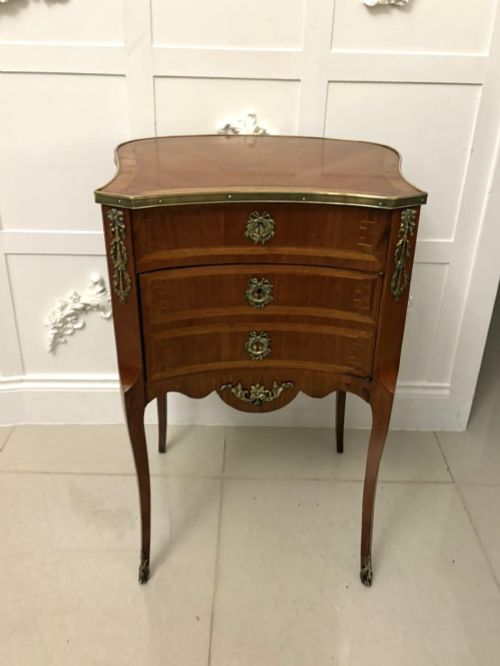
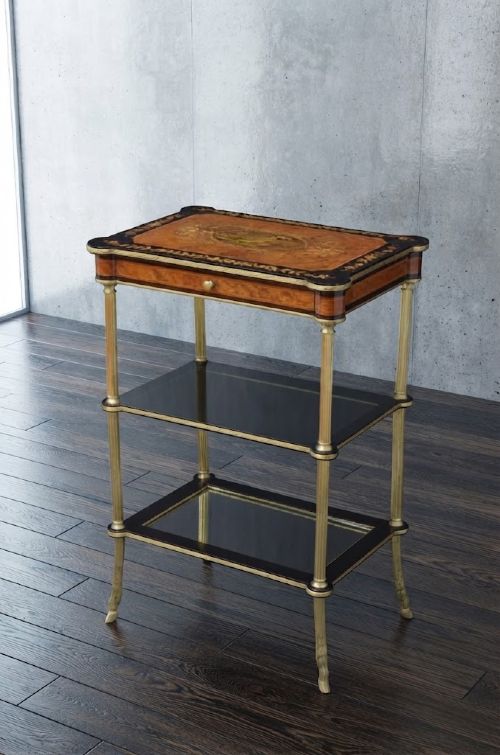
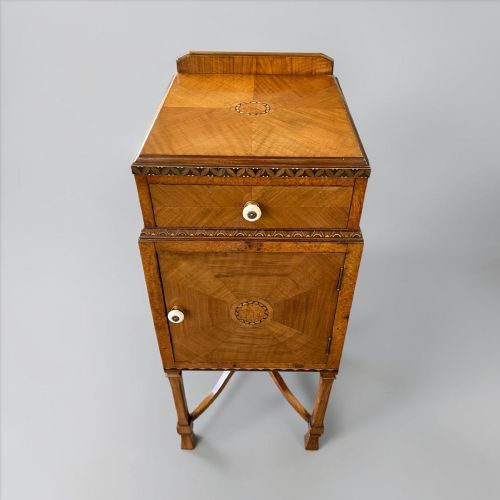
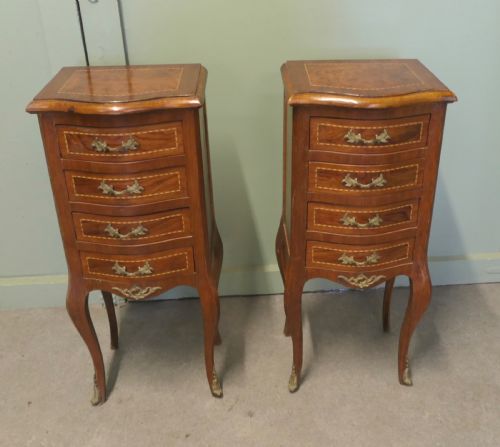
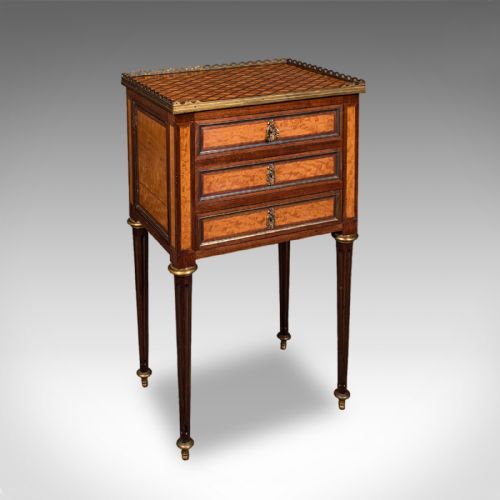
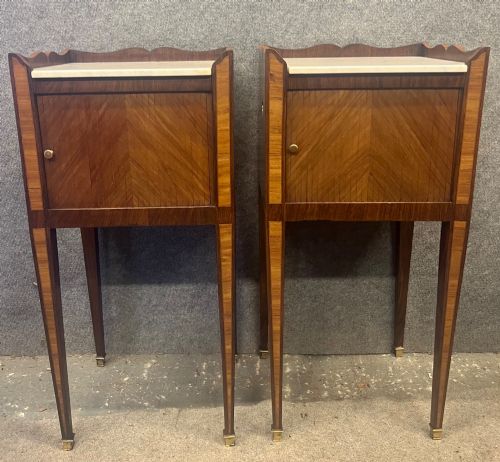
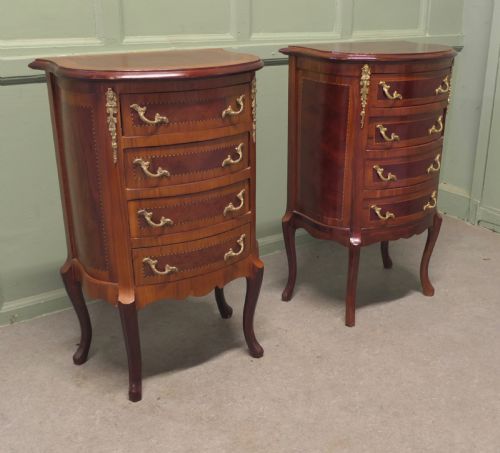
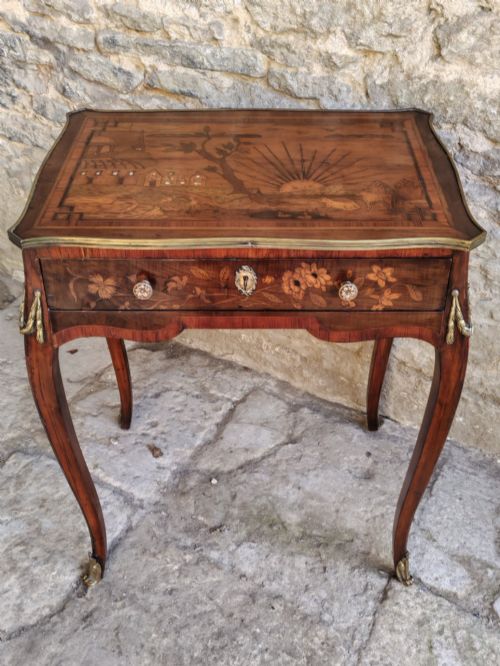
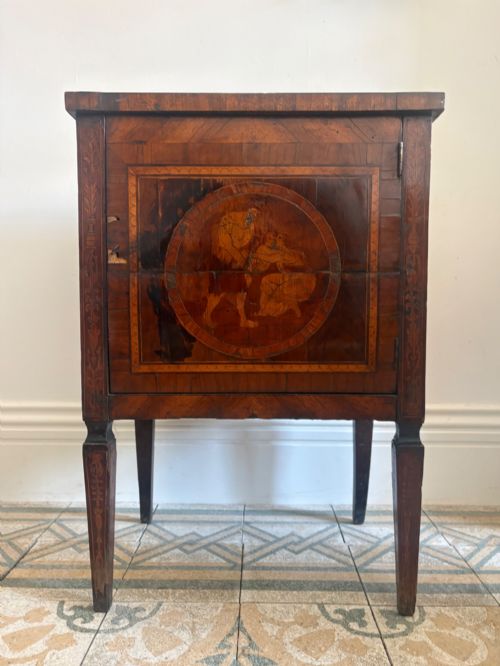
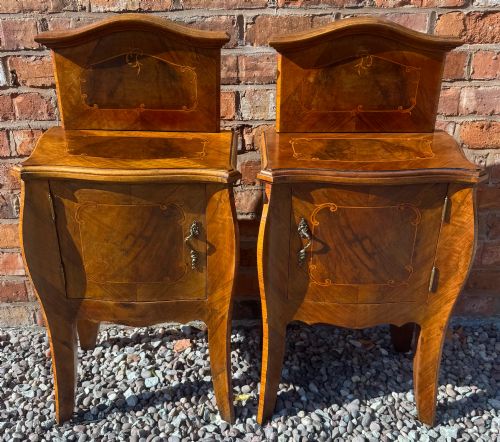
Marquetry inlaid nightstands take many forms across the inventory, appearing frequently as French bedside cabinets, lamp tables, and small commodes alongside English Victorian pot cupboards. These pieces bridge several periods, stretching from eighteenth-century Dutch and Italian examples through nineteenth-century Victorian pieces to twentieth-century French productions dated around nineteen-twenty and nineteen-thirty.
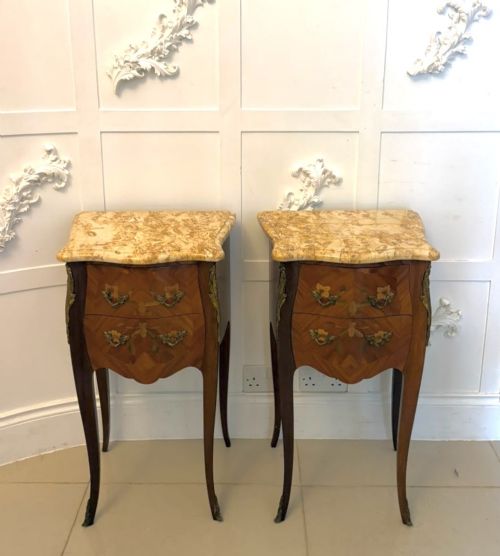
A buyer searching this phrase encounters numerous pairs alongside single items, often fitted with marble tops or arranged with drawers and cupboards. The forms range from bow-front chests and tall side lockers to simpler bedside tables, reflecting diverse regional tastes from French Louis styles to Sheraton revivals.
Materials and Technique
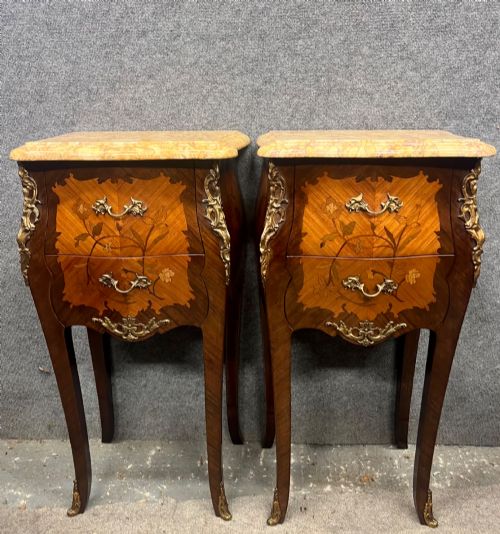
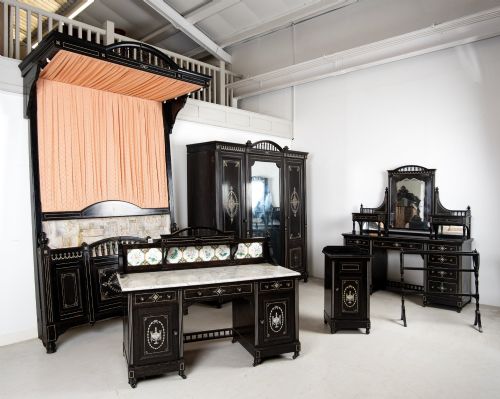
Cabinet-makers built these nightstands using sturdy foundational timbers like mahogany, walnut, and ebonised wood, upon which they applied decorative veneers of kingwood, rosewood, and satinwood. The distinctive pictorial or geometric surface patterns rely on precise wood-cutting techniques where contrasting timber veneers fit together snugly before mounting.
Metal mounts in brass and ormolu often accent the corners, handles, and lock escutcheons, while inset marble slabs frequently form the upper surface of French cabinets. Joinery methods combine traditional carcass construction with careful inlay work across curved and straight panels alike.
Dutch floral marquetry occasionally sneaks into nineteenth-century French company, proving that cabinet-makers loved a blooming good cabinet.
Judging Quality
The standard of these pieces rests on the precision of the veneer work and the harmony of the timber grain. Finer examples display tight, complex floral or geometric marquetry that remains flush with the surrounding wood, whereas lesser pieces show simpler patterns with wider joints between the inlaid elements.
Structural integrity and material selection also divide the range. Superior cabinets utilise heavier hardwoods and solid marble slabs fitted cleanly to the frame, while standard items rely on simpler carcases and less substantial secondary timbers.
Sormani
The Marquetry Inlaid Nightstands Glossary
- Marquetry
- Decorative veneer work forming pictures or patterns by fitting together small pieces of wood. This technique allows cabinet-makers to create elaborate floral or architectural designs across table tops and cabinet doors.
- Parquetry
- Geometric wood inlay forming regular patterns such as cubes or chequers. Unlike pictorial marquetry, parquetry relies on repeating angular shapes.
- Ormolu
- Gilt bronze mounts used for decorative handles, feet, and edging on furniture. It adds metallic contrast to the timber surfaces of French cabinets.
- Commodino
- A small Italian bedside chest or cabinet. These diminutive pieces typically feature drawers or a single cupboard door.
- Kingwood
- A dense, richly figured timber often used in French furniture veneers. Its dark brown colouring with lighter golden streaks provides high contrast for inlay.
Marquetry Inlaid Nightstands: Frequently Asked Questions
What is the difference between a nightstand and a commode?
Nightstands generally serve beside a bed to hold lamps and small personal items, while commodes traditionally refer to lower storage chests with drawers or doors.
In the context of antique French furniture, the terms often overlap as makers produced small scaled bedside commodes designed for similar domestic rooms.
How do I care for marble-topped bedside cabinets?
Marble surfaces require protection from acidic liquids like fruit juice or wine, which can etch the polished stone over time. Regular dusting with a soft cloth keeps the stone clean without risking the surrounding timber veneers.
When moving the cabinet, lift it rather than sliding it to prevent stress on the joints supporting the heavy stone top.
Where were most marquetry nightstands made?
Many surviving examples originate from French workshops following Louis styles, alongside English pieces from the Victorian and Edwardian eras. Dutch and Italian makers also produced notable inlaid bedside furniture during the eighteenth century.
French pieces from the early twentieth century heavily dominate the market for matching pairs.
Can I use a lamp table as a nightstand?
Lamp tables and bedside tables share similar heights and surface dimensions, making them interchangeable in most bedrooms. Their open lower tiers or small drawers suit bedside storage needs well.
Buyers often select lamp tables when searching for matched pairs that offer slightly lighter proportions than enclosed bedside cupboards.