


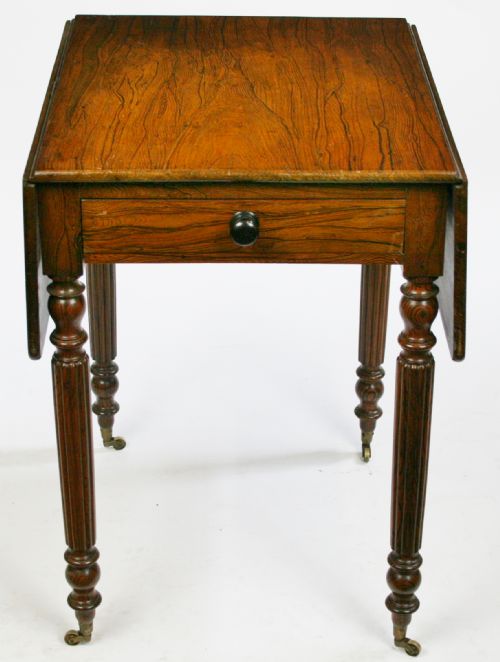

Brown Rosewood Nightstands
Brown rosewood nightstands bring rich grain and compact storage to a bedroom, offering a warm surface for a lamp and a discreet spot for books.
Brown Rosewood Nightstands
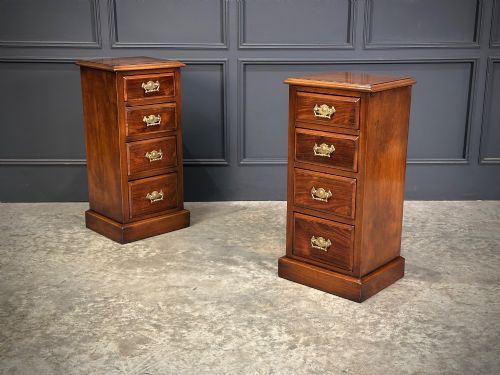
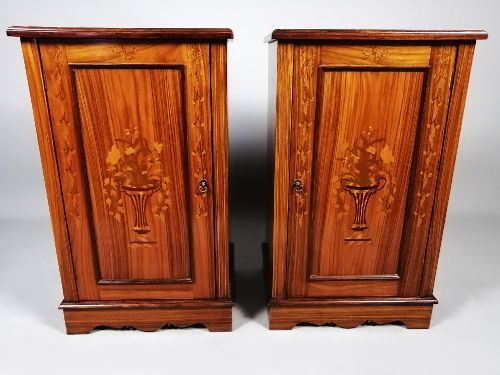
The version you are most likely to meet on this page is a nineteenth-century or Edwardian cabinet featuring rich timber veneers, sometimes accented with marquetry or boxwood inlay. They appear individually or as pairs, serving as practical bedside companions.
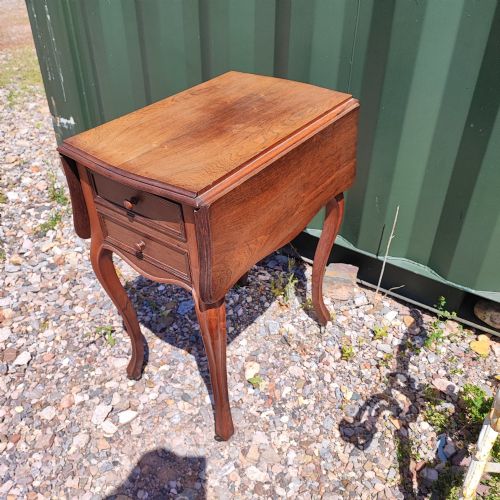
Makers utilised alternative secondary woods alongside rosewood, meaning you will also spot pieces incorporating mahogany, kingwood, walnut, and tulipwood. Their forms vary from simple two-tier occasional tables to refined floral marquetry bedside tables with enclosed storage.
How they were made
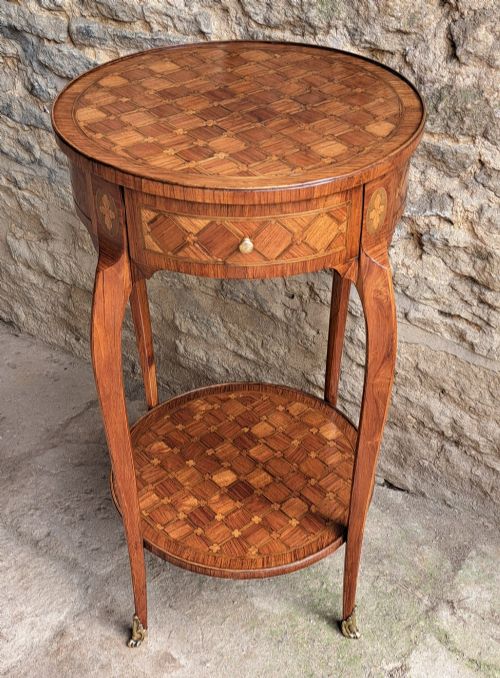
Cabinet makers applied fine rosewood and kingwood timber veneers over sturdy structural carcases, creating patterned surfaces that highlight the natural grain of the wood. Boxwood inlay provides sharp linear contrast, while marquetry introduces floral and geometric pictorial motifs into the tops and doors.
Fittings such as handles, hinges, and mounts utilise cast brass, complementing the dark tones of the polished timber. Drop leaves and folding sections on tables rely on traditional hinged joints that allow surfaces to expand or fold away.
The listings span the Victorian, Edwardian, and 1920s periods, incorporating materials such as brass, rosewood, kingwood, and boxwood inlay.
What varies in quality
The fidelity and complexity of the marquetry work dictate much of the visual standard, with crisp, detailed floral inlays marking out superior examples. Simpler veneered surfaces depend entirely on the natural figuring of the rosewood and the symmetry of the grain matching.
Structural refinement shows in the proportion of the legs, the tight fit of cupboard doors, and the smooth operation of drop-leaf mechanisms. Higher grade pieces often combine multiple contrasting timbers, such as boxwood and tulipwood, executed with precision.
The Brown Rosewood Nightstands Glossary
- Marquetry
- The art of applying pieces of veneer to a structure to form decorative patterns and pictures. This technique often employs contrasting woods to create floral or geometric designs.
- Veneer
- A thin layer of superior wood glued to a base of commoner timber. It provides a decorative exterior surface while maintaining structural stability.
- Drop leaf
- A hinged flap at the side of a table that can be raised to increase surface area or lowered when space is restricted.
- Occasional table
- A small, light table designed for general utility rather than a single specific purpose. These pieces move easily around a room as needed.
- Boxwood inlay
- Narrow strips or pieces of pale boxwood set flush into a darker wood surface to create borders and linear patterns.
Brown Rosewood Nightstands: Frequently Asked Questions
Are these tables sturdy enough for daily use?
These pieces were built from dense hardwoods like rosewood and mahogany, making them robust for holding lamps and bedside items. Their solid construction allows them to withstand regular handling.
Care should be taken with veneered surfaces to avoid moisture damage or deep scratches, preserving the polished finish over years of use.
Do these bedside tables come as pairs?
Listings include both single items and matched pairs, depending on how the original furniture survived. Pairs are particularly common among Edwardian and Victorian bedroom pieces.
Single pieces often originate from occasional tables or side tables adapted for bedside use in later periods.
What is the difference between a cabinet and a table?
Cabinets provide enclosed storage space behind doors or within chests of drawers, keeping personal items hidden from view. They offer more substantial bulk beside a bed.
Tables present open surfaces, sometimes with shelves or drop leaves, prioritizing accessible display space over concealed storage.