

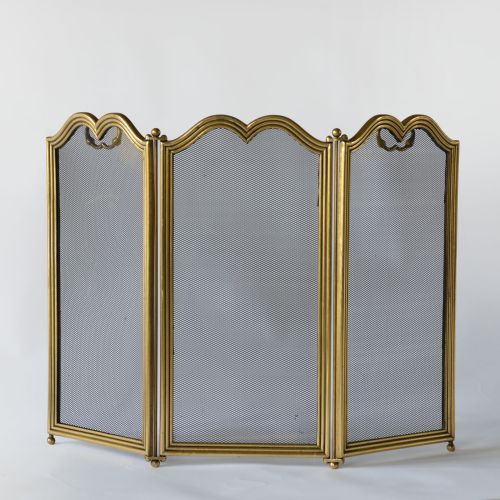




Edwardian Hearth Fender
An Edwardian hearth fender frames an open fireplace with metal and leather, protecting the room while offering a fireside seat.
Edwardian Hearth Fender
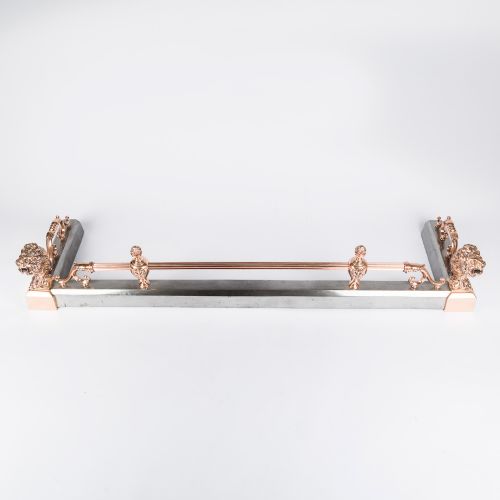
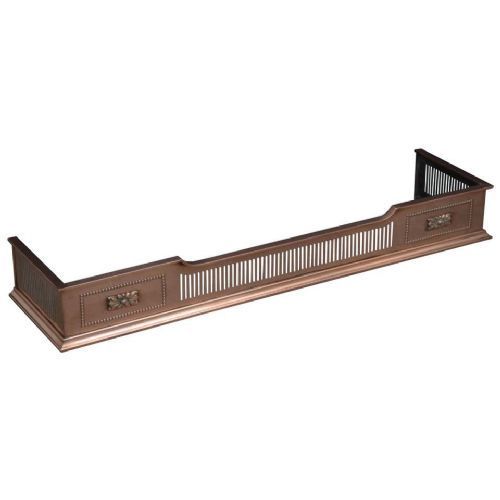
When you search for an edwardian hearth fender, you encounter metal frames that enclose the hearth to contain ash and sparks while anchoring the room's fireside furniture. The pieces on this page span the Edwardian period and Victorian eras, reaching into the early twentieth century alongside twentieth-century revivals.
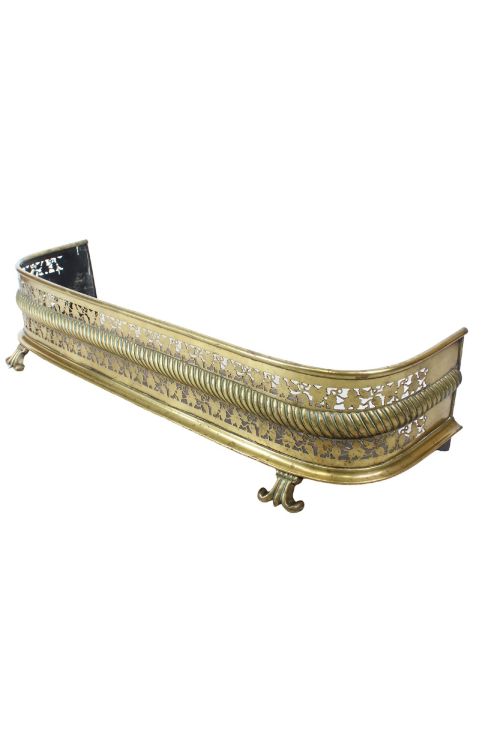
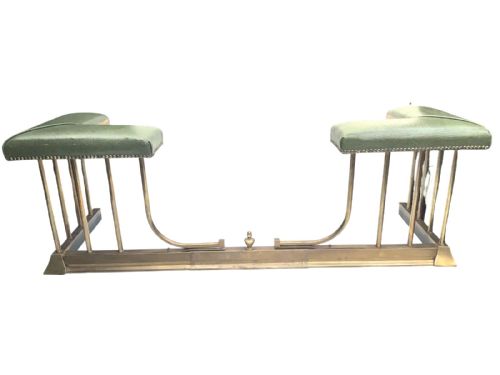
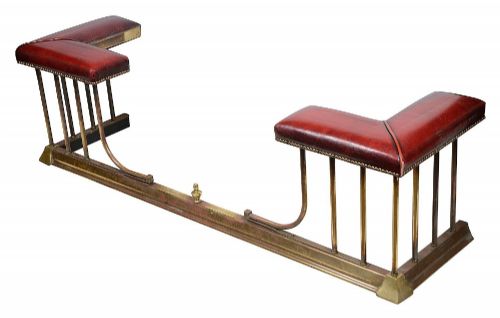
You meet simple low brass kerbs alongside elaborate club fenders fitted with leather Chesterfield seats for sitting by the grate. Materials range from polished and pierced brass to beaten copper, iron, steel, and oak frames paired with wire mesh guards.
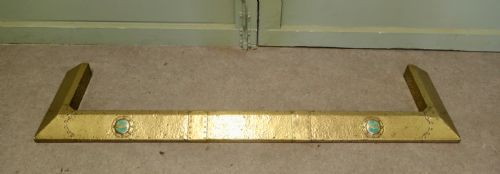
Styles stretch from restrained late-nineteenth-century forms to flowing Art Nouveau motifs and solid Arts and Crafts designs with enamel cabochons. Many examples offer adjustable widths to fit varying fireplace openings across different rooms.
How they were made
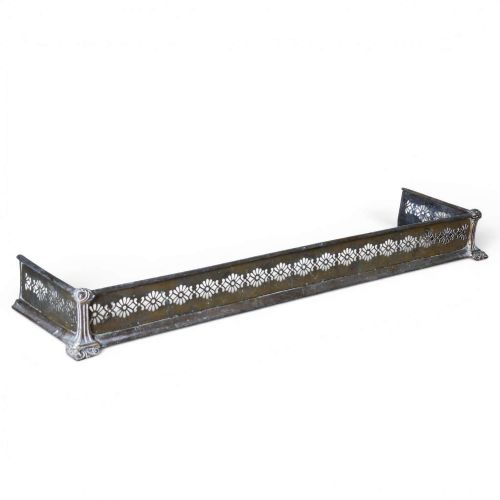
Makers constructed these frames using combinations of cast and sheet brass, beaten copper, iron, and steel, often mounting them on oak bases. Metal components were pierced, chased, or decorated with floral pateras, beaded borders, and green enamel cabochons.
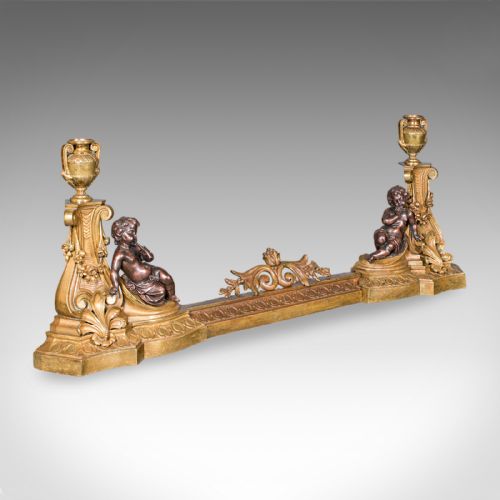
Upholstered club versions incorporated leather seats stuffed over sturdy internal frames, while nursery guards utilised fine wire mesh and integrated clothes rails. Adjustable mechanisms relied on sliding internal steel or brass bars to alter the overall span.
Some nursery guards arrived with built-in clothes rails, turning the living room fire into a makeshift laundry dryer.
What varies in quality
Quality rests on the weight of the metal gauge, the crispness of cast or beaten ornamentation, and the structural integrity of extending mechanisms. Flimser tubular brass yields to heavy cast sections and thick, solid plates that withstand daily hearthside wear.
Upholstered elements show distinction in the grade of leather and the firmness of the internal padding rather than surface appearance alone. Original patination on copper and brass surfaces indicates age and careful preservation over decades.
The Edwardian Hearth Fender Glossary
- Club fender
- A low fireside frame featuring padded leather top rails designed for sitting around the hearth. These seats became popular in English country houses during the late nineteenth and early twentieth centuries.
- Patera
- A circular ornamental bas-relief motif carved or stamped with floral or classical patterns. Makers frequently applied these to brass and copper fender rails.
- Nursery fender
- A taller protective guard, often incorporating wire mesh and a top rail for drying garments. These items kept children and stray embers safely separated in domestic rooms.
- Kerb
- The low stone or metal boundary retaining the hearth floor. Metal fender kerbs sit directly against or upon this perimeter.
Edwardian Hearth Fender: Frequently Asked Questions
What is a club fender?
A club fender is a hearth frame fitted with upholstered leather seats along the top rails. This design allowed people to sit close to the fire while keeping sparks contained within the hearth.
Such pieces combine metal structures in brass or steel with cushioned seating, creating a functional social hub in traditional rooms.
How do I measure for a fender?
You measure the width and depth of your fireplace hearth opening, accounting for any protruding hearth stones or mouldings. Many antique fenders feature adjustable widths to help achieve a precise fit against the brickwork.
Check the internal dimensions rather than the overall decorative span to ensure the frame clears your fire grate comfortably.
Are these fenders adjustable?
Many period examples include sliding extension mechanisms that allow the metal frame to widen or narrow. This design accommodated different fireplace proportions in various rooms.
Inspect the listings for specific mentions of extending or adjustable rails if your hearth requires a non-standard width.
What materials were used?
Makers relied primarily on brass, copper, iron, and steel, frequently pairing them with oak bases and leather upholstery. Wire mesh appeared on nursery guards designed for child safety.
Surfaces range from bright polished brass to beaten copper panels adorned with enamel cabochons and floral motifs.