


Edwardian Hearth Curb
An Edwardian hearth curb frames the fireplace, keeping stray embers off the rug while anchoring the whole fireside arrangement.
Edwardian Hearth Curb
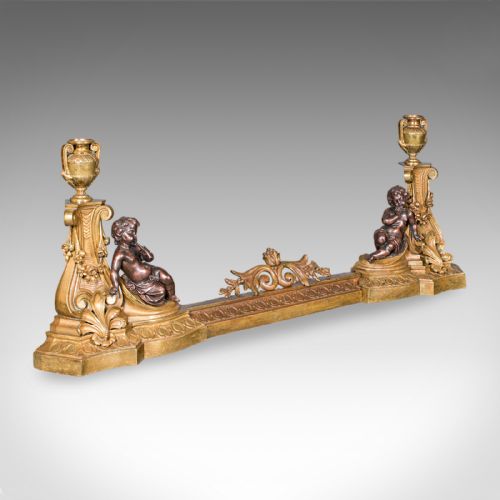
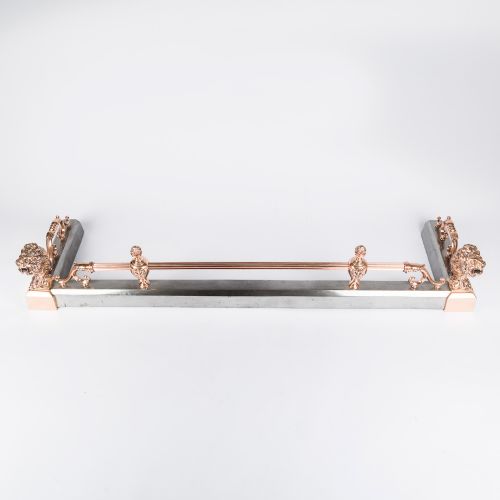
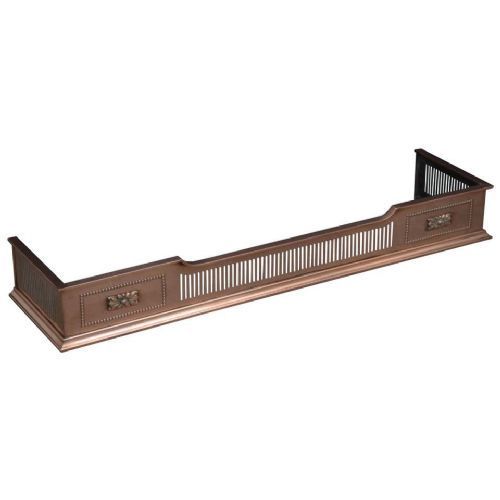
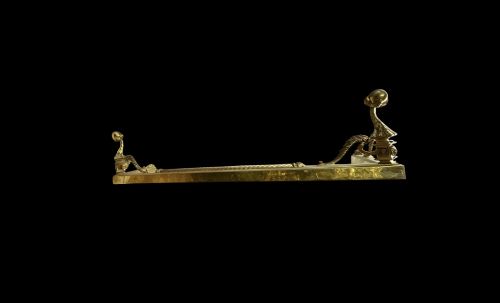
An Edwardian hearth curb sits directly on the floor around the fireplace opening, defining the hearth zone with a low metal barrier. These pieces appear in forms ranging from simple adjustable rails to ornate structures accompanied by fire irons.
The selection on this page draws heavily from Edwardian and Victorian periods, alongside items dated from the late nineteenth century up to nineteen hundred. Alongside straightforward brass rails, buyers encounter pieces incorporating copper, steel, and occasionally oak.
Makers of the era produced both clean geometric designs and flowing organic shapes, reflecting the transition from Victorian formality through Arts and Crafts ideals into Art Nouveau styling.
Materials and Construction
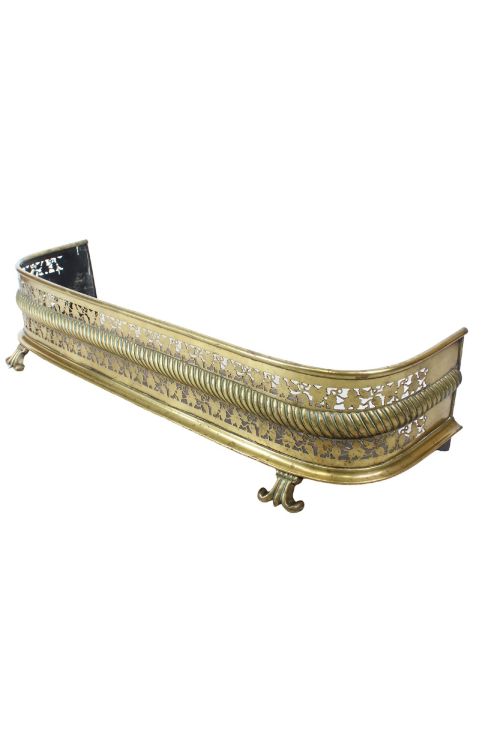
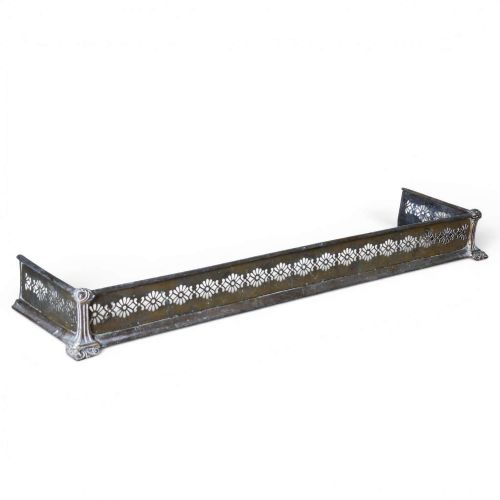
Makers relied primarily on brass, copper, iron, and steel, often combining polished brass frames with blackened iron or steel bases for structural weight. Many examples integrate sheet metal with heavier cast components to achieve both decorative detail and durability.
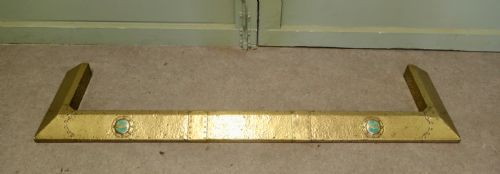
Surface enrichment involved hand-beaten copper panels, applied green enamel cabochons, beaded decoration, and flower patera motifs. Adjustable mechanisms allowed single curbs to fit varying hearth widths securely.
Assessing Quality
Quality rests in the thickness of the metal gauge and the crispness of decorative chasing or beating rather than mere surface shine. Heavy gauge construction ensures the frame resists the knocks of daily fireside use without bending or loosening at the joints.
Superior pieces display thoughtful integration of mixed metals, secure riveting, and original patination that develops naturally across brass and copper surfaces over decades.
The Edwardian Hearth Curb Glossary
- Hearth curb
- A low protective barrier placed around the front of a fireplace to contain ash and embers. It also provides a visual boundary for the hearth.
- Patera
- A circular ornamental bas-relief motif resembling a classical libation dish, frequently carved or stamped with floral patterns. Makers used these to accent corners and focal points.
- Cabochon
- A gemstone or piece of glass shaped and polished instead of faceted. In metalwork, these appeared as decorative bosses, often in coloured enamel.
- Club fender
- A specialised fender featuring upholstered seats along the top rails. This design allowed people to sit close to the fire.
- Beaten copper
- Sheet copper shaped by hand hammering from the reverse side to raise decorative low relief patterns. This technique was central to Arts and Crafts metalwork.
Edwardian Hearth Curb: Frequently Asked Questions
What is a hearth curb used for?
A hearth curb serves primarily to keep rolling embers and stray coals contained within the fireplace precinct, protecting surrounding floor coverings. It also establishes a neat architectural perimeter around the hearth stone.
Beyond safety, these metal frames tidy the fireside visually, often holding matching fire irons or providing a convenient rail to steady oneself when tending the fire.
How do I clean a brass fender?
Maintenance depends entirely on the desired finish and the presence of original patination, which many collectors prefer to leave undisturbed. Gentle dusting with a soft dry cloth removes everyday soot and grime without harming the metal.
If polishing is necessary, use a mild metal cream applied sparingly with a soft cloth, taking care to avoid enamelled cabochons or darkened iron sections.
How do I tell Art Nouveau from Arts and Crafts?
Art Nouveau metalwork favours flowing, asymmetrical plant stems, whiplash curves, and stylised organic motifs. The focus rests on movement and graceful line.
Arts and Crafts pieces tend to emphasise honest construction, hand-beaten textures, visible rivets, and simpler geometric forms rooted in traditional craftsmanship.