



Edwardian Hall Tree Mirror
These edwardian hall tree mirror pieces combine glass, oak and brass to anchor a hallway with practical utility.
Edwardian Hall Tree Mirror
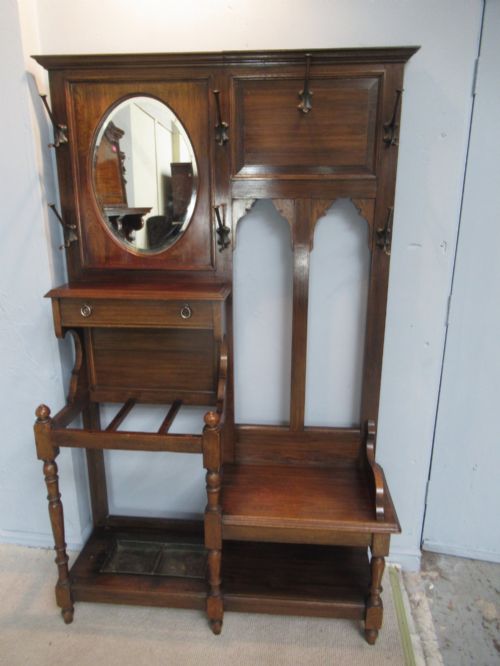
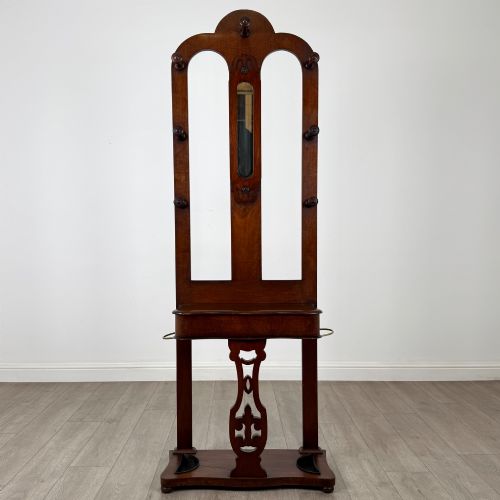
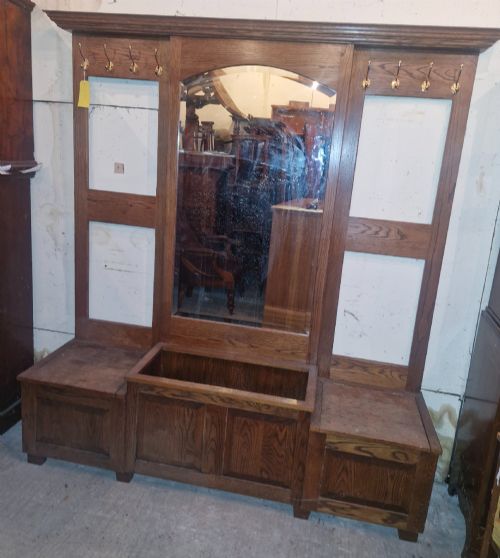
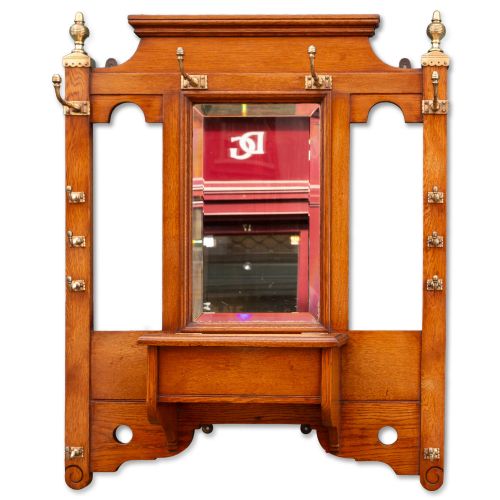
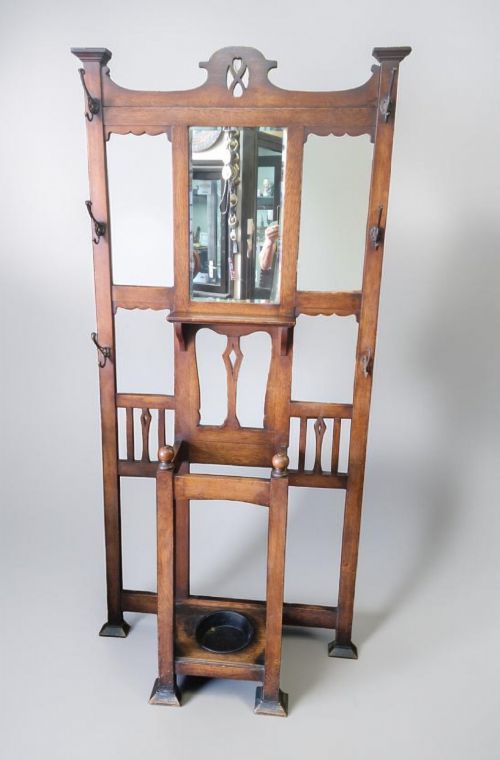
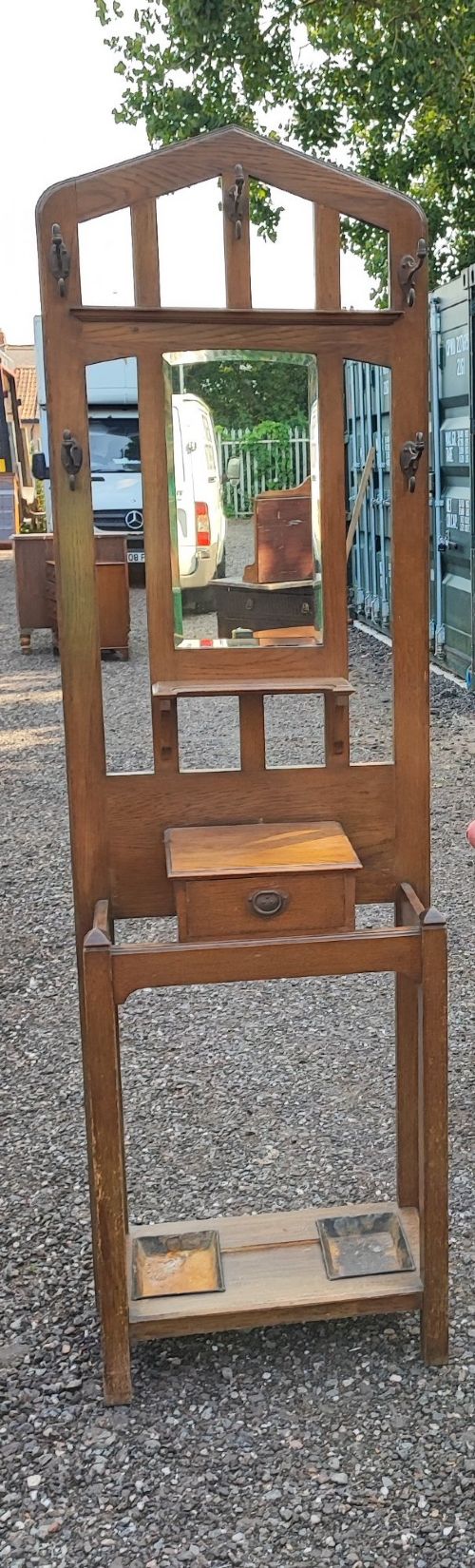
An edwardian hall tree mirror serves as the central functional piece for an entrance hall, combining coat storage, hat hooks, and a looking glass in a single vertical frame. The examples seen on this page stretch across Victorian, Edwardian, and early twentieth century periods, reflecting diverse stylistic movements from Arts and Crafts to Art Nouveau.
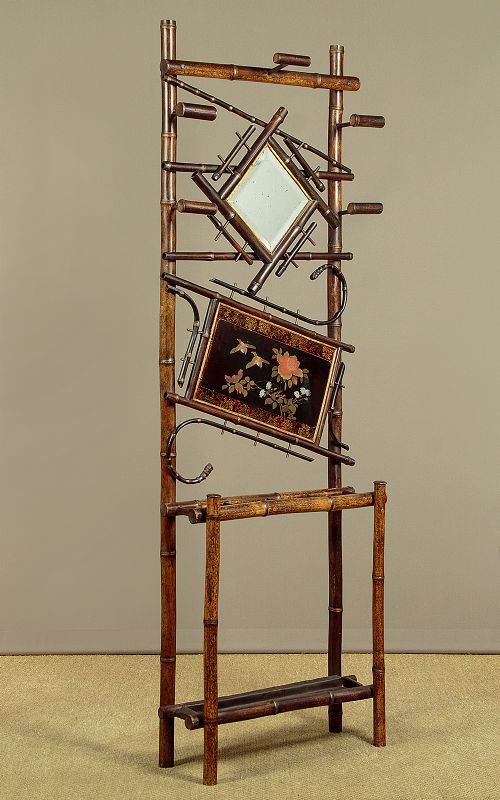
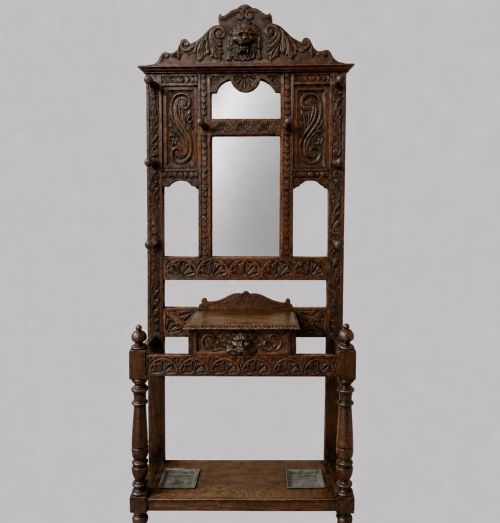
The form appears most frequently in oak, walnut, or mahogany, often incorporating integrated umbrella stands and occasionally marble inserts. Buyers encounter everything from compact wall-mounted coat racks to substantial multi-functional hall stands featuring Green Man carvings and bamboo structures.
How they were made
Cabinetmakers constructed these pieces using solid timbers such as oak, mahogany, and walnut, frequently utilising brass for hat hooks and cast iron for heavy drip trays. Glass forms the central mirror element, while specialised examples incorporate ceramic tiles or bamboo framing.
Decoration relies on carved wooden details, including prominent Green Man motifs, alongside inlay work and bentwood shaping seen in specialised pieces. Cast iron components in specific Victorian country house versions provide robust structural support for heavy outerwear and umbrellas.
Several pieces stare back through wooden foliage thanks to enthusiastic Green Man carvings guarding the hallway.
What varies in quality
The distinction between standard utility items and finer examples rests upon the ambition of the design and the depth of the carving. Elaborate stylistic expressions like Art Nouveau curves or specific Arts and Crafts inlays elevate a piece above basic utilitarian hall storage.
Material selection and maker attribution drive further separation within the range. Pieces bearing specific manufacturer details or incorporating high-end additions such as Minton tiles and marked cast iron work stand apart from unbranded workshop production.
Fischel·Coalbrookdale·Ellen E. Houghton of Minton
The Edwardian Hall Tree Mirror Glossary
- Hallstand
- A piece of hallway furniture combining hooks for coats and hats, a mirror, and storage or drip trays for umbrellas and walking sticks. These items address the practical needs of nineteenth and early twentieth century reception spaces.
- Arts and Crafts
- A design movement emphasising handcraftsmanship, simple forms, and traditional materials, frequently visible in the oak construction of these hallway pieces. The style rejects mass production in favour of visible construction methods.
- Art Nouveau
- A decorative style characterised by flowing, organic lines and natural motifs, appearing on specific hallway furniture from around nineteen hundred. This aesthetic contrasts with the heavier geometric lines of standard Victorian production.
- Bamboo
- A lightweight material utilised in late nineteenth century furniture, often paired with lacquer or chinoiserie decoration for smaller entrance hall stands. Its introduction brought an exotic lightness to traditional hallway furnishings.
- Green Man
- A sculptural architectural motif representing a human face surrounded by or entwined with leaves and vines, frequently carved into the oak crests of substantial hallway stands. This decorative feature draws upon ancient folklore and woodland symbolism.
Edwardian Hall Tree Mirror: Frequently Asked Questions
What is an edwardian hall tree mirror?
An edwardian hall tree mirror is a combined hallway furnishing designed to hold hats, coats, and umbrellas while providing a reflective glass surface for last-minute adjustments before leaving the house.
These pieces range from compact wall racks to substantial freestanding oak structures placed directly inside the front entrance.
How were these hall stands used?
Households used these items in entrance halls and reception spaces to manage outerwear, hats, and wet umbrellas belonging to residents and visitors alike.
The integrated mirror allowed individuals to check their appearance, while the trays at the base caught water from walking sticks and umbrellas.
What woods are most common?
Oak appears most frequently in various finishes including golden oak and dark fumed varieties, reflecting the preferences of the Arts and Crafts period.
Mahogany and walnut also appear regularly, particularly on pieces originating from the Victorian era and early twentieth century.
How do I date an edwardian hall tree mirror?
Dating relies on identifying stylistic markers such as Aesthetic Movement bamboo framing, heavy Victorian carvings, or flowing Art Nouveau lines.
Construction techniques, hardware materials like brass and cast iron, and accompanying elements like ceramic tiles help narrow the period of manufacture.