


Hallway Coat Rack Mirror
A hallway coat rack mirror brings together practical storage and reflective glass, anchoring an entrance hall with period character.
Hallway Coat Rack Mirror
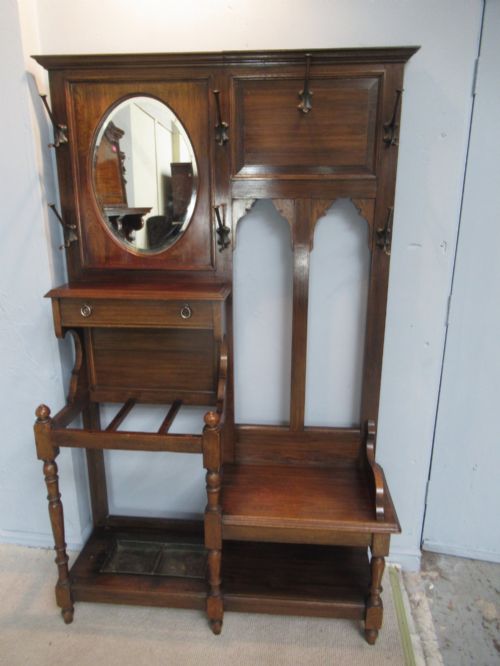
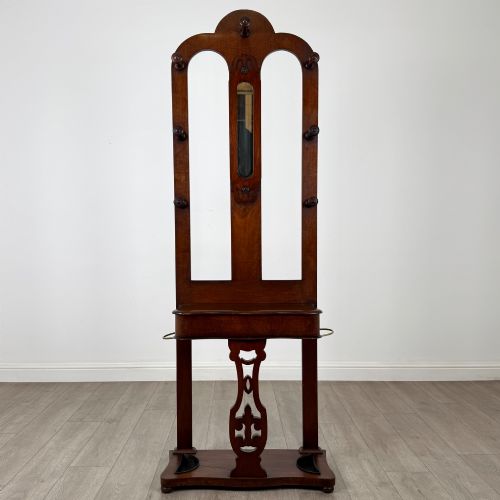
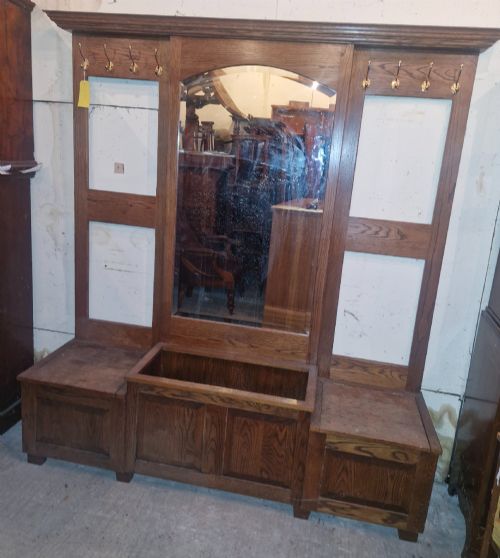
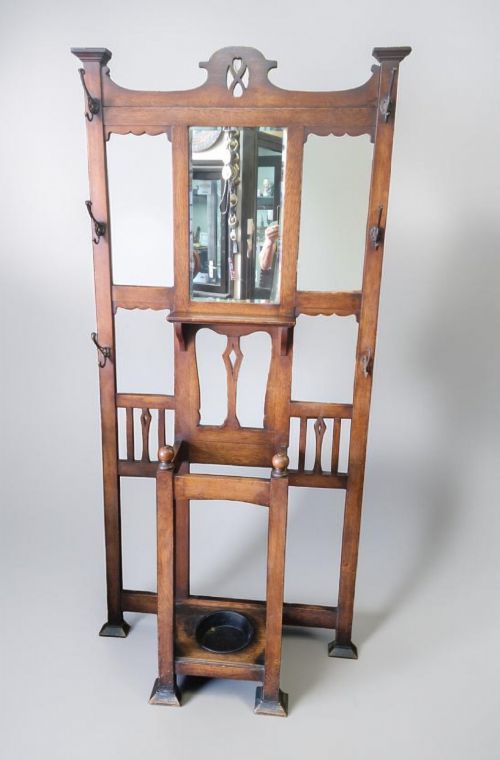
A hallway coat rack mirror combines hat and coat storage with a looking glass, appearing primarily as substantial freestanding hall stands or wall-mounted racks. The pieces found here date from the nineteenth century into the early twentieth century, spanning Victorian, Edwardian, and Art Nouveau periods.
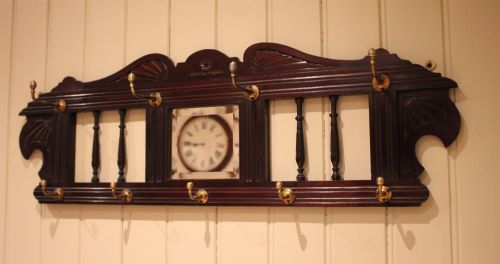
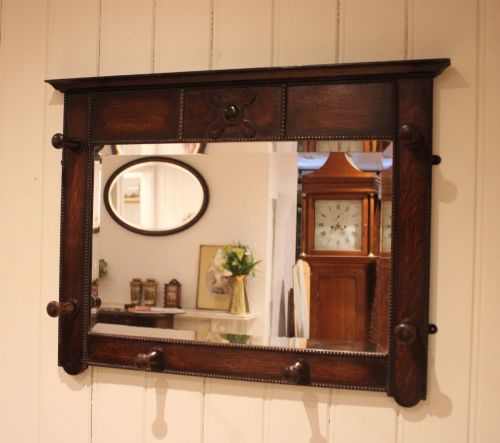
Freestanding examples often incorporate umbrella wells, marble shelves, and carved wooden framing, whilst wall-mounted versions utilise compact boards fitted with brass hooks and bevelled mirror plates. Oak and mahogany dominate the freestanding formats, anchoring entrance spaces with deep timber tones.
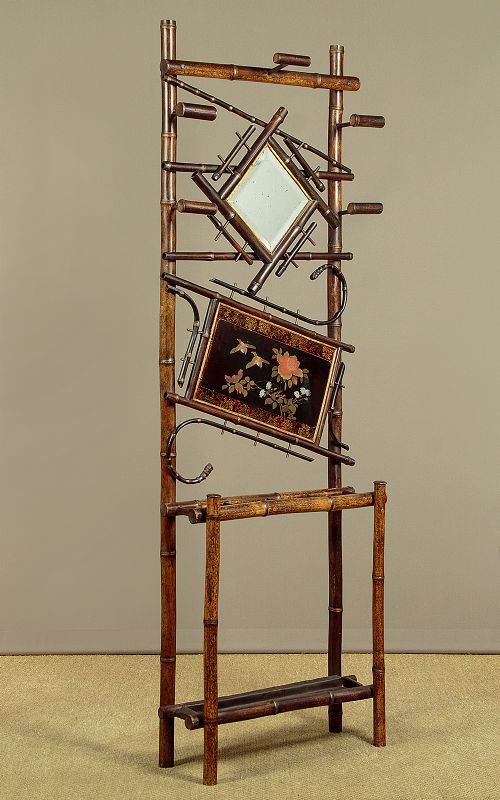
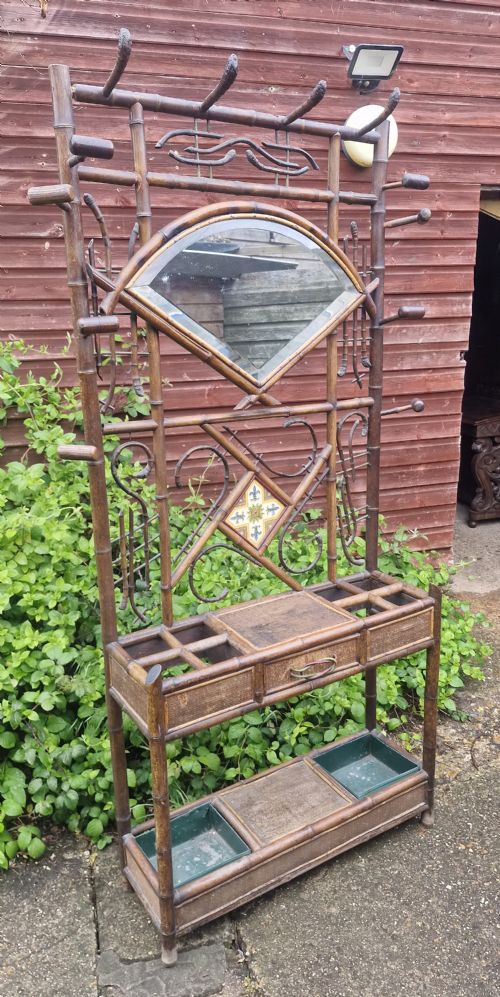
Lighter alternatives also appear, including bamboo, bentwood, and cast iron constructions. These varied forms reflect the changing domestic requirements of period hallways, where guests were greeted and outerwear stowed.
Materials and construction
Cabinetmakers utilised solid timbers such as oak, walnut, and mahogany, frequently employing deep carving on panels and crestings. Structural integrity in freestanding pieces often depended on robust framing to support heavy brass or cast iron coat hooks and central mirror plates.
Alternative materials introduced distinctive structural techniques, seen in bamboo frames secured with pinned joints and bentwood steamed into curved profiles. Marble inserts provided durable surfaces for calling card trays, while cast iron and brass formed heavy-duty frameworks and decorative hanging hardware.
Some Victorian hall stands feature built-in metal drip pans to catch the mud from rainy nineteenth-century streets.
Factors of quality
Quality rests upon the selection of timbers and the depth of hand-carved ornamentation across the structural framing. Superior examples feature well-figured mahogany or quarter-sawn oak, complemented by heavy cast brass hooks and deeply bevelled mirror glass rather than plain plate.
Construction methods further separate standard items from superior works, particularly in the joinery of umbrella wells and the integration of marble shelves. Finer pieces demonstrate careful attention to proportion, accommodating multiple functions without appearing overcrowded.
Fischel·Gillows
The Hallway Coat Rack Mirror Glossary
- Hall stand
- A freestanding piece of hallway furniture combining a mirror, coat hooks, umbrella stands, and often a small shelf or compartment. These items dominated Victorian and Edwardian entrance halls for organising outdoor wear.
- Bevelled plate
- A mirror glass whose edges are cut and polished at an oblique angle to catch the light. This traditional finishing technique adds depth and refractive quality to the looking glass.
- Bentwood
- Wood that has been rendered pliable through steaming and then bent into curved structural shapes. This method created lightweight yet resilient frames popular around the turn of the twentieth century.
- Aesthetic Movement
- A late nineteenth-century design style emphasising visual beauty over narrative content, often incorporating Japanese-inspired bamboo forms. It rejected heavy Victorian ornamentation in favour of lighter, simpler lines.
- Hall tree
- An alternative regional term for a freestanding hall stand equipped for hats, coats, and umbrellas. It serves the same functional purpose within the entranceway.
Hallway Coat Rack Mirror: Frequently Asked Questions
What is a hallway coat rack mirror?
A hallway coat rack mirror is a piece of entrance furniture designed to hold hats, coats, and umbrellas while providing a looking glass. These items combine practical storage with decorative presence.
Most examples date from the Victorian and Edwardian eras, utilising timbers like oak and mahogany alongside brass hooks and glass plates.
How were hall stands used?
Hall stands provided a central station for visitors and residents to deposit outerwear upon entering the home. The integrated mirror allowed for last-minute appearance checks.
Umbrella wells caught dripping rainwater, while small shelves held calling cards and correspondence.
How do I date a hall stand?
Dating relies on stylistic clues, timber choices, and manufacturing techniques characteristic of specific periods. Victorian pieces often feature heavy carved mahogany and cast iron, while Edwardian and Art Nouveau versions introduce lighter oak frames and flowing organic lines.
Bamboo and bentwood examples typically point toward the turn of the twentieth century.
Are these pieces suitable for small hallways?
Wall-mounted coat racks with mirrors offer a compact alternative to large freestanding hall stands. They provide hanging space and reflective glass without occupying valuable floor area.
Freestanding options require more space due to their depth and umbrella compartments.