


Edwardian Hall Centre Table
An edwardian hall centre table brings a freestanding presence to an entrance space, designed to anchor a room from every angle.
Edwardian Hall Centre Table
When you search for an edwardian hall centre table, you encounter freestanding furniture designed to occupy the middle of a room or a prominent entrance hall rather than sit against a wall. The examples appearing here span the Edwardian era alongside earlier nineteenth century periods, incorporating Victorian, Regency, and Arts and Crafts design influences.
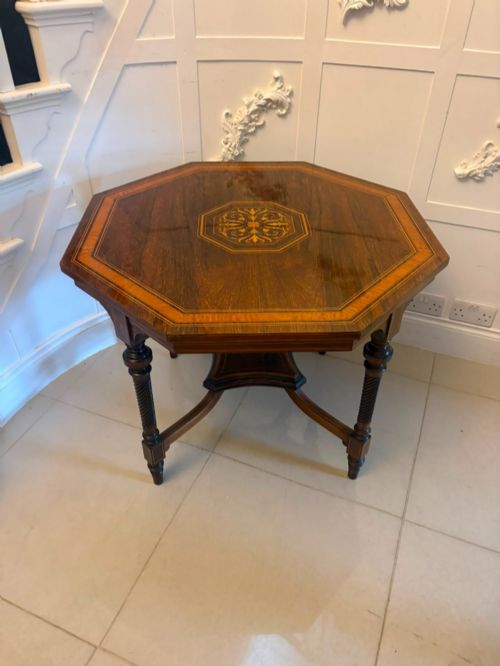
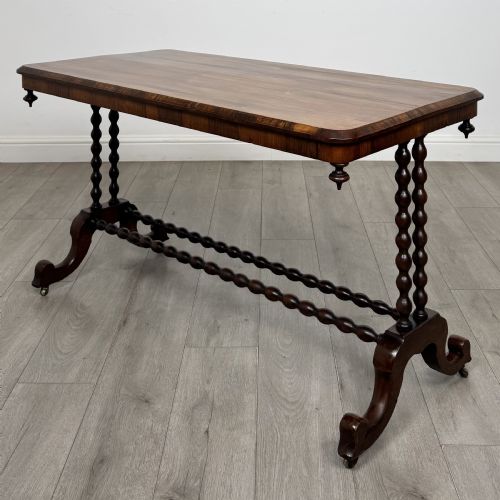
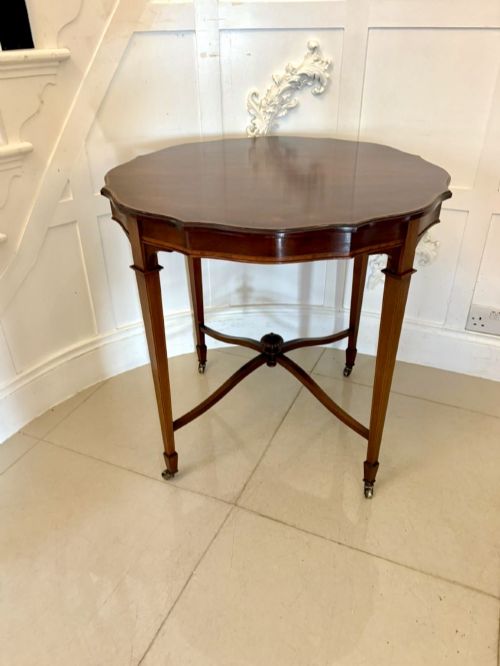
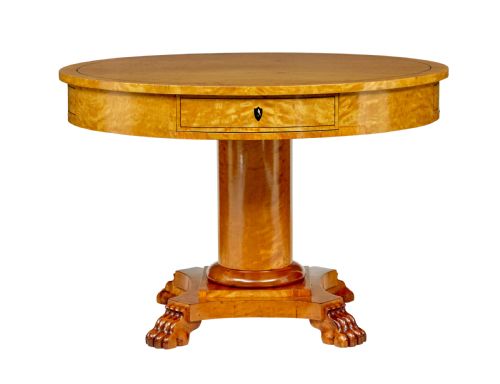
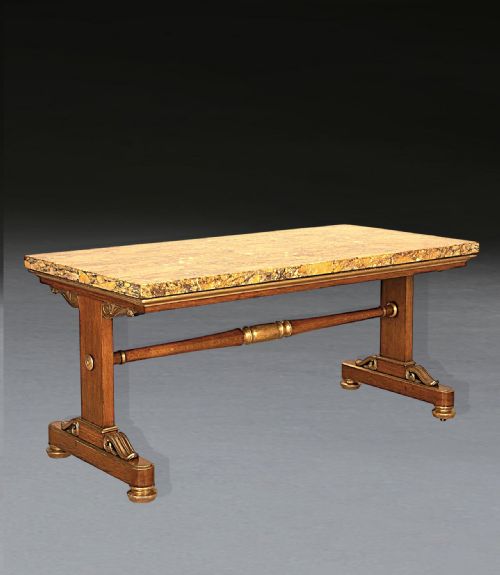
The physical forms include circular, square, oval, and octagonal tops, often supported by turned spindle bases, cross bases, or carved pedestals. These tables serve practical functions as lamp tables, library tables, or hall tables while displaying decorative woodwork across diverse historical revivals.
Materials and Construction
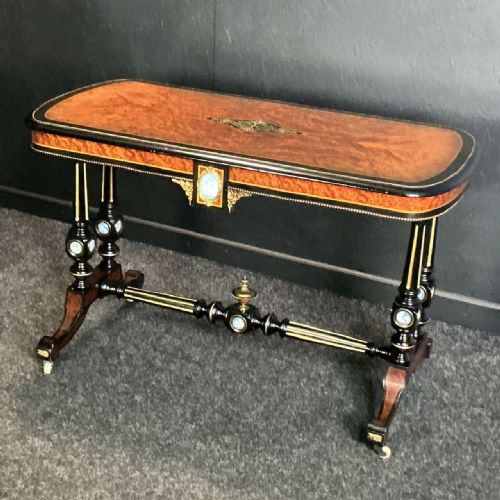
Cabinetmakers constructed these pieces primarily using hardwoods such as mahogany, walnut, burr walnut, and oak, occasionally incorporating exotic timbers like rosewood, coromandel, and satinwood. Surfaces frequently showcase decorative techniques including marquetry, parquetry, and contrasting string inlay, alongside tooled leather insets on library variants.
Structural elements integrate cast brass sabots, turned spindle stretchers, and carved mahogany details. Joinery relies on traditional carpentry methods appropriate to the period, ensuring stability for freestanding placement where all sides remain visible.
Several tables manage to seat up to eight people while still insisting on being called occasional.
Evaluating the Pieces
Quality in these tables depends upon the selection of timber veneers, such as richly figured burr walnut or flame mahogany, and the precision of the inlay work. Finer examples display crisp carving on the legs and bases, alongside balanced proportions that maintain stability across varied top shapes.
The integrity of the original surfaces, including polished wood finishes and authentic leather inserts, distinguishes superior specimens. Consideration also extends to the complexity of the base construction, from simple turned spindles to elaborate carved pedestals and brass mounts.
Holland + Son·Daniel Cottier·Cottier and Co·Gillows·Walker and Hall
The Edwardian Hall Centre Table Glossary
- Drum Table
- A circular library or centre table with a deep frieze containing drawers, resembling the shape of a drum. They typically stand on a central pillar with branching legs.
- Marquetry
- Decorative veneer work forming pictorial or geometric patterns using various woods, shells, or ivory. Craftsmen apply these veneers to the table top to create elaborate visual designs.
- Parquetry
- A geometric mosaic of wood pieces used for decorative floors and table tops. This technique creates repeating patterns like squares and triangles across the surface.
- Sabot
- A metal shoe or sleeve fitted to the foot of a furniture leg for protection and decoration. They appear in cast brass on specific revival and aesthetic movement pieces.
- Spindle
- A slender, turned piece of wood forming part of a base or gallery. Spindles are shaped on a lathe to create symmetrical decorative profiles.
Edwardian Hall Centre Table: Frequently Asked Questions
Where should I place a centre table?
These pieces are designed to stand freely in the middle of a room or an entrance hall rather than pushed against a wall. Their finished appearance on all sides allows them to act as a focal point from any viewing angle.
In practical terms, they function well as lamp tables or occasional surfaces where foot traffic permits walking entirely around the furniture.
How do I identify an Edwardian piece?
Edwardian furniture generally dates from the period surrounding the early twentieth century and often reinterprets earlier Sheraton or Georgian styles. You will frequently find lighter satinwood inlays, mahogany structures, and refined proportions.
Comparing the construction methods, wood patination, and secondary timbers helps separate these later revival pieces from their nineteenth century predecessors.
How do I care for inlaid wood surfaces?
Maintain timber and inlaid sections by keeping them away from direct sunlight and extreme temperature fluctuations that cause wood to dry or crack. Routine dusting with a soft, dry cloth preserves the polished finish.
Avoid using silicone-based polishes, opting instead for traditional wax formulated for antique furniture to nourish the grain.