
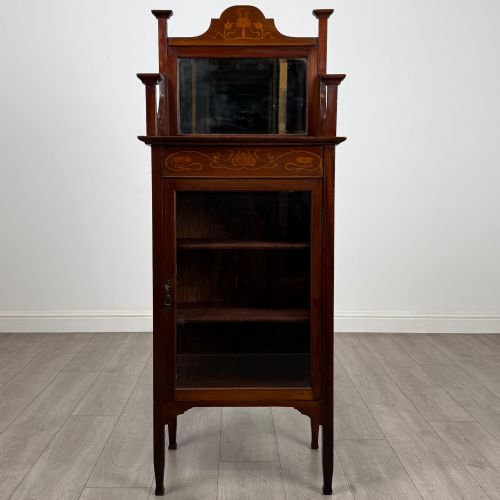
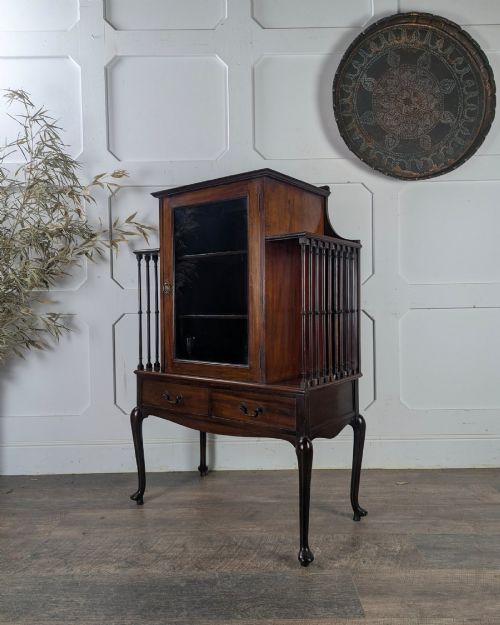
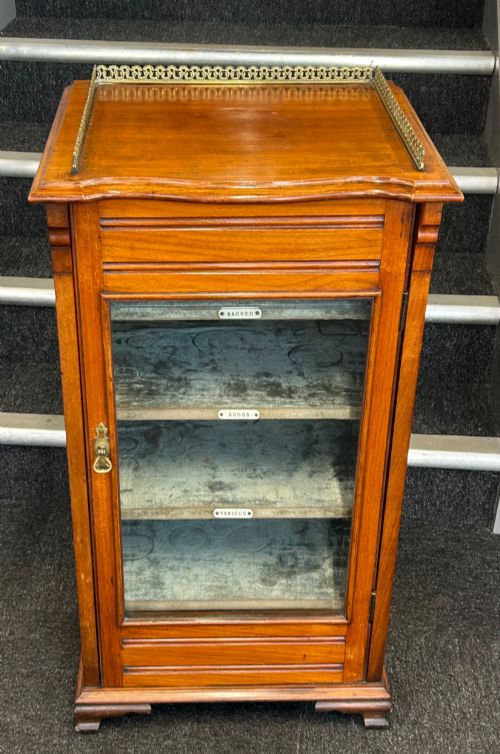
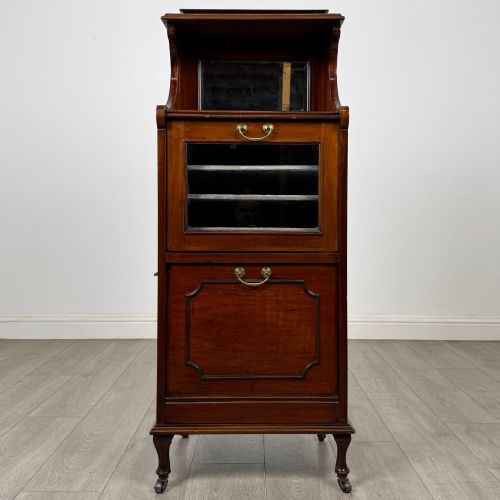


Edwardian Glazed Music Cupboard
These edwardian glazed music cupboard pieces are compact storage units for sheet music that double as fine display furniture for the home.
Edwardian Glazed Music Cupboard
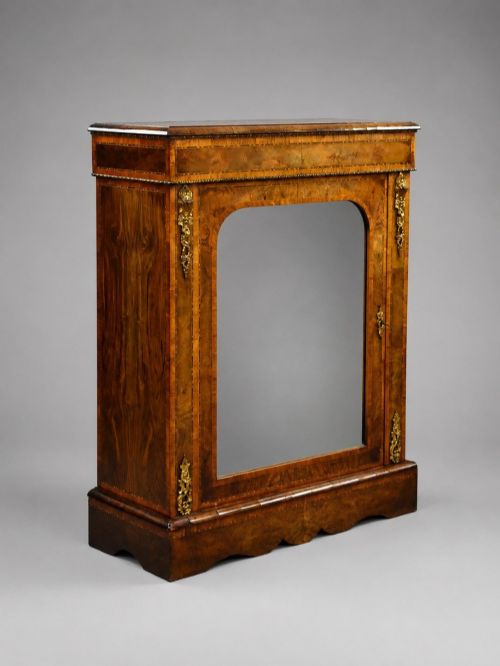
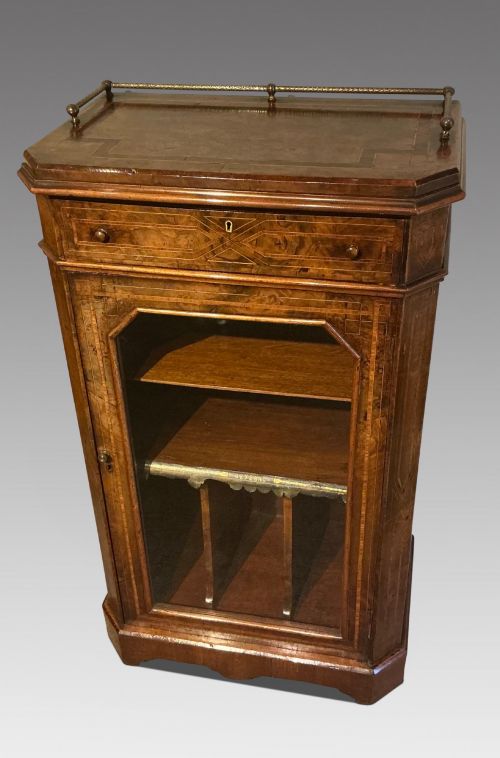
An edwardian glazed music cupboard is a specialised cabinet designed originally to house sheet music, typically featuring glass doors that reveal internal shelving or specialised compartments. The pieces appearing here span from the late Victorian era through the Edwardian period and into the early twentieth century.
Most examples take the form of upright cabinets or pier cabinets, constructed to fit neatly into drawing rooms and parlours while providing practical storage. Alongside dedicated music cabinets, the selection includes related display cabinets and glazed bookcases sharing similar proportions and glazing.
How they were made
Cabinetmakers utilised a variety of dense hardwoods including mahogany, walnut, burr walnut, rosewood, and satinwood, often embellishing surfaces with intricate inlay work. Glass panels fitted into wooden doors allowed the contents to be viewed while protected from dust.
Brass hardware such as handles, hinges, and occasional mounts provided functional accents, while mirror glass occasionally appeared in related cabinet backs. Construction relied on traditional joinery methods suited to housing heavy paper collections and display items.
Materials span mahogany, walnut, burr walnut, rosewood, satinwood, brass, and glass across Edwardian and Victorian periods.
What varies in quality
The distinction between standard items and superior examples lies in the choice of timber figurations, such as burr walnut or figured mahogany, and the precision of the inlaid details. Finer cabinets display meticulous attention to timber selection and more refined proportioning.
Hardware quality and the clarity of the glass panels further differentiate the range, as do hand-painted decorative touches found on select Edwardian pieces.
The Edwardian Glazed Music Cupboard Glossary
- Pier cabinet
- A narrow cabinet designed to stand against the wall space between windows. These pieces often feature glass doors and delicate inlay.
- Inlay
- A technique where contrasting woods or materials are inserted into recessed portions of the base wood to form decorative patterns. This ornament defines much of the Edwardian aesthetic.
- Burr walnut
- A prized wood veneer showing swirling, knotty grain patterns formed from tree growths. It provides a highly decorative surface on fine Victorian and Edwardian furniture.
- Sheet music cabinet
- A specialised storage unit containing shallow drawers or vertical partitions built specifically for organising scores. Many examples feature drop-front drawers or glazed doors.
Edwardian Glazed Music Cupboard: Frequently Asked Questions
What is an edwardian glazed music cupboard used for?
These cabinets served initially to store sheet music near a piano or in a music room, keeping scores organised and protected behind glass doors.
Today, collectors use them to display books, ceramics, or small collections while utilising the enclosed space for general household storage.
How do I date an edwardian music cabinet?
Dating relies on stylistic clues, timber choices, and construction methods characteristic of the period between the late nineteenth century and the early twentieth century.
Edwardian pieces often display lighter timbers and refined inlay, whereas Victorian predecessors tend to utilise heavier dark woods like rosewood and burr walnut.
Can I store things other than music inside?
The internal shelving and compartments adapt readily to holding books, photographs, or delicate ornaments.
The glass doors keep dust away while permitting a clear view of the contents, making the furniture suitable for living rooms and studies.
What woods are typical for these cabinets?
Mahogany and walnut form the primary structure for the vast majority of these pieces, often enhanced by burr walnut or satinwood veneers.
Makers also incorporated rosewood and occasional hardwood inlays to create decorative contrast across the exterior surfaces.