
Edwardian Glass Paraffin Lamp
An edwardian glass paraffin lamp brings practical period illumination into a room through moulded bowls and heavy metal stands.
Edwardian Glass Paraffin Lamp
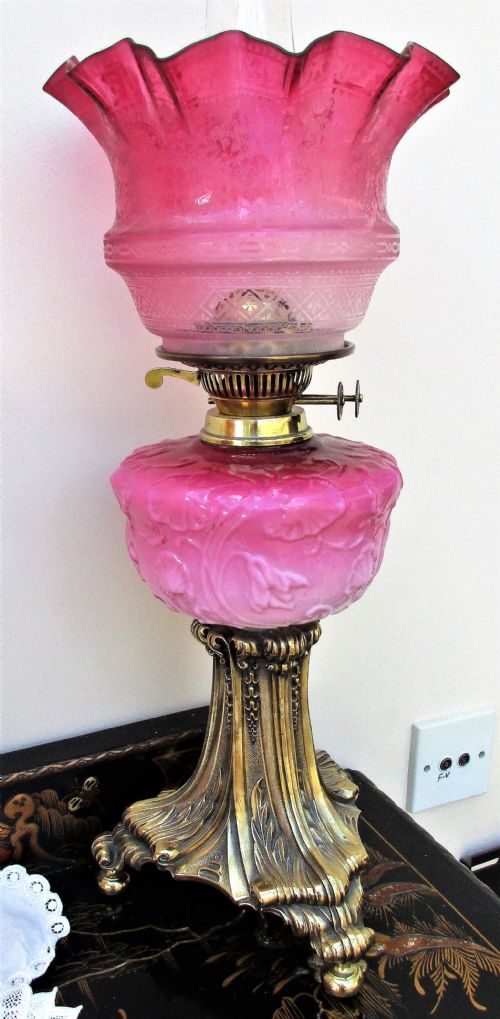
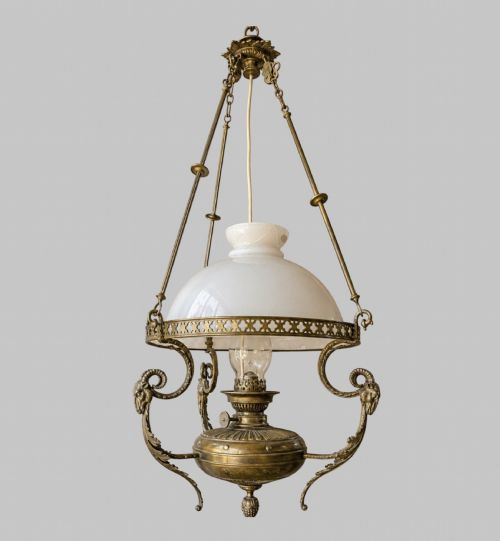
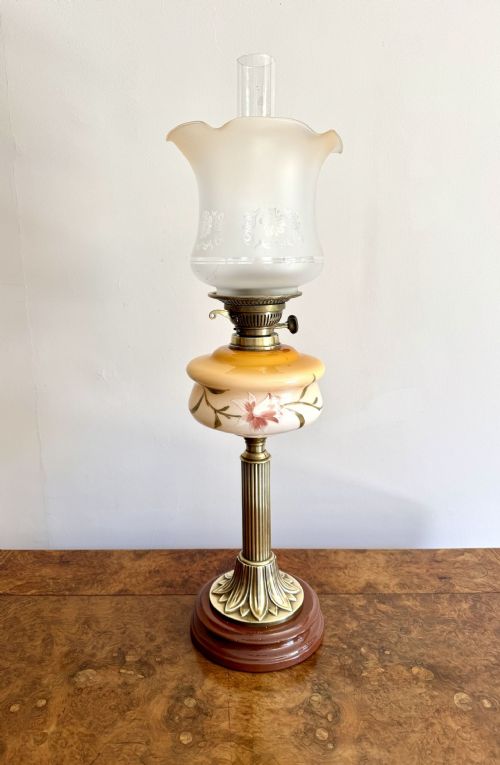
When you search for an edwardian glass paraffin lamp, you encounter table and hanging lighting spanning the late nineteenth and early twentieth centuries, alongside earlier Victorian examples. Most pieces combine a substantial metal base with a glass font and a matching glass shade, designed to burn paraffin cleanly.
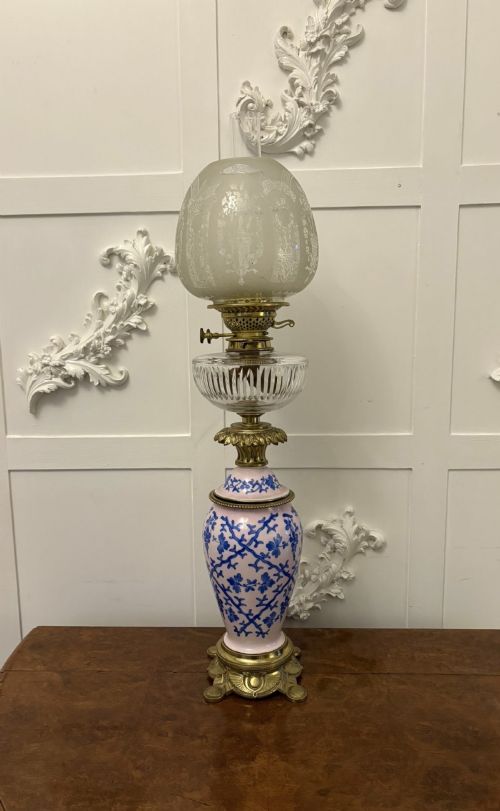
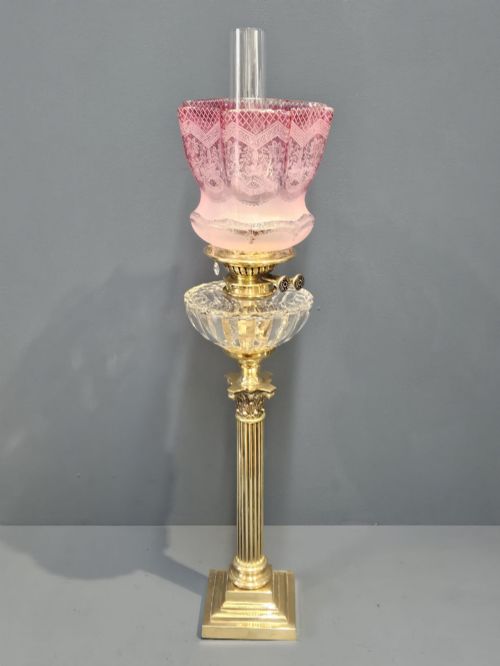
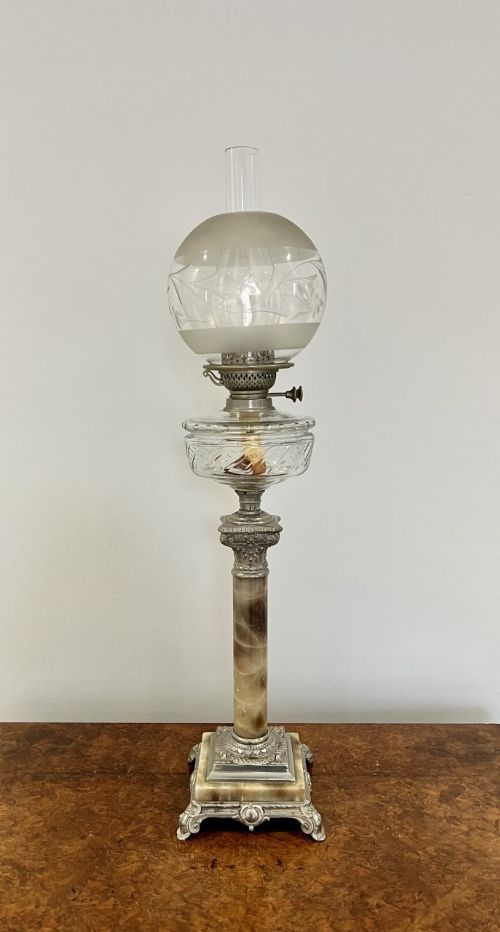
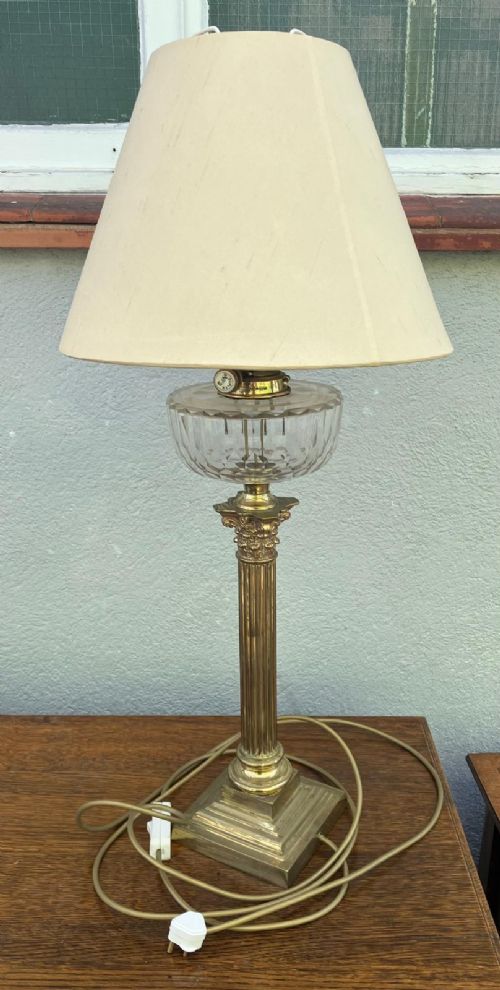
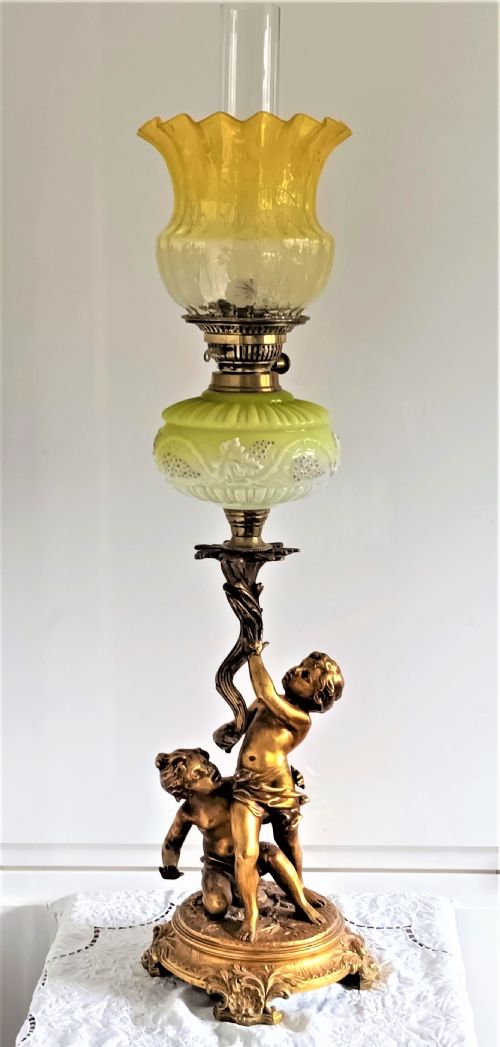
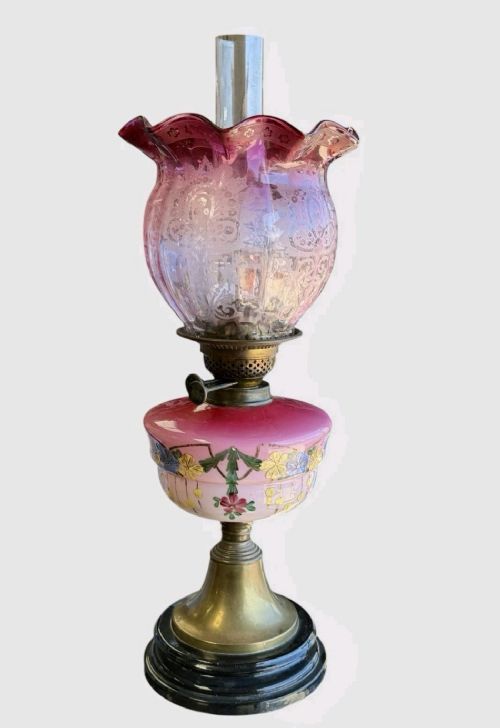
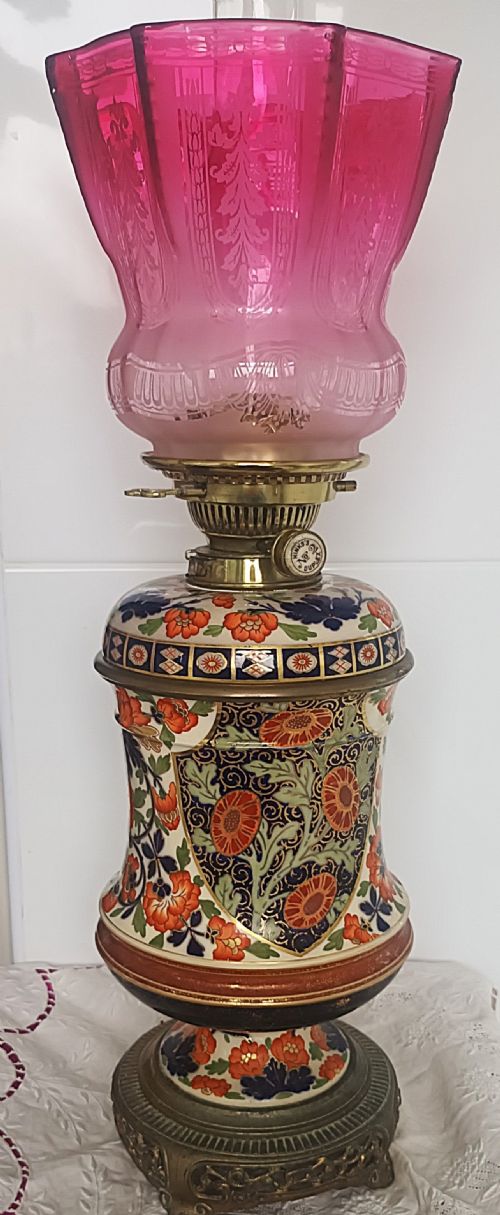
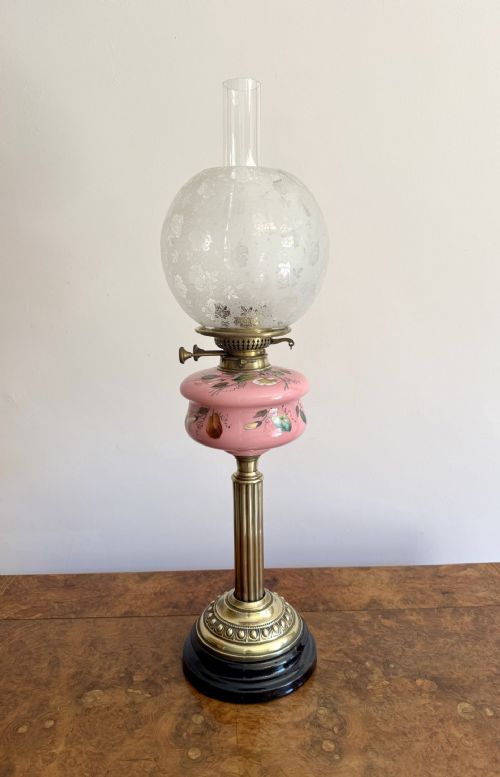
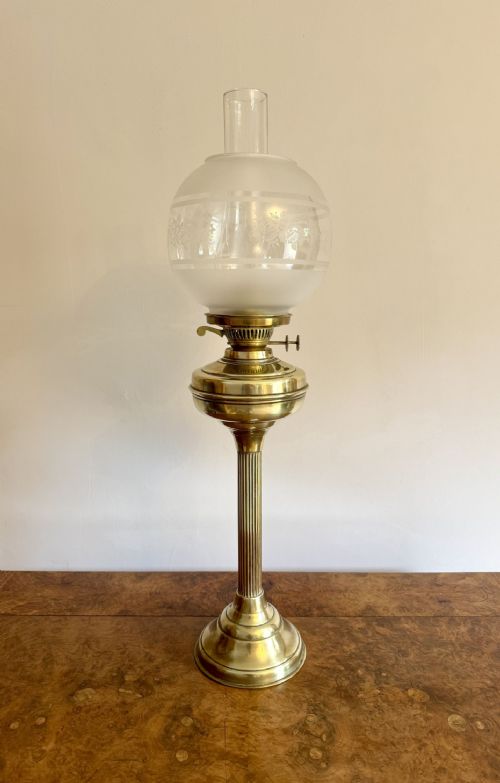
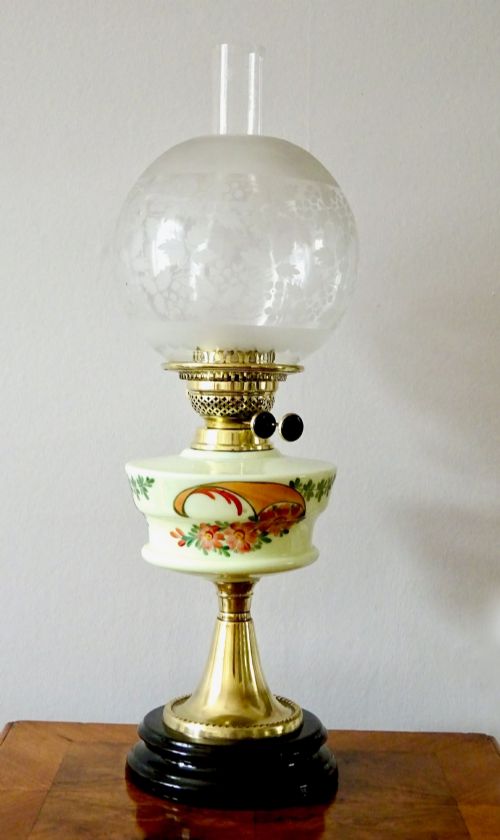
The prevailing style on this page pairs a brass column with coloured or clear glass bowls, sometimes accented with enamel or hand-painted scenes. You will also find ceramic fonts and occasional copper and brass combinations rooted in Arts and Crafts design.
How they were made
Brass and copper form the heavy structural stands, often cast in classical columns or stepped pedestal shapes to provide stability for the fuel reservoir. These metal components are frequently paired with heavy cast brass burners by makers such as Hinks.
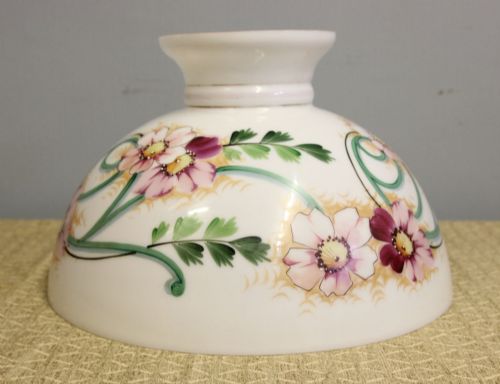
Glass fonts and shades utilise methods like cutting, moulding, and opaline colouring to diffuse light effectively. Cranberry glass, pink glass, and etched clear crystals are common, alongside hand-painted enamel decoration fired onto the glass surface.
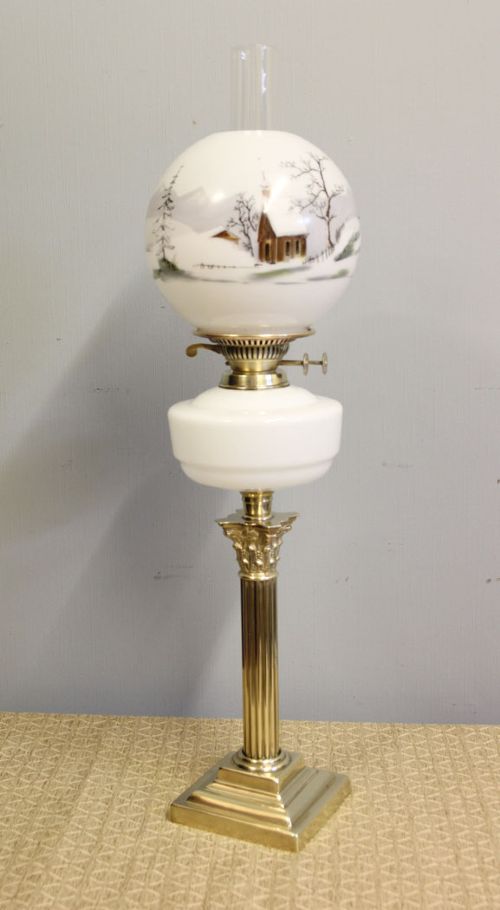
Some winter scene shades feature hand-painted snow landscapes that glow warmly when the paraffin is lit.
What varies in quality
Quality rests heavily on the crispness of the brass casting and the weight of the glass components. Finer examples feature deeply cut crystal fonts or evenly saturated cranberry glass rather than thin, uniform moulding.
The presence of an original matching shade and a signed burner mechanism elevates a piece significantly. Superior proportions, such as a particularly tall Corinthian column or intricate gilding on the font, separate standard domestic lamps from exceptional ones.
Hinks·Taylor Tunnicliff·Messengers·Harrods
The Edwardian Glass Paraffin Lamp Glossary
- Font
- The reservoir that holds the paraffin fuel, usually made from coloured, cut, or opaline glass.
- Corinthian column
- A classical architectural column style frequently utilised for the tall brass stems of these lamps.
- Opaline glass
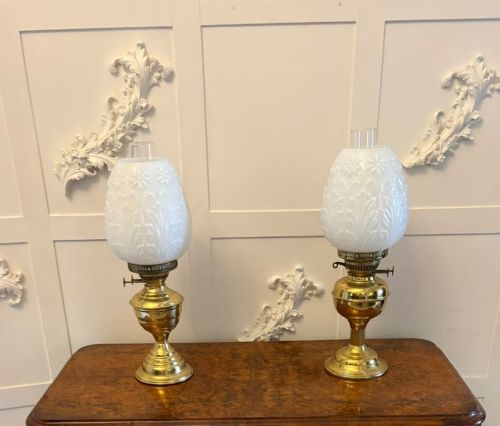
- An opaque or translucent pale glass, often white or pastel, used for shades and fonts to soften the light.
- Burner
- The metal mechanism atop the lamp that regulates the wick and flame, occasionally stamped with maker details like Hinks.
Edwardian Glass Paraffin Lamp: Frequently Asked Questions
How do I operate an old paraffin lamp?
Operating these lamps involves filling the glass font with paraffin and allowing the cotton wick to soak through the metal burner before lighting. You adjust the wick height to control the flame and prevent smoke.
Many surviving pieces have been converted to electricity for modern convenience while retaining their original burners and glass shades. If yours retains its oil-burning setup, ensure the wick is trimmed flat and use clean fuel in a well-ventilated space.
Were these lamps used in every room?
Table lamps were primarily utilised in principal rooms like drawing rooms and dining rooms where better illumination was required for reading or socialising. Smaller or simpler cottage models served utilitarian needs in other parts of the house.
Hanging versions with pulley systems were common in larger hallways or above dining tables to cast light downward over a wide area.
How can I tell Victorian lamps from Edwardian ones?
Victorian examples frequently display ornate Neoclassical Revival details, deep cranberry colouring, and heavy gilded brass, reflecting high Victorian taste. Edwardian pieces often lean towards simpler columnar forms or softer opaline glass.
Arts and Crafts influences also emerge around the turn of the century, favouring hammered copper and simpler geometric lines over elaborate classical castings.