
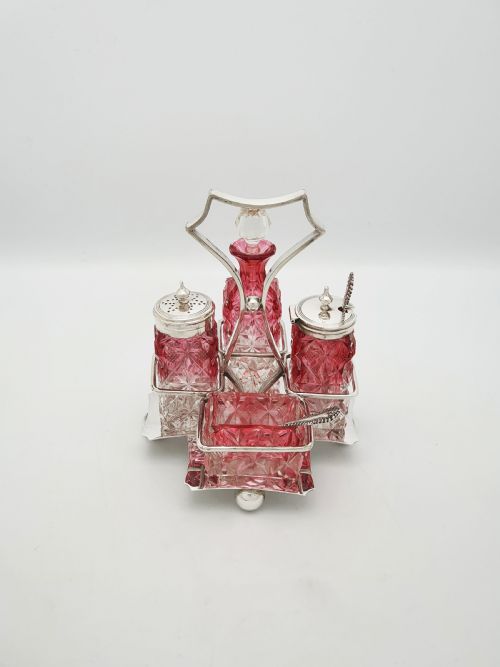
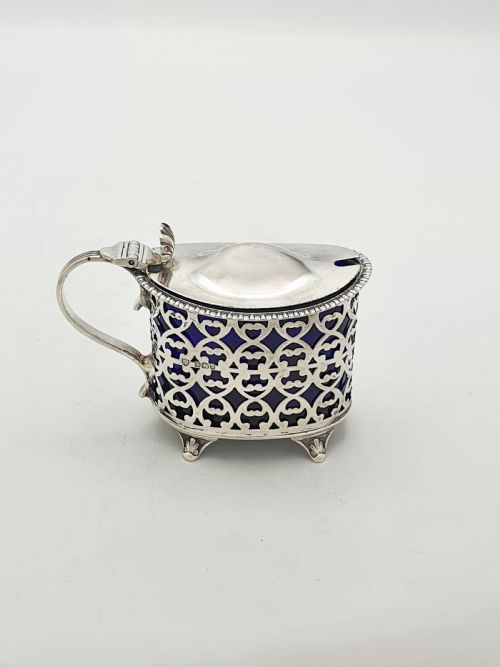


Edwardian Glass Condiment Set
An edwardian glass condiment set brings table service to life with bright cut glass and gleaming mounts.
Edwardian Glass Condiment Set
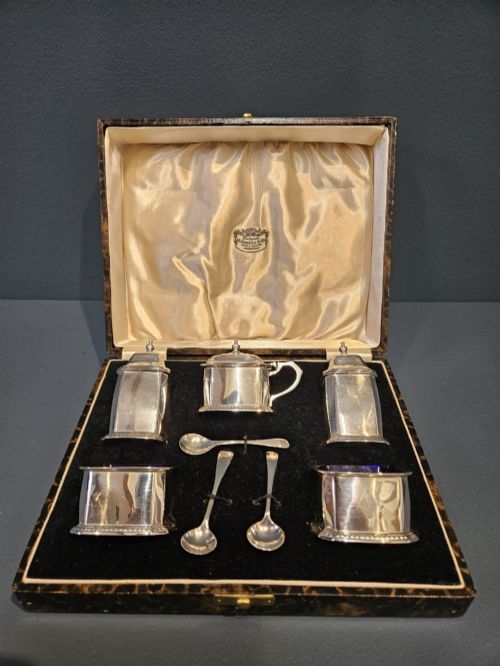
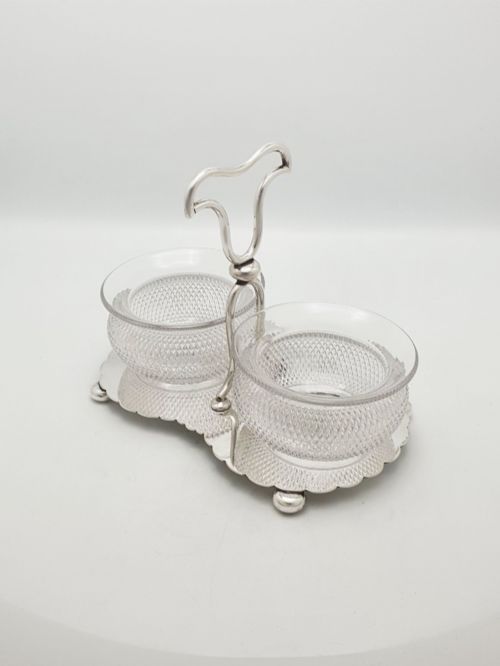
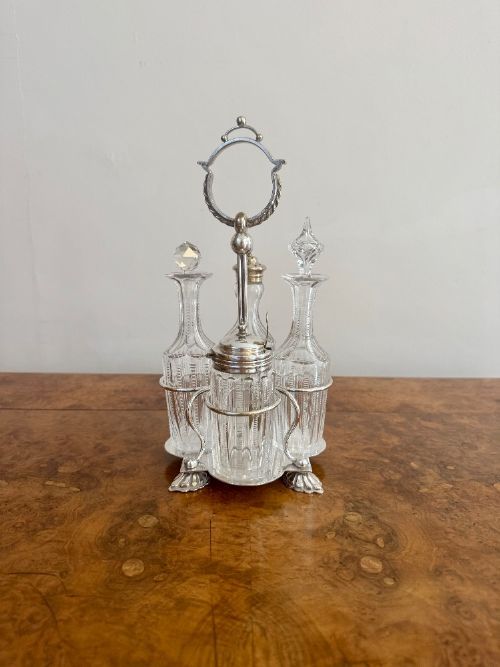
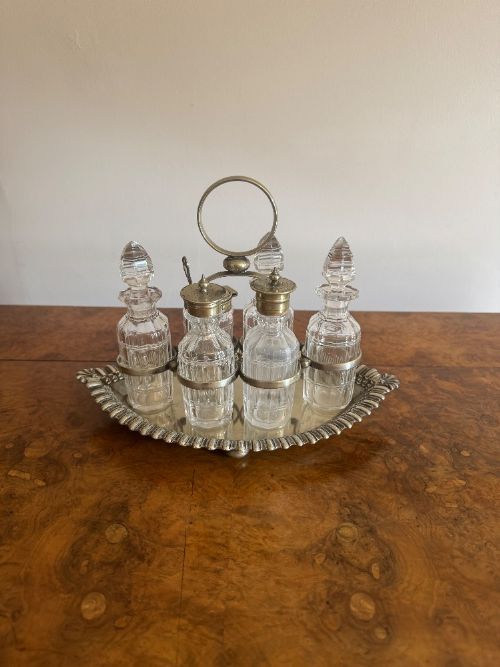
An edwardian glass condiment set brings together table vessels for salt, mustard, and oil, housed within a metal frame or stand. Buyers searching for an edwardian glass condiment set will encounter coordinated groupings designed to hold relishes, sauces, and seasonings for the dining table.
The selections on this page span the Edwardian period alongside Victorian, Art Deco, and later 20th century examples. Forms range from multi-bottle stands and cruet sets to individual mustard pots, preserve dishes, and table salts.
Materials combine cut glass, cranberry glass, and blue glass with silver plate and sterling silver mounts. Sets often include original glass bottles, bowls, and caddies designed for functional dining use.
How they were made
Makers shaped glass through cutting, pressing, and flashing techniques to create clear and cranberry coloured bowls, bottles, and jars. These glass components fit securely into metal stands and frames cast or plated in silver.
Mounts, handles, and frames utilise silver plate or sterling silver, frequently paired with fitted velvet interiors inside presentation cases. Piercing and decorative metalwork embellish the stands, mustard pots, and relish caddies.
Listings feature items spanning the Victorian era through the Edwardian period and into 1930s Art Deco styles.
What varies in quality
The refinement of the cut glass pattern and the clarity of coloured glass elements set finer examples apart from simpler utilitarian pieces. Depth of engraving, precision in silver plating, and the structural integrity of the frame define the tier of craftsmanship.
Completeness alters the character of a set, particularly when matching original bottles, stoppers, and stands survive together. Coordinated multi-bottle arrangements reflect higher ambition in dining table appointments than isolated individual salts.
Goldsmith & Silversmith's·Walker & Hall
The Edwardian Glass Condiment Set Glossary
- Cruet set
- A fitted stand holding glass bottles and jars for condiments such as oil, vinegar, salt, and mustard. These sets sat centrally on the dining table for self-service.
- Cranberry glass
- A rich red-pink glass created by adding gold chloride to the molten batch. It appears frequently in Edwardian tableware and preserve dishes.
- Silver plate
- A layer of silver fused to a base metal core such as copper or Britannia metal. This technique provided the appearance of solid silver at a lower cost.
- Table salt
- An open glass vessel or cellar used for holding loose salt before the invention of the shaker. Dinners used a small spoon or fingers to take salt from the dish.
- Relish caddy
- A specialised frame or basket designed to hold glass jars containing relishes and pickles. They often feature a central carrying handle.
Edwardian Glass Condiment Set: Frequently Asked Questions
What is included in a typical condiment set?
A standard set includes glass bottles or bowls housed in a metal stand designed for the dining table.
Many arrangements combine cruet bottles for liquids alongside open salt cellars and mustard pots with fitted spoons.
How do I clean silver plated condiment stands?
Maintenance requires gentle washing of the glass components in warm soapy water without harsh abrasives.
Silver plated frames benefit from occasional careful polishing with a specialist cloth to preserve the finish.
Can I use these sets for everyday dining?
These pieces function well for serving condiments, sauces, and relishes during modern meals.
Careful handling protects delicate cut glass bowls and older silver plating from accidental knocks.
How do I tell Edwardian sets from Victorian ones?
Edwardian examples tend to display lighter proportions and simplified geometric or floral motifs compared to heavier Victorian designs.
Marks on the metal mounts and stylistic cues in the cut glass help narrow down the period of manufacture.