

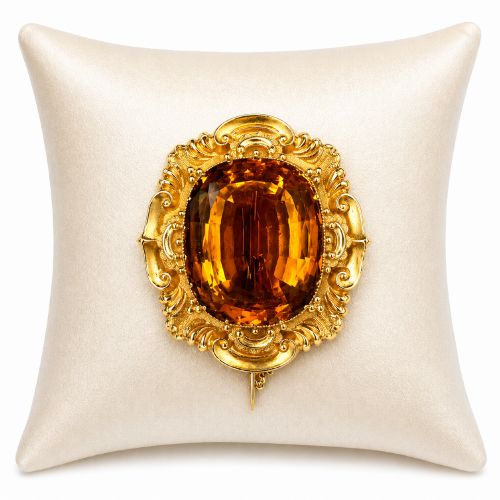
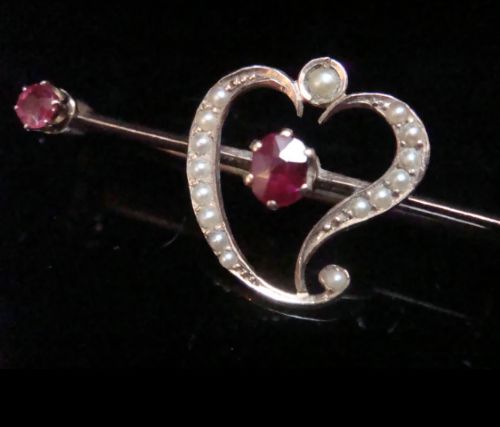


Edwardian Gemstone Pin
An edwardian gemstone pin brings together delicate precious metals and colourful stones designed to fasten garments with elegance.
Edwardian Gemstone Pin
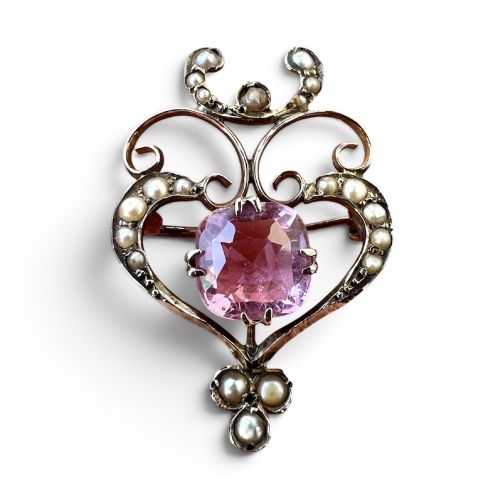
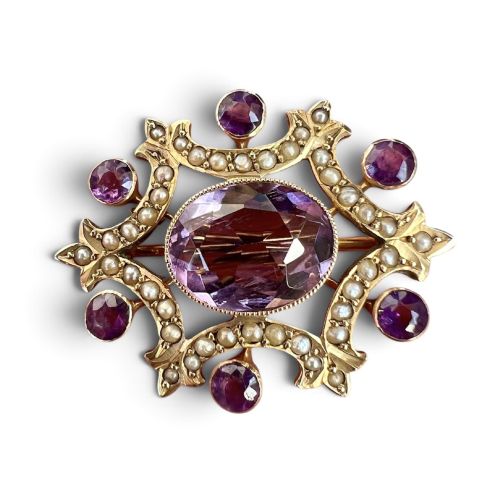
The pieces grouped under the term edwardian gemstone pin primarily encompass brooches, bar brooches, pendant brooches, and stick pins. These ornaments originate predominantly from the Edwardian period, alongside examples spanning Victorian and early twentieth-century eras.
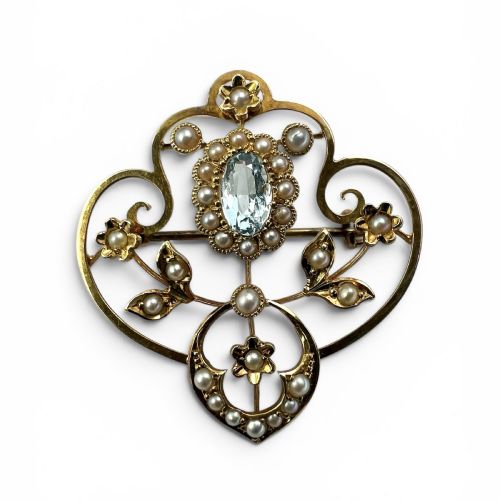
Makers shaped these items into floral motifs, hearts, crescents, target designs, and insect forms. Gold in nine-carat, fifteen-carat, and yellow or rose varieties frequently serves as the foundation, alongside silver, white gold, and platinum.
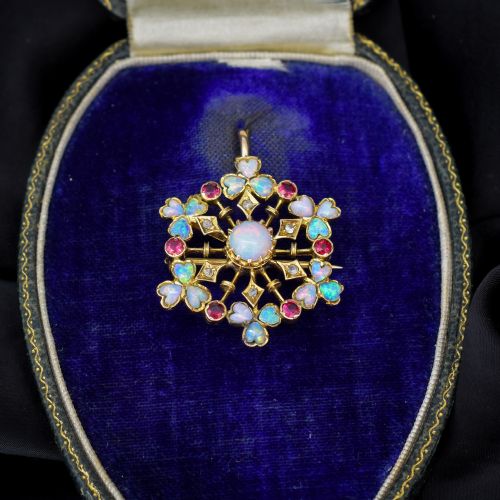
Gemstones such as diamond, ruby, peridot, amethyst, aquamarine, opal, tourmaline, and seed pearl define the visual character of the selection. Many pieces combine multiple stones into clusters or bar configurations to maximise visual contrast.
Materials and construction
Craftsmen utilised various carats of yellow, rose, and white gold, alongside silver and platinum, to fabricate the structural frames and settings. Seed pearls and cut gemstones were meticulously mounted into claw, bezel, or flush settings to secure the stones within intricate wirework and cast mounts.
Artisans combined natural stones like diamonds, rubies, peridots, and amethysts with pearls using traditional bench techniques such as soldering, collet setting, and pave work. These methods allowed complex shapes like butterflies, crescents, and coronets to maintain structural integrity while supporting multiple gems.
Even turtles and insects joined the gemstone menagerie, rendered in diamonds and pearls to perch permanently on a lapel.
Quality factors
Superior examples display precise stone-cutting and well-matched gem sizes, where colour saturation and clarity remain consistent across clusters or bar arrangements. The finesse of the metalwork, including delicate millegrain edges and secure stone settings, distinguishes finer specimens from simpler production.
The Edwardian Gemstone Pin Glossary
- Bar brooch
- A narrow horizontal pin featuring gemstones or decorative motifs mounted along a metal bar. This form was widely produced during the late nineteenth and early twentieth centuries.
- Seed pearl
- A very small, naturally formed or cultured pearl often utilised in clusters or concentric rings around a central gemstone. These pearls provide a soft textural border in period jewellery.
- Millegrain
- A jewellery technique involving a line of small bead-like metal reliefs along the edges of a setting. This decorative border softens the transition between metal and gemstone.
- Crescent brooch
- An ornamental pin shaped into a crescent moon, frequently set with graduated diamonds and coloured gemstones. The curved form enjoyed immense popularity during the Edwardian era.
Edwardian Gemstone Pin: Frequently Asked Questions
How were Edwardian pins worn?
These pieces served primarily to fasten lace collars, lapels, scarves, and shawls on formal and everyday garments. Pins were positioned securely onto fabric using functional pin stems and C-clasps or safety catches.
They also functioned as pendants when fitted with hidden loops or bails, allowing owners to suspend the ornament from a chain.
What stones are common in Edwardian pins?
Diamonds, seed pearls, peridots, amethysts, rubies, and aquamarines appear frequently in the surviving examples. Jewellers often paired clear diamonds with vibrant coloured stones like green peridot or purple amethyst to create striking contrasts.
Opals and tourmalines also featured prominently, providing varied iridescence and rich hues within floral and geometric mounts.
How do you date an Edwardian pin?
Dating relies on stylistic markers such as platinum-topped gold settings, delicate millegrain work, and distinct motifs like garlands, ribbons, and crescent moons. Hallmarks stamped onto the metal pin stems or reverse frames provide assay office marks and date letters where present.
Construction methods, including the evolution from simple C-clasps to early safety mechanisms, further assist in narrowing the timeframe.
How should you care for antique gemstone pins?
Gentle cleaning with a soft cloth helps maintain the metal polish without disturbing fragile seed pearls or soft stones like opals. Avoiding immersion in chemical cleaning solutions protects organic materials and glued gemstone assemblies from deterioration.
Storage in dedicated lined boxes prevents the pin stems from bending and protects delicate cluster settings from impact with other items.