




Edwardian Fold Over Table
When you search for an edwardian fold over table, you uncover adaptable pieces designed to transition seamlessly from a compact console to a functional gaming or tea surface.
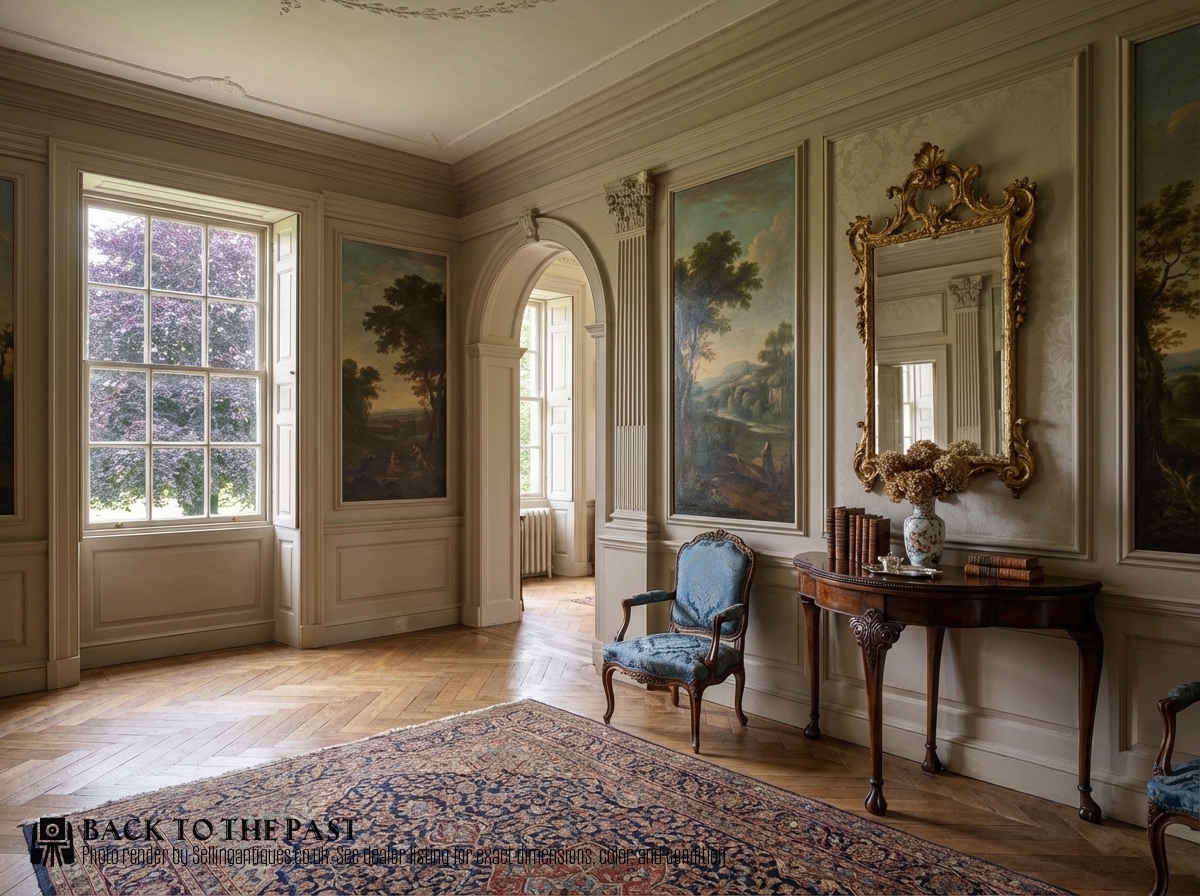
Edwardian Fold Over Table
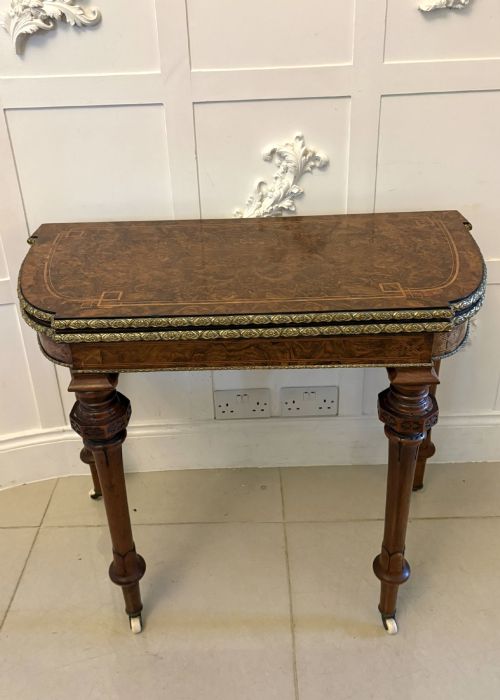
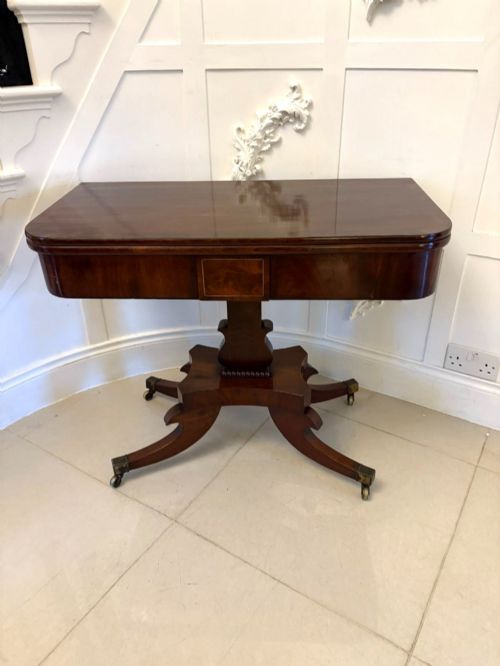
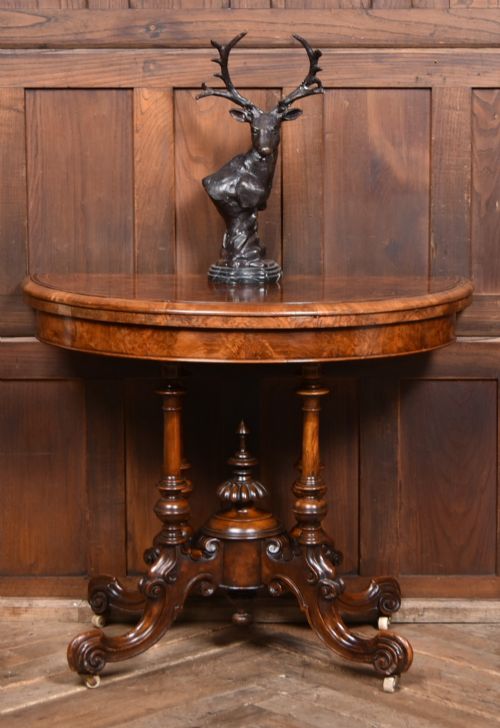
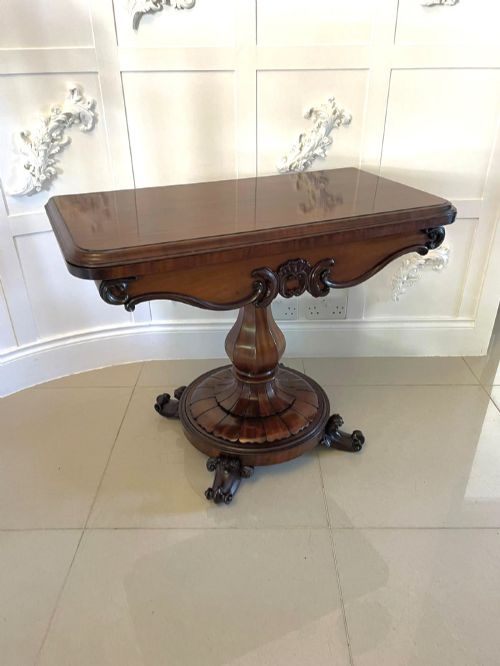
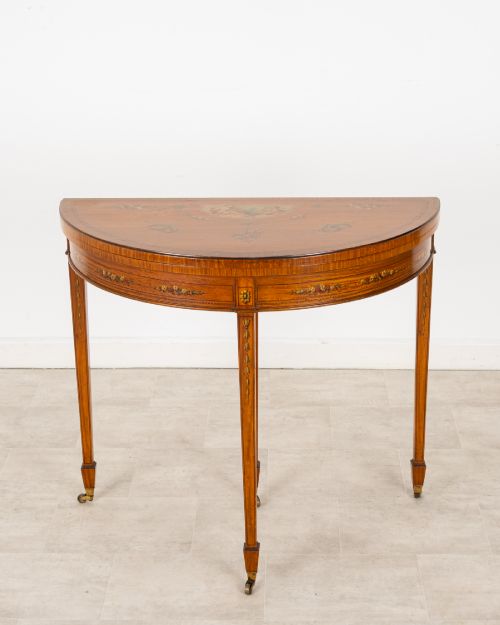
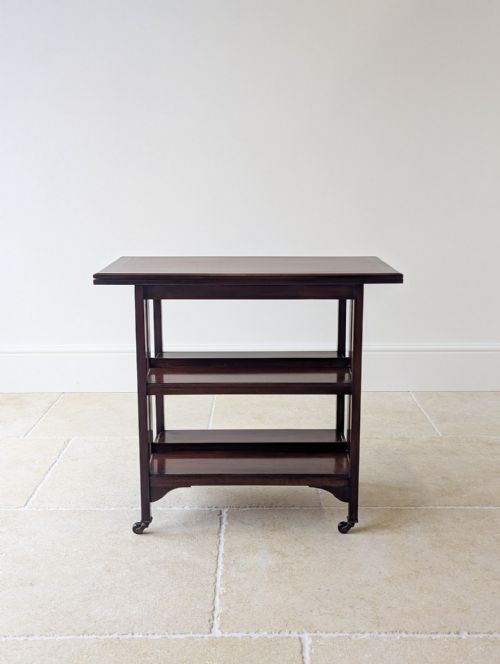
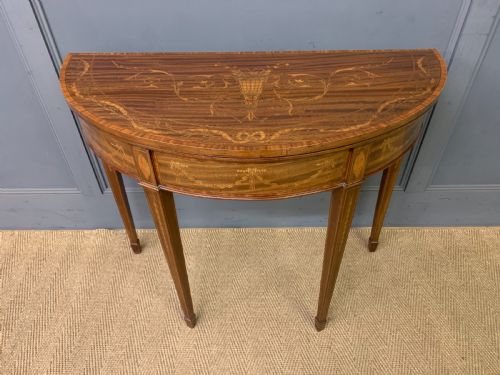
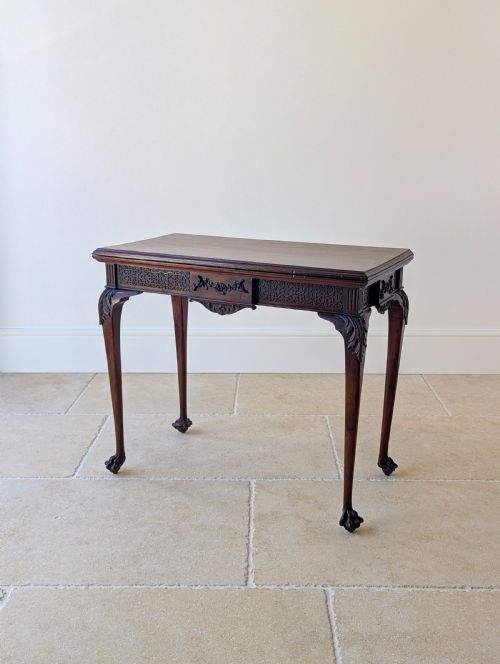
While many examples originate from the Edwardian era, the selection also embraces Victorian, Georgian, and Regency antecedents alongside later 1920s revivals. You will encounter forms ranging from simple mahogany side tables to elaborate inlaid satinwood and burr walnut designs.
Materials and construction
Cabinetmakers utilised solid timbers and veneers of mahogany, walnut, burr walnut, and rosewood, often supported by secondary woods. Surfaces were frequently embellished with satinwood inlay, boxwood stringing, or painted decoration.
Hinged leaves required precise joinery to ensure the top sat level when open, supported by swing legs, gatelegs, or lift-action mechanisms. Ormolu mounts and Tunbridge ware details occasionally appeared on higher-status examples.
Edwardian Fold Over Table Retail Price Guide 2026
Typical asking prices for edwardian fold over table among the pieces listed under this phrase on Sellingantiques today, from the lower quarter to the upper quarter. They describe what is for sale here now, not the wider market.
Listings feature mahogany, walnut, burr walnut, rosewood, and satinwood, spanning the Edwardian, Victorian, and Regency periods.
Distinctions in quality
The standard of an edwardian fold over table depends heavily on the choice of timber figure, such as heavily marked burr walnut or figured mahogany, and the precision of the marquetry. Expert cabinetmaking is evident in how cleanly the hinge mechanism operates and how securely the top locks into position.
Maker attribution and the refinement of revival styles, including Hepplewhite, Sheraton, and Queen Anne influences, further elevate certain examples above standard utility pieces.
Edwards and Roberts·Maple and Co·John Taylor of Edinburgh
The Edwardian Fold Over Table Glossary
- Demi-lune
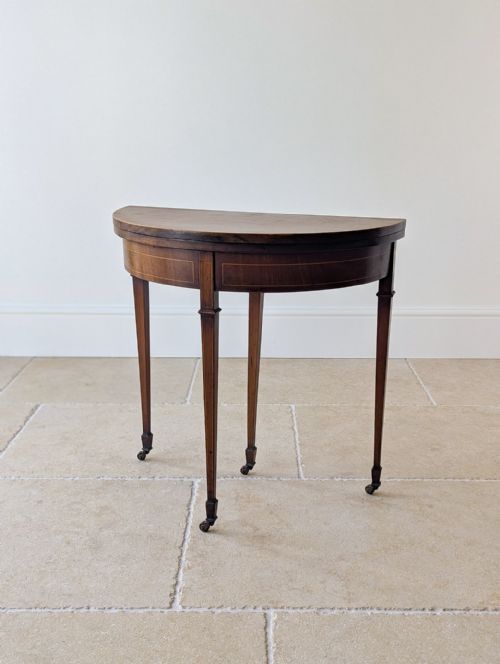
- Having a half-moon shape with a flat back edge designed to sit flush against a wall. These tables often open to form a full circle for card games.
- Fold-over
- A table top constructed with a hinged flap that lifts and rotates or folds outward to double the available surface area. This mechanism conceals a hidden well or lined playing surface underneath.
- Marquetry
- Decorative patterns formed by fitting together thin slices of various coloured woods and veneers into a wooden base. This technique was widely utilised on Edwardian revival pieces.
- Ormolu
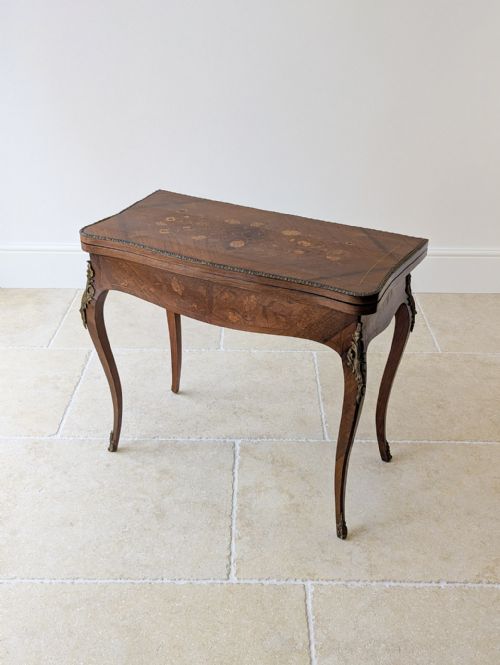
- Gilded bronze mounts applied to furniture as decorative enrichment, typically found on Victorian and continental-influenced designs.
- Satinwood inlay
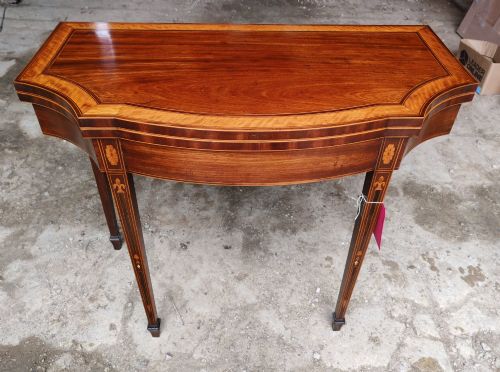
- Contrasting pale yellowish wood inserted into darker primary timbers to create geometric lines or decorative motifs. It is a defining characteristic of Sheraton Revival pieces.
Edwardian Fold Over Table: Frequently Asked Questions
What was an edwardian fold over table used for?
These tables served primarily as compact side or console furniture that could be rapidly expanded for card games, chess, or serving tea when guests arrived. The hinged leaf provided a stable surface for social pastimes in domestic drawing rooms.
Once the evening concluded, the leaf folded back down, allowing the piece to resume its place against the wall without occupying valuable floor space.
How do I tell an Edwardian table from a Georgian one?
Edwardian versions often display machine-sawn veneers, lighter construction timbers, and specific revival styles like Sheraton or Hepplewhite influences dating around nineteen hundred. They may also feature boxwood stringing and satinwood inlay characteristic of early twentieth-century production.
Original Georgian pieces exhibit deeper patination, heavier solid timber construction, and hand-cut joinery consistent with the eighteenth century.
Do these tables have storage inside?
Many examples incorporate a shallow concealed well beneath the hinged top, specifically designed to store playing cards, counters, or dice. Some variations include integrated drawers beneath the frieze.
Specialist writing versions feature lift-action compartments tailored for stationery and writing implements.
Where should I place this table in my home?
A demi-lune shape fits neatly against hallway walls or in narrow reception spaces when closed. Opening the top requires clearance around the piece, making sitting rooms or studies ideal locations.
They function effectively as occasional lamp tables when folded.