
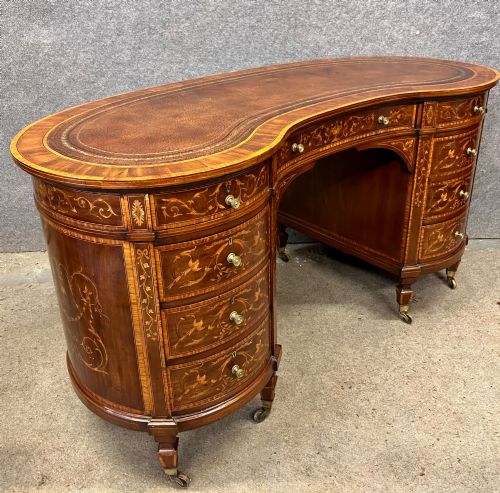


Edwardian Floral Inlaid Table
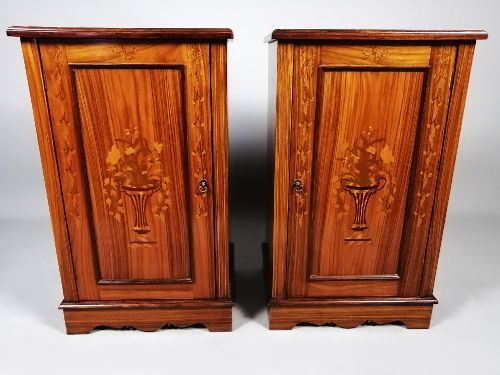
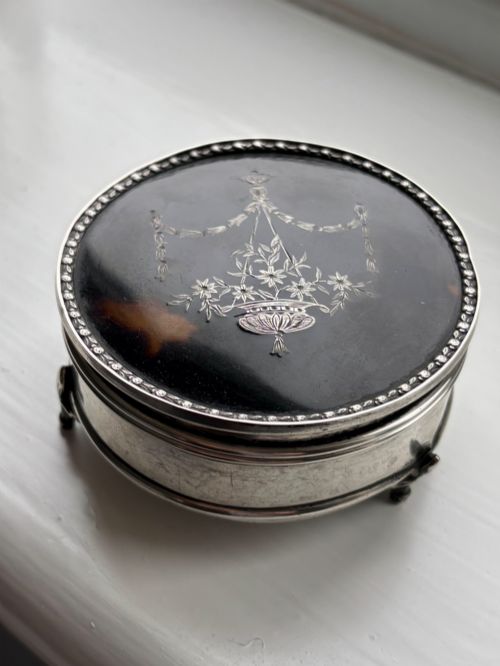
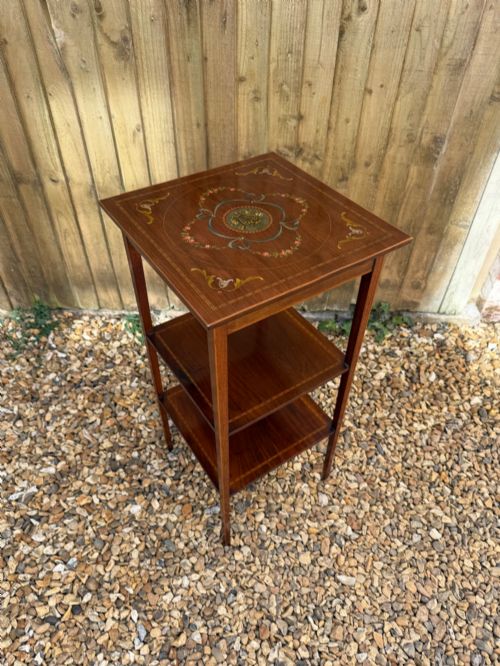
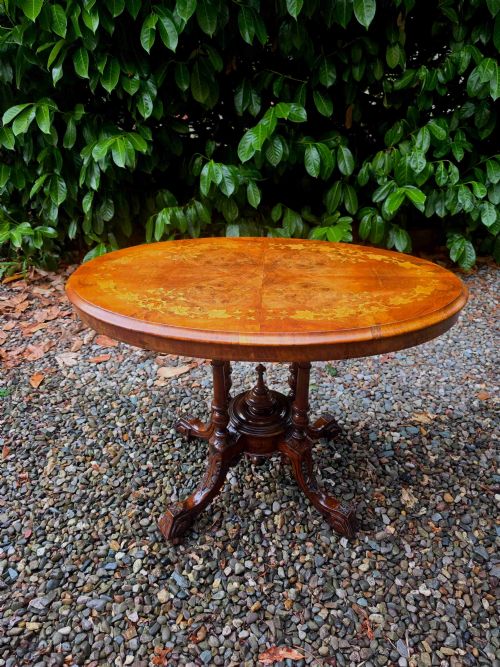
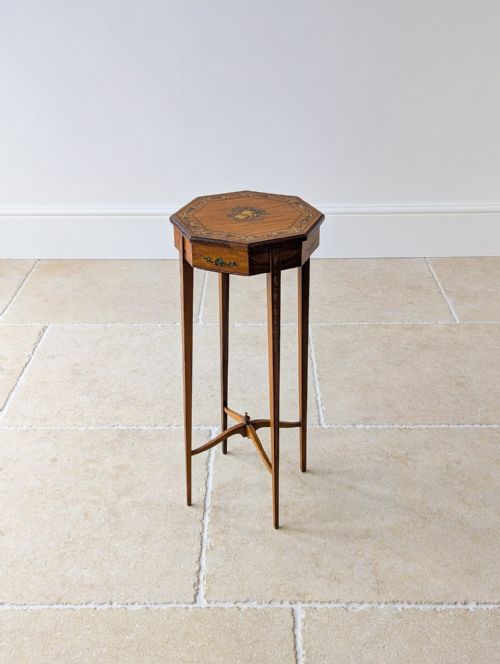
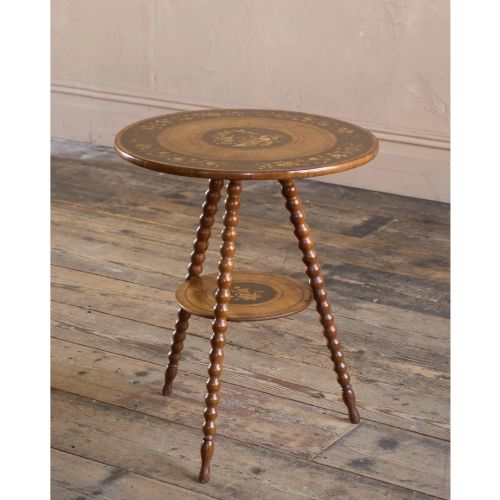
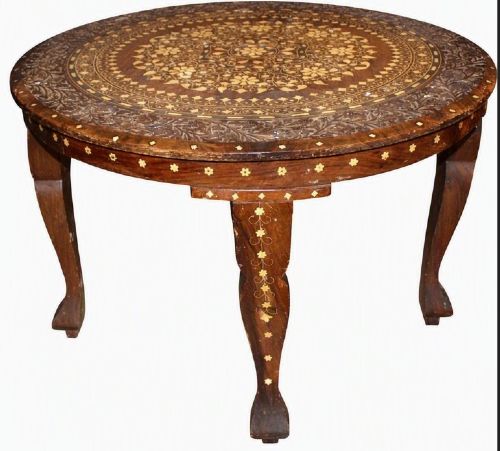
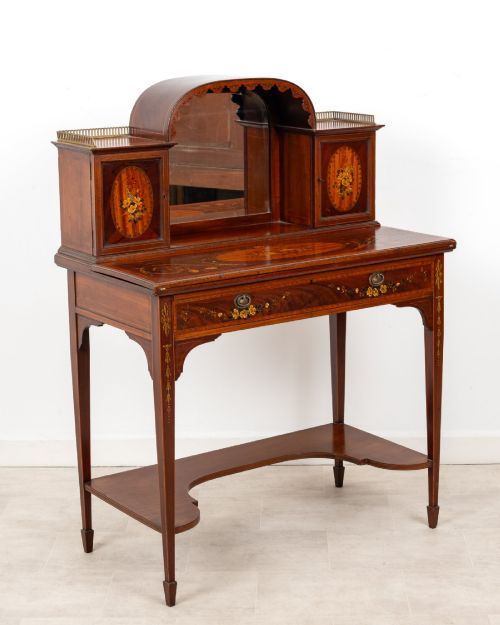
An edwardian floral inlaid table combines delicate wood marquetry with slender timber frames, offering a refined surface for a lamp or books.
Edwardian Floral Inlaid Table
An edwardian floral inlaid table is typically found in forms such as occasional tables, side tables, centre tables, and nests of tables. These pieces originate primarily from the Edwardian period and the late nineteenth century, drawing heavily on Sheraton Revival aesthetics.
The construction relies heavily on lighter timbers like satinwood and mahogany, frequently accented with contrasting woods for floral motifs. Most examples serve functional roles in sitting rooms, functioning as display surfaces or small writing desks.
Materials and Technique
Cabinet makers utilised a foundation of mahogany, walnut, or rosewood, applying fine veneers of satinwood and boxwood to create contrasting borders. Marquetry inlay techniques involved cutting floral designs from thin sheets of dyed and natural woods, then fitting them precisely into carved recesses within the primary surface.
Details were often enhanced through hand painting directly onto the wood or by integrating brass mounts and glass panels. Joinery techniques from this era prioritized stability while maintaining slender legs and delicate tiers.
Listings feature marquetry inlay, brass hardware, and painted details across Edwardian, Victorian, and late nineteenth-century periods.
Design and Execution
The distinction between standard production and superior pieces lies in the crispness of the marquetry cutting and the choice of timbers. Finer examples feature intricate floral shading achieved by scorching veneer edges in hot sand before assembly, creating a sense of depth.
Construction details such as the integration of secondary woods inside drawers, the thickness of the top veneer, and the symmetry of the hand painted embellishments dictate the overall standard of the piece.
Ollivant and Botsford·Liberty and Co
The Edwardian Floral Inlaid Table Glossary
- Marquetry
- Decorative veneer work forming pictures or patterns, composed of thin pieces of wood applied to a structural carcass. It differs from parquetry through its use of pictorial and floral motifs rather than geometric tiles.
- Satinwood
- A durable, lustrous yellow-brown timber imported from the tropics, utilised extensively for contrasting veneers and stringing during the Sheraton Revival period.
- Boxwood
- A dense, pale yellow wood employed for fine stringing lines and delicate stem details within floral marquetry panels.
- Étagere
- A piece of furniture consisting of open shelves for displaying small objects, frequently constructed with multiple tiers and inlaid surfaces.
- Sheraton Revival
- A late nineteenth and early twentieth century style emulating the neoclassical furniture designs of George Sheraton, characterised by painted decoration and light mahogany frames.
Edwardian Floral Inlaid Table: Frequently Asked Questions
How do I clean an inlaid wooden table?
Dust gently with a soft, dry cloth and avoid using liquid polishes or silicone sprays that can penetrate hairline gaps in the veneer.
Maintain a stable room humidity to prevent the thin marquetry elements from lifting or shrinking away from the core timber.
Are these tables sturdy enough for daily use?
Most examples function well as lamp tables or display surfaces, but their slender legs are not designed to support heavy weights or sudden impacts.
Place them away from direct heat sources and strong sunlight to protect the fragile dyed veneers and delicate hand painted details.
What is the difference between marquetry and parquetry?
Marquetry utilises varied wood veneers to create pictorial compositions such as floral sprays, ribbons, and urns.
Parquetry arranges uniform geometric shapes like cubes or chequers to form repeating patterns across the surface.
How can I tell an Edwardian piece from a Victorian one?
Edwardian tables generally display lighter satinwood surrounds, brighter floral motifs, and slender proportions influenced by the Sheraton Revival.
Victorian counterparts tend to utilise darker burr walnut or rosewood timbers with heavier frames and denser, more complex inlay schemes.