
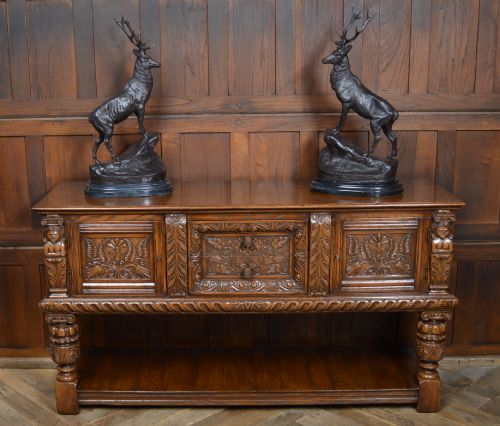
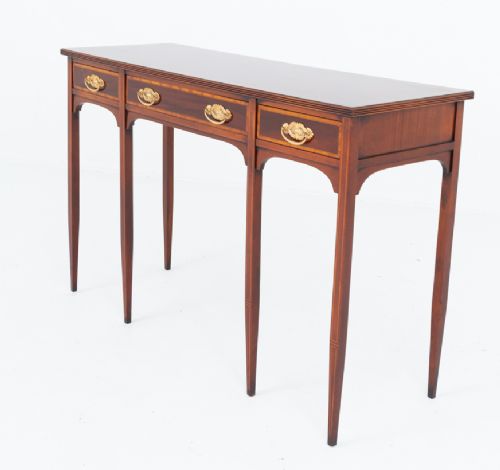
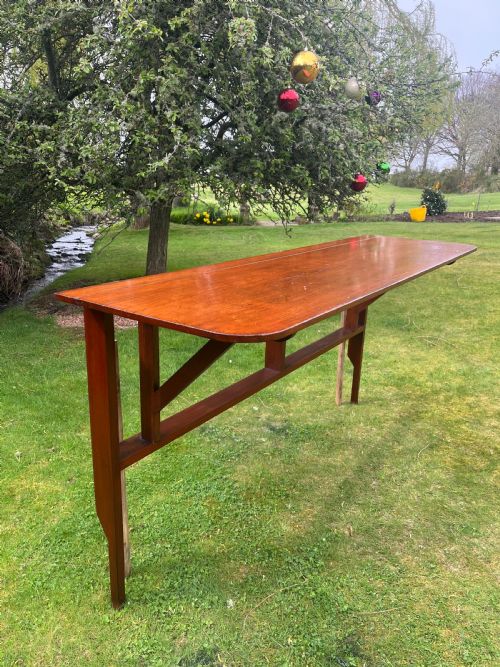

Edwardian Hallway Server Table
These edwardian hallway server table pieces bring practical surface space and period timber character to entranceways.
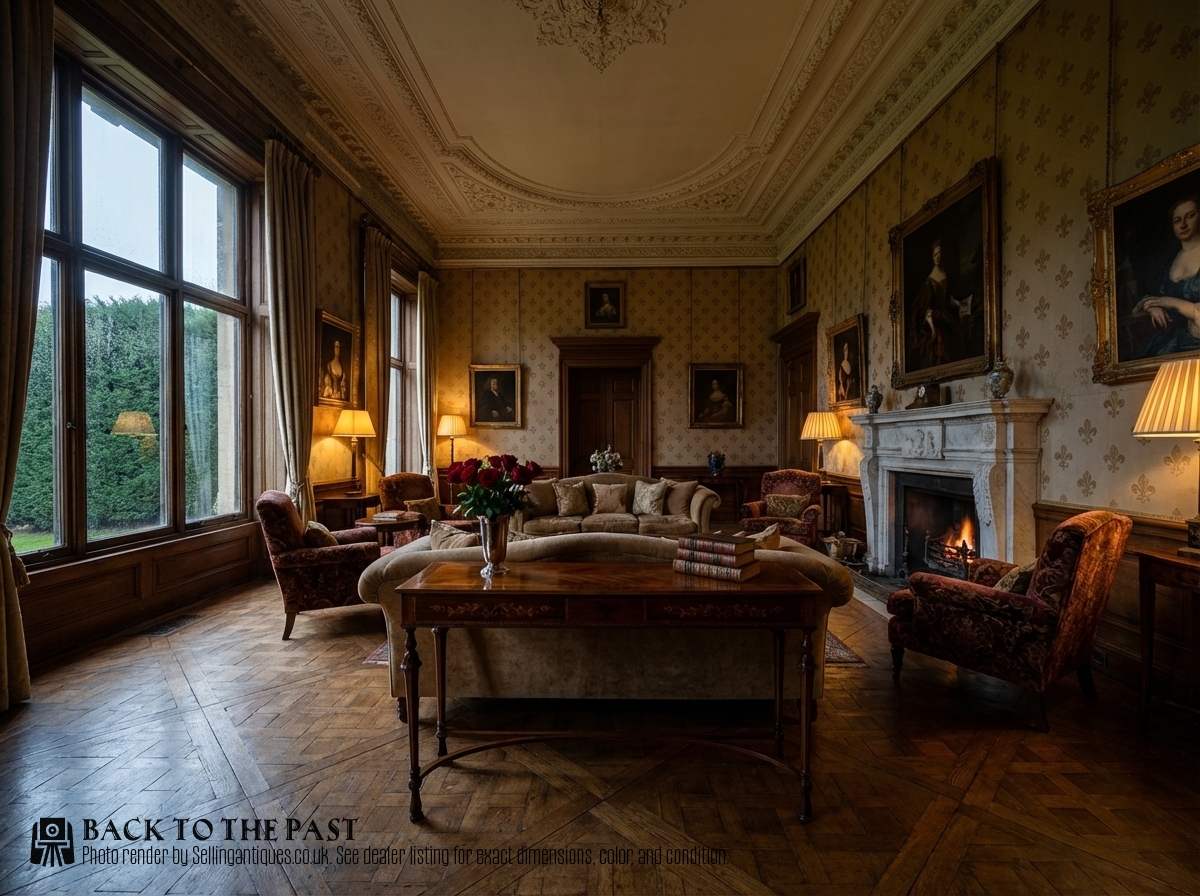
Edwardian Hallway Server Table
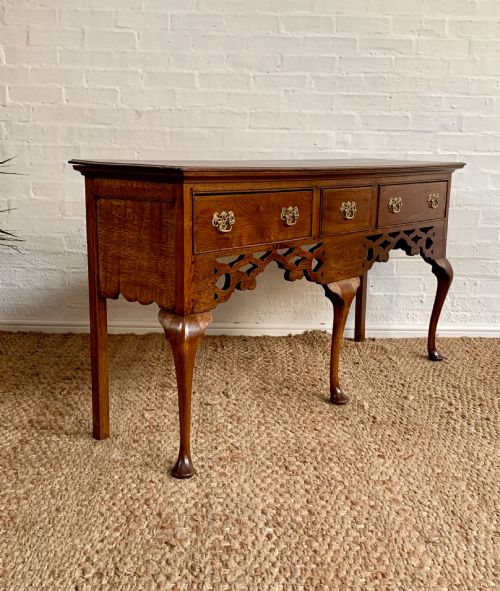
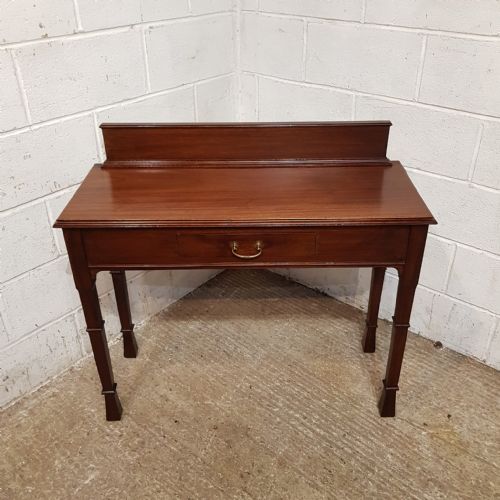
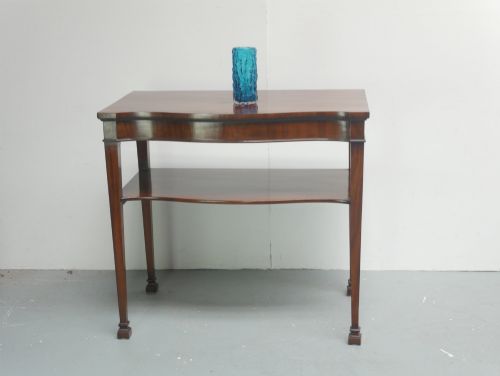
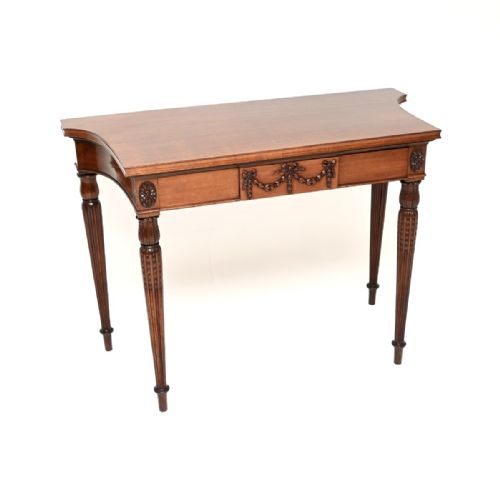
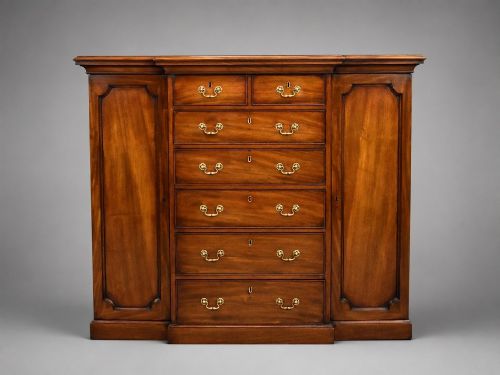
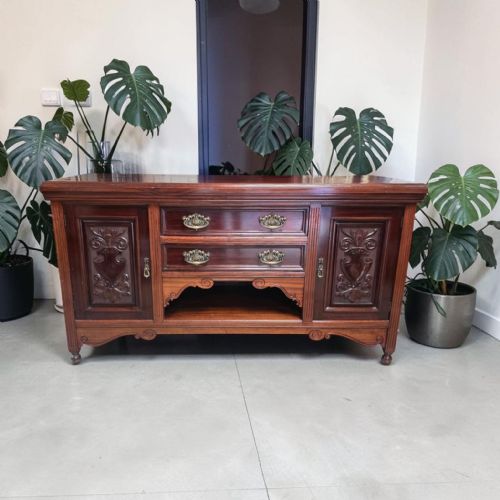
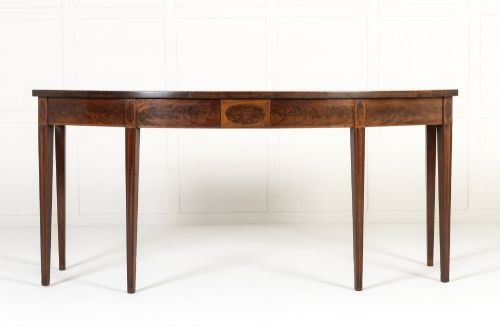
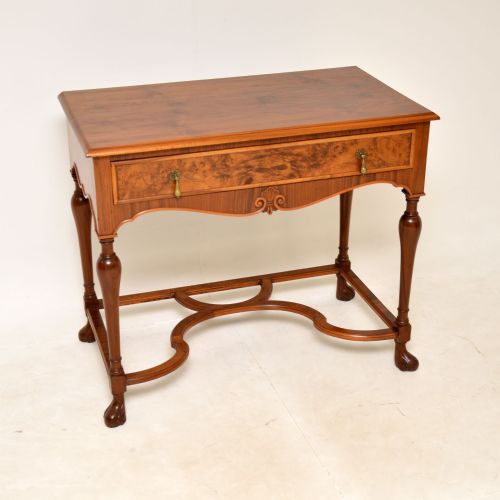
When searching for an edwardian hallway server table, buyers encounter a mix of forms originating primarily from the Edwardian period alongside Victorian and early twentieth-century examples. The selection includes console tables, side tables, serving tables, and dresser bases utilised for storage and display in corridors.
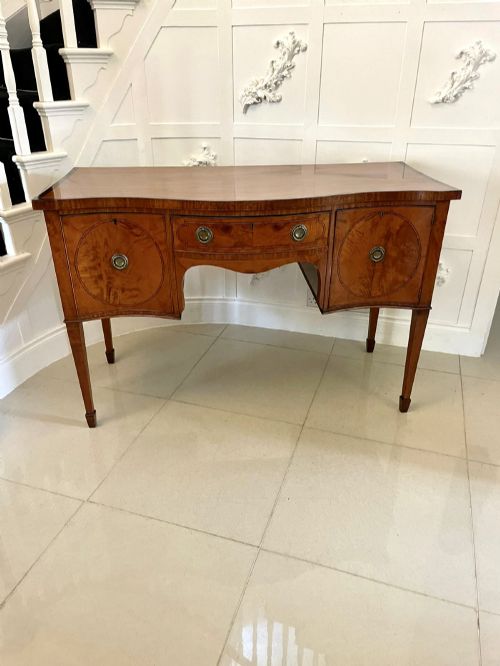
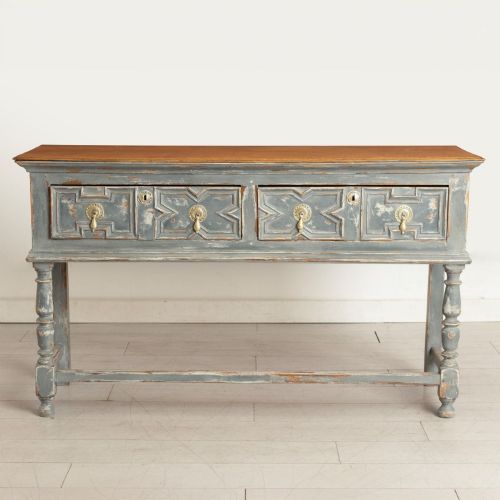
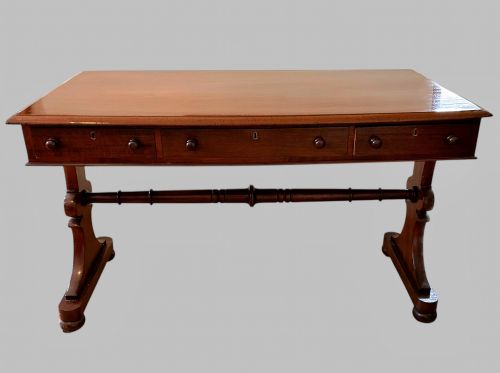
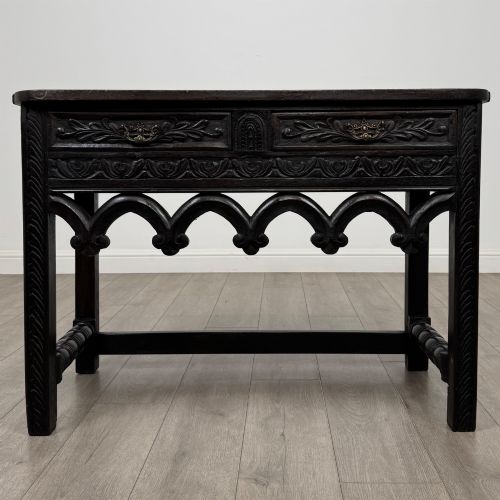
The pieces appearing on this page span styles such as Sheraton Revival, Gothic Revival, Arts and Crafts, and Edwardian Neoclassical Revival. Mahogany and oak dominate the forms, frequently paired with satinwood inlay, wood inlay, and brass hardware.
Buyers are most likely to meet mahogany or oak pieces featuring drawers and undertier shelves, bridging the gap between domestic utility and period design. These items serve narrow entranceways by offering shallow footprints combined with functional surface areas.
Construction and materials
Timbers such as mahogany and oak provide the structural foundation for these pieces, selected for density and grain pattern. Cabinetmakers employed solid construction alongside veneered surfaces to achieve curved fronts and geometric layouts.
Decorative elements involve contrasting satinwood inlay and detailed wood inlay applied to drawer fronts and tabletops. Brass handles, backplates, and campaign details finish the joinery on select forms.
Current listings feature pieces spanning the nineteenth century through the 1930s, constructed predominantly in mahogany and oak.
Markers of quality
The standard of timber selection and inlay precision distinguishes finer examples from simpler vernacular pieces. Crispness in carved details, such as Gothic motifs or neoclassical swags, indicates skilled workshop execution.
Structural integrity relies on sound joinery in the drawers and underframes, ensuring longevity in high-traffic hallway settings.
M. D. Miller & Sons
The Edwardian Hallway Server Table Glossary
- Console Table
- A table designed to stand against a wall, frequently supported by brackets or legs at the front. These units suit narrow hallways where floor space is limited.
- Dresser Base
- A low sideboard or serving table featuring cupboards or drawers beneath a flat top. They provide substantial storage capacity for domestic items.
- Server
- A narrow table or sideboard utilised for serving food or holding household items. Their shallow profiles integrate easily into corridors and living rooms.
- Pot Board
- An open lower shelf fitted between the legs of a dresser base or table. Historically, this shelf held pots and earthenware vessels.
- Inlay
- A technique where contrasting woods or materials are fitted into depressions within a solid timber surface to create decorative patterns.
Edwardian Hallway Server Table: Frequently Asked Questions
What is an edwardian hallway server table used for?
These tables provide a practical surface for post, keys, and decorative items while occupying minimal floor space in narrow corridors.
Their drawer storage helps keep entranceways tidy by concealing small household accessories.
How do I style an edwardian hallway server table?
Pair the table with a wall mirror or a small lamp to create a welcoming focal point near the front door.
Keep the surface uncluttered to highlight the mahogany or oak grain and any inlaid details.
Are these tables suitable for small hallways?
Many variants feature shallow console or side table depths specifically designed to fit compact domestic spaces.
Their slender legs and narrow profiles prevent corridors from feeling obstructed.
How do I distinguish Edwardian pieces from Victorian ones?
Edwardian examples often display lighter satinwood inlays and refined neoclassical revival motifs compared to heavier Victorian carving.
Timbers also shift subtly, with Edwardian pieces frequently favouring brighter mahogany and polished oak.