




Edwardian Fireside Scuttle
An edwardian fireside scuttle brings practical metalwork and polished timber directly to the hearth, offering a purposeful way to store fuel.
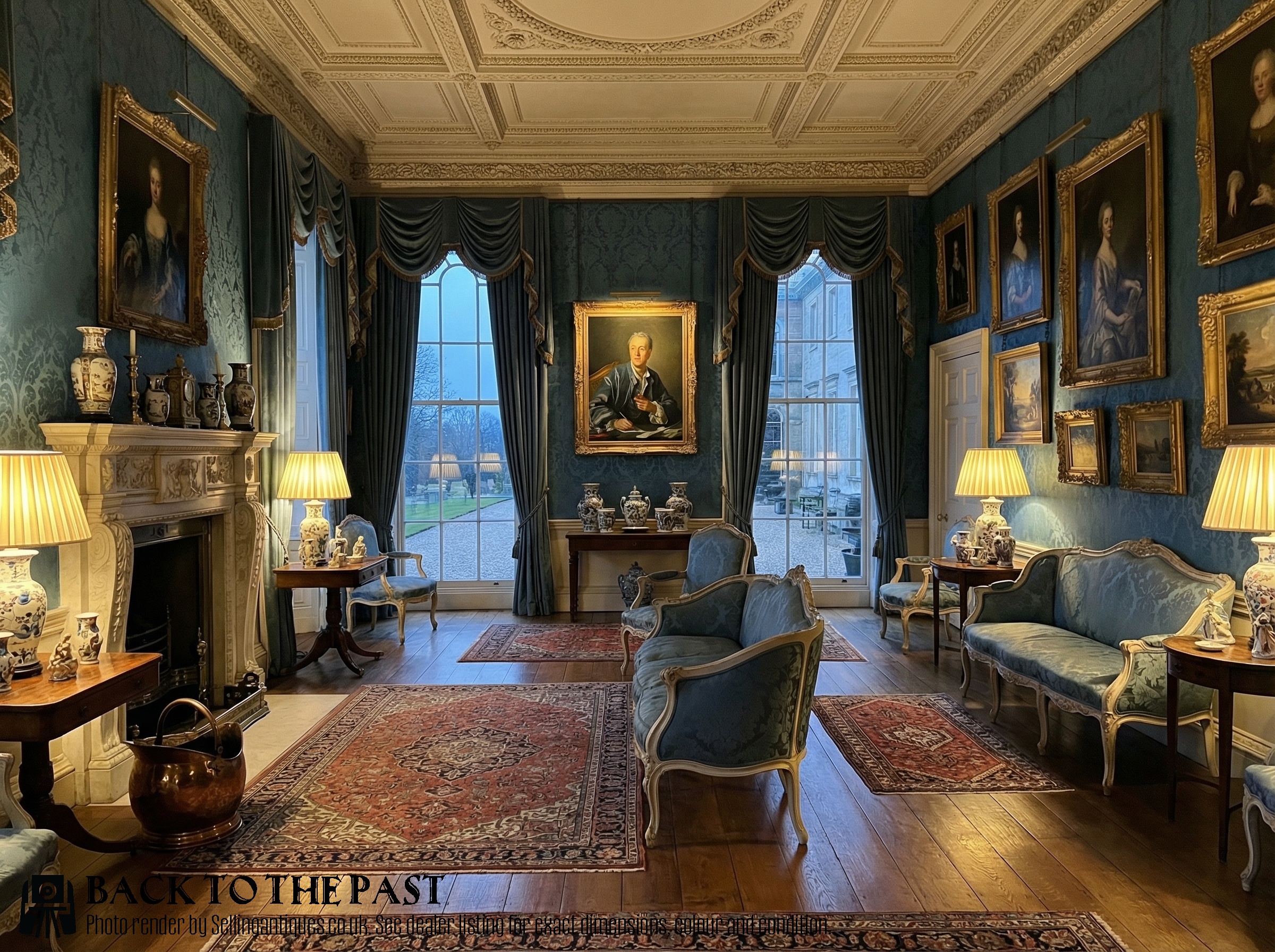
Edwardian Fireside Scuttle
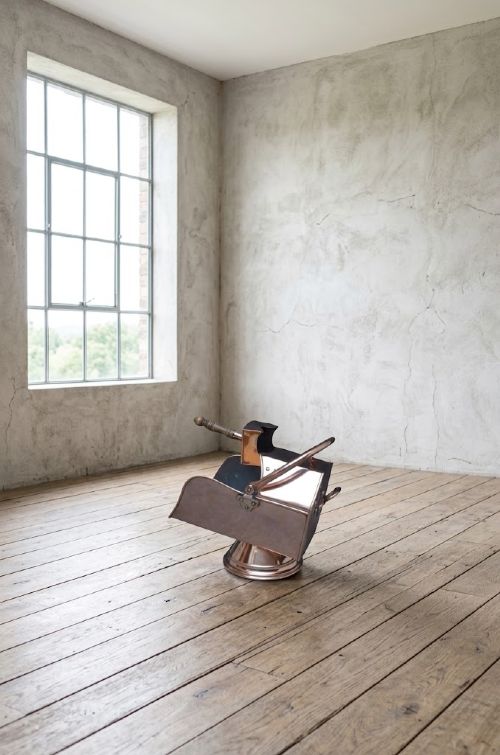
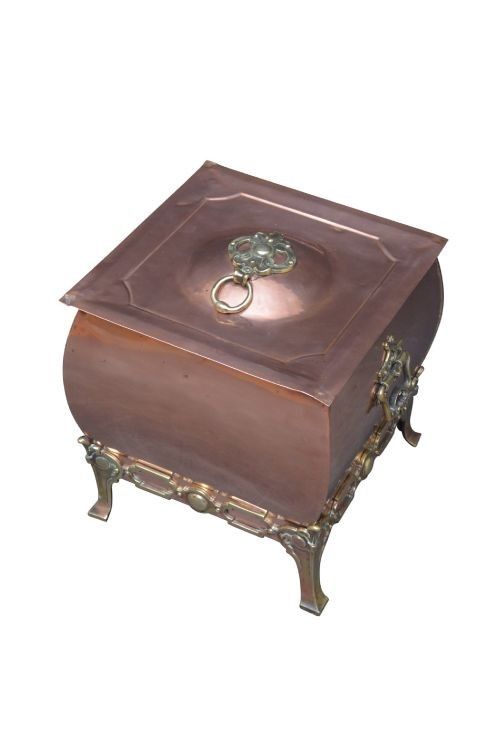
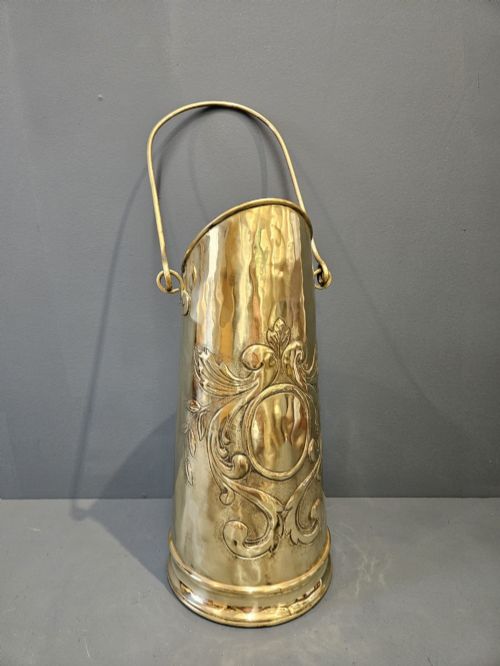
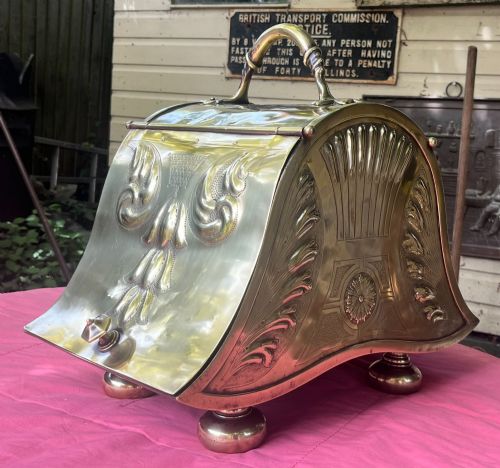
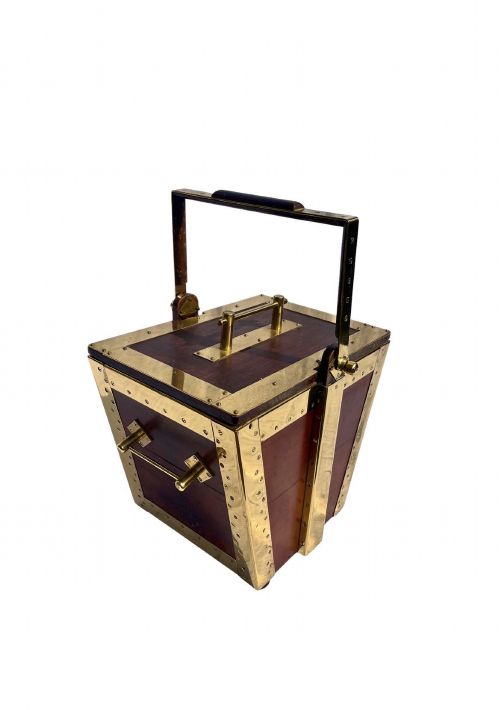
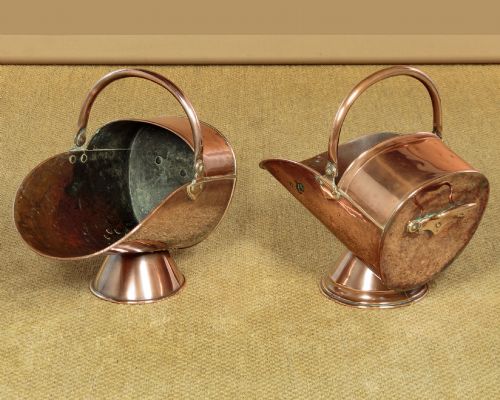
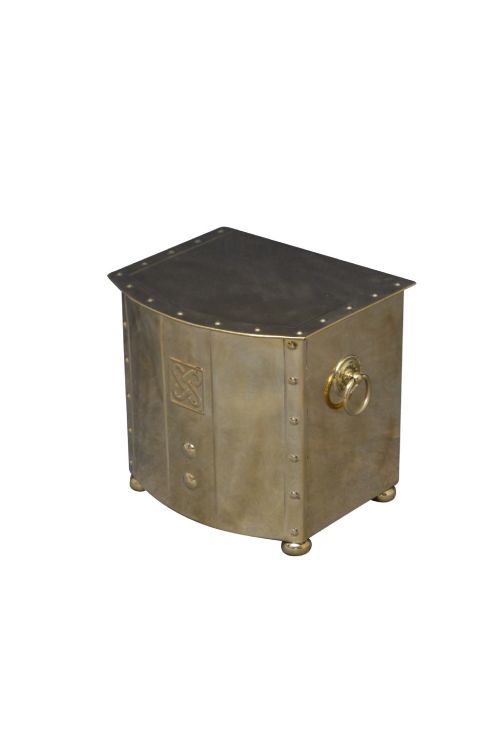
When you search for an edwardian fireside scuttle, you are looking at domestic coal and log containers produced across the late nineteenth and early twentieth centuries. The most common examples on this page take the form of helmet shaped buckets in brass or copper, alongside wooden purdoniums and cabinets.
Makers fashioned these utilitarian items to sit beside the fireplace, drawing on Victorian practicality and the decorative impulses of the Arts and Crafts and Art Nouveau movements. Surviving pieces range from plain copper bins to carved oak and inlaid mahogany boxes fitted with shovels and liners.
Materials and Techniques
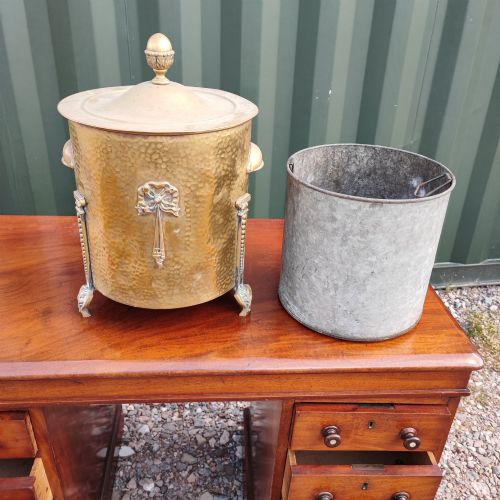
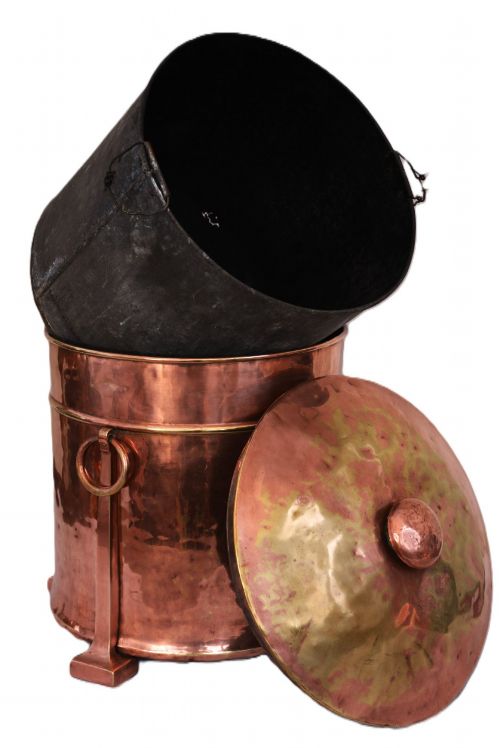
Metal vessels rely heavily on sheet brass and copper, often shaped by hand with hammer beaten textures or joined with visible rivets. Workshops combined these copper bodies with wrought iron frames, brass swing handles, and ceramic or metal liners.
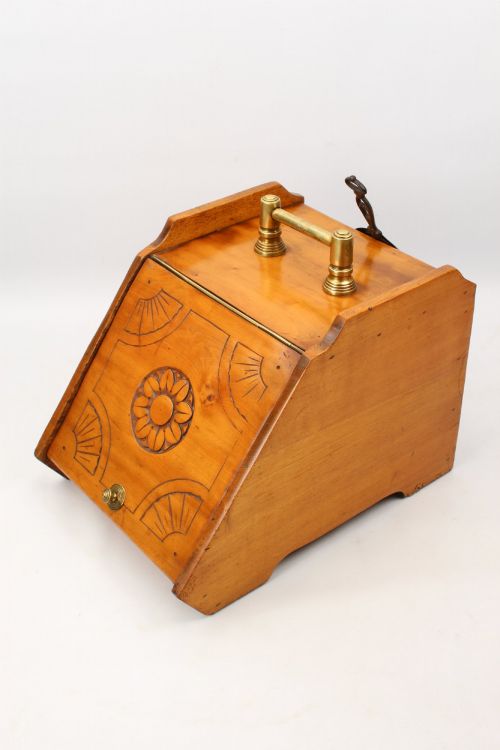
Wooden equivalents utilise oak, walnut, mahogany, and rosewood, frequently incorporating carved details, fretwork designs, or decorative wood inlays. Many of these cabinets and purdoniums include drop down or sloping fronts designed to conceal an interior metal coal shovel and box.
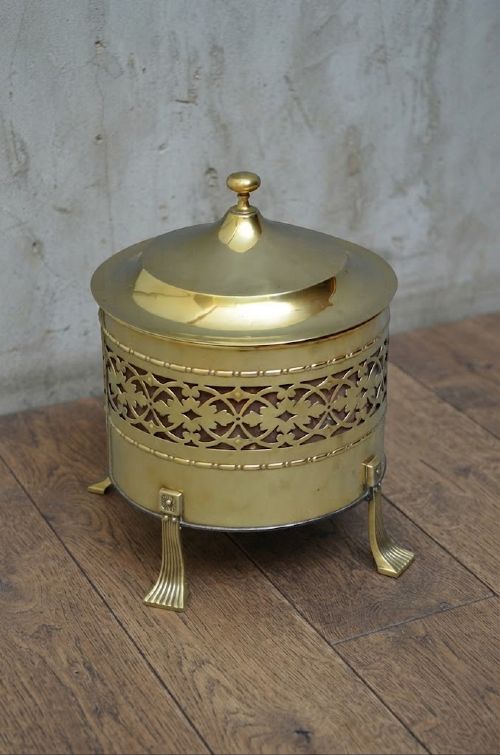
Some coal buckets hide their dirty work behind surprisingly delicate floral fretwork.
Design and Construction
Quality rests upon the weight of the metal and the integrity of the joinery, distinguishing heavy gauge hand beaten copper from thinner stamped alternatives. Superior wooden cabinets show careful timber selection, crisp carving, and sound internal liners rather than superficial decoration.
The presence of original matching shovels, interior coal buckets, and period specific hardware elevates a piece beyond standard utilitarian stock. Maker marks, such as those from established metalwork firms, further separate standard workshop output from distinguished examples.
Benham and Froud
The Edwardian Fireside Scuttle Glossary
- Purdonium
- A box or cabinet designed specifically to hold coal, typically featuring a sloping front lid and a built in metal shovel compartment. These wooden containers often include a removable interior metal liner for easy refilling.
- Coal Helmet
- A metal bucket featuring a high flared back and a lower sloping front edge that resembles the profile of a classical helmet. This distinct shape allowed householders to tip fuel cleanly onto the fire.
- Arts and Crafts
- A design movement favouring honest construction, visible hand working techniques, and simple natural motifs. In fireside metalwork, this appears as hammered copper surfaces and unadorned riveted construction.
- Art Nouveau
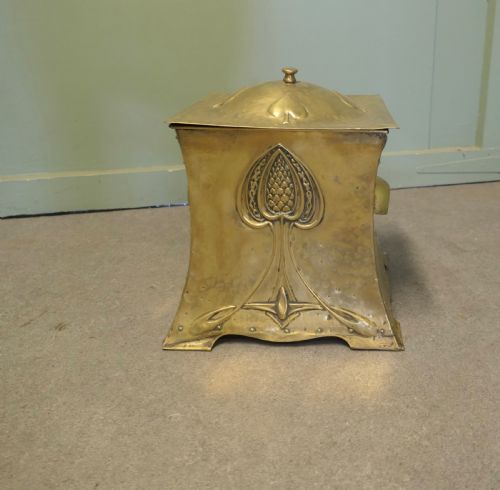
- A decorative style characterised by flowing organic lines, stylised plant forms, and whip like curves. On coal bins and scuttles, this manifests in embossed brass hinges, handles, and repoussé panels.
Edwardian Fireside Scuttle: Frequently Asked Questions
What is an edwardian fireside scuttle?
An edwardian fireside scuttle is a container made from metal or wood designed to hold coal, logs, or kindling near a fireplace.
These pieces served a daily domestic function in homes heated by solid fuel, combining storage utility with decorative metalwork or cabinetry.
How do you use a purdonium?
A purdonium is used by opening the front flap or lid to access an internal metal container that holds the fuel supply.
The matching shovel, usually stored in a compartment at the back or side, is then used to transfer coal from the box to the hearth.
Are these coal scuttles waterproof?
Most metal buckets and many wooden purdoniums feature removable interior metal liners designed to hold loose coal and prevent moisture or dirt from damaging the floor or timber exterior.
These removable liners allow owners to carry the insert directly to an outside coal bunker for refilling.
How do I distinguish brass from copper pieces?
Brass pieces exhibit a bright, warm golden yellow metallic tone, whereas copper items display a distinct reddish orange hue.
Both metals were frequently used together on a single scuttle, with copper bodies paired with brass handles, rims, and fixings.