

Edwardian Enamel Fob
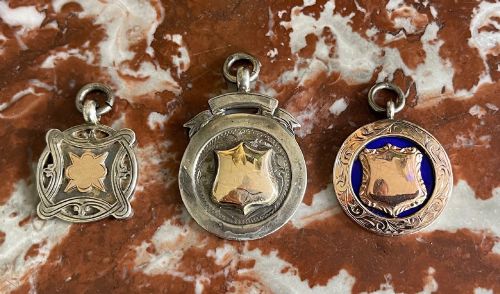
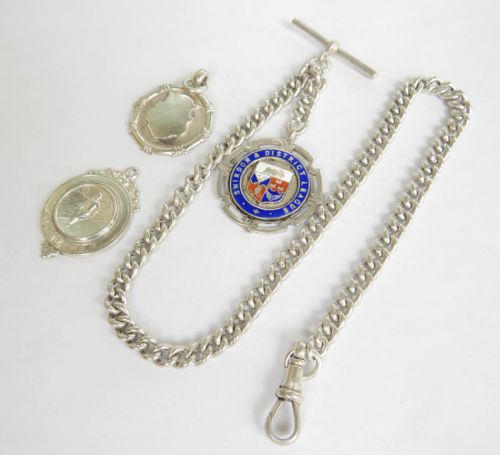
These edwardian enamel fob pieces bring coloured glass and metalwork together into compact, wearable markers of time.
Edwardian Enamel Fob
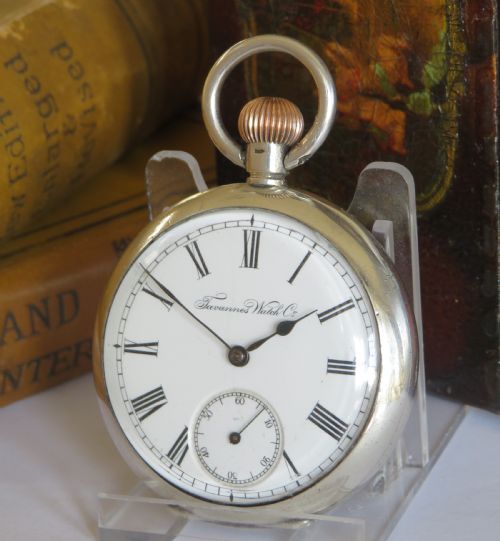
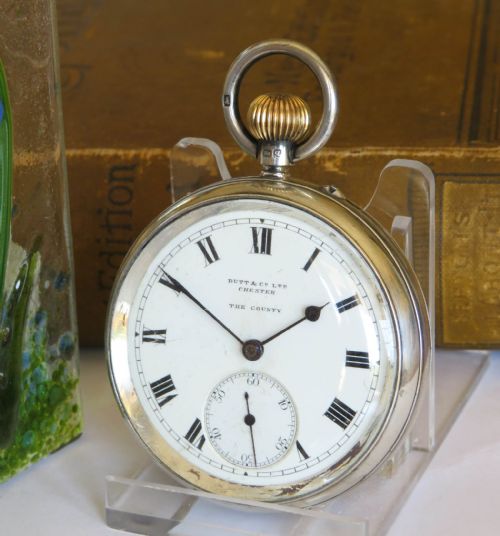
An edwardian enamel fob serves as a decorative pendant attached to a pocket watch chain, often featuring coloured vitreous coatings fused to a metallic base. When exploring an edwardian enamel fob, buyers encounter small scale items designed to hang from chains alongside pocket watches.
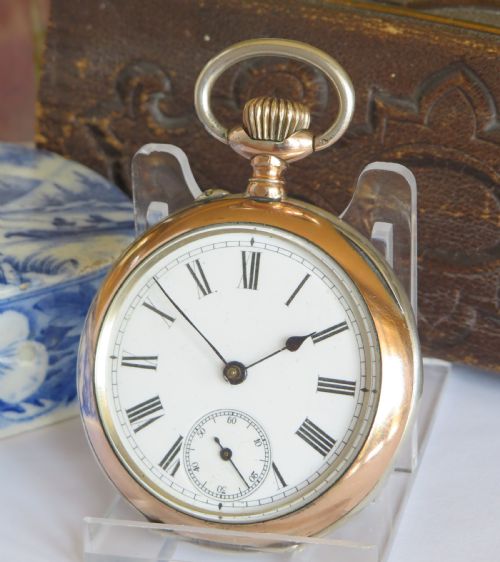
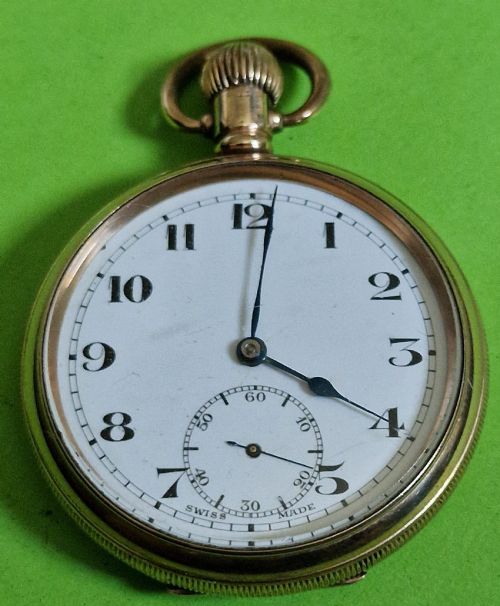
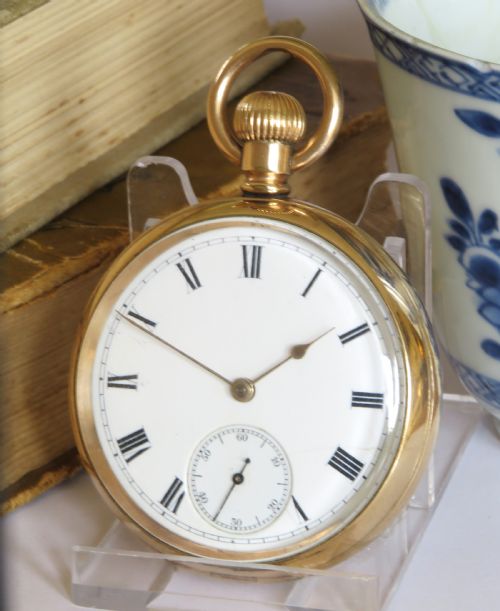
The selections span various forms including watch cases, spinning fobs, and novelty designs such as darts boards. Many examples integrate silver, gold plate, and glass elements within early twentieth century contexts.
Pieces from this category frequently connect to specific localities or sporting interests, such as Irish football fobs originating around nineteen hundred. Surviving items reflect the broader Victorian and Edwardian manufacturing traditions that persisted into the early decades of the 1900s.
How they were made
Makers formed these items using metals like sterling silver, gold, and steel as a foundational structure for decorative work. Molten glass was applied and fired to create glossy coloured enamel surfaces on watch fobs and cases.
Craftsmen combined metal stamping and engraving techniques with hand applied enamel pastes to produce detailed patterns. Components were linked to chains or mounted with spinning mechanisms using traditional jewellery construction methods.
What varies in quality
The refinement of the enamel work distinguishes standard pieces from finer examples, particularly where colour blending and surface smoothness are concerned. Metal quality also plays a role, with solid silver and gold versions demonstrating superior weight and durability compared to plated alternatives.
Intricacy of design, such as novelty motifs or rotating components like mother of pearl spinning fobs, marks out the more ambitious items. Preservation of the vitreous enamel without chipping or cracking determines the enduring integrity of each piece.
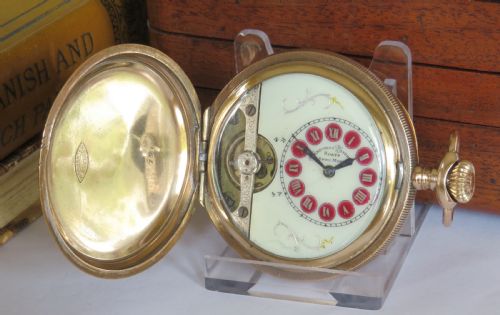
Waltham·Dennison·Baume And Co
The Edwardian Enamel Fob Glossary
- Fob
- A small ornamental pendant attached to a pocket watch ribbon or chain. These items often display personal ciphers, club emblems, or colourful enamel decoration.
- Enamel
- A glassy substance fused to metal through high temperature firing to produce a hard, coloured surface. It provides both protection and decorative contrast for watch cases and fobs.
- Full Hunter
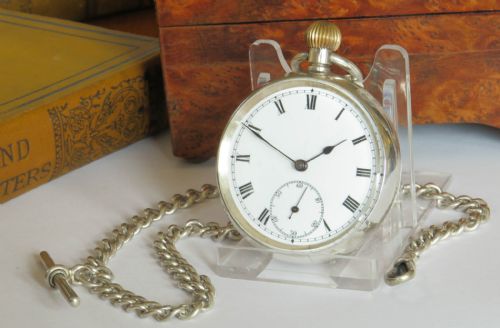
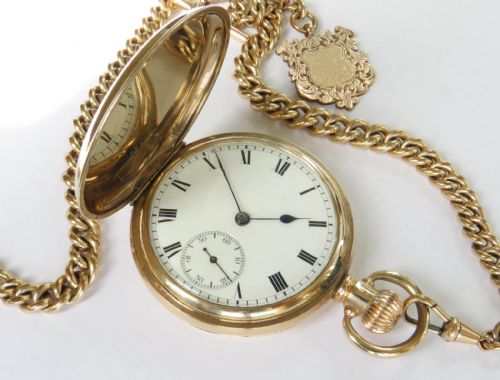
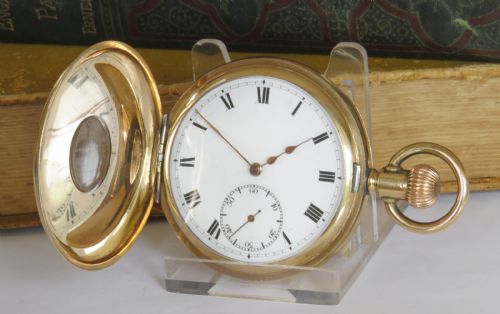
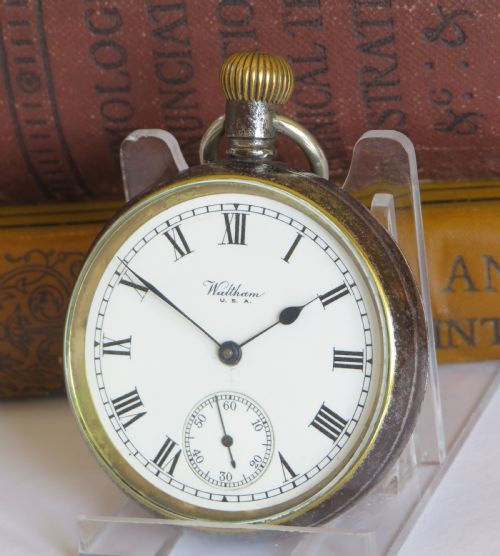
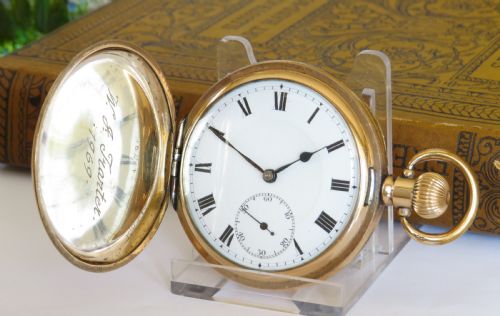
- A pocket watch featuring a spring hinged metal cover that protects the dial. This case style offers an expansive exterior surface frequently paired with decorative chains and fobs.
- Half Hunter
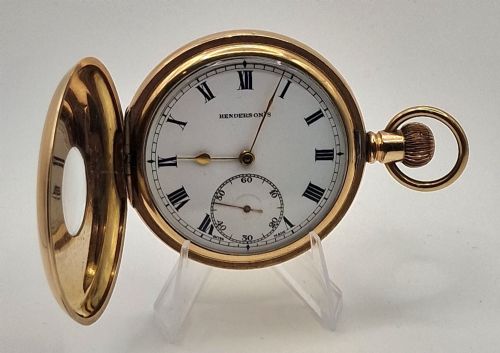
- A pocket watch case equipped with a small glass lens or open centre in the outer cover. This allows the wearer to check the time without opening the protective lid.
- Albert Chain
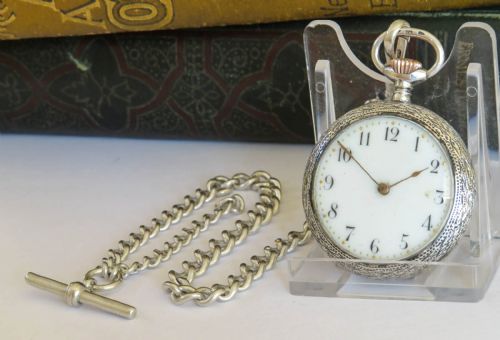
- A type of watch chain secured across a waistcoat, named after Prince Albert. It frequently supports fobs, medals, and pendants at its centre drop.
Edwardian Enamel Fob: Frequently Asked Questions
What is an edwardian enamel fob used for?
These items were designed to hang from watch chains attached to pocket watches worn in waistcoats. They served as decorative adornments and often indicated club membership or personal affiliations.
The coloured enamel surfaces provided visual contrast against the metal links of the chain. Owners used them to add personality to their timekeeping accessories.
How do you wear an edwardian enamel fob?
A fob suspends from the centre drop of an albert chain connected to a pocket watch in a pocket. The chain threads through a buttonhole on a waistcoat.
Today, collectors attach these pieces to shorter chains or wear them as pendants on modern chains. They function as versatile historical jewellery items.
How can you tell the period of a fob?
Stylistic cues such as Edwardian design motifs and manufacturing materials help establish the era of production. Silver hallmarks often provide specific date letters corresponding to assay office records.
The presence of associated watch types from the early twentieth century further contextualises the date. Construction techniques also align with methods common around nineteen hundred.
What materials make up these fobs?
Silver, gold, gold plate, and steel form the metallic base structures of these pieces. Coloured glass pastes are fused onto the metal to create the enamel sections.
Some examples incorporate organic materials like mother of pearl alongside the metal and glass components. This mixture of substances defined the decorative standards of the period.