





Silver Enamel Medallion
These silver enamel medallion pieces combine precious metal with vitreous work, offering wearable history from several past centuries.
Silver Enamel Medallion
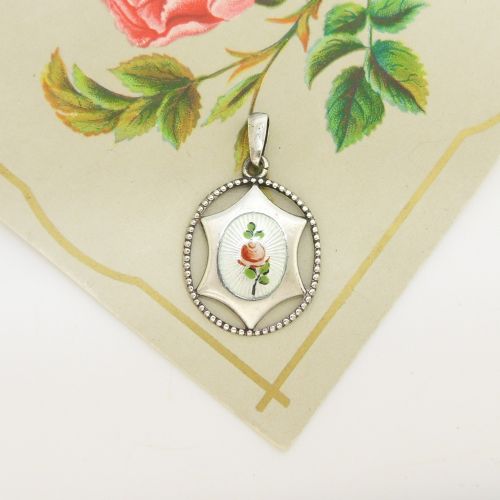
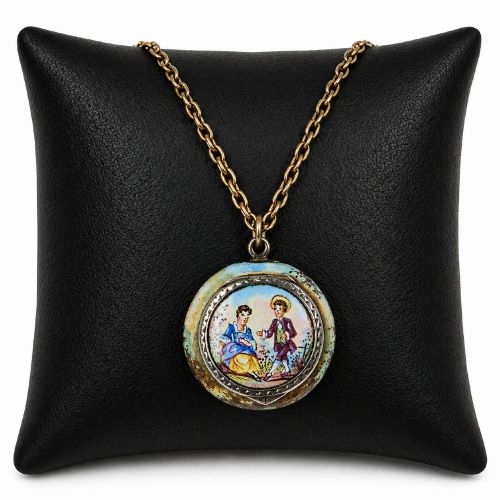
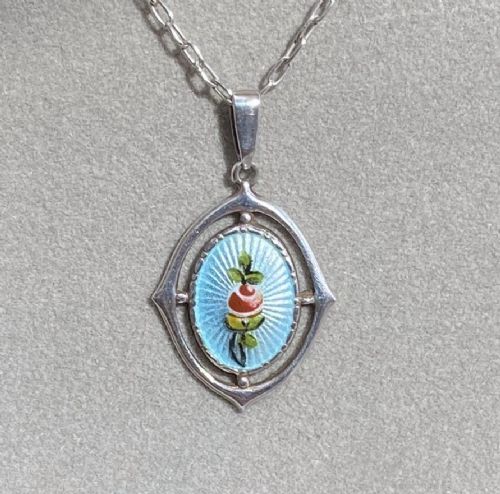
A silver enamel medallion is primarily represented on this page through pendants, watch fobs, brooches, medals, and decorative inkwells. You are most likely to meet pieces originating from the nineteenth and twentieth centuries, spanning Edwardian, Art Nouveau, Arts and Crafts, and Scandinavian styles.
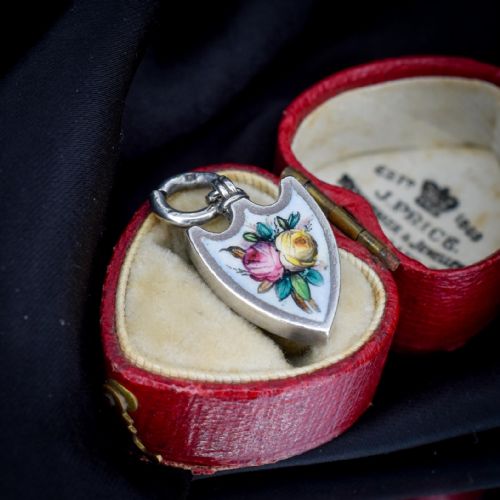
The physical forms vary considerably, ranging from floral shield charm pendants and lockets to novelty darts board watch fobs and small capstan inkwells set with enamel medallions. Origins stretch across Britain, Scandinavia, Vienna, and Austro-Hungary.
Makers and workshops utilise silver, sterling silver, gilt silver, and gold alongside pearl elements to create these objects. Dating evidence on this page points toward pieces created from the eighteenth century through to the mid twentieth century.
Materials and construction methods
Makers combine silver, sterling silver, and gilt silver bases with vitreous and guilloche enamel techniques. These coloured glass pastes are fused to the metal surface through high temperature firing to produce durable decorative panels.
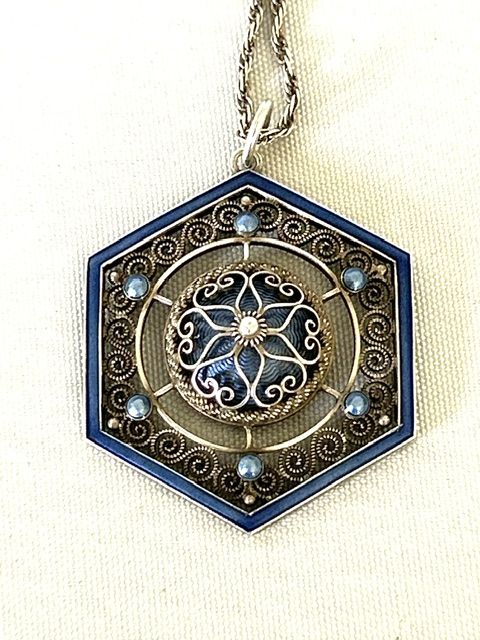
Some examples incorporate cloisonné work, where thin metal wires form compartments on the silver ground before enamel application. Pearls and gold accents occasionally supplement the primary silver and enamel construction.
Object forms range from traditional pendants and brooches to functional items like capstan inkells and novelty watch fobs.
Assessing quality in enamelled silver
Quality separates through the precision of the metalwork and the clarity of the enamel surface. Hand chased silver mounts and complex guilloche patterns require high levels of artisan skill compared to simpler cast forms.
The integrity of the vitreous or guilloche enamel layer dictates the grade of the piece, with smooth, evenly coloured surfaces representing superior execution. The complexity of the subject matter, such as figurative religious scenes or intricate floral shields, also distinguishes finer examples.
Marius Hammer·Charles Horner
The Silver Enamel Medallion Glossary
- Guilloche Enamel
- A decorative technique where the metal surface is mechanically engraved with precise repetitive patterns beneath a translucent enamel layer. This allows the underlying design to show through the coloured glass.
- Vitreous Enamel
- A material made by fusing powdered glass to a substrate by firing, usually between seven hundred and nine hundred degrees Celsius. The powder melts, flows, and hardens to a smooth, durable glass coating.
- Cloisonne
- An ancient technique for decorating metalwork objects, in which thin wires are applied to the metal base to form raised partitions. These spaces are then filled with coloured enamel paste prior to firing.
- Watch Fob
- A short strap, ribbon, or chain attached to a pocket watch, often featuring an ornamental medallion or charm at the end. They frequently display silver hallmarks and enamel decoration.
- Capstan Inkwell
- A desk accessory shaped like the nautical capstan drum used for weighing anchor, featuring a wide base tapering towards the top. Enamel medallions are occasionally set into the hinged lids of these silver desk items.
Silver Enamel Medallion: Frequently Asked Questions
What periods do these pieces come from?
The inventory spans multiple eras, beginning with eighteenth century Austro-Hungarian work and nineteenth century Viennese pieces. Twentieth century examples extend through the Edwardian period, the nineteen tens, twenties, thirties, and forties.
Items reflect specific regional aesthetic movements, including Scandinavian designs, Arts and Crafts creations, and traditional British hallmarked items from Birmingham.
How were watch fobs used?
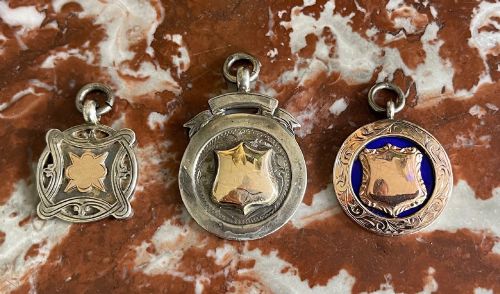
Watch fobs served as decorative and functional appendages attached to pocket watches, allowing the owner to pull the watch easily from a pocket. They frequently doubled as commemorative items or club medals.
Many examples feature intricate silver metalwork and enamel medallions displaying specific motifs, numbers, or presentation inscriptions.
How do I care for silver and enamel?
Enamel is essentially glass fused to metal, meaning it requires gentle handling to prevent scratching or impact damage. Store pieces individually away from harder metals that might chip the vitreous surface.
Clean the silver components carefully with a soft cloth, avoiding harsh chemical dips that could seep underneath or damage fragile enamel and pearl elements.
Are all these items hallmarked?
Not every piece carries formal assay office hallmarks, as regulations varied significantly across different European countries and centuries. British items, particularly those from Birmingham, frequently display clear silver hallmarks and date letters.
Continental pieces, such as Viennese or Scandinavian items, often rely on maker marks or standard metal fineness stamps rather than full British assay stamps.