

Edwardian Dressing Table Desk
These pieces unite the surface for letters with the mirror of a dressing table, bringing versatile Edwardian dressing table desk designs into daily service.
Edwardian Dressing Table Desk
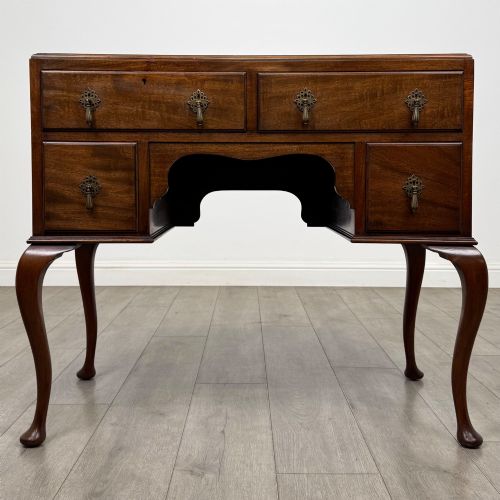
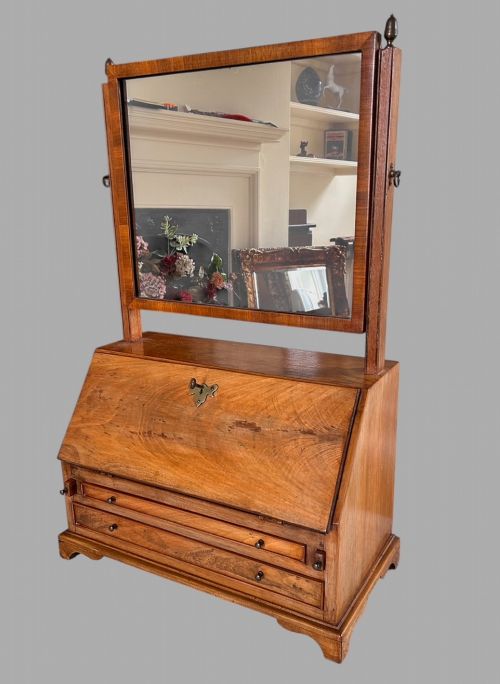
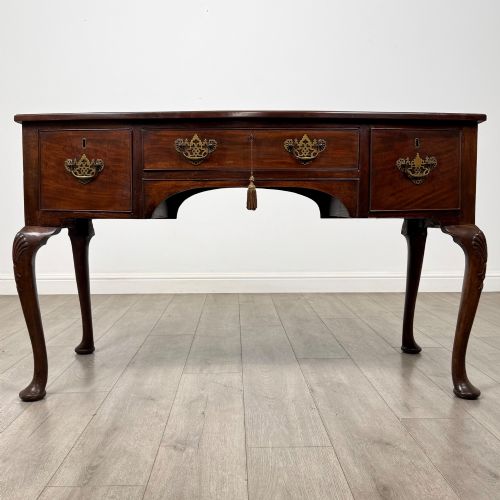
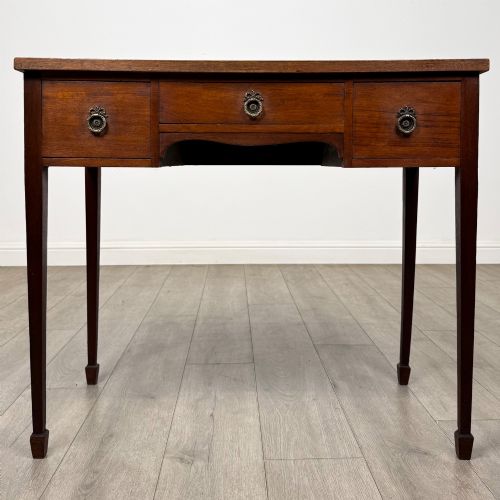
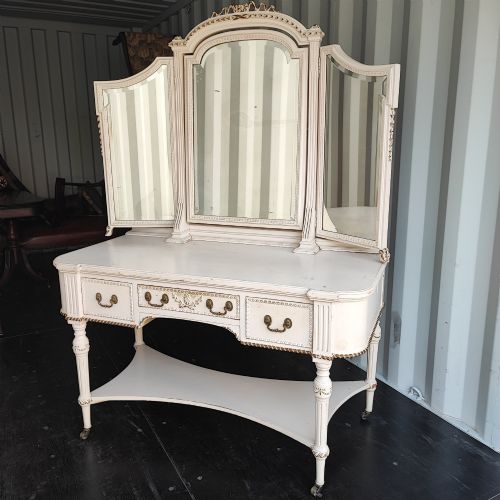
An edwardian dressing table desk combines the workspace of a writing table with the mirror and storage of a dressing chest, serving both domestic functions in one footprint.
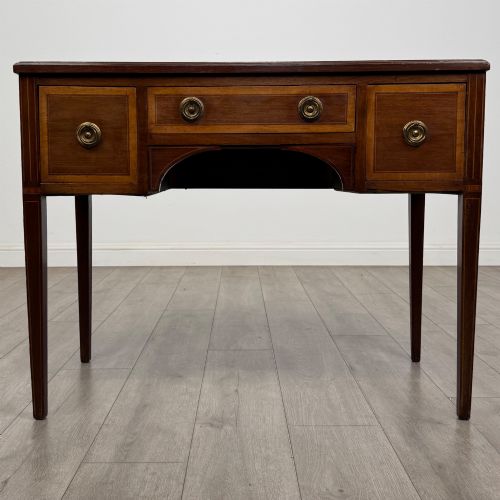
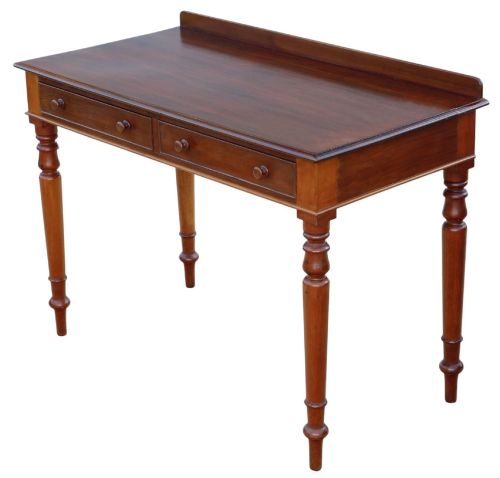
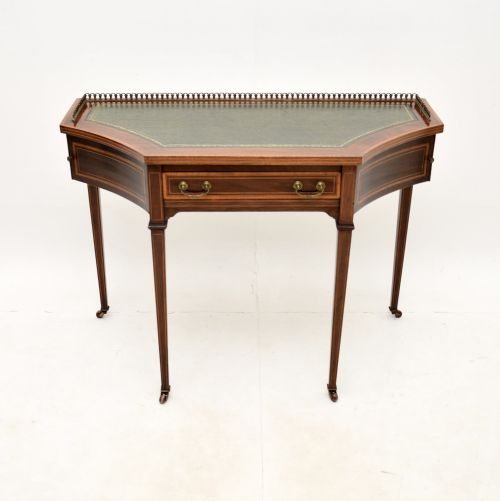
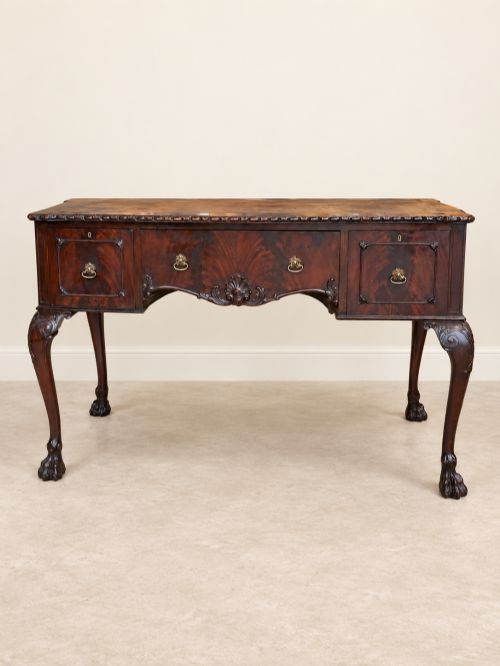
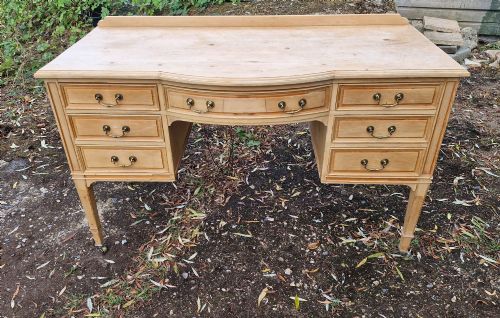
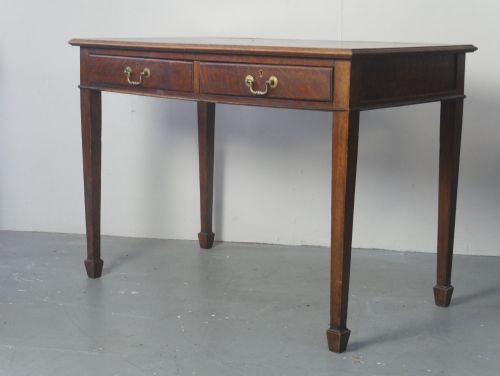
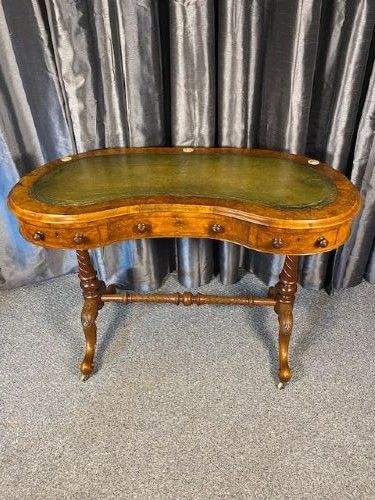
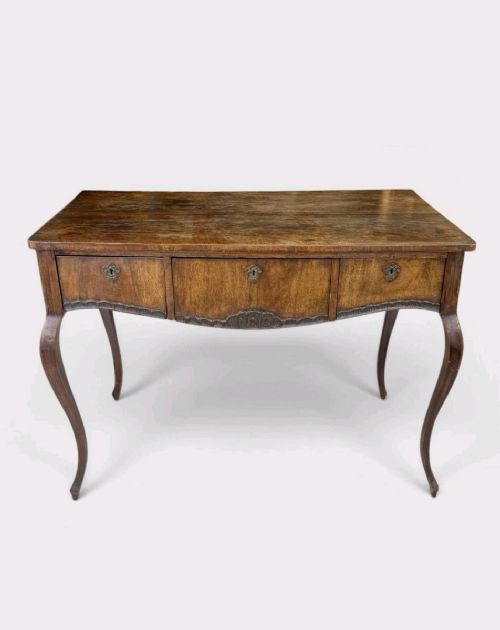
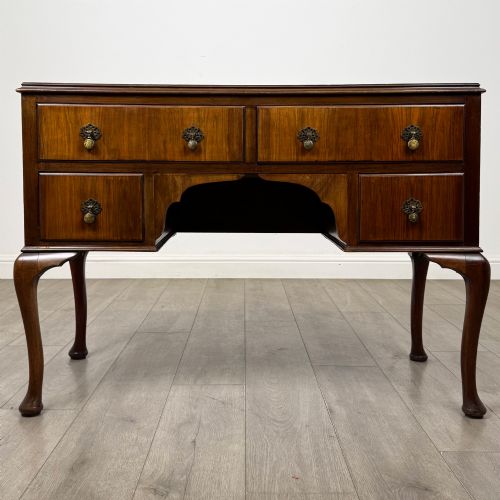
The pieces appearing on this page span the Edwardian period alongside late Victorian and early twentieth-century examples, taking forms that range from kidney-shaped writing desks to kneehole dressing tables.
Buyers commonly encounter mahogany and walnut timbers, frequently augmented by satinwood inlay or cross-banding, reflecting revival styles like Sheraton and Chippendale.
How They Were Made
Cabinet makers utilised solid and veneered timbers including mahogany, burr walnut, satinwood, and oak, often shaping the wood into curved bows and demi-lune fronts.
Brass fittings, leather writing surfaces, and glass mirrors completed the construction, whilst painted details and inlaid bandings provided decorative contrast.
Listings feature mahogany, burr walnut, and oak timbers across Edwardian, Victorian, and early twentieth-century periods.
What Varies in Quality
The refinement of the timber selection dictates the visual depth, distinguishing plain boards from highly figured burr walnut and carefully matched mahogany veneers.
Execution of decorative elements such as inlaid satinwood motifs and brass hardware separates standard workshop production from finer cabinet work.
Heal and Son·Maples of London and Paris·Wylie and Lochhead Glasgow
The Edwardian Dressing Table Desk Glossary
- Cross-banding
- A narrow strip of veneer laid perpendicular to the grain of the main surface panel, framing the top of a table or desk. It provides a neat border using contrasting wood figures.
- Satinwood
- A durable, light yellow timber native to India and Ceylon, prized for its lustrous finish and grain. Makers used it extensively during the Sheraton Revival for banding and inlay.
- Kidney-shaped
- Describing a curved, concave writing surface resembling a kidney bean. This form appeared frequently on refined Edwardian writing and dressing tables.
Edwardian Dressing Table Desk: Frequently Asked Questions
How do I use one today?
These dual-purpose tables fit well in bedrooms or studies where floor space is limited. The surface accommodates a laptop or correspondence, while the drawers organise daily essentials.
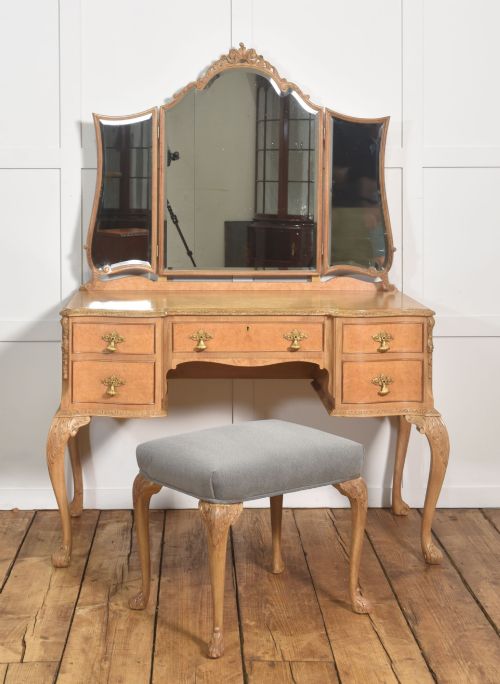
Position the piece near natural light to utilise the writing surface effectively. Many examples include mirrors or companion stools that complete the traditional arrangement.
Are they writing desks or dressing tables?
They often function as both, bridging the gap between a bedroom dressing chest and a library writing table. Makers designed them for multi-purpose rooms in Edwardian homes.
Some pieces emphasise writing with leather inserts and numerous small drawers, while others feature triple mirrors and compartments tailored for grooming items.
Which woods are most common?
Mahogany forms the majority of surviving examples, often paired with satinwood stringing or cross-banding. Oak and walnut also appear frequently in various revival styles.
Burr walnut provides a more decorative grain pattern on select pieces. Timbers were chosen for both durability and their capacity to take a polished finish.
How do I date an Edwardian piece?
Edwardian items date from the reign of King Edward VII between 1901 and 1910, though production styles often overlap with late Victorian and early 1920s work. Construction methods, such as dovetailing in the drawers and the choice of revival styles, offer chronological clues.
Cabinet labels or maker stamps, when present, provide definitive attribution. Hardware styles and secondary woods inside the drawers also assist in confirming the period.