
Edwardian Display Mirror
An edwardian display mirror combines reflective glass with timber framing to showcase small possessions while brightening a room.
Edwardian Display Mirror
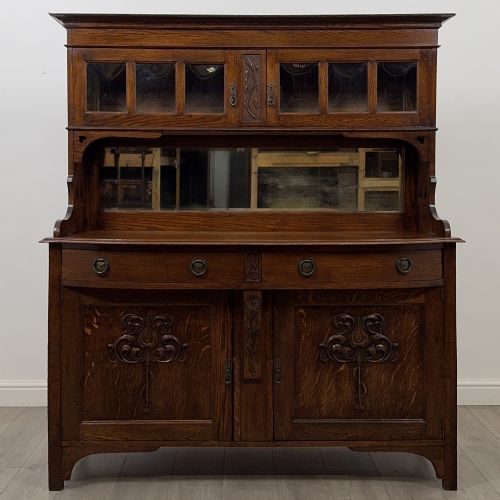
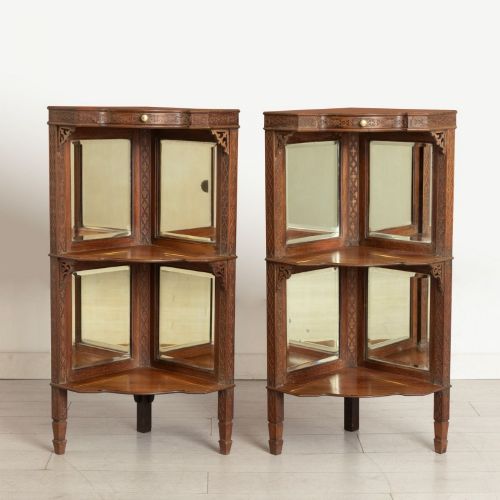
When you search for an edwardian display mirror, you encounter pieces that merge storage, display, and reflection, characteristic of the early twentieth century. These objects function as wall-hanging shelves, corner cupboards, and table-standing cases designed to hold small ornaments.
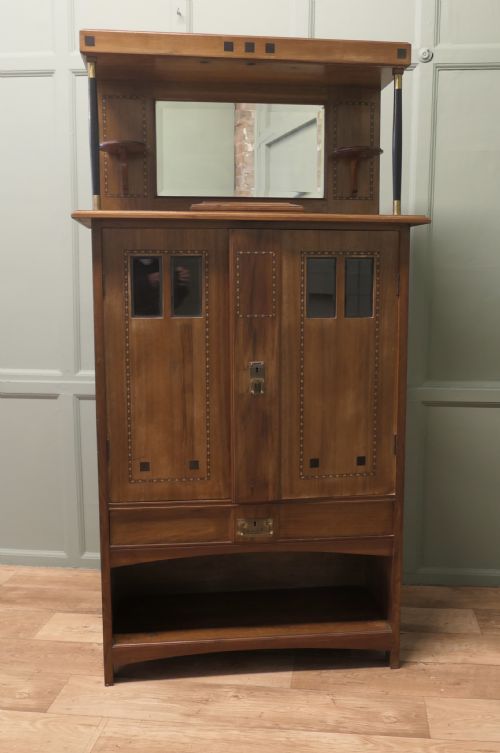
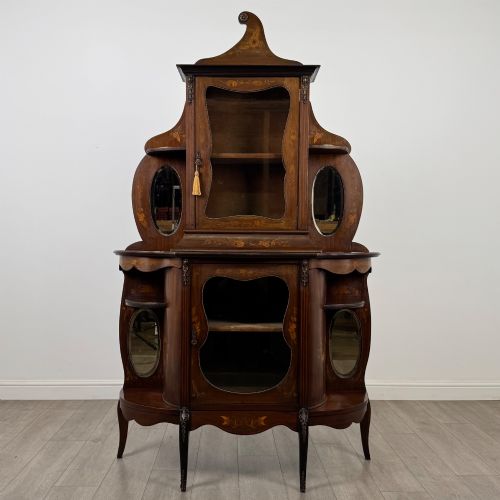
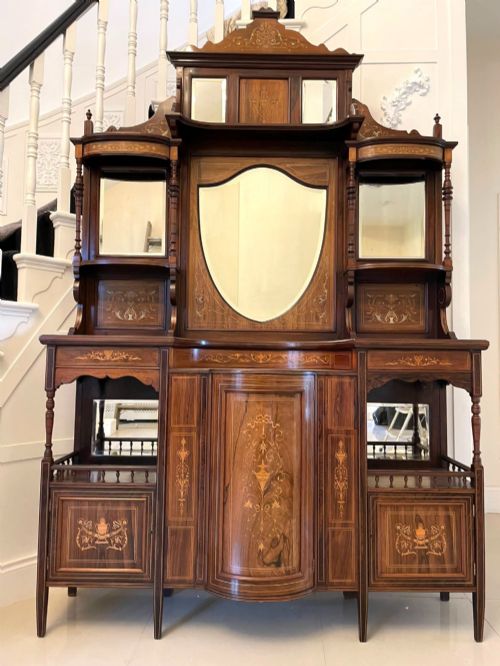
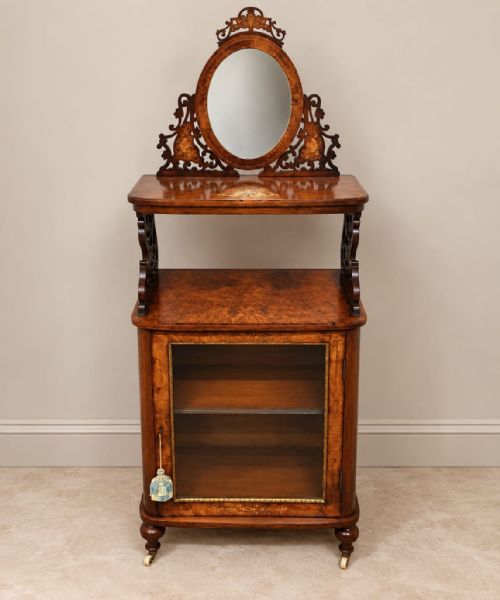
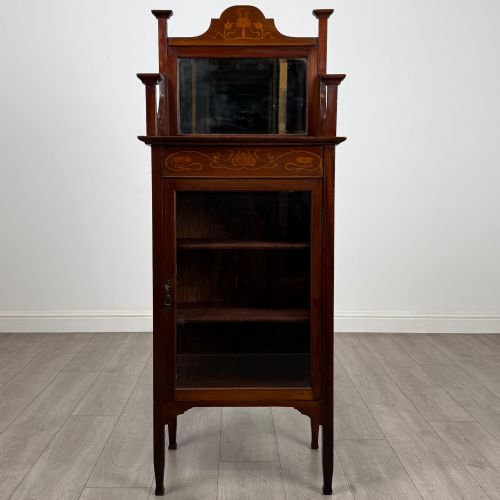
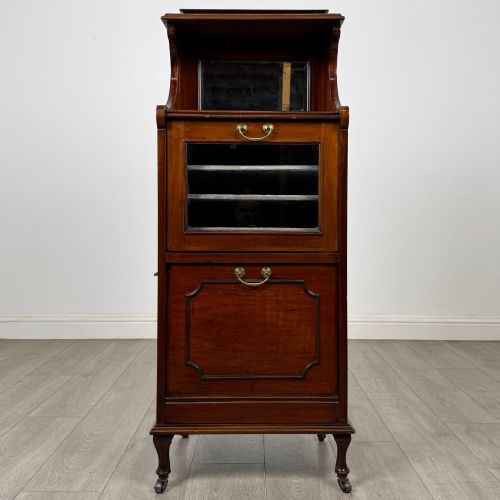
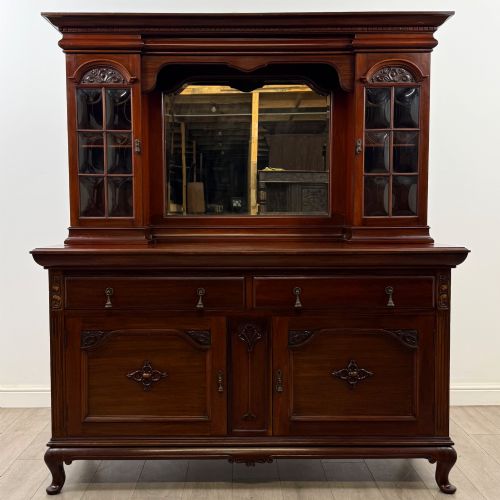
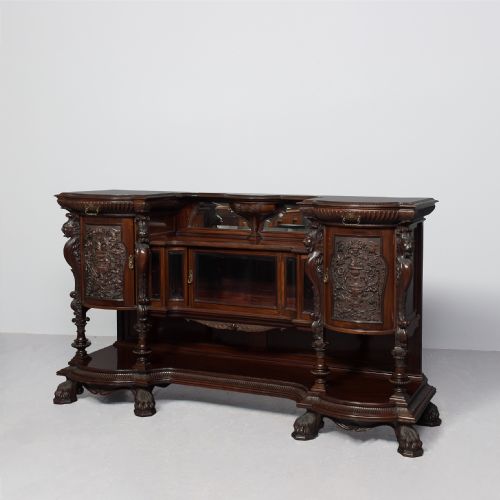
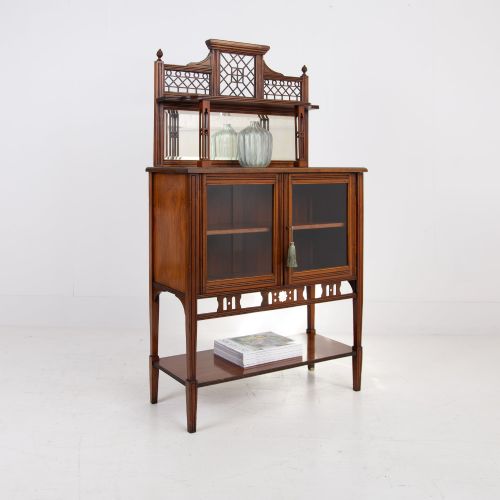
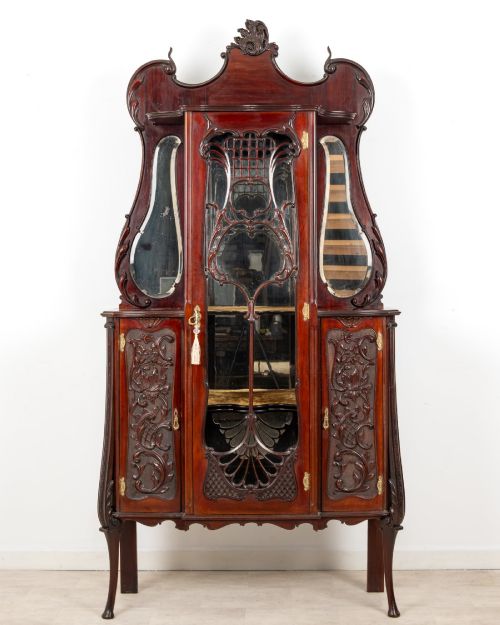
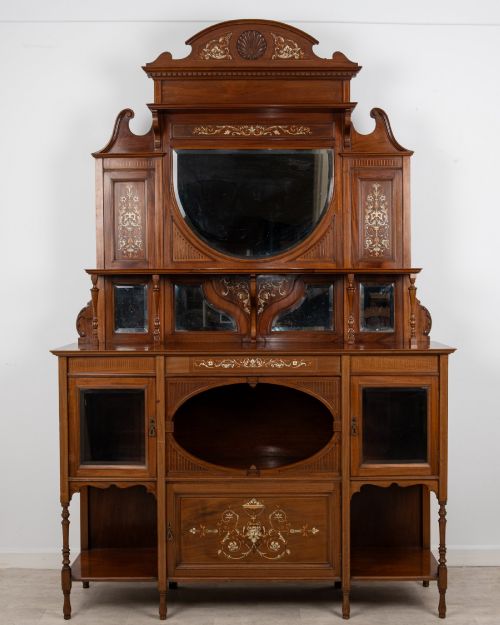
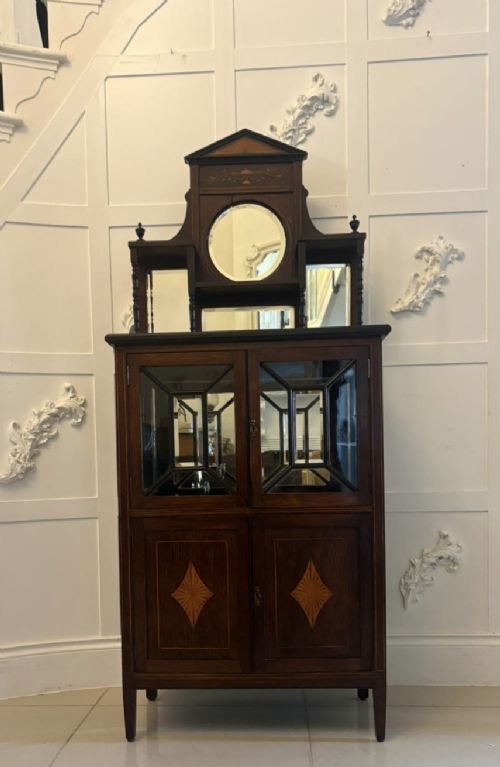
The versions most frequently met on this page span the Edwardian era and the late Victorian period, frequently constructed in mahogany or rosewood. They incorporate integrated mirror glass panels behind shelving or within an upper pediment above a cabinet.
Makers of the period also produced shop display variants and wall-mounted whatnot frames with bamboo or timber structures. These items served domestic parlours and retail counters alike, prioritising visual lightness and polished surfaces.
Materials and Technique
Cabinetmakers utilised hardwoods such as mahogany, rosewood, oak, and walnut as the primary structural timbers for framing and cabinetry. Satinwood and marquetry inlay added contrasting decorative details to flat door panels and cornices.
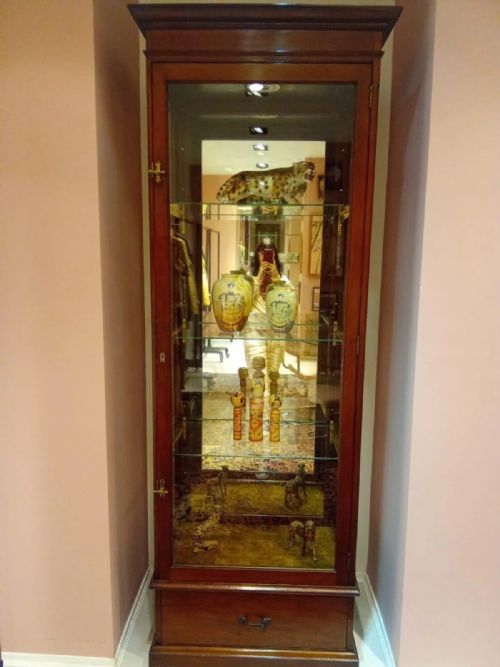
Glass technology of the period provided flat mirror plates and transparent panes for doors and adjustable internal shelves. Brass fixtures, handles, and occasional gilt mounts completed the assembly, securing hinged doors and hanging brackets.
Distinctions in Quality
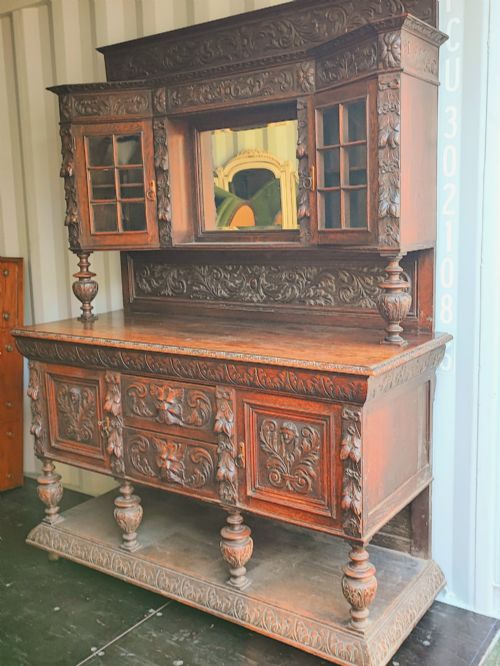
Quality rests upon the precision of the timber joinery, the depth of the hand-carved ornamentation, and the subtlety of the inlaid marquetry patterns. Finer examples display meticulous attention to interior linings, original mirror glass integrity, and well-fitted brass hardware.
Standard commercial production relied on simpler construction methods with mass-produced mouldings and minimal inlay. The presence of original keys, adjustable glass shelving, and intact mirrored back panels elevates the standing of an individual piece.
Edwards & Roberts
The Edwardian Display Mirror Glossary
- Marquetry
- Decorative veneer patterns formed by fitting together small pieces of different coloured woods or other materials. This technique adorned cabinet doors and friezes.
- Pediment
- The triangular or curved architectural crown surmounting the top of a cabinet or mirror frame. It draws the eye upward and completes the vertical composition.
- Whatnot
- A set of open shelves for displaying small objects, often combined with a mirror and hanging frame. These were popular in late Victorian and Edwardian parlours.
- Credenza
- A sideboard or display cabinet, frequently featuring mirror backs and decorative inlays. They originated as side tables before evolving into enclosed display furniture.
- Chiffonier
- A low sideboard or cabinet featuring a raised mirror back and internal shelving. It served both storage and display functions in domestic interiors.
Edwardian Display Mirror: Frequently Asked Questions
What is an edwardian display mirror?
An edwardian display mirror is a piece of furniture that combines a mirror plate with shelving or a small cabinet. These items were designed to hold porcelain, ornaments, and small collectibles while reflecting light into a room.
They appear in various forms, including wall-hanging shelves, corner cupboards, and freestanding floor cabinets. The reflective glass enhances the perceived space of the interior while highlighting the objects placed before it.
How were these mirrors used?
Households utilised these pieces in drawing rooms, parlours, and hallways to display cherished ornaments and small decorative items. The integrated mirror brightened darker corners and allowed quick checks of appearance.
Commercial variants also served in retail settings, functioning as shop display cabinets and counter stands for merchandise. Their dual purpose of storage and exhibition made them versatile additions to period interiors.
How do I identify an Edwardian piece?
Edwardian furniture generally exhibits lighter proportions and brighter timbers compared to heavier Victorian predecessors. Look for mahogany and satinwood construction, subtle inlaid stringing, and influences from Art Nouveau or Arts & Crafts styles.
Construction details also provide clues, as machine-sawn timber and standardised brass hardware became common during this period. The absence of heavy dark finishes distinguishes them from mid-nineteenth-century dark oak and walnut.
How do I care for antique mirror glass?
Preserving antique mirror glass requires avoiding harsh chemical cleaners that can damage the silvering behind the plate. Use a soft, dry microfibre cloth to remove dust and gentle moisture only when necessary.
Protect the timber frame from direct sunlight and rapid humidity changes to prevent warping or veneer lifting. Maintaining a stable indoor climate ensures both the wood and the mirror backing survive in good condition.