
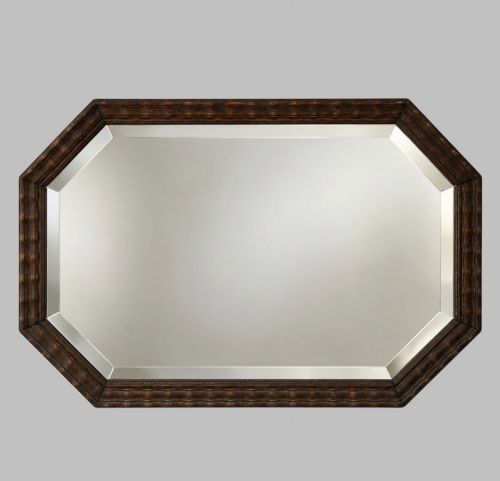
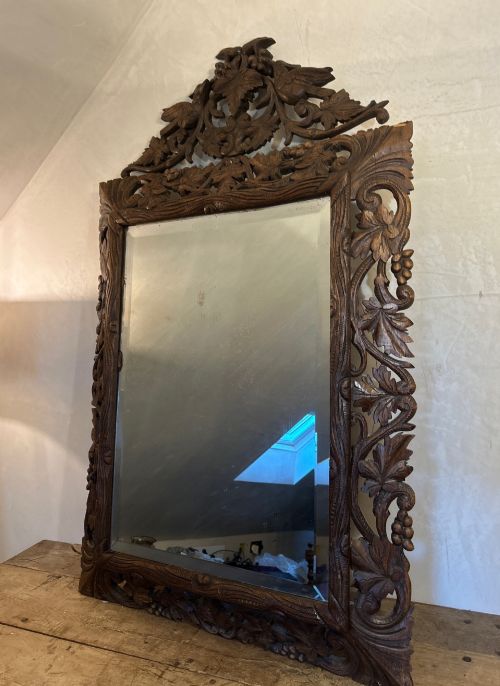
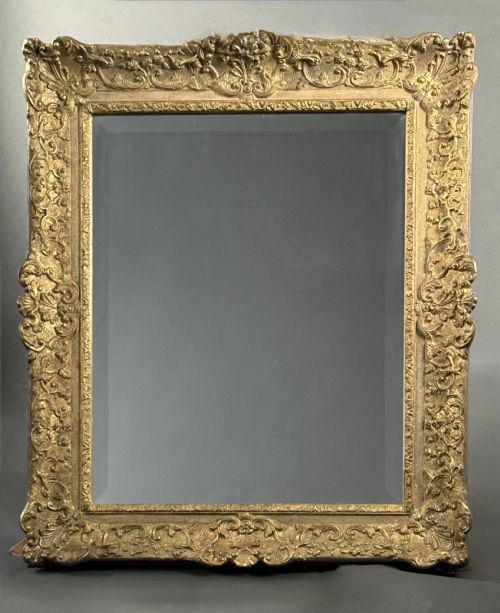
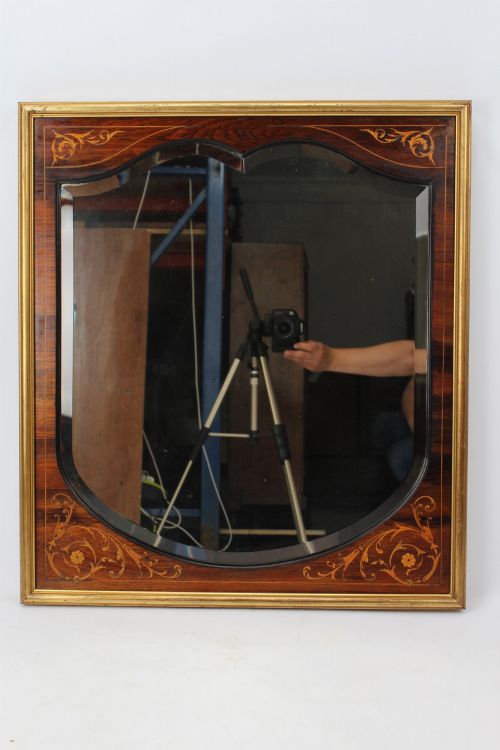
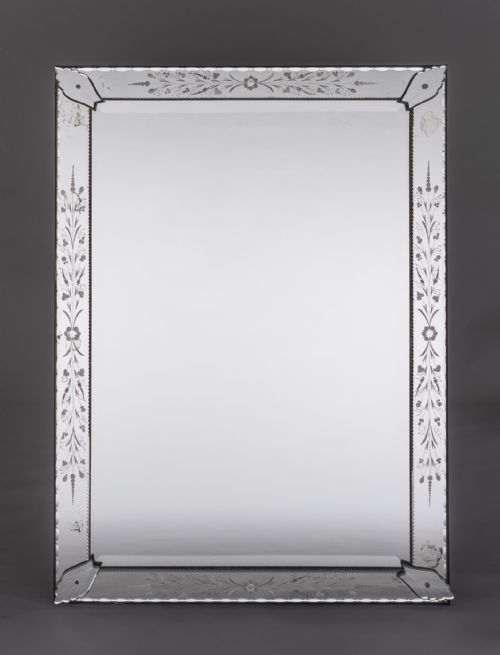


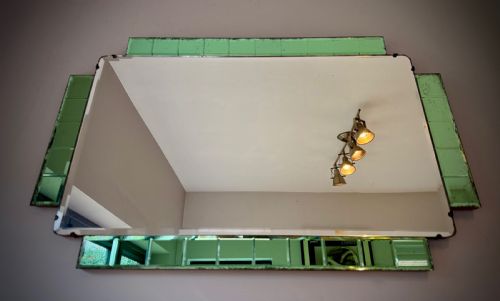


Bevelled Glass Overmantel
A bevelled glass overmantel brings immediate light and architectural weight to a room, framing a fireplace with substantial period presence.
Bevelled Glass Overmantel
A bevelled glass overmantel is a large mirror specifically designed to sit above a mantelpiece, reflecting interior space and daylight across the room. When buyers search for a bevelled glass overmantel, they encounter pieces ranging from ornate Victorian and Edwardian giltwood frames to restrained oak and mahogany structures.
The selection on this page draws primarily from the nineteenth and early twentieth centuries, spanning periods from 1860 through to the Art Deco era of the 1930s. Forms vary from simple cushion frames and architectural walnut surrounds to heavily carved French Rococo revival designs and Venetian glass creations.
Origin and stylistic influence dictate the character of each piece, with French chateau and revival styles appearing frequently alongside British Edwardian and Victorian iterations. Buyers find both landscape formats meant for broad chimneypieces and taller vertical variants suited to narrower hearths.
Materials and Construction
Makers constructed these frames from hardwoods such as oak, mahogany, walnut, and burr yew-wood, often applying gesso and gold leaf to create elaborate gilded surfaces. Carved wooden elements and applied marquetry provide structural depth and surface decoration, particularly in Edwardian and late nineteenth-century examples.
Glass plates were hand-cut and edge-bevelled to catch the light at oblique angles, sometimes utilising mercury backing in older pieces or incorporating coloured glass panels as seen in later Art Deco items. Ormolu mounts and brass details occasionally accent the timber and gilt frames.
Listings feature periods from 1860 through the Edwardian era to Art Deco 1930s pieces, utilising materials including giltwood, gesso, oak, mahogany, and walnut.
Distinctions in Quality
Quality rests in the depth and crispness of the carving, whether executed in solid oak, mahogany, or moulded gesso over timber. Superior pieces exhibit precise joinery, original gilding with genuine gold leaf, and substantial mirror plates with clean, pronounced bevels.
The integrity of the frame and the retention of original surface patination distinguish finer examples from later restorations or heavily altered pieces. Balance in proportion and the harmony between the wooden or gilt surround and the glass plate determine the overall aesthetic success of the mirror.
Waring and Gillow
The Bevelled Glass Overmantel Glossary
- Bevelled glass
- A mirror plate with an angled, ground edge that refracts light. This technique adds depth and decorative brilliance to the perimeter of the glass.
- Gesso
- A plaster-like mixture applied to wood frames to create a smooth surface for gilding. Skilled artisans carved intricate relief details directly into this ground.
- Giltwood
- Timber coated with gold leaf or gold paint to create a lustrous metallic finish. It remains a hallmark of formal nineteenth-century salon mirrors.
- Cushion frame
- A mirror frame with a rounded, convex profile that slopes outward or inward toward the glass. This form provides a robust architectural border.
- Marquetry
- Decorative patterns formed by fitting contrasting veneers into timber surfaces. It appears on select Edwardian and Victorian frames.
Bevelled Glass Overmantel: Frequently Asked Questions
How do I hang a heavy overmantel mirror?
These mirrors carry significant weight due to their dense timber frames and thick glass plates. Secure installation requires fixing directly into wall studs or using heavy-duty masonry anchors matched to the wall type.
Professional mirror fixings or a dedicated wall cleat distribute the load evenly across the structure, ensuring the piece hangs safely above the hearth.
Can I place an overmantel mirror on a mantel?
Many overmantel mirrors are designed to rest directly upon the shelf of the mantelpiece while being anchored to the wall for safety. This placement method was standard practice in period interiors, allowing the mirror to sit flush against the chimney breast.
Weight distribution and the depth of the mantel shelf determine whether a piece rests safely or requires wall mounting entirely.
How do I clean antique mirror glass?
Gentle maintenance preserves the fragile silvering and historical surface of antique glass plates. Use a soft, dry microfibre cloth to remove dust without applying pressure to vulnerable edges.
Avoid commercial chemical sprays that can seep behind the glass plate and damage the original backing or oxidise the mercury and silver layers.
What is the difference between an overmantel and a wall mirror?
An overmantel mirror is proportioned specifically in a wide landscape format to complement the horizontal spread of a fireplace surround. Standard wall mirrors follow vertical or square dimensions suited to general wall placement.
Overmantels also tend to feature heavier architectural mouldings and construction designed to anchor the visual weight of a room's hearth.