


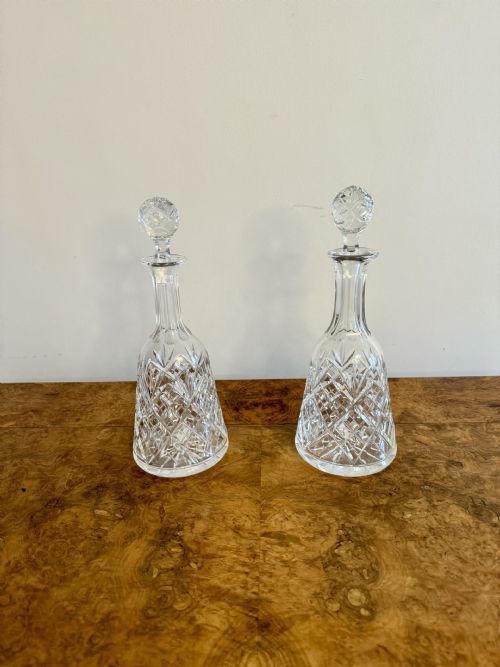
Edwardian Cut Crystal Pair
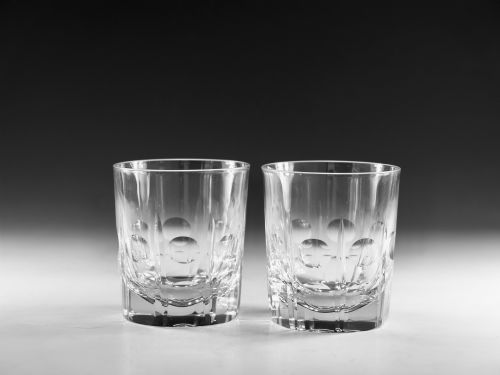
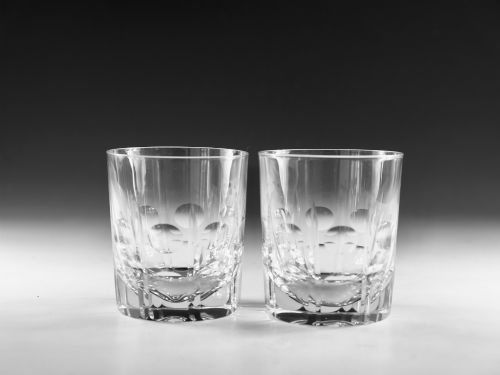
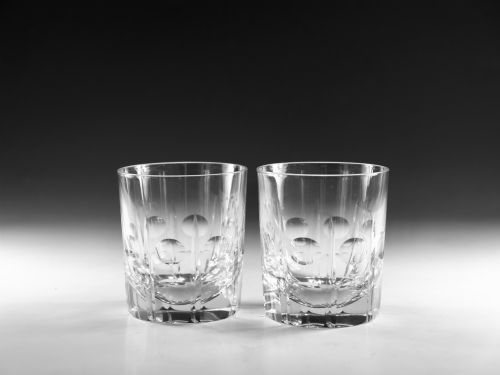
When you handle an edwardian cut crystal pair, you hold domestic glass shaped by heavy wheel-cutting and polished to a sharp refractive clarity.
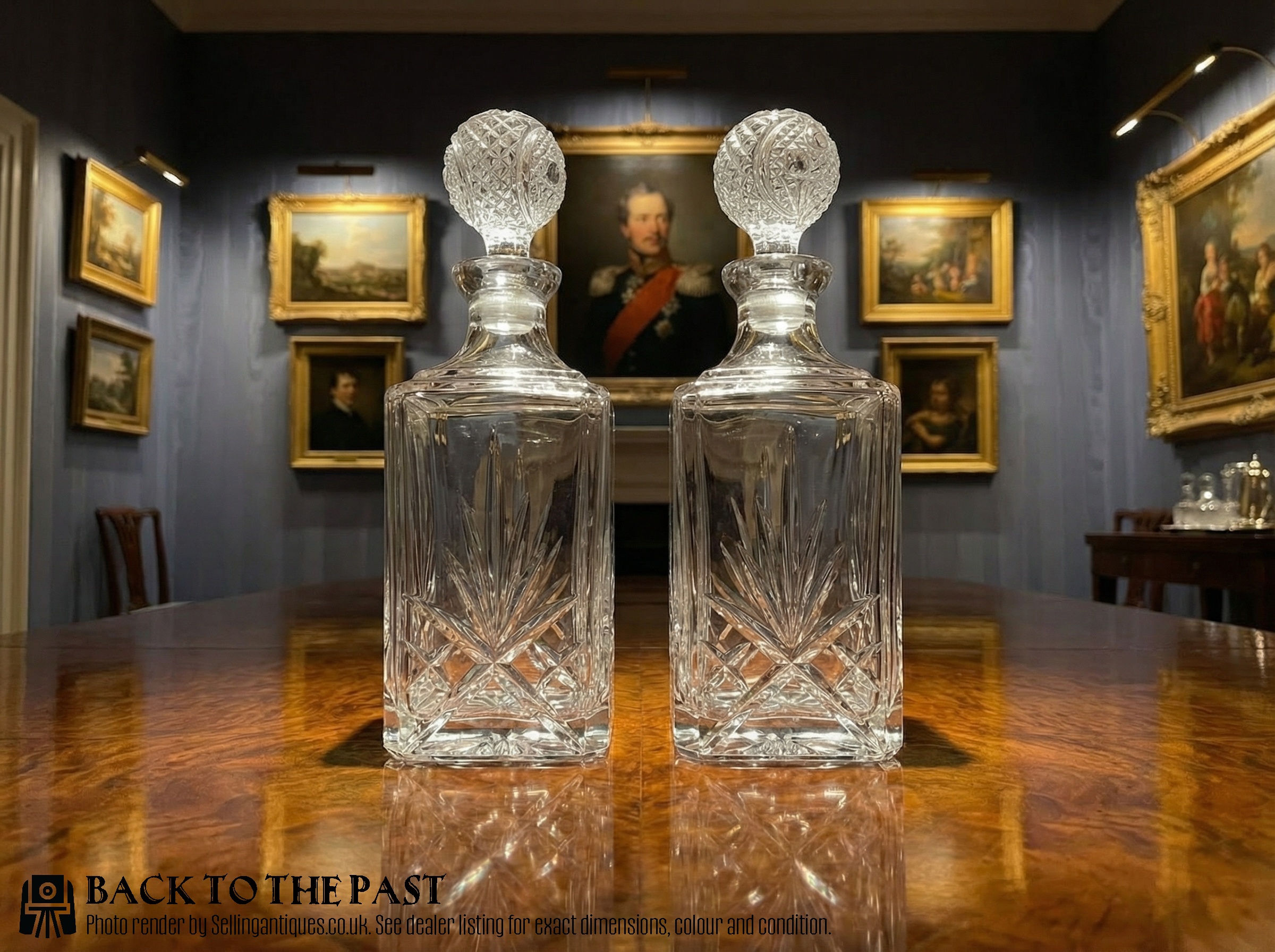
Edwardian Cut Crystal Pair
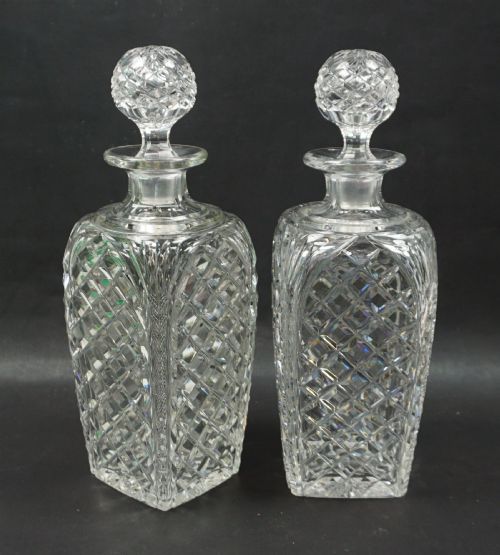
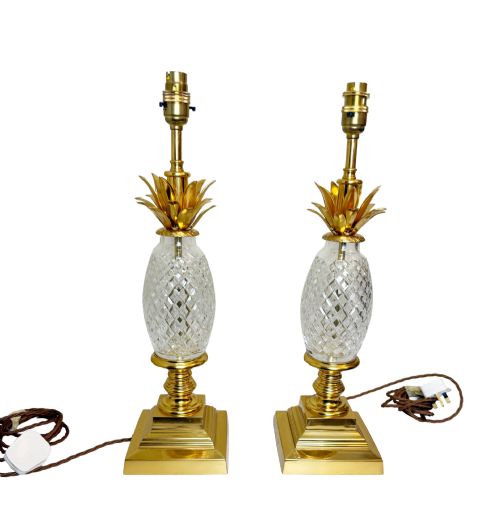
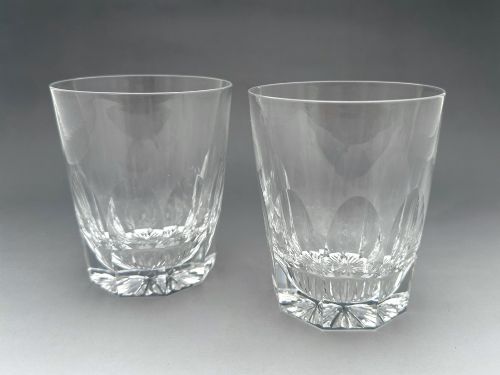
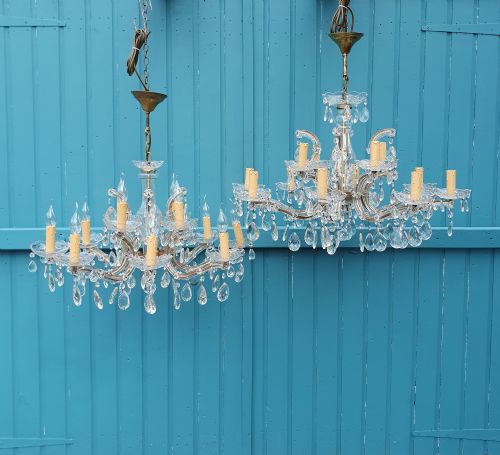
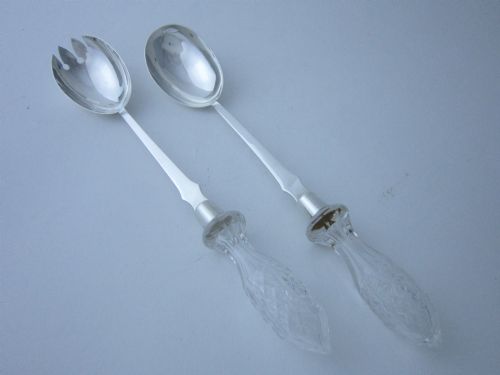
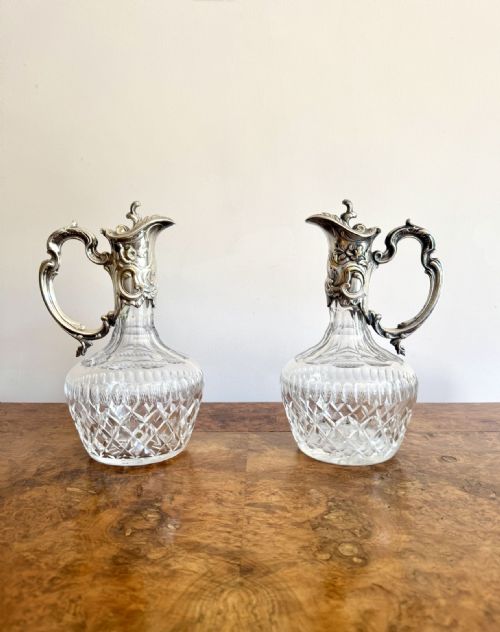
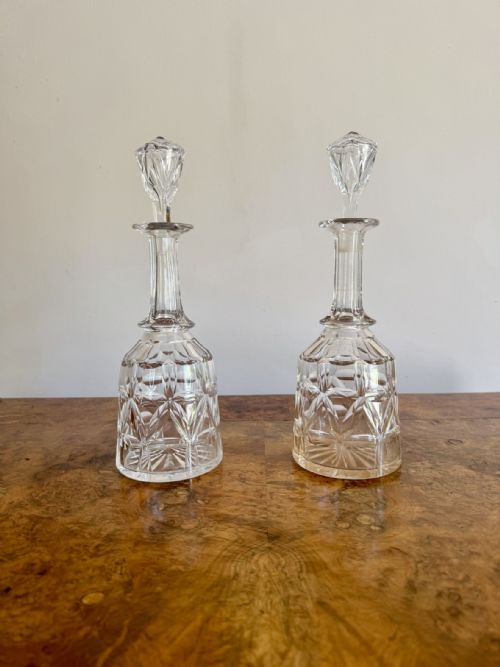
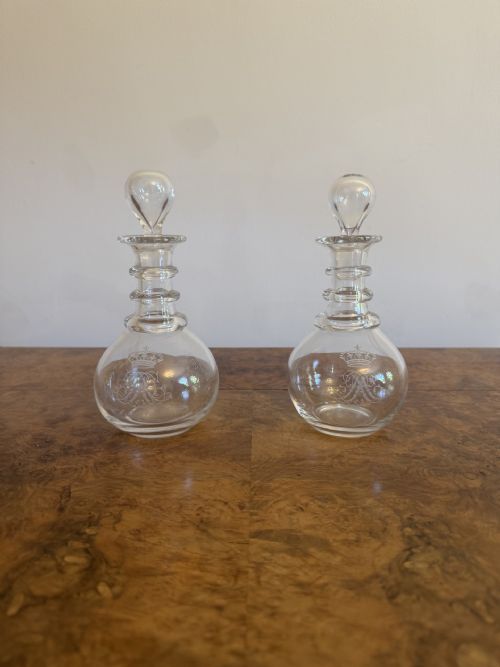
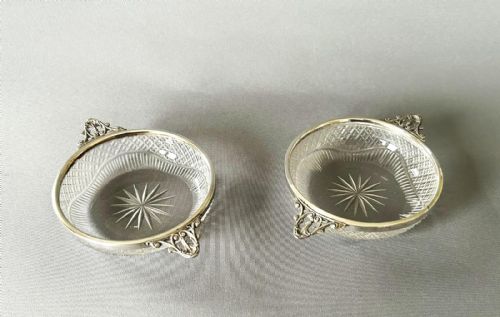
An edwardian cut crystal pair typically brings together matching vessels or lighting components produced around the turn of the twentieth century. Decanters, whisky tumblers, wine glasses, scent bottles, and chandeliers dominate the forms preserved from this period. These matching objects were designed to sit symmetrically in formal dining rooms and drawing rooms, performing domestic duties with brilliance.
The heavy decanters with square or bell-shaped bodies sit alongside table lamps, candlesticks, and wall lights mounted with brass or sterling silver collars. English and French workshops produced much of this output, utilising lead crystal that catches artificial or natural light from every angle. Buyers encounter both utilitarian table pieces and decorative lighting fixtures sharing identical cutting patterns.
While Victorian antecedents often display dense, overall ornamentation, edwardian cut crystal pairs frequently balance deep incisions with calmer expanses of clear glass. This restraint marks the transition from nineteenth-century exuberance towards lighter Edwardian interiors. Each survivor in a pair relies on the other to complete the balanced visual symmetry expected by the original dining table or mantelpiece.
Depth of facet and clarity of metal
The distinction between ordinary production and superior craftsmanship lies in the crispness of the wheel-cut facets. Sharply defined mitre cuts with clean, unchipped edges reflect light intensely, whereas softer, rounded depressions indicate hurried execution or excessive polishing. The weight and acoustic ring of the lead crystal further separate standard wares from heavier, more sonorous pieces.
Attention to supporting materials also signals quality, seen in heavy cast brass mounts, fully hallmarked sterling silver collars, and balanced proportions between the glass body and its stopper. Matched pairs where both items share identical weight, tint, and height demonstrate greater care at the workshop stage than assembled sets.
F. & C. Osler·James Powell·George Unite·Mappin & Webb
The Edwardian Cut Crystal Pair Glossary
- Cut crystal
- Glass containing lead oxide that has been decorated on a wheel with facets, flutes, or geometric patterns. This heavy material yields a bright refractive sparkle when clean.
- Decanter
- A glass vessel fitted with a stopper, used for holding and serving wine or spirits. Pairs of these containers often feature matching stoppers ground to fit individual necks.
- Bonbonniere
- A small decorative jar or vase intended for sweets or confiserie. These lidded containers frequently appear in cut lead crystal.
- Claret jug
- A pouring vessel specifically for red wine, usually combining a cut glass body with a silver or plated mount, handle, and hinged lid.
- Lead crystal
- Glass containing a significant proportion of lead oxide, which softens the material for easier cutting and increases its brilliance and weight.
Edwardian Cut Crystal Pair: Frequently Asked Questions
Are original stoppers important for decanters?
Original stoppers that match the cut pattern and fit the specific neck snugly maintain the integrity and visual balance of the object. Decanters retain higher collector interest when paired with their original ground stoppers rather than replacements.
In some cases, numbers or marks are scratched onto both the neck and the base of the stopper to show they were ground together in the workshop. Inspecting the frosted ground portion helps confirm the stopper belongs to that specific vessel.
How can I date edwardian glass?
The Edwardian period spans from nineteen hundred to nineteen ten, sitting between the late Victorian era and the First World War. Stylistic clues include lighter cutting patterns, restrained forms, and specific hallmarks on accompanying silver mounts.
Silver collars often bear date letters and town marks that provide an exact year of manufacture. Comparing the weight, tint, and cutting style against dated pieces in archives helps narrow down unmarked examples.
Can I use these decanters for daily dining?
These vessels were built for functional domestic service and remain entirely suitable for holding wine or spirits at the table. Ensure the interior is thoroughly rinsed before use, as older decanters can accumulate residue over decades of storage.
Avoid pouring very hot liquids into lead crystal to prevent thermal shock and potential cracking. Hand washing preserves the polished surface better than mechanical dishwashers.