


Vintage Glass Flagon
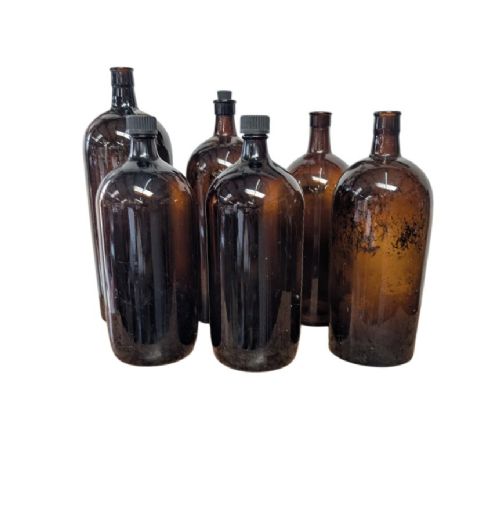
A vintage glass flagon is a sturdy vessel meant for serving or storing spirits, holding history in green, amber, or crystal.
Vintage Glass Flagon
When you search for a vintage glass flagon, you encounter practical vessels originating from periods spanning the Victorian and Edwardian eras up to the mid-twentieth century. The selection includes decanters, claret jugs, ewers, apothecary bottles, and large carboys.
Most examples you meet here date from the nineteenth century and the early twentieth century, reflecting domestic dining and storage traditions. Forms range from simple clear glass wine bottles to elaborate silver-mounted crystal jugs.
Origins vary from English makers to French country workshops and Bohemian production centres. Buyers find everything from utilitarian amber apothecary jars to decorative cut glass table decanters.
Materials and construction
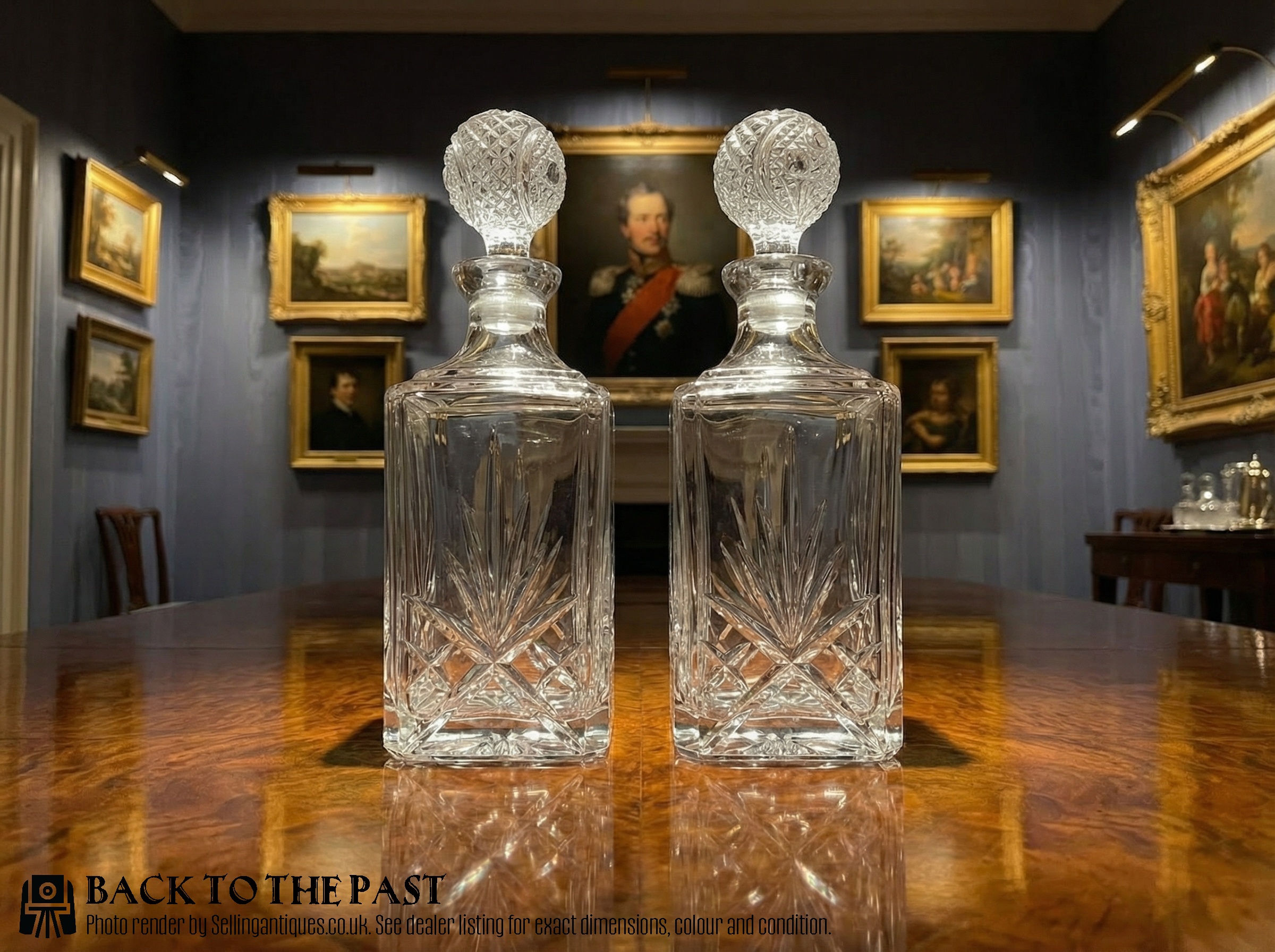
Makers utilised blown glass, lead crystal, and heavy cut glass to form the primary bodies of these vessels. Production methods combined traditional glassblowing with manual wheel-cutting to achieve faceted patterns and clear optics.
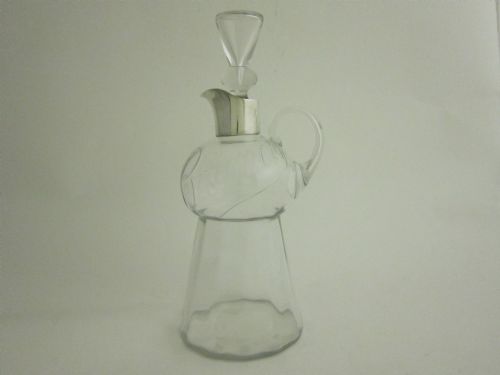
Many specimens incorporate metal mounts in sterling silver or silver plate, featuring hinged lids, collars, and handle attachments. Coloured glass varieties such as cranberry, amber, and blue achieved their hues through mineral oxides added during the melting process.
One piece takes the unmistakable form of a ceramic or glass dog, ready to guard your sideboard.
Judging the quality
Quality rests upon the weight and clarity of the glass, the depth of hand-cut facets, and the integrity of any metal mounts. Heavy lead crystal and crisp wheel-cut decorations distinguish superior pieces from standard pressed glass.
The craftsmanship of silver or silver-plated collars and finials also marks the distinction. Hallmarked sterling silver mounts and finely chased figural tops indicate higher workshop standards.
Orfèvrerie Produx Saint Hilaire
The Vintage Glass Flagon Glossary
- Carboy
- A large, rounded glass bottle protected by its size, historically used for transporting liquids. They appear frequently in larger French formats.
- Claret jug
- A specialised pouring vessel designed for red wine, combining a glass body with a metal handle and hinged spout. Edwardian and Victorian versions often feature elaborate silver plating.
- Cranberry glass
- A rich red-pink transparent glass created by adding gold chloride to the molten batch. It gained popularity during the Victorian period for tabletop serving ware.
- Ewer
- A large jug with a wide spout and looped handle, used historically for water or wine service. These pieces frequently showcase intricate wheel-cut designs.
- Overlay glass
- A technique where a layer of coloured glass is fused over a clear body and partially cut away to reveal patterns. This method produces high contrast and deep relief on decorative bottles.
Vintage Glass Flagon: Frequently Asked Questions
What is a vintage glass flagon used for?
These vessels served diverse practical purposes ranging from decanting wine at the dining table to storing dry goods and apothecary liquids in pharmacies. They functioned as both utilitarian storage and decorative serving ware.
Today, buyers utilise them to display fresh stems, serve spirits, or anchor a room as decorative accents on shelves and sideboards.
How do I date a glass decanter?
Dating relies on observing manufacturing marks, pontil scars on the base, and the style of any metal mounts or engraving. Victorian and Edwardian pieces often exhibit distinct cut glass patterns and silver hallmarks.
Comparing the closure type, neck finish, and glass tint against known period styles helps narrow the decade of production.
Are silver mounts marked for hallmarking?
Many silver-mounted examples carry British hallmarks or continental silver stamps indicating the standard of metal used. These marks provide reliable clues to the exact year and place of manufacture.
Unmarked metal is often silver plate rather than solid sterling silver, which remains common on Edwardian claret jugs and ewers.
How should I clean antique glass?
Gentle washing with warm water and mild soap preserves the delicate interior surfaces and historic metal mounts. Avoid abrasive pads that scratch the glass or damage silver plating.
Allowing the vessel to air dry upside down prevents water spots inside narrow necks and carboys.