
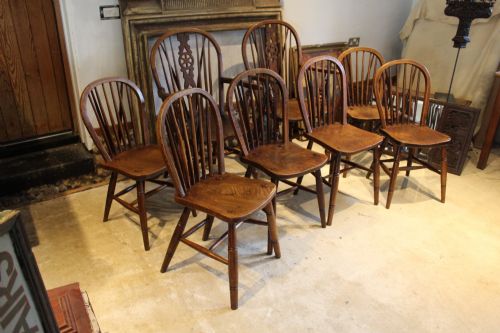
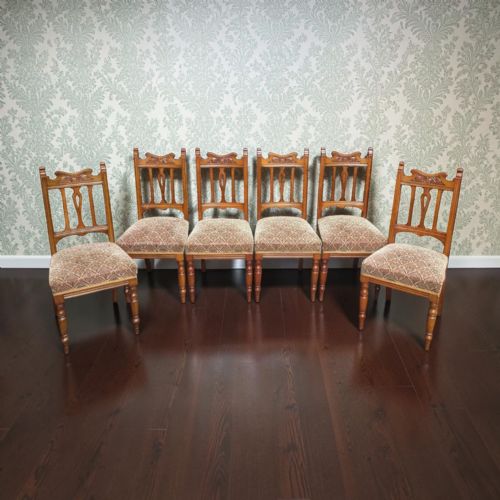
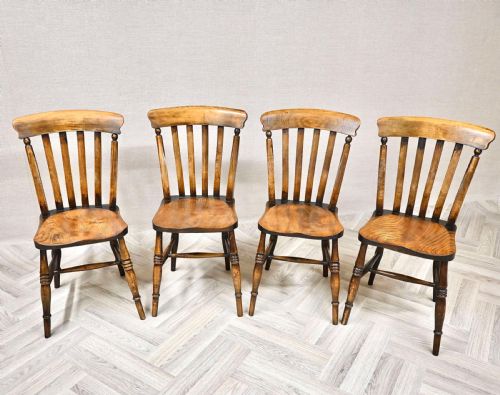
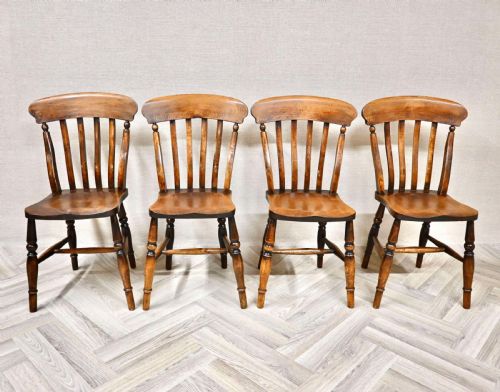
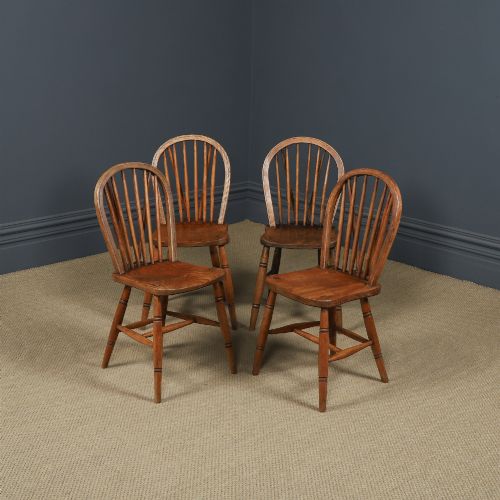
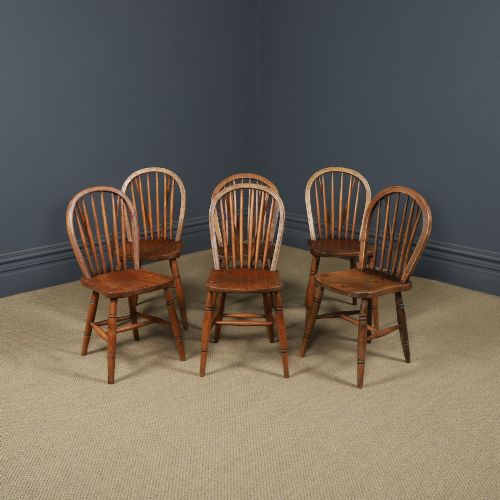
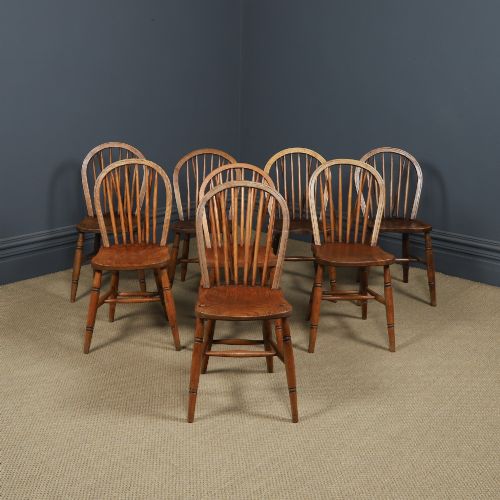
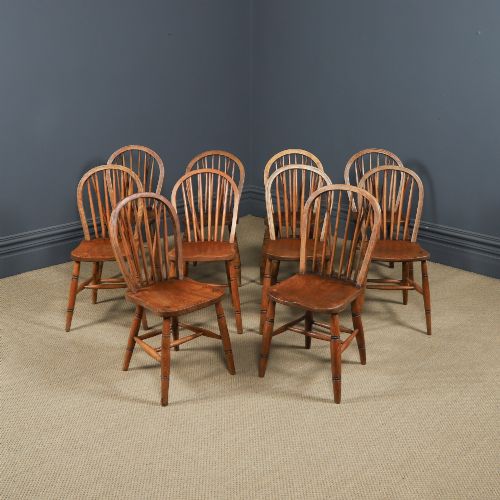

Edwardian Country Dining Chairs
Edwardian country dining chairs bring robust vernacular charm to the table, offering sturdy timber construction and honest rustic character for everyday dining.
Edwardian Country Dining Chairs
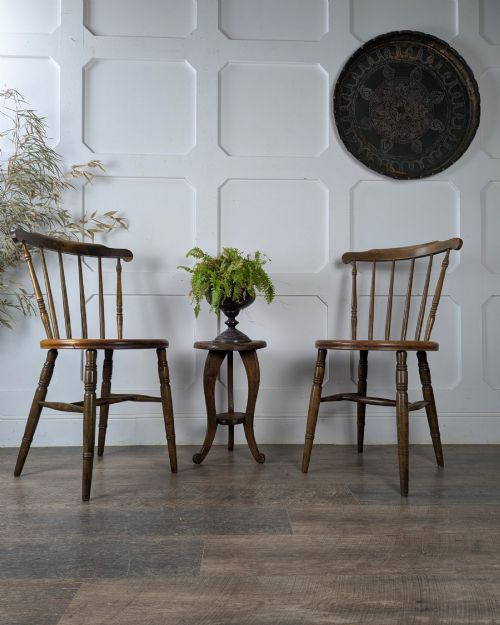
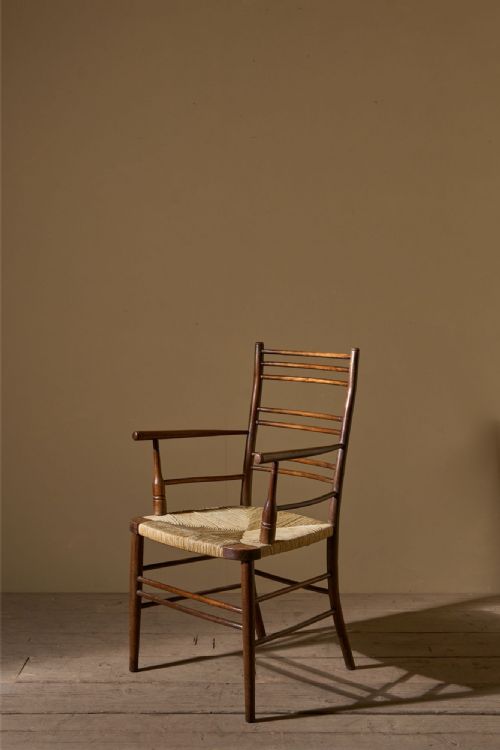
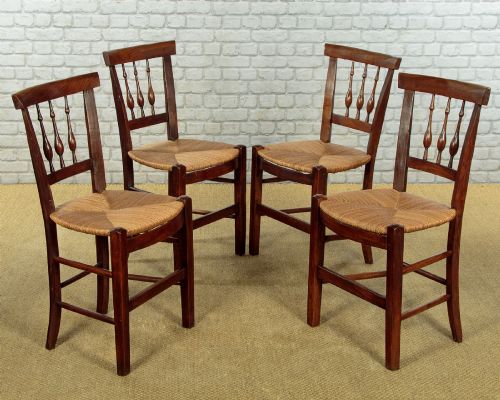
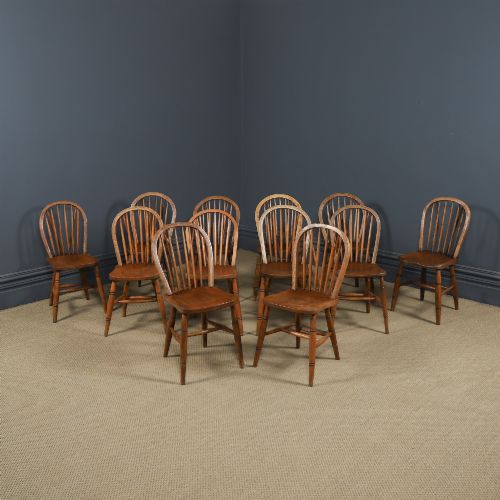
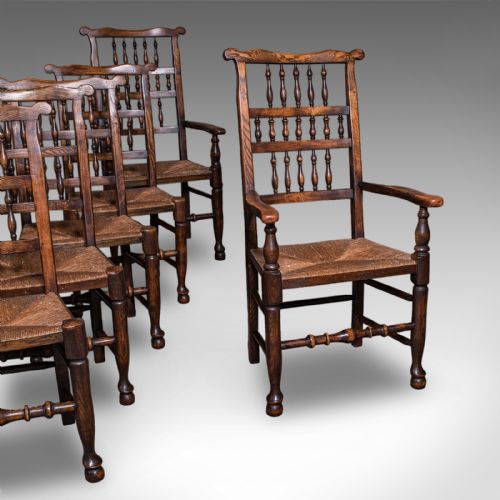
Edwardian country dining chairs encompass practical kitchen and farmhouse seating, including Windsor hoop and stick backs, ladder backs, and rush seat chairs. These pieces draw on English country, Arts and Crafts, and vernacular traditions from the early twentieth century and the nineteenth century.
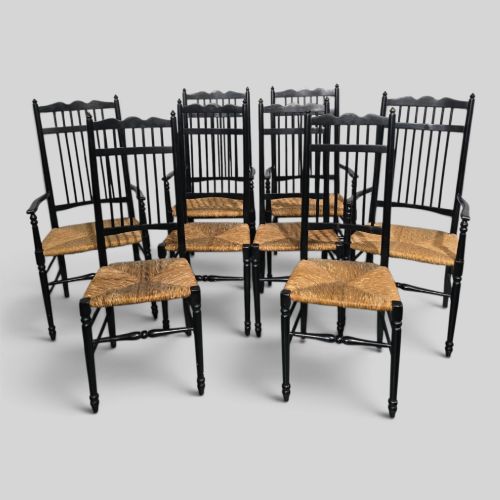
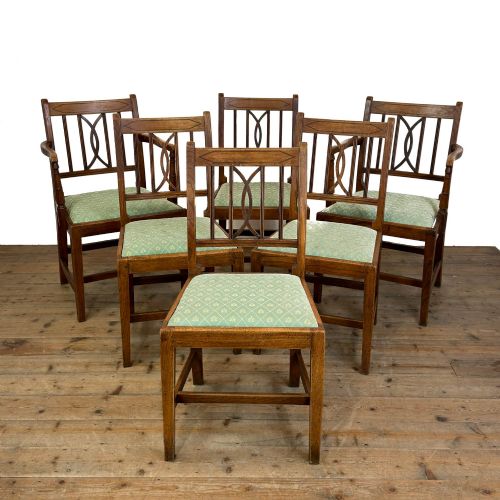
Buyers encounter sturdy sets in ash, elm, oak, and beech, ranging from small groupings to large sets suitable for communal dining tables. The forms bridge formal dining requirements with the simpler utility of farmhouse and kitchen environments.
How they were made
Constructed primarily from domestic timbers such as ash, elm, oak, and beech, these chairs rely on traditional joinery methods suited to heavy daily use. Turnings, steam-bent components, and pegged joints give the frames structural resilience.
Seats incorporate carved solid timber planks, woven rush, or drop-in upholstered pads covered in fabric. Secondary timbers like alder and fruitwood appear alongside ebonised wood and painted finishes.
Some sturdy kitchen chairs have survived a century of family arguments, spilled tea, and chaotic Sunday dinners while stubbornly refusing to wobble.
What varies in quality
Quality rests in the integrity of the timber selection and the retention of original matching components across larger sets. Hand-carved details, well-turned spindles, and tight joints distinguish finer examples from standard utility seating.
The preservation of original surface patination and authentic rush or wooden seats elevates a set above heavily altered or mismatching assemblages.
Heals
The Edwardian Country Dining Chairs Glossary
- Windsor
- A traditional chair construction featuring a solid wooden seat into which the legs and back spindles are wedged directly. These chairs often use a combination of ash and elm for strength and flexibility.
- Rush seat
- A seating surface woven from dried marsh rushes around a wooden frame. This technique creates a textured, supportive base commonly found in traditional country chairs.
- Ladder back
- A chair back composed of several horizontal arched slats set between two upright posts. This regional style dates back centuries and remains a staple of country furniture.
- Arts and Crafts
- A design movement prioritising traditional craftsmanship, simple forms, and visible natural materials. Chairs in this style often highlight the grain of oak or fruitwood.
- Carver
- An armchair designed to match a set of dining chairs, traditionally placed at the head of the table. These incorporate supportive armrests integrated into the back frame.
Edwardian Country Dining Chairs: Frequently Asked Questions
How do I choose the right set size?
Consider the length of your dining table and the physical space available in the room. Sets range from smaller four-piece groupings up to large gatherings of ten or more chairs.
Matching carvers often accompany larger sets for the heads of the table. Ensure you measure leg clearance and width to allow comfortable seating for guests.
Are rush seats durable for daily use?
Rush is a remarkably strong natural material when woven tightly around a sturdy wooden frame. It withstands regular daily dining provided it is kept dry and away from excessive moisture.
Avoid placing these chairs in damp environments to preserve the natural fibres. Occasional gentle cleaning helps maintain the integrity of the weave over decades of use.
What woods were used for these chairs?
Country chair makers utilised readily available domestic hardwoods and softwoods. Ash and elm provide the flexible strength required for bent Windsor hoops and shaped spindles.
Oak and beech form the solid frames and legs of ladder backs and Lancashire styles. Occasional pieces incorporate fruitwood or alder depending on regional availability.
How do I care for antique wooden chairs?
Maintain the timber by dusting regularly with a soft, dry cloth. Avoid commercial silicone polishes that can build up and degrade the historic surface finish over time.
Keep the chairs away from direct heat sources and radical temperature shifts to prevent the wood from splitting. Natural wax applied sparingly preserves the original patination.