


Edwardian Corner Shelf
Edwardian corner shelf designs combine practical corner storage with delicate tiered displays, offering walnut and mahogany timbers suited to period interiors.
What They Are
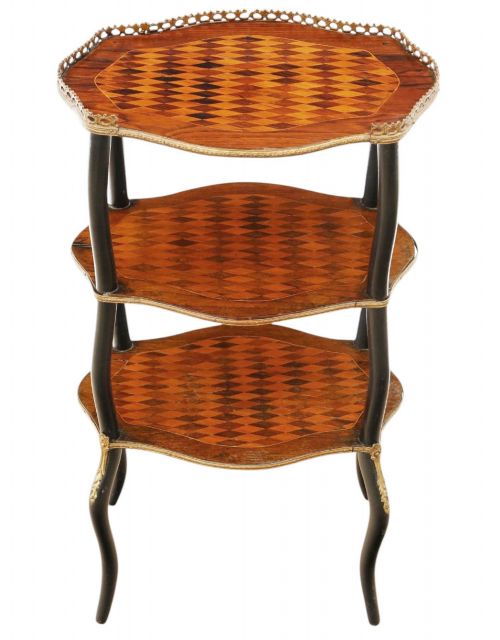
An edwardian corner shelf provides tiered shelving specifically designed to fit room corners, using vertical space efficiently while displaying small ornaments and books. These pieces often take the form of whatnots and corner display cabinets.
The selection ranges from Victorian and late nineteenth century walnut and mahogany tiers to Edwardian inlaid examples dated around eighteen ninety. Multi-tiered standing models dominate the available forms.
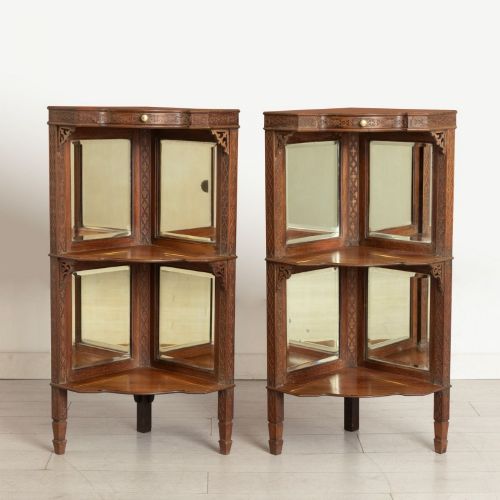
Makers such as Edwards and Roberts produced refined corner display cabinets in mahogany during the nineteenth century. Buyers frequently encounter walnut timbers enhanced by marquetry and boxwood inlay.
How They Were Made
Cabinet makers utilised solid and veneered timbers including walnut and mahogany, shaping upright supports and shelves to fit ninety-degree wall angles. Marquetry and boxwood inlay decorate the surfaces of many pieces.
Some variants incorporate mirror glass panels and brass hardware, adding reflective light and structural detailing to the tiered wooden framework.
Retail Price Guide 2026
Typical UK retail prices for edwardian corner shelf, calculated from the Sellingantiques database of over a million retail prices indexed since 2003. This retail price guide relies exclusively on Sellingantiques data; no external sources or auction records are used, so the figures do not describe the wider market.
Cabinet makers built these tiered wonders specifically to rescue neglected room corners from absolute emptiness.
What Varies in Quality
Quality rests upon the precision of the marquetry and boxwood inlay, alongside the selection of figured walnut or mahogany veneers. Finer pieces demonstrate meticulous joinery in the tiered supports and turning.
The inclusion of specialist elements such as bevelled mirror glass or labeled maker attribution elevates a piece above standard utility items from the period.
Edwards & Roberts
The Edwardian Corner Shelf Glossary
- Whatnot
- An open tiered piece of furniture designed for the display of ornaments and small objects. These stands typically feature three to five shelves supported by slender uprights.
- Marquetry
- Decorative veneer work formed by fitting together small pieces of wood, shell, or other materials into geometric or pictorial patterns. This technique adorns the shelves and panels of finer walnut pieces.
- Boxwood Inlay
- Contrasting pale wood inserted into dark timber channels to create delicate borders and linear motifs. It characterises the refinement of nineteenth century cabinet work.
- Corner Display Cabinet
- A glazed or open unit constructed to fit snugly into a room angle. These cabinets protect delicate objects while making use of otherwise redundant space.
Frequently Asked Questions
What is an edwardian corner shelf?
An edwardian corner shelf is a multi-tiered wooden stand built to occupy the corner of a room. It provides vertical display space for ornaments and books without dominating floor area.
Most examples utilise walnut or mahogany, frequently embellished with inlaid boxwood and marquetry details.
How were these corner shelves used?
Historically, these pieces served as whatnots or display cabinets in sitting rooms and parlours. They held porcelain, small books, and decorative objects.
Their corner placement allowed households to maximise display capacity in smaller or awkwardly shaped rooms.
How do I date a corner whatnot?
Dating relies on timber choices, construction techniques, and decorative styles. Pieces range from mid nineteenth century walnut stands to edwardian inlaid variations.
Makers' marks or specific marquetry patterns can also help narrow down the decade of production.
Where should I place one at home?
These units suit empty wall angles in hallways, living rooms, or bedrooms. They provide functional display surfaces in rooms where floor space is limited.
Keep them away from direct sunlight to protect the walnut or mahogany veneers and inlaid details.