

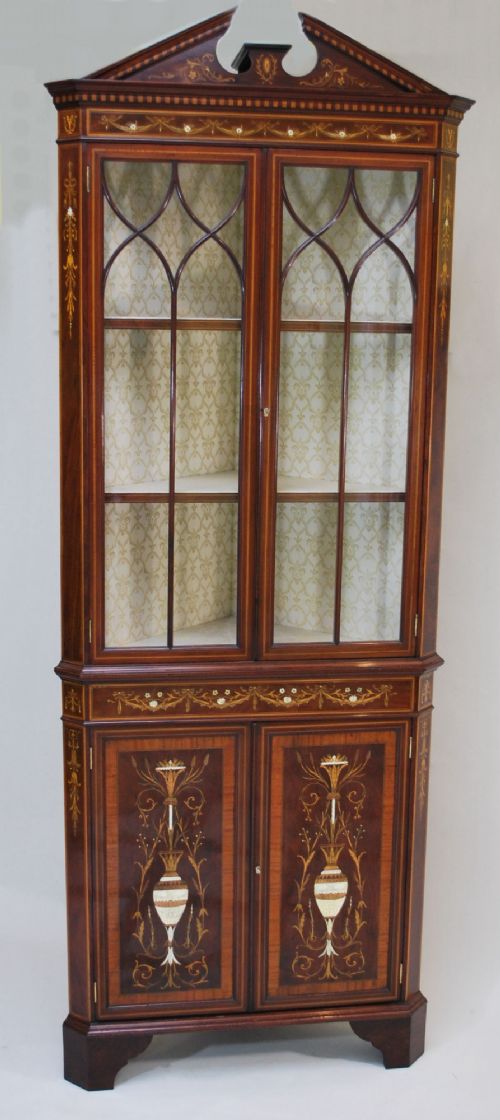
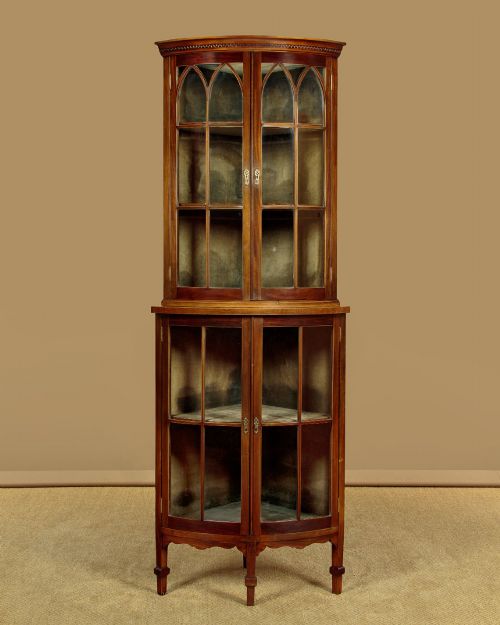

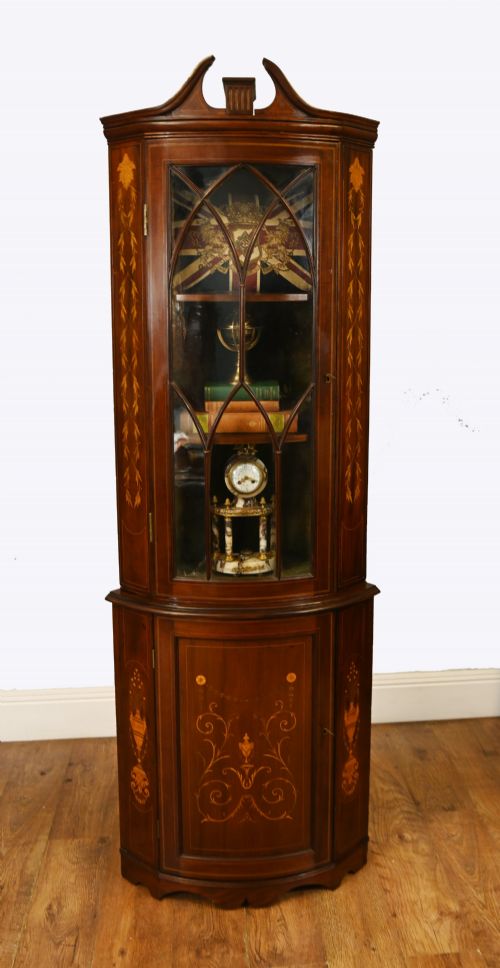


Edwardian Corner Bookcase
An edwardian corner bookcase turns wasted wall angles into practical shelving, bringing polished mahogany and subtle inlay to awkward corners.
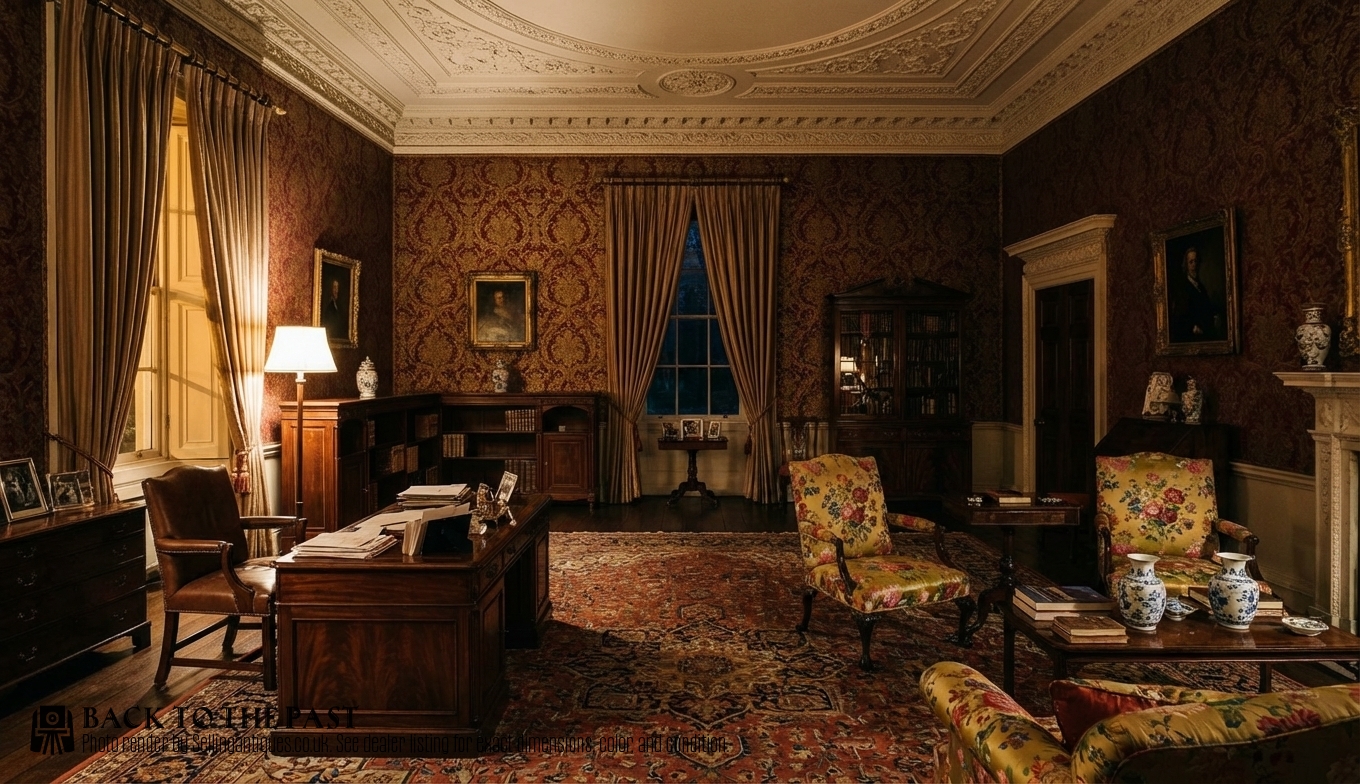
Edwardian Corner Bookcase
When searching for an edwardian corner bookcase, buyers encounter tall standing cupboards, open shelves, and glazed display pieces designed to fit tight 90-degree room angles. The material record shows these pieces emerge primarily from the Edwardian era around 1900, alongside related Victorian and Sheraton Revival interpretations.
Most examples found on this page consist of mahogany structures enhanced by satinwood inlay, often featuring single or double doors with glass panels. Makers applied these fitted formats to maximise floor space while offering surface display areas for books and porcelain.
How they were made
Cabinet makers constructed these corner units predominantly from solid and veneered mahogany, frequently incorporating contrasting satinwood inlay to accentuate the door panels and cornices. Glass panes were fitted into timber doors for display variants, while brass handles and hinges completed the hardware.
Marquetry and painted details appear across the Edwardian pieces, requiring precise hand-cutting of wood veneers to form floral or classical motifs. Structural joints relied on traditional woodworking methods to ensure stability within angled room configurations.
Listings demonstrate that Edwardian corner furniture frequently combines mahogany structures with satinwood inlay and glass panel doors.
What varies in quality
Quality separates standard production items from superior workshop pieces through the crispness of the marquetry inlay and the selection of timber grain. Finer examples display meticulous satinwood banding and well-figured mahogany veneers that have aged with a deep, warm tone.
Proportion and execution of the glazing bars also distinguish the range, where delicate wooden framing around glass doors reflects higher cabinet-making standards. The integration of brass fittings and the structural integrity of the corner joints further indicate the original tier of manufacture.
Goodhall Lamb and Heighway·Edwards And Roberts
The Edwardian Corner Bookcase Glossary
- Marquetry
- Decorative patterns formed by fitting together small pieces of wood veneer into timber surfaces. This technique creates detailed floral or geometric motifs across cabinet doors.
- Satinwood inlay
- Contrasting yellowish timber strips inserted into darker wood surfaces to create neat geometric borders. It provides a bright visual edge against mahogany frames.
- Sheraton Revival
- A late nineteenth and early twentieth-century design movement inspired by eighteenth-century neoclassical furniture. These pieces utilise classical symmetry, tapered legs, and delicate marquetry.
- Whatnot
- A piece of freestanding open shelving with multiple tiers supported by upright posts. They were traditionally utilised for displaying ornaments and small books in corners.
Edwardian Corner Bookcase: Frequently Asked Questions
How do I fit a corner bookcase?
Measure the exact wall depth and ceiling height of your chosen corner before selecting a cabinet, as these units require precise right-angle alignment. Standing double height formats need stable wall anchoring to prevent tipping on uneven floors.
Ensure clearance for opening doors, particularly on glazed display models where handles or neighbouring furniture might restrict full access.
What is satinwood inlay?
Satinwood inlay involves embedding fine strips of pale, lustrous timber into recesses carved into darker primary woods like mahogany. This technique frames panels and shelves with contrasting geometric lines.
Cabinet makers utilised this method to add decorative definition without altering the primary structural form of the corner furniture.
How do I clean mahogany surfaces?
Dust timber surfaces regularly with a soft, dry cloth along the grain to prevent particle buildup in the marquetry recesses. Avoid silicone-based sprays that can damage older French polish finishes.
Apply a quality beeswax periodically to nourish the mahogany and preserve the natural sheen of the wood over time.
Are Edwardian bookcases sturdy?
Edwardian corner units are built from dense hardwoods like mahogany and walnut, offering reliable structural strength for storing heavy books. The 90-degree angular construction inherently distributes weight firmly against two adjoining walls.
Inspect the internal shelf supports and base plinths to ensure they remain secure after decades of domestic use.