


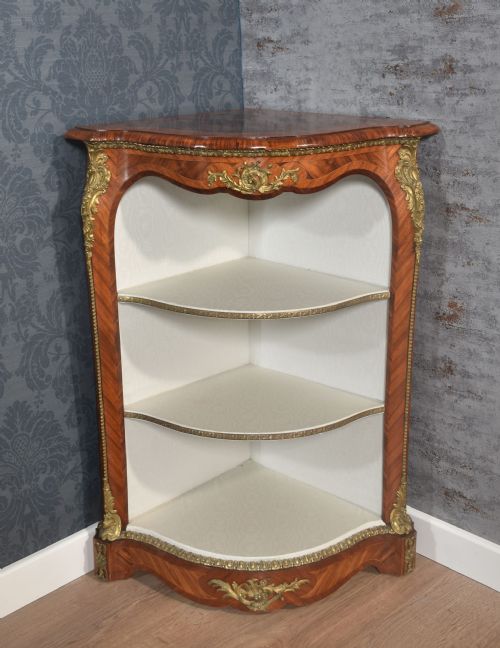


Corner Open Bookshelf
These corner open bookshelf pieces provide tiered display and storage, bringing architectural timber and polished surfaces into tight interior angles.
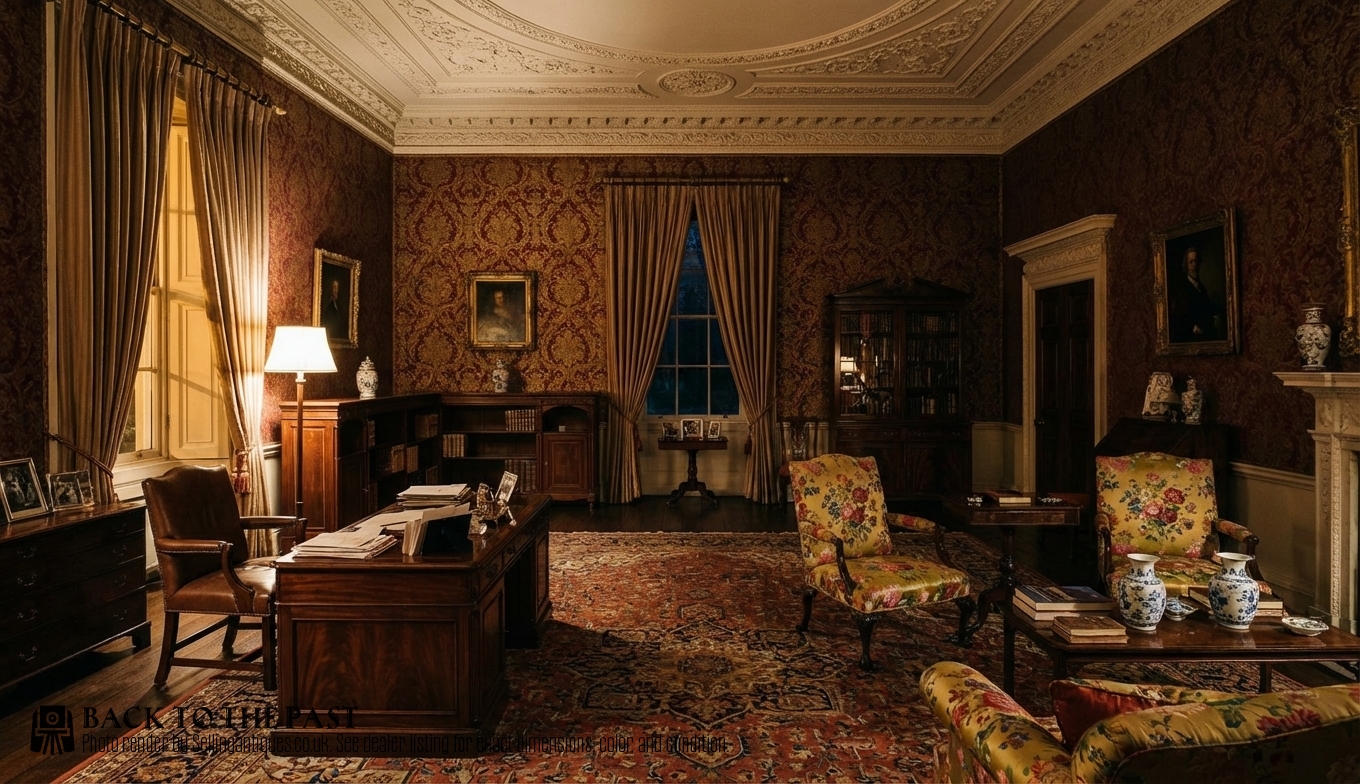
Corner Open Bookshelf
A corner open bookshelf or associated whatnot serves to utilise neglected angles in a room through ascending tiers of timber shelves. The selection on this page centres primarily upon nineteenth century designs, spanning Regency, Victorian, William IV and Edwardian periods.
Most examples appear as multi-tiered whatnots or etageres constructed in mahogany, burr walnut, rosewood and kingwood. These forms often incorporate lower cupboards or open compartments while maintaining an open profile suited to displaying small objects or volumes.
Materials and construction
The primary woods utilised in these pieces include figured mahogany, burr walnut and rosewood, chosen for their rich grain patterns and durability. Joinery methods of the period rely upon traditional framing and tiered upright supports to bear the weight of stacked shelves.
Decorative elements involve inlaid details, carved timber accents and occasionally brass or ormolu mounts. Certain pieces integrate fabric linings or enclosed cupboard sections beneath the open upper tiers.
Corner Open Bookshelf Retail Price Guide 2026
Typical asking prices for corner open bookshelf among the pieces listed under this phrase on Sellingantiques today, from the lower quarter to the upper quarter. They describe what is for sale here now, not the wider market.
Several pieces double as whatnots with cupboards, proving that even a book lover occasionally needs a place to hide the biscuit tin.
Distinctions in quality
The distinction between standard examples and finer items rests upon the choice of timber veneers, such as richly figured burr walnut or high-grade mahogany. Superior pieces display meticulous attention to inlay work, cabinet proportions and the crispness of any carved ornament.
Structural integrity and the quality of the original polish significantly influence the standing of a piece. Finer examples maintain balanced tiers and robust upright supports without heavy alterations to the underlying woodwork.
The Corner Open Bookshelf Glossary
- Whatnot
- A movable piece of furniture with shelves placed one above another for displaying books or ornaments. It emerged in popularity during the nineteenth century.
- Etagere
- A piece of furniture consisting of a set of open shelves for displaying small objects. This term often interchanges with whatnot in period descriptions.
- Ormolu
- Gilded bronze or brass applied as a decorative mount on furniture. It appears on select refined cabinetry.
- Inlay
- A technique of inserting pieces of contrasting material into a solid wood surface to form a decorative pattern. This adorns several mahogany and walnut examples.
Corner Open Bookshelf: Frequently Asked Questions
How were these pieces used historically?
Historically, these tiered pieces served to display ornaments, ceramics and small book collections in sitting rooms and parlours. The open shelves allowed owners to exhibit decorative items at multiple levels.
Lower enclosed cupboards, where present, provided discreet storage for household sundries while the upper open tiers held accessible reading material.
How do I identify a Victorian whatnot?
Victorian examples often feature dense timbers such as burr walnut or mahogany, coupled with turned upright supports and multi-tiered shelving. They frequently exhibit exhibition quality carving or exhibition joinery standards typical of the mid-nineteenth century.
Comparing the timber grain, turning style and overall proportions helps distinguish these pieces from later Edwardian reproductions.
How do I care for antique timber shelves?
Care involves keeping the wood away from direct heat sources and sudden humidity changes to prevent timber movement or veneer lifting. Regular dusting with a soft, dry cloth preserves the polished surface.
Applying appropriate wax feeds the grain periodically without building up excessive residue on carved details or inlaid surfaces.