
Edwardian Column Table Lamp
These upright pieces bring classical proportions to domestic lighting, offering a solid architectural presence on a sideboard or desk.
Edwardian Column Table Lamp
When searching for an edwardian column table lamp, buyers encounter lighting fixtures that adopt architectural orders such as Corinthian and Doric capitals atop vertical shafts. These pieces translate stone building traditions into domestic objects scaled for furniture placement.
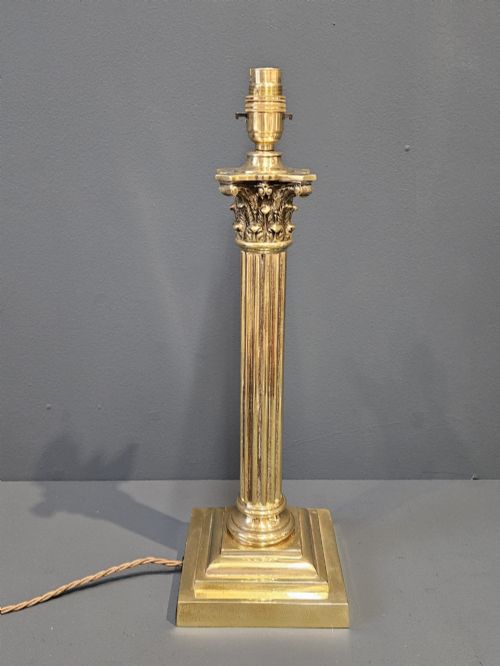
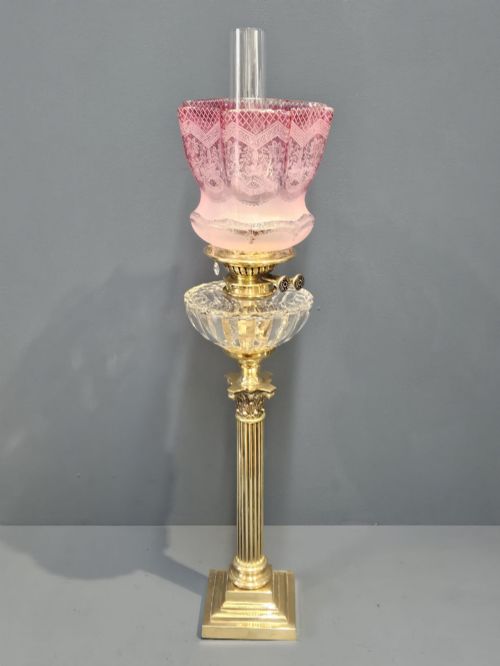
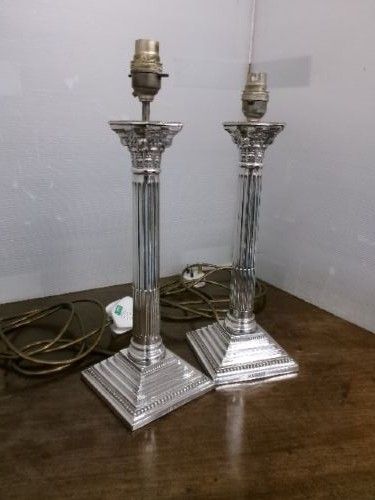
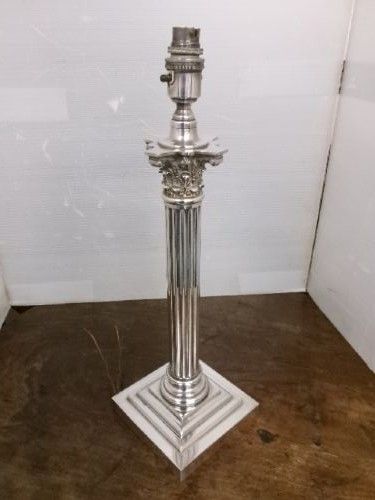
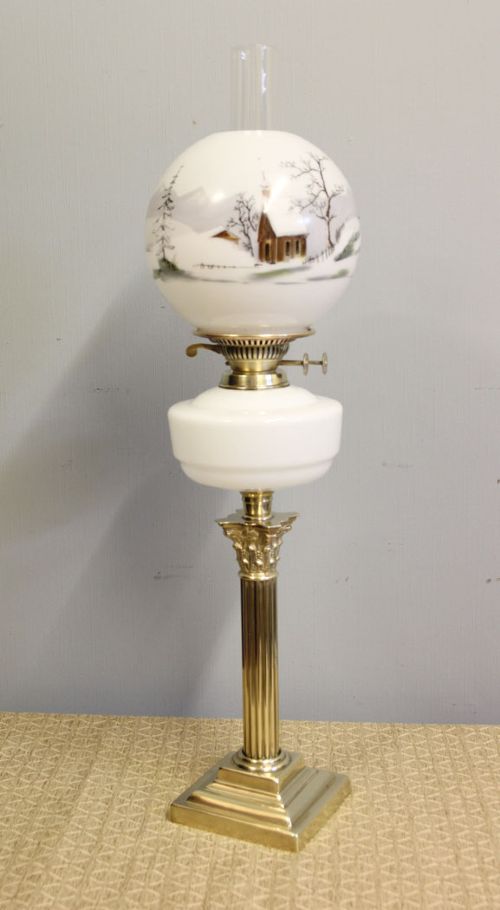
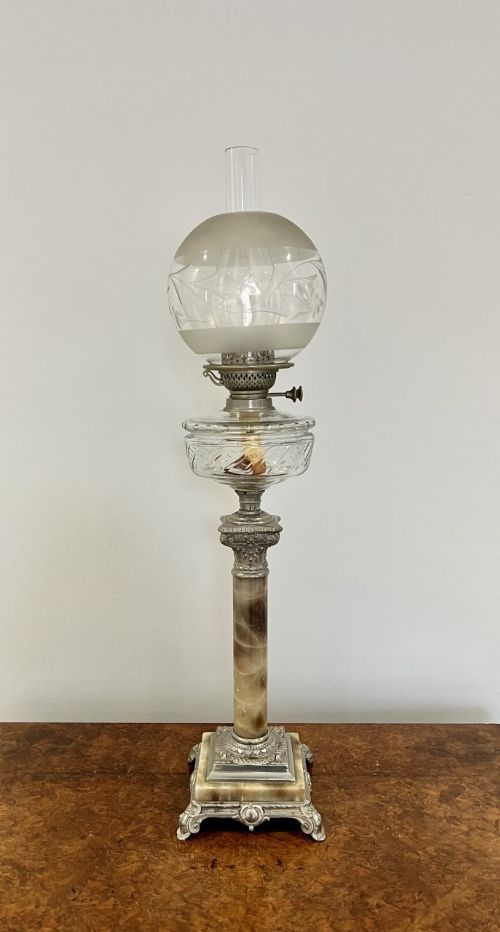
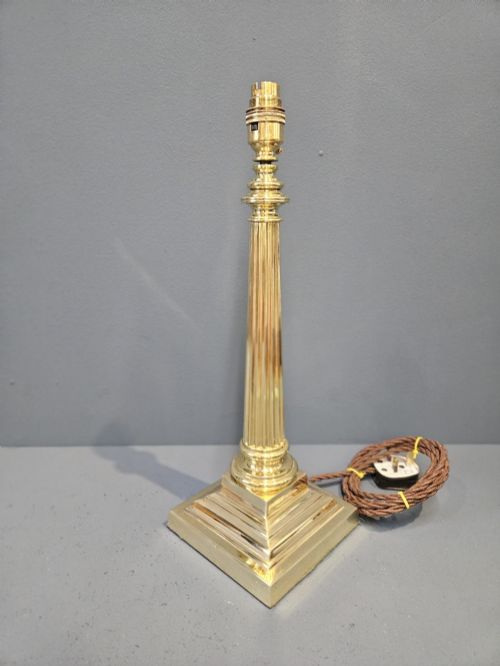
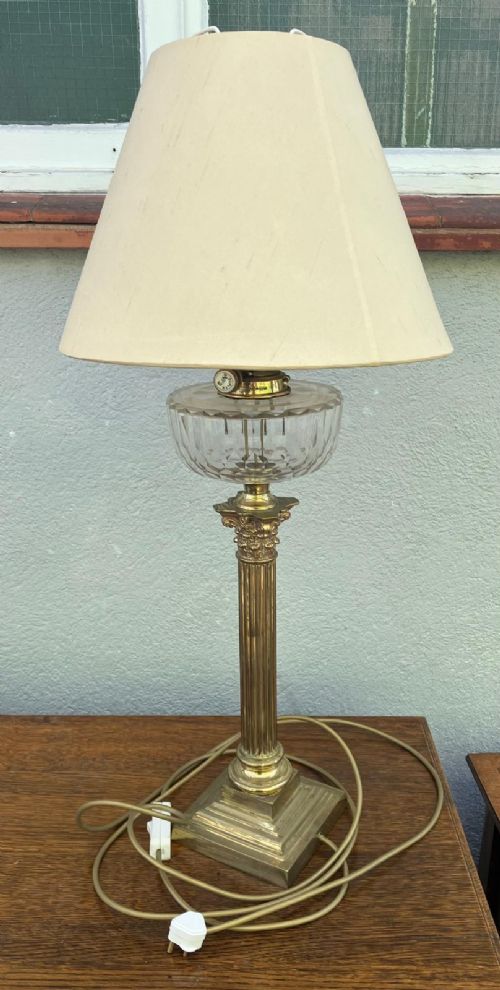
The version most commonly met on this page is the brass Corinthian column lamp, often rising from a stepped square base and originating from the Edwardian period or late Victorian era. Such designs frequently reflect the neoclassical revival interest prevalent around the turn of the twentieth century.
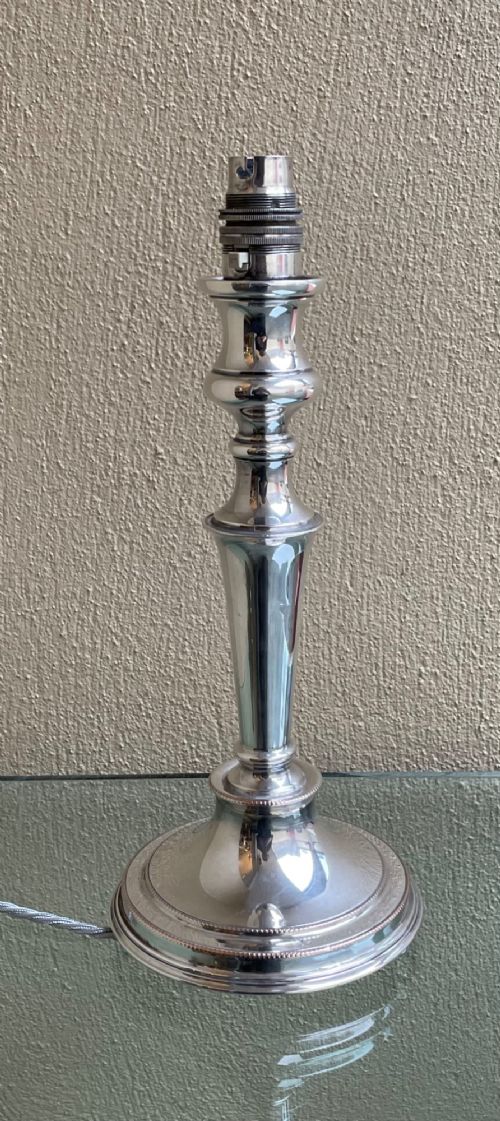
Beyond standard brass configurations, listings reveal alternative interpretations including silver-plated metal, carved oak, and combinations involving marble or alabaster. Some examples adapt earlier oil lamp mechanisms for electrical use, retaining the original proportions and heavy metal fonts.
Materials and construction
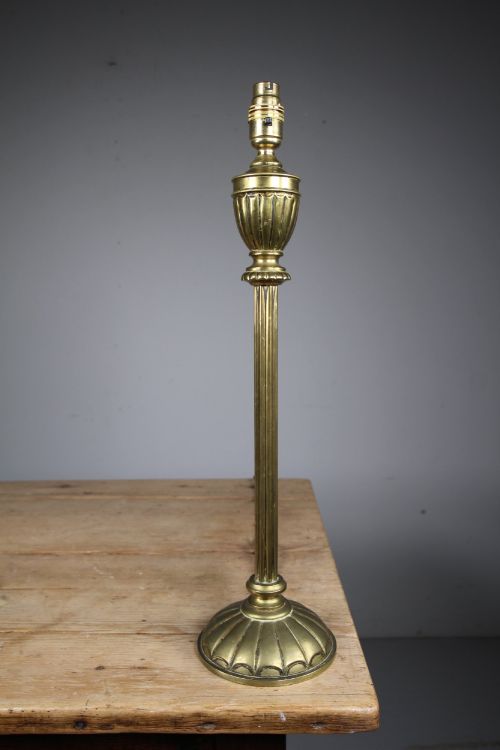
Foundries produced the primary metal components through casting and turning, shaping brass and silver-plated alloys into fluted or smooth shafts. Capitals received detailed acanthus leaf decoration in the classical tradition, while bases were weighted to ensure stability.
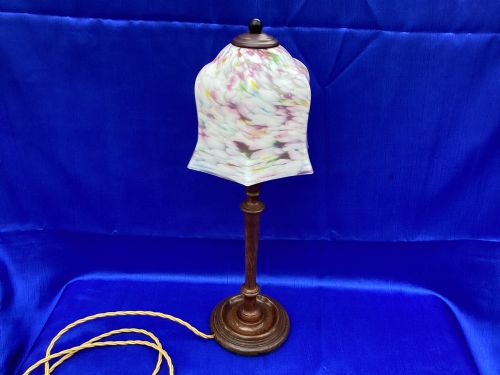
Wood columns utilise oak or mahogany turned on a lathe, sometimes paired with metal mounts or stepped wooden plinths. Stonework elements such as marble or alabaster provide solid weight and contrasting texture beneath metal capitals.
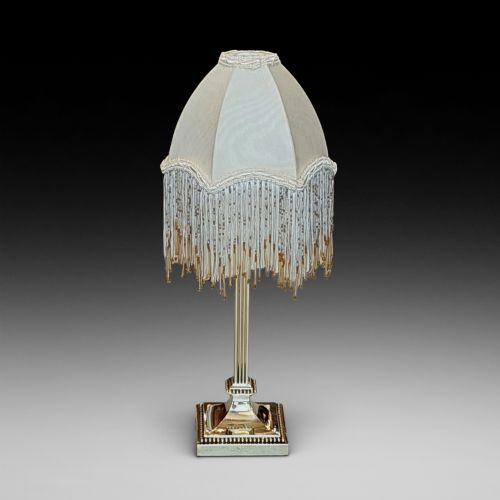
Glass components appear primarily as removable shades or font reservoirs, incorporating opaline, cranberry, or etched finishes. Silk and fabric shades supplied later diffuse the illumination directed upwards from the column top.
Listings demonstrate that brass remains the dominant material, frequently accompanied by silver plate, oak, marble, and opaline glass.
Measures of quality
The distinction between standard production and superior execution rests upon the crispness of the cast detailing on the capital and base. Finely rendered acanthus leaves and sharply defined fluting indicate superior workshop practices, whereas worn casts result from repetitive moulding.
Substantial gauge metal and genuine heavy marble or solid timber contribute to an overall balance that distinguishes better pieces from lighter alternatives. Proportions follow classical architectural rules more strictly in higher grade examples, avoiding awkward elongation or compressed shafts.
Hinks
The Edwardian Column Table Lamp Glossary
- Corinthian capital
- The uppermost section of a column featuring carved acanthus leaves and scroll details. This ornament defines the most prevalent style found on these lamps.
- Doric mount
- A simpler capital design featuring plain mouldings rather than decorative foliage. It offers a restrained alternative to the ornate Corinthian style.
- Opaline shade
- A type of milk glass used for lamp diffusers that softens the light output. These translucent shades frequently accompany period oil lamp conversions.
- Font reservoir
- The vessel originally designed to hold lamp oil before electrical conversion. In many surviving examples, this remains an integral metal or glass component.
- Stepped base
- A multi-tiered platform supporting the lower column. This tiered construction adds visual weight and stability to the upright shaft.
Edwardian Column Table Lamp: Frequently Asked Questions
What is an edwardian column table lamp?
These lighting pieces take the form of classical architectural pillars, adapting ancient column designs into functional interior furnishings. They typically feature a tall vertical shaft resting on a weighted base and topped with a decorative capital.
Most surviving examples date from the early twentieth century or late Victorian era, constructed primarily in brass, silver plate, or turned hardwoods. Their enduring appeal lies in the formal symmetry and classical dignity they introduce to domestic interiors.
Were these always electric lamps?
Many examples began as burning oil lamps before conversion to electricity during subsequent decades. The original metal or glass reservoirs frequently remain intact beneath the electrical fittings.
Original oil-burning variants often retain their burners, galleries, and decorative glass shades, while others were produced specifically as candle lamps or wired lighting from the outset.
How do I style these lamps at home?
The formal architectural presence of these fixtures suits traditional side tables, mahogany occasional furniture, and heavy timber sideboards. Their vertical orientation works well in spaces requiring height without a broad footprint.
Pairing them with appropriate silk or fabric shades maintains the period aesthetic, while their neutral metallic finishes complement both antique and contemporary interior colour schemes.
How do I distinguish Edwardian from Victorian columns?
Distinguishing between these periods involves examining the specific neoclassical revival style and manufacturing techniques. Late Victorian pieces often display heavier brass castings and more complex stepped marble or stepped metal bases.
Edwardian examples frequently present slightly more slender proportions and refined surface plating, reflecting changing tastes in domestic decoration around the nineteen hundreds.