

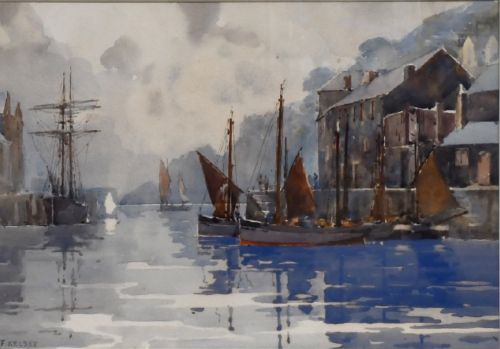


Edwardian Coastal Seascape
Edwardian coastal seascape paintings capture harbour scenes and fishing boats in watercolours and oils from the early twentieth century.
Edwardian Coastal Seascape
An edwardian coastal seascape brings maritime life and British shores into domestic spaces through framed oil paintings and watercolours. Collectors find depictions of fishing boats, Cornish harbours, and tidal bays produced during the early twentieth century.
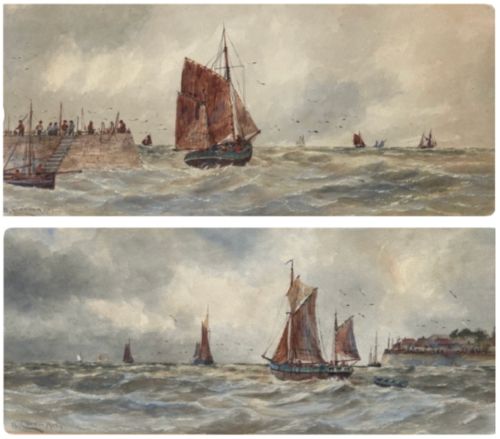
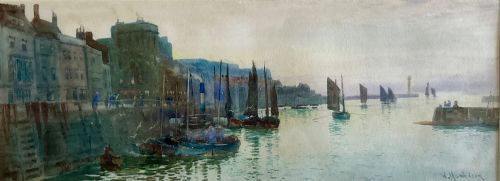
The works appearing here range from precise watercolours on paper to heavier oil paints on canvas and board. Artists of the period focused on local harbours such as Whitby, St Ives, and Polperro, recording working vessels and coastal light.
Materials and Technique
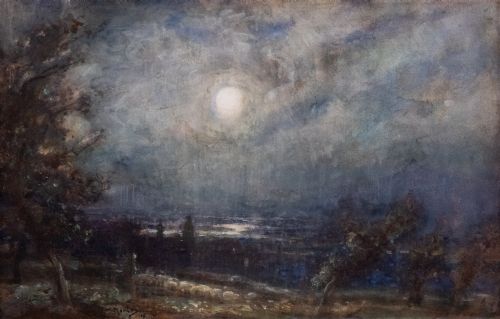
Painters applied watercolour pigment to paper or laid oil paint onto canvas and wood panels. These materials defined the texture of choppy seas, sandy beaches, and chalk cliffs.
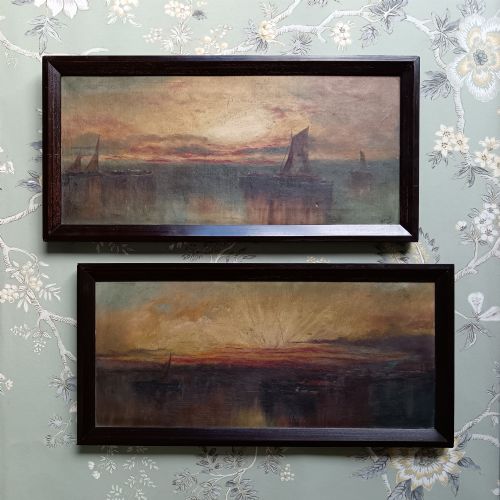
Framed artwork utilised timber surrounds to protect delicate paper sheets and stretched canvas. Pigments captured the changing light of sunrise and sunset across British and continental waters.
Artists frequently braved bracing winds and crashing spray to record the exact moment fishing boats made their run for home.
Quality and Execution
Skill in handling watercolours or oil paint distinguishes a striking coastal view from a standard topographical record. The best examples demonstrate confident brushwork that conveys the movement of waves and the atmosphere of harbour air.
Compositional balance and accurate depictions of rigging and vessel types separate accomplished marine artists from lesser contemporaries. Signed pieces with clear provenance and recorded artist biographies tend to hold greater distinction.
Thomas William Morley·Hector Caffieri·Charles Napier Hemy·Pieter Cornelis Dommersen·James Webb·Bertram Priestman
The Edwardian Coastal Seascape Glossary
- Watercolour
- A paint consisting of pigment suspended in a water-based solution, typically applied to paper. It creates luminous, transparent washes of colour.
- Oil on Canvas
- A painting technique using pigments bound in a drying oil applied to a stretched fabric surface. This method allows for rich texture and deep colour blending.
- Lugger
- A type of small sailing vessel featuring lug sails, frequently recorded by artists working around Cornish and Yorkshire fishing ports.
Edwardian Coastal Seascape: Frequently Asked Questions
What subjects appear in these paintings?
The artworks primarily show fishing boats, harbour entrances, and coastal cliffs around Britain. Common locations include Whitby, St Ives, and various Devon and Cornwall shores.
Artists also recorded daily maritime labour, such as seaweed gatherers and fishermen landing their catch. Occasional European scenes, including Venetian waterways, also feature.
How do watercolours differ from oils here?
Watercolour paintings use transparent pigments on paper to achieve light, atmospheric effects of sea and sky. They are typically displayed behind glass within timber frames.
Oil paintings utilise heavier pigments on canvas or board, offering rich textures and deeper colour saturation. These works capture the robust weight of choppy seas and wooden vessels.
Where should these paintings be hung?
These framed artworks suit rooms with stable light levels away from direct sunlight to protect pigments on paper and canvas. Wall placement above mantelpieces or in study spaces allows the fine details of harbour life to be appreciated.
Proper framing with conservation-grade materials helps preserve both oil and watercolour formats over time.
How can I identify the period?
Signatures, dates, and stylistic traits offer primary clues to the age of a marine painting. Many works from this era carry artist signatures alongside dates spanning the late nineteenth and early twentieth centuries.
Subject matter focusing on traditional sailing luggers and working fishing fleets also points firmly toward the Edwardian epoch.