


Edwardian Coastal Artwork
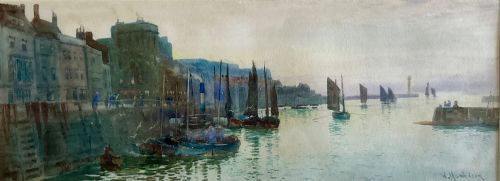
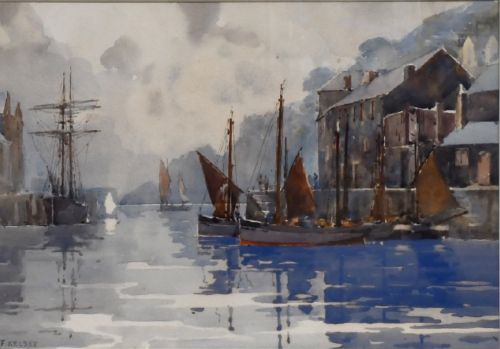
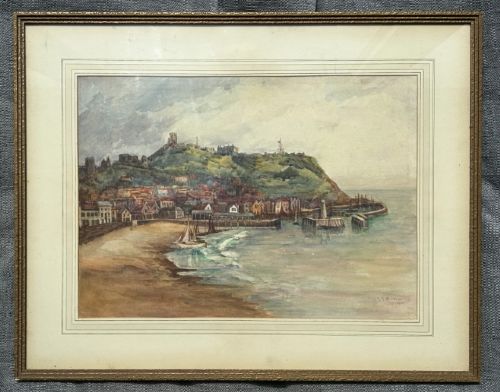
Edwardian coastal artwork brings maritime harbours, fishing boats and cliffside towns directly into rooms through period paintings.
Edwardian Coastal Artwork
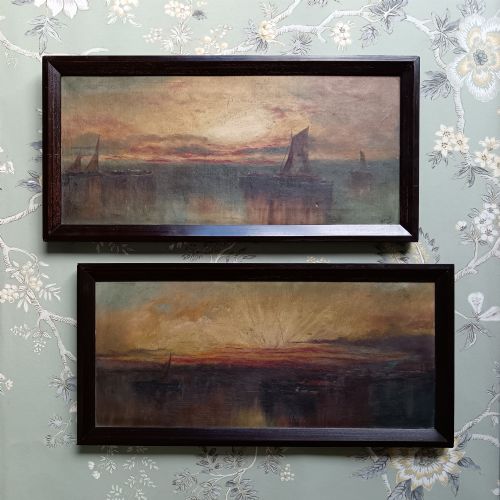
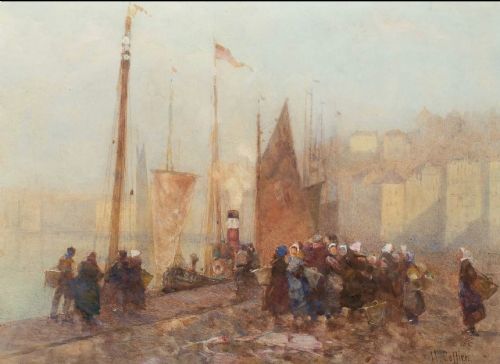
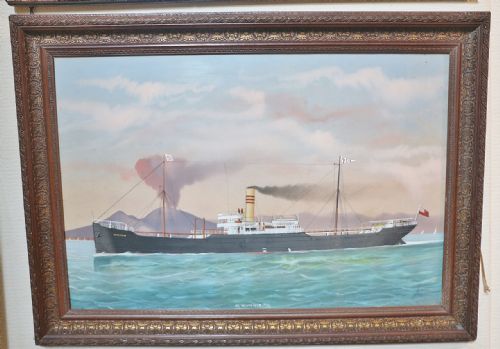
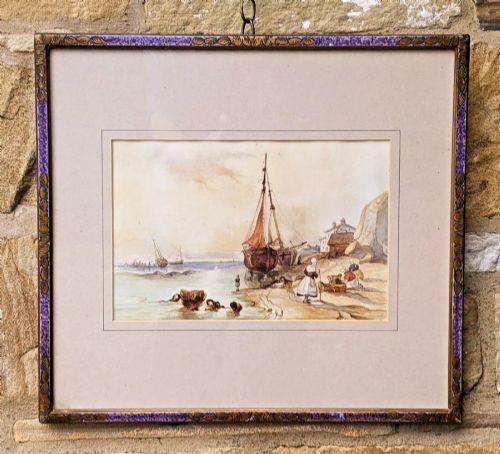
Edwardian coastal artwork captures the busy harbours, sandy shores and maritime scenes of the early twentieth century. Buyers searching this phrase meet framed watercolours and oil paintings depicting working boats, quiet inlets and coastal architecture.
The selections span early twentieth-century periods with works rendered in watercolour and oil on canvas. Regional English harbours feature prominently alongside broader maritime views set during the Edwardian era.
Materials and methods
Artists worked primarily with watercolour pigment on paper or applied oil paints directly onto canvas and wood panels. These painted compositions were frequently placed behind glass or mounted within wooden frames.
Brushwork ranges from detailed depictions of rigging and stonework to impressionistic applications of pigment that capture shifting light on coastal waters.
Salt air may have long since cleared from the studio, but the painted tides remain steadfastly fixed in place.
Evaluating craftsmanship
Quality rests in the handling of atmospheric light and the precision of maritime detail within the painted surface. Skilled compositions convey depth and movement in choppy seas without losing the architectural integrity of local quays and vessels.
The strength of a piece often depends on the artist's ability to render the specific topography of named locations such as Whitby, St Ives or Polperro with convincing scale and atmosphere.
Hector Caffieri·William Matthison·Frank Kelsey·Charles Napier Hemy·Pieter Cornelis Dommersen
The Edwardian Coastal Artwork Glossary
- Watercolour
- A paint consisting of colour suspended in a water-soluble vehicle, typically applied to paper to produce translucent washes of tone.
- Oil on canvas
- A painting technique utilising pigments bound in a drying oil, applied to a stretched woven fabric support.
- Woodblock print
- An image created by carving a design into a block of wood, applying ink, and transferring it to paper.
- Gouache
- A water-soluble paint type that includes an added white pigment to create an opaque finish.
Edwardian Coastal Artwork: Frequently Asked Questions
Where were these coastal scenes typically painted?
Artists focused heavily on working fishing ports and coastal towns around the British Isles. Locations like Whitby, St Ives and various Cornish harbours appear frequently across the surviving works.
Many painters lived near these coastal communities or travelled along the coastline to record the daily routines of local fishermen and trading vessels.
How do I hang a period watercolour safely?
Watercolours require protection from direct sunlight to prevent the pigments from fading over time. Glazing with appropriate glass helps shield the paper from environmental moisture and pollutants.
Displaying works away from heat sources and damp walls preserves both the paper support and the surrounding wooden frame.
What subjects define maritime art from this era?
The compositions concentrate on harbour life, incoming fishing fleets, and sailing vessels navigating coastal waters. Scenes often record specific working activities such as hauling seaweed carts or landing the daily catch.
Lighthouses, estuaries and coastal castles also serve as primary subjects for artists working during the early twentieth century.