



Edwardian Circular Wall Mirror
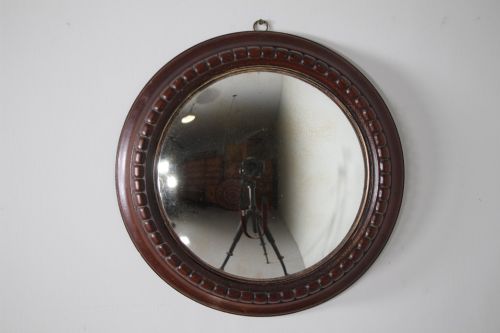
An edwardian circular wall mirror brings immediate depth and light to a room through curved glass and refined frames.
Edwardian Circular Wall Mirror
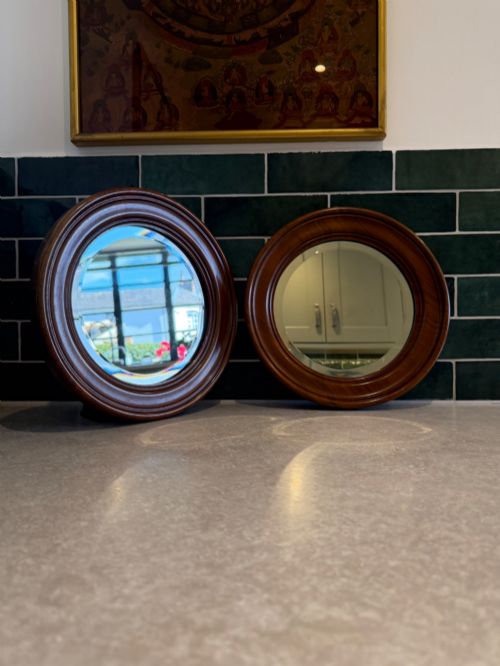
An edwardian circular wall mirror delivers classic reflection in shapes ranging from compact rounds to larger statement pieces. These items originate from periods spanning the nineteenth century through to nineteen twenty, taking the form of wall mirrors and pier mirrors.
The selection on this page centres predominantly on Edwardian examples alongside Victorian, Regency, and Arts and Crafts interpretations. Buyers frequently encounter frames shaped from timber or finished in bright gilt.
How they were made
Maker construction relies heavily on solid timbers including oak, mahogany, walnut, and ebonised wood alongside traditional gesso work. Artisans turned circular wooden frames to house the glass securely within the timber surround.
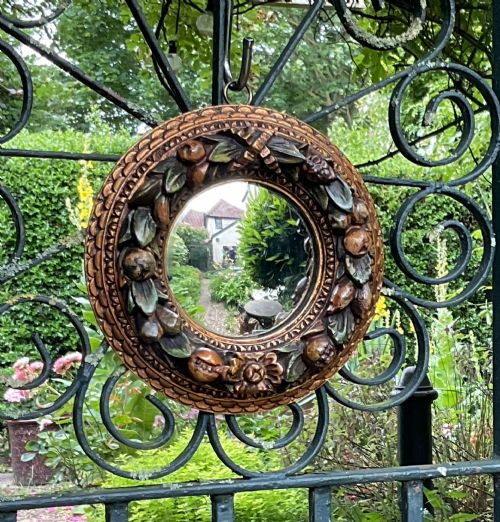
Giltwood finishes provide a bright reflective surface on ornate frames, while convex glass creates a wide-angle curved reflection. Carved details add texture to the wooden borders.
Edwardian Circular Wall Mirror Retail Price Guide 2026
Typical asking prices for edwardian circular wall mirror among the pieces listed under this phrase on Sellingantiques today, from the lower quarter to the upper quarter. They describe what is for sale here now, not the wider market.
Convex mirrors were famously known as eye of the bank glasses, giving merchants a watchful sphere over their counting rooms.
What varies in quality
Quality rests in the crispness of the carved woodwork and the smoothness of the gesso application over the frame. Superior examples display harmonious proportions between the circular glass plate and the surrounding timber or gilt border.
The depth of the convex glass and the integrity of the original wood finishes distinguish finer pieces from simpler wall hangings.
The Edwardian Circular Wall Mirror Glossary
- Convex mirror
- A curved glass plate that bends light to produce a wide-angle, spherical reflection of the room. This form was traditionally utilised by butlers to survey staff.
- Pier mirror
- A tall wall glass designed to hang on the narrow pier of wall space between windows. These pieces maximise natural light in nineteenth-century interiors.
- Gesso
- A plaster-like mixture applied to wooden frames as a smooth base for gilding. Skilled makers model fine relief ornament directly into this layer.
- Ebonised wood
- Timber treated with chemical stains or dark finishes to imitate costly ebony. This dark surface creates a sharp contrast against gilt or silvered elements.
Edwardian Circular Wall Mirror: Frequently Asked Questions
Where should I hang a circular wall mirror?
These round mirrors suit entrance halls, living rooms, and bedroom spaces where they bounce natural daylight across the room. Hang them at eye level to maximise their reflective impact.
Ensure the wall fixings match the weight of the timber and glass frame for secure placement.
How do I identify an Edwardian mirror?
Edwardian mirrors often exhibit lighter timber tones like walnut and oak, alongside refined gilt frames inspired by earlier Regency designs. Construction techniques combine machine precision with hand finishing.
Labels, stamps, or backboards frequently provide clues regarding the exact period of production.
Are convex mirrors difficult to maintain?
Dusting the curved glass and carved wooden frame gently with a soft cloth keeps the surface clean. Avoid harsh liquid cleaners that might seep behind the glass plate.
Regular care preserves the original finish of both the wood and the gilt gesso.