

Edwardian Circular Table
An edwardian circular table brings compact balance to a room, offering versatile surfaces ranging from small occasional pieces to large extending dining furniture.
Edwardian Circular Table
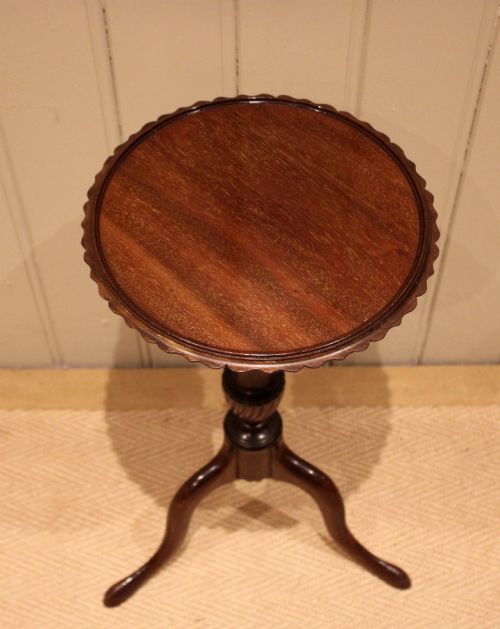
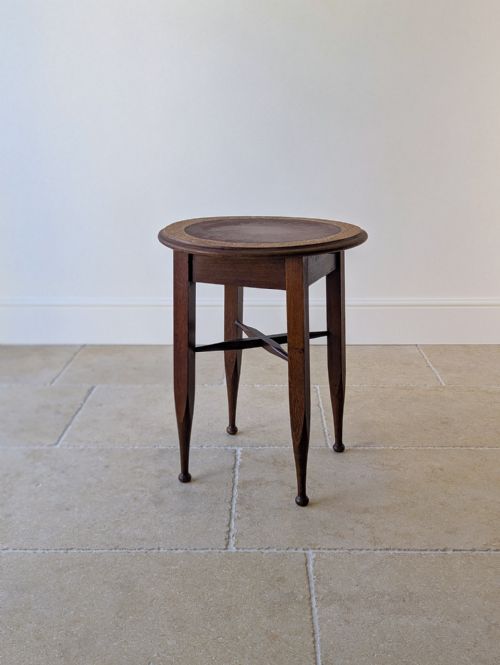
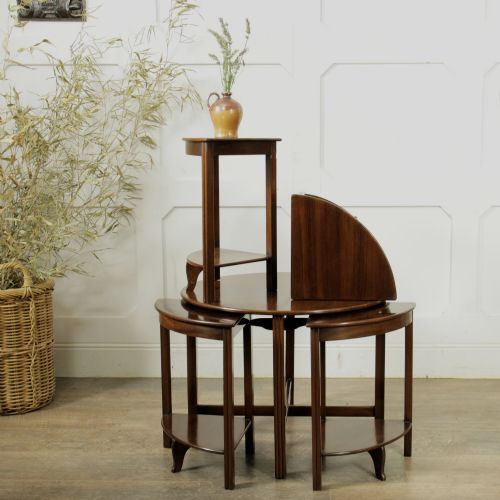
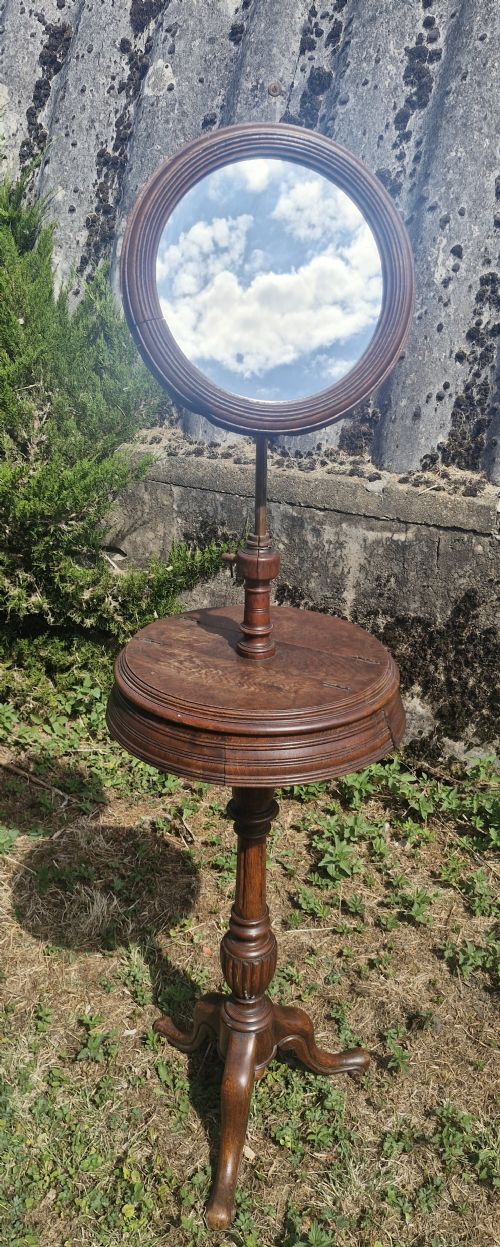
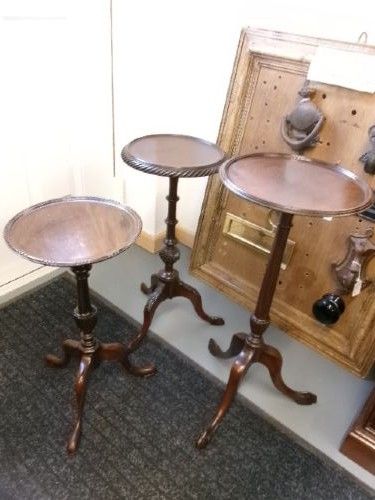
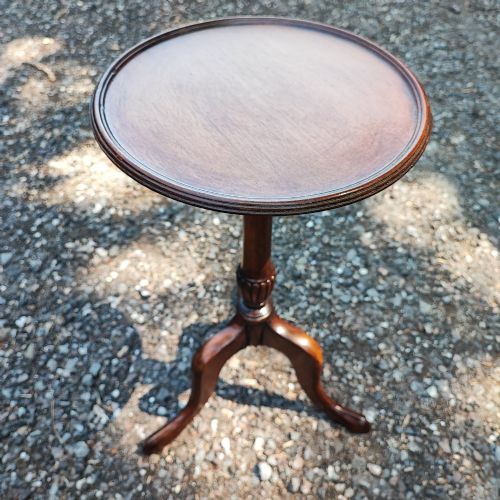
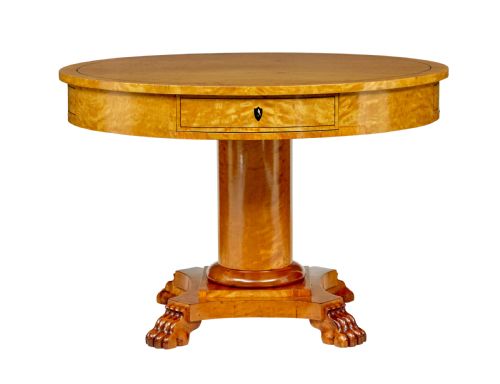
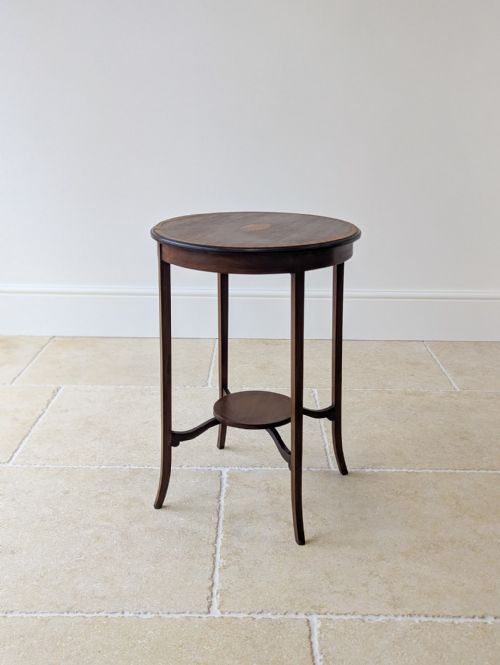
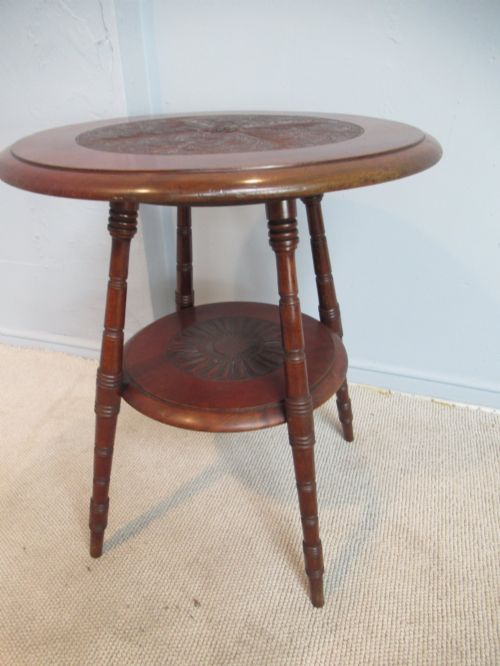
An edwardian circular table encompasses a broad variety of domestic furniture forms, appearing most frequently as occasional, centre, lamp, or wine tables designed for early twentieth-century interiors. These pieces frequently manifest as compact occasional tables, though the category also includes larger extending dining tables, coffee tables, and tiered tray tops.
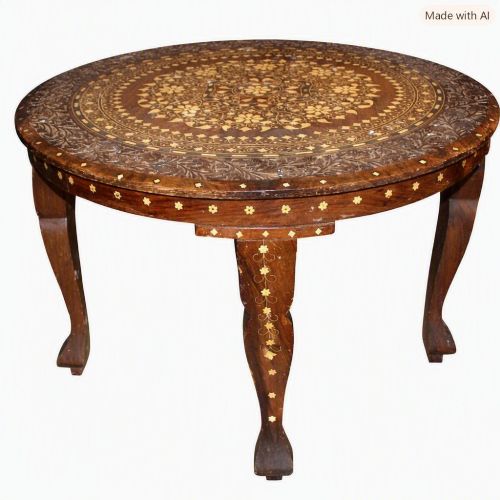
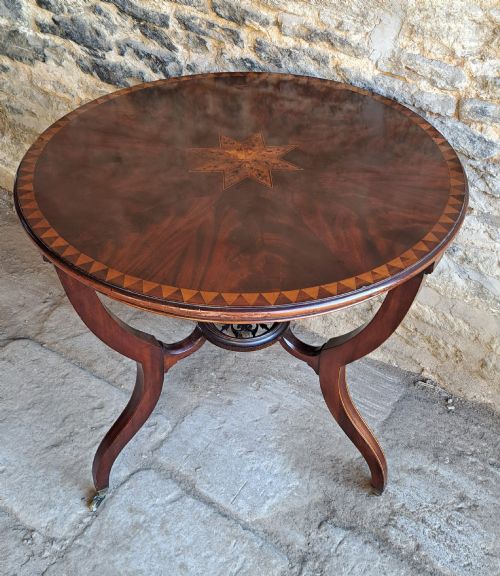
Makers and workshops of the period drew upon diverse stylistic influences, producing Edwardian designs alongside Sheraton Revival, Arts and Crafts, and occasional Anglo-Indian or Chinoiserie interpretations. Oak, mahogany, and satinwood dominate the surviving examples, often enriched with marquetry inlay, boxwood stringing, or brass mounts.
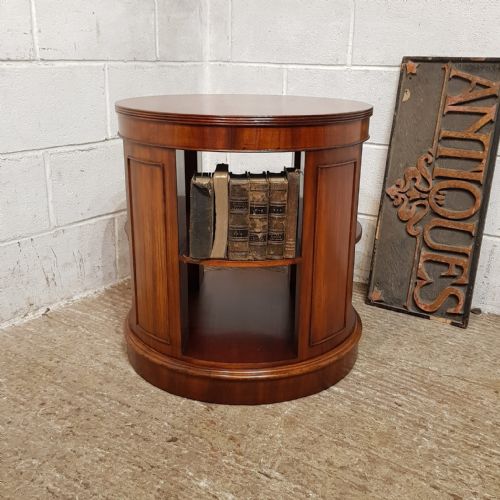
The practical utility of these tables spans multiple room types, serving as lamp stands, side tables, or central library pieces. Buyers encounter both simple vernacular oak pieces and highly refined inlaid satinwood models.
Distinctions in craftsmanship and design
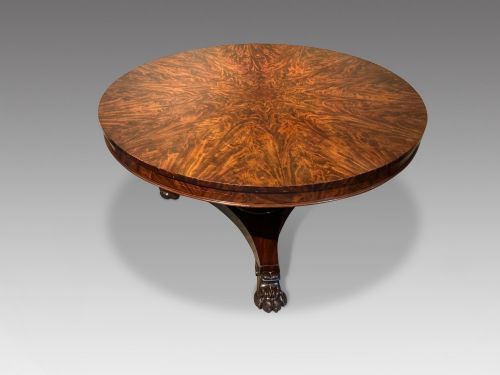
The upper tier of the range is distinguished by the choice of timber, seen in highly figured flame mahogany or finely selected satinwood, coupled with intricate, hand-cut marquetry and crisp inlay. Superior examples often bear stamps or labels from notable retailers and workshops, reflecting higher standards of design conception and execution.
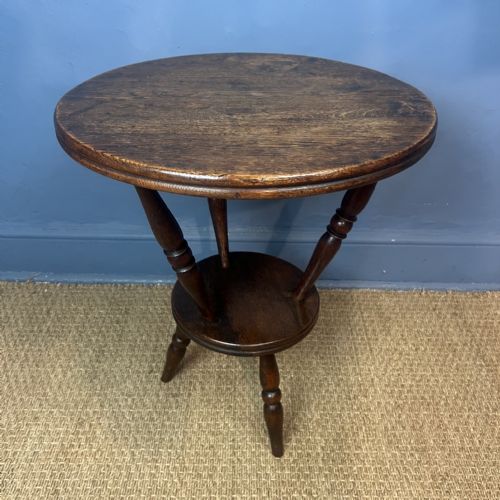
Simpler vernacular pieces, while soundly constructed from utility timbers like oak, display less decorative ambition and rely on straightforward turnings rather than detailed carving or complex veneering schemes.
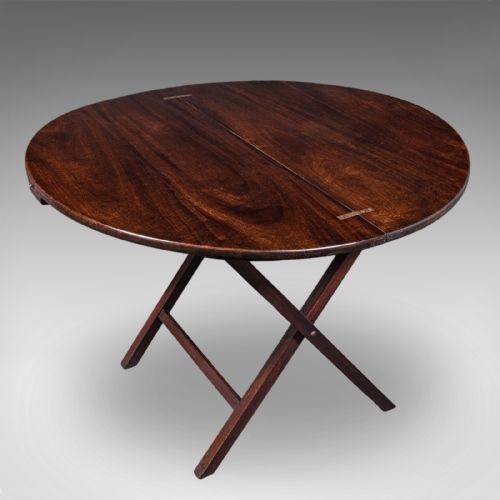
Several folding tables retain the capability to pack flat for coaching use, ready for a sudden garden tea party.
Liberty & Co·Waring & Gillow·Edwards & Roberts·Gaskell & Chambers
The Edwardian Circular Table Glossary
- Occasional table
- A small, movable table designed for a specific, intermittent domestic use rather than a permanent central position.
- Marquetry
- Decorative patterns formed by the insertion of contrasting veneers into a wooden surface, creating pictorial or geometric designs.
- Tripod table
- A small round table supported by a central pillar resting on three spreading feet.
- Tray top
- A table top featuring a raised moulded edge designed to prevent items from sliding off.
- Stringing
- Thin lines of contrasting wood inlaid into the surface of furniture to create delicate geometric borders.
Edwardian Circular Table: Frequently Asked Questions
How are edwardian circular tables best used in modern rooms?
These tables function effectively as compact lamp stands beside seating or as central occasional surfaces in smaller spaces.
Their varied heights and diameters allow them to fit into corners or act as pedestals for display objects without dominating a room.
What distinguishes an Edwardian table from Victorian examples?
Edwardian furniture generally exhibits lighter proportions and simpler lines than earlier Victorian pieces, reflecting changing domestic tastes around 1900.
Inlay work on Edwardian pieces often employs refined satinwood and boxwood stringing rather than the heavier carvings typical of mid-nineteenth-century production.
How do I identify a dining table from an occasional table?
Dining tables within this category incorporate extending mechanisms or heavier underframes designed to support substantial weight and daily use.
Occasional and wine tables remain lightweight, sometimes featuring folding actions or tiered structures intended for easy movement.
Are these tables suitable for everyday household use?
Most pieces are built with robust timber frames that withstand normal daily activities when treated with appropriate care for polished wood surfaces.
Using coasters and avoiding placement near direct heat sources helps preserve the antique veneers and joint integrity.