

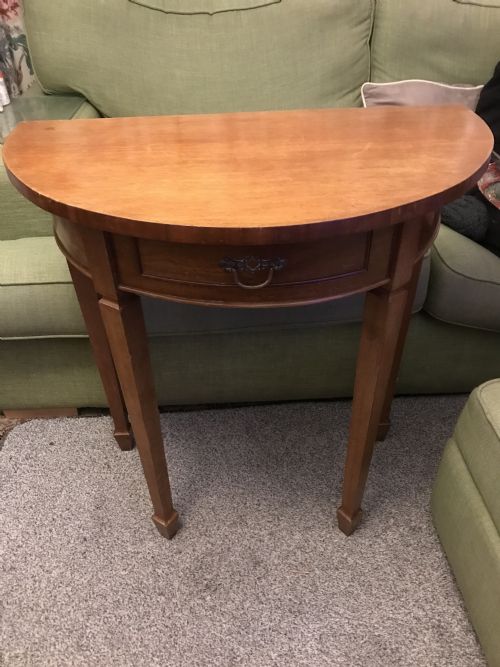
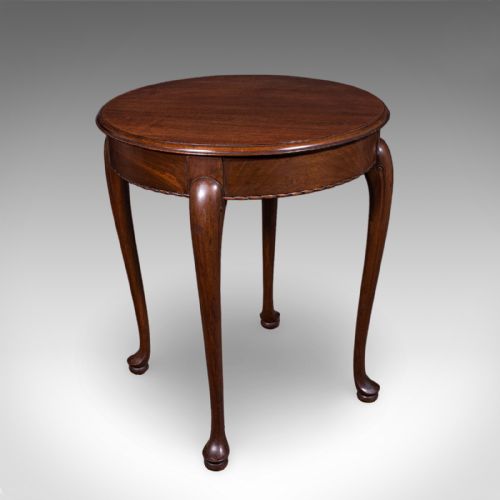

Edwardian Circular Side Table
An Edwardian circular side table brings compact proportions and refined timber to a corner or beside a chair.
Edwardian Circular Side Table
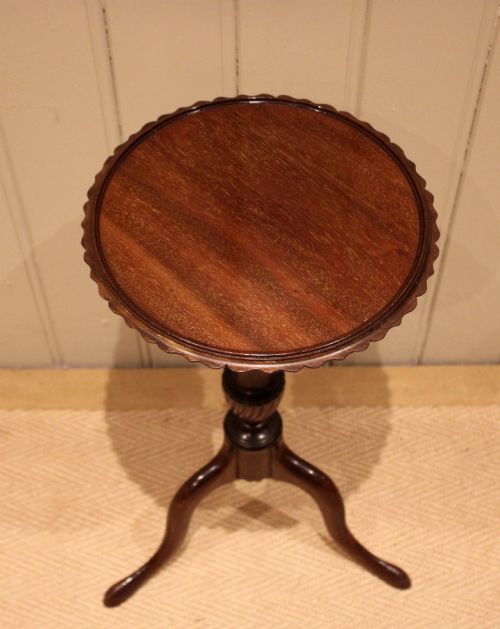
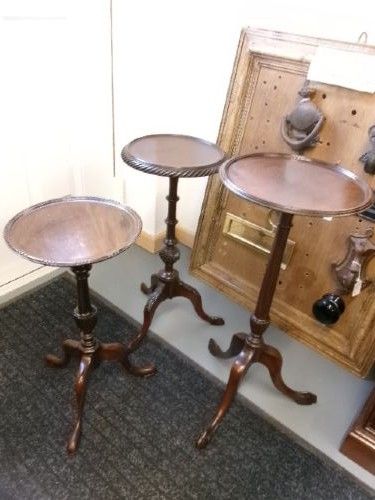
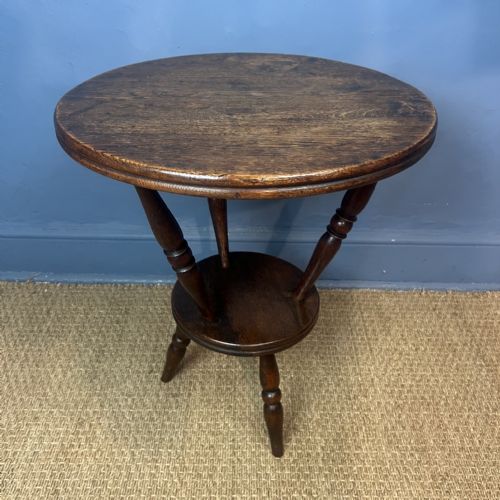
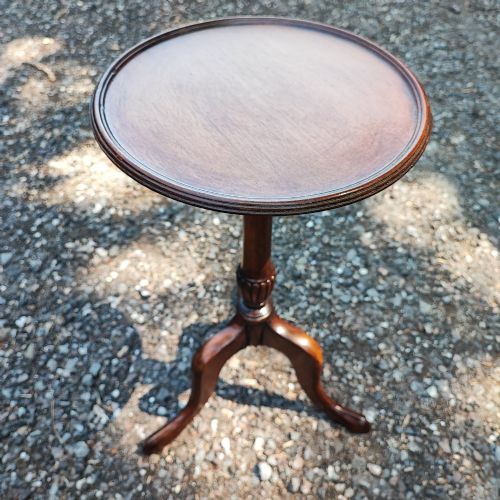
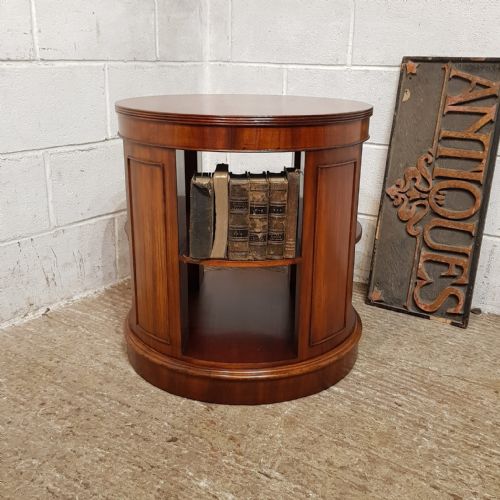
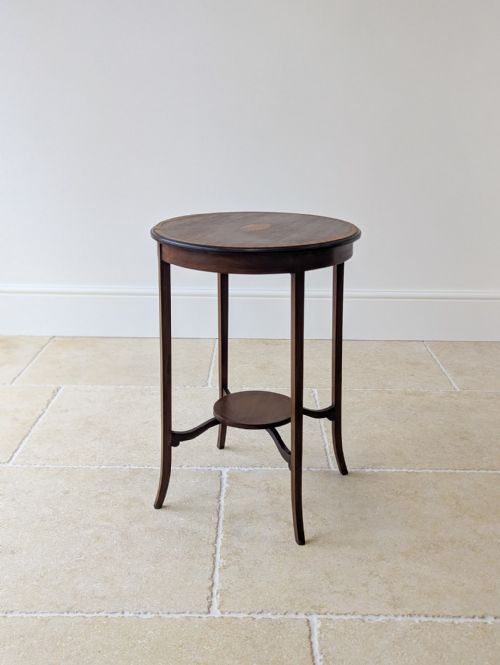
An edwardian circular side table is primarily encountered in mahogany or oak, often spanning wine tables, occasional tables, and two-tier designs created around the turn of the twentieth century. These pieces serve as versatile lamp stands or display surfaces in sitting rooms, drawing upon Victorian utility while shedding heavy proportions.
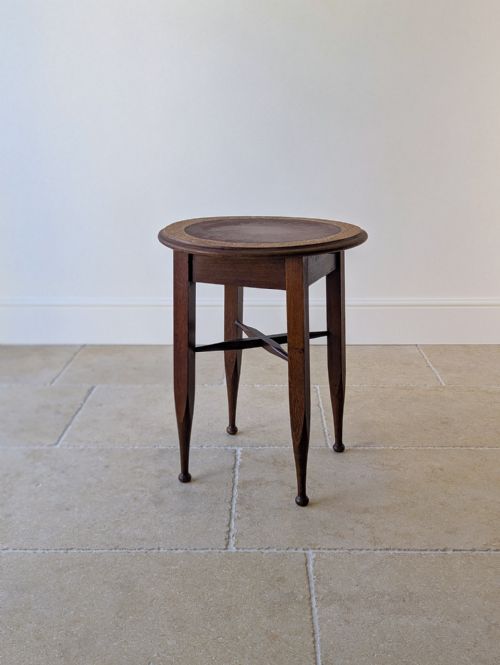
The selection ranges from simple tripod wine tables to inlaid satinwood models and unconventional arts and crafts oak creations. While the core of the selection dates to the Edwardian period, related examples stretch back into the nineteenth century and forward into the early decades of the twentieth century.
Materials and Construction
Cabinetmakers relied heavily on solid and veneered mahogany, complemented by satinwood, oak, walnut, and yew, occasionally incorporating brass details, boxwood stringing, or bone inlay. Tops were frequently supported by turned pillars above tripod legs or by pegged tier structures in arts and crafts examples.
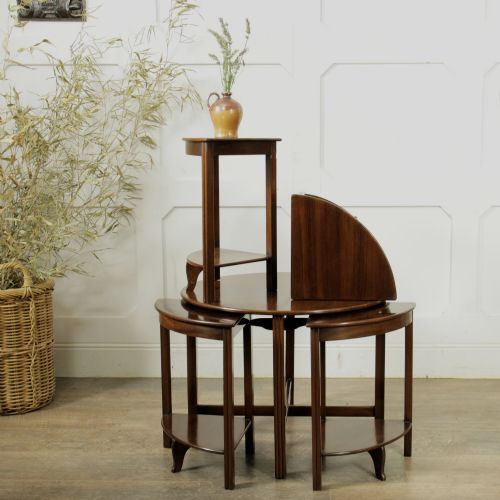
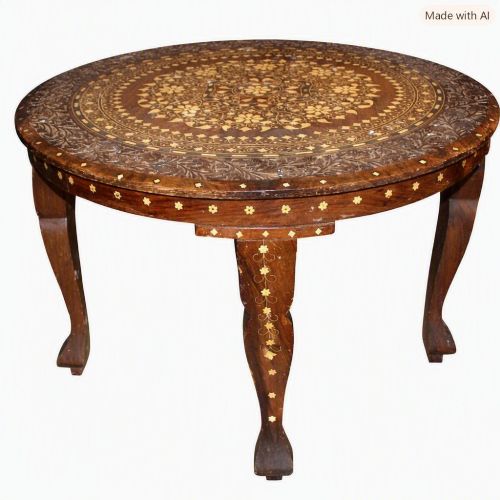
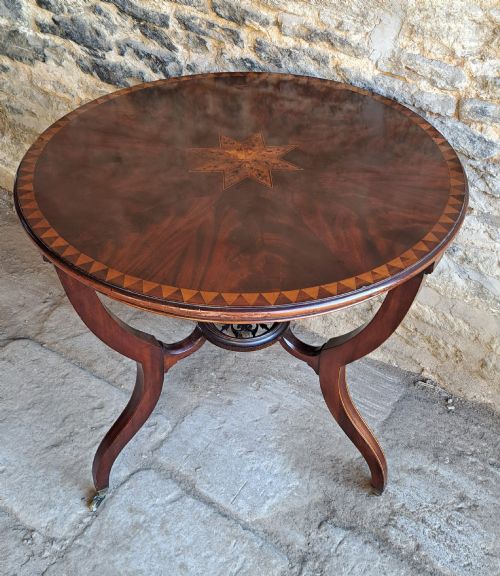
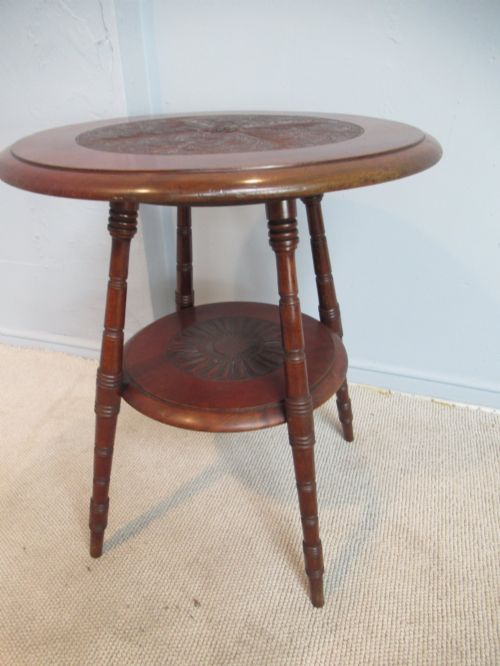
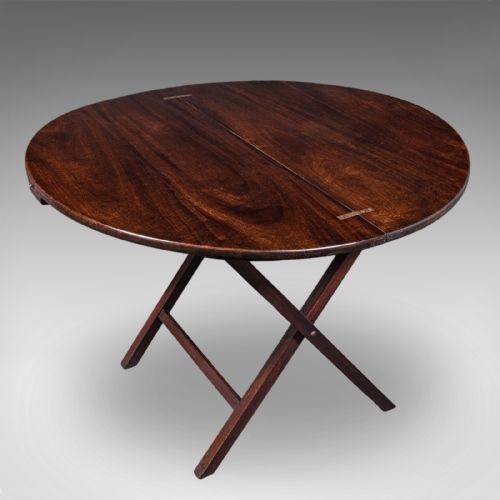
Surface decoration frequently involved delicate marquetry inlay or painted tops, contrasting with the carved relief work seen on Anglo-Indian variants. Folding mechanisms and revolving tiers demonstrate practical ingenuity alongside traditional joinery.
Listings feature woods spanning mahogany, satinwood, oak, rosewood, and walnut, alongside brass and bone.
The Measure of Craft
Quality rests in the crispness of the timber grain, the precision of the inlay, and the stability of the central column and leg joints. Pieces featuring figured mahogany or finely worked satinwood display a superior depth of finish.
Distinction also lies in the restraint of the design and the integrity of the structural joints, where hand-cut elements outlast purely utilitarian assembly.
Liberty & Co·Waring & Gillow·Gillows·François Linke
The Edwardian Circular Side Table Glossary
- Wine table
- A small, light circular table traditionally used for holding a glass and bottle, typically raised on a pillar and tripod base.
- Occasional table
- A versatile small table intended for intermittent use around a principal room.
- Satinwood
- A lustrous, hard timber native to Ceylon and India, prized for its pale yellow tone and smooth grain in high-status pieces.
- Inlay
- A decorative technique where contrasting woods, brass, or bone are set flush into the primary surface.
- Tripod base
- A supporting structure consisting of three spreading legs connected to a central vertical pillar.
Edwardian Circular Side Table: Frequently Asked Questions
Where should I place a side table?
These compact tables fit naturally beside a reading chair, in an unused corner, or as a central platform for a small lamp.
Their modest footprint allows them to integrate into modern rooms without dominating the floor space.
How do I care for polished wood?
Keep timber surfaces away from direct heat sources and strong sunlight to prevent the polish from fading or cracking.
Apply a traditional wax polish occasionally and buff gently with a soft cloth to maintain the natural sheen.
Are these tables sturdy enough for daily use?
Tripod wine tables and occasional tables are designed for holding lamps, books, or small decorative items rather than heavy weight.
Placing them on level floors protects their slender leg joints from undue strain.
How can I tell an Edwardian piece from a Victorian one?
Edwardian examples tend to feature lighter timber tones, restrained inlay, and slender proportions influenced by revival styles.
Victorian counterparts often carry heavier mouldings and darker finishes, though both periods share common wood types.