




Edwardian Chippendale Desk
An edwardian chippendale desk brings refined mahogany timber and classic revival carving into a modern study with absolute distinction.
Edwardian Chippendale Desk
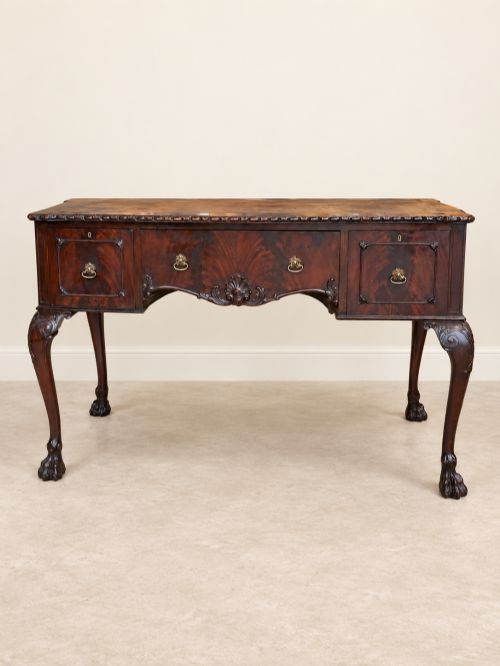
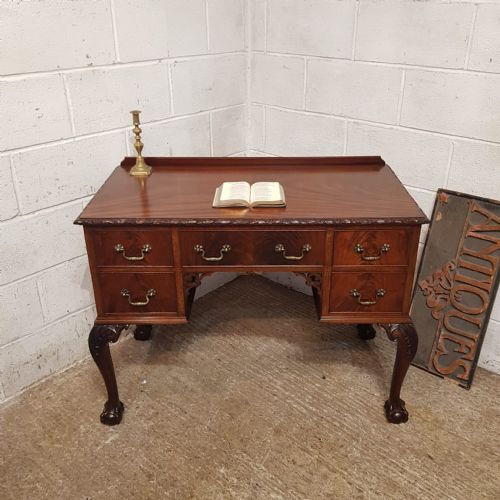
An edwardian chippendale desk combines the sturdy utility of a traditional writing table with the ornamental flourishes characteristic of the revival period. Most examples encountered here date from the Edwardian era around 1900, drawing directly upon earlier 18th-century design principles.
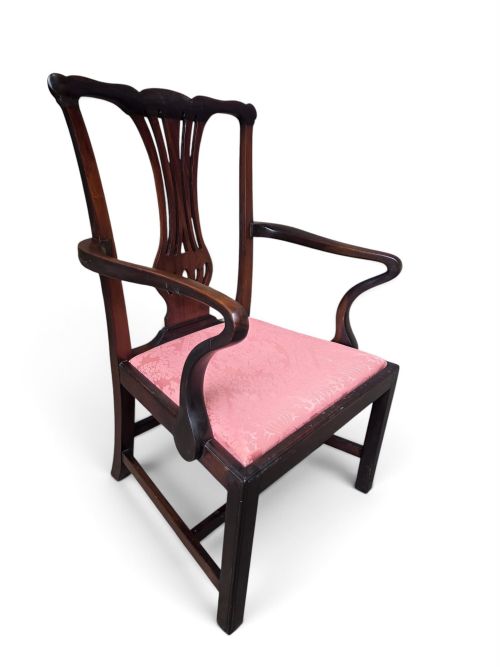
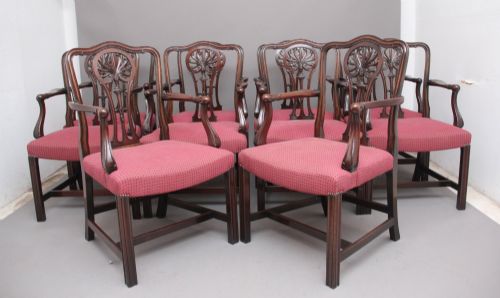
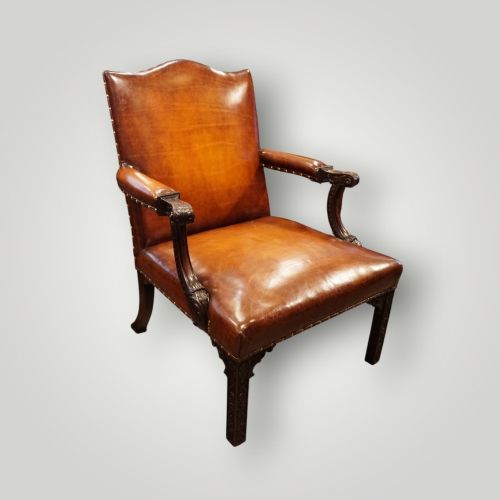
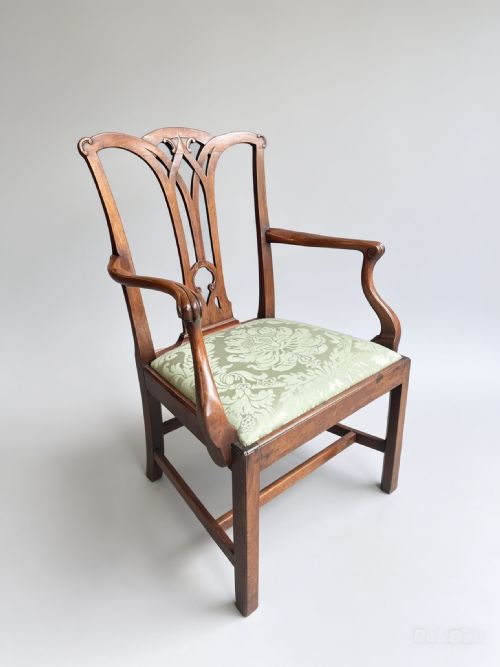
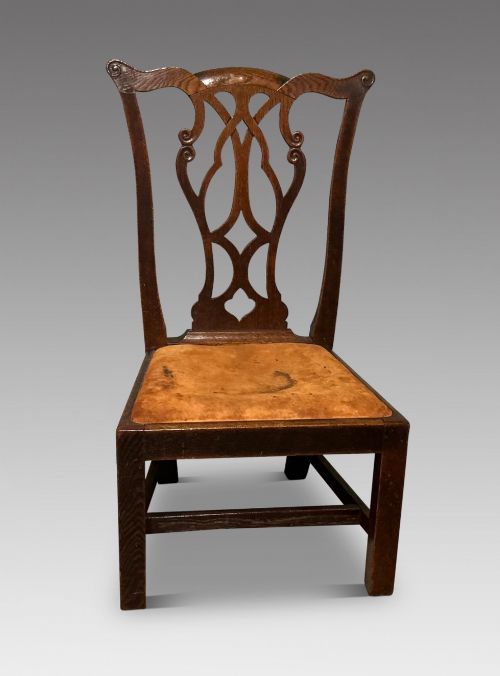
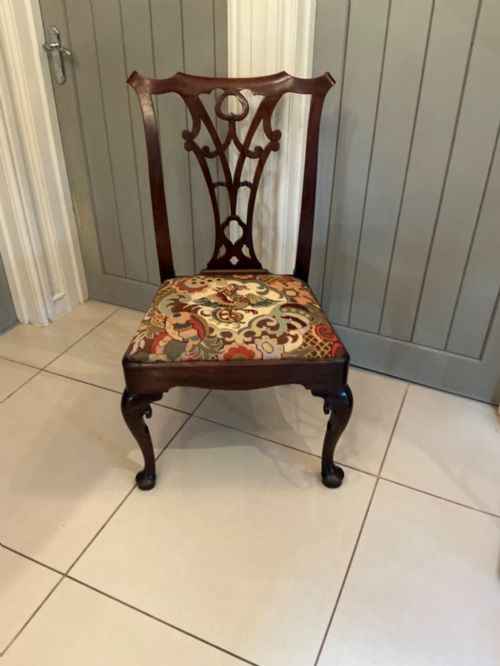
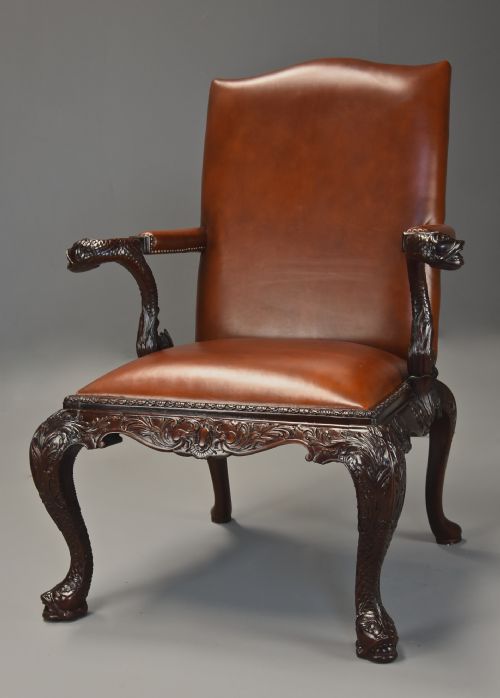
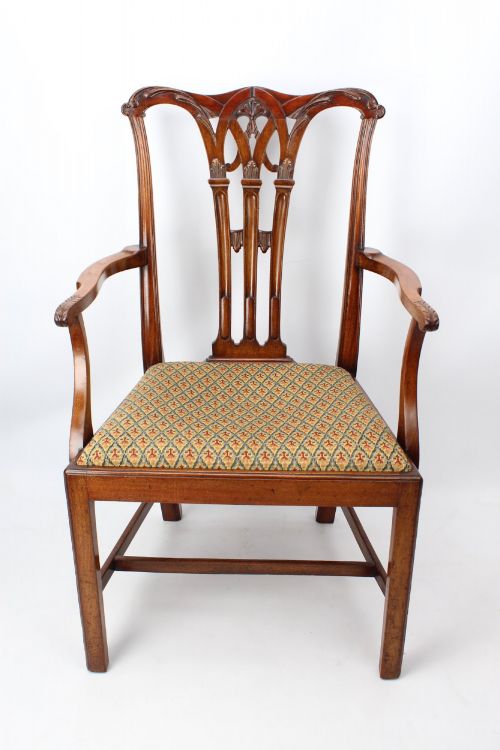
The form typically manifests as a writing table or a pedestal desk, often accompanied by matching elbow chairs designed for the study. Makers of the period reinterpreted classic motifs such as blind fretwork and cabriole legs to suit contemporary domestic spaces.
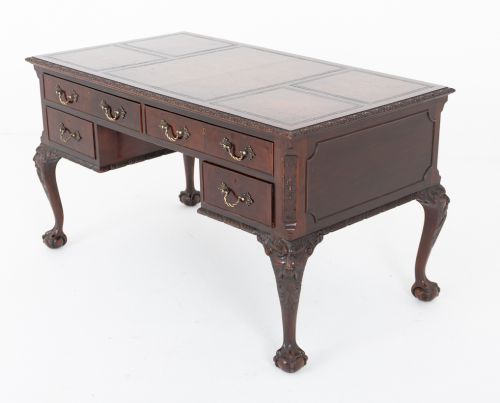
Surviving pieces range from straightforward writing tables with simple leather inserts to larger pedestal configurations built with substantial timber. The aesthetic relies heavily on proportion and historical homage rather than stark modern utility.
How they were made
Cabinetmakers constructed these desks primarily using solid mahogany and mahogany veneers, selected for deep grain patterns and resilience. Brass hardware, including handles and key escutcheons, provides functional contrast to the dark timber.
Writing surfaces are frequently lined with English hide leather, sometimes detailed with gilt tooling along the borders. Structural joinery follows established trade practices, ensuring stability across pedestal and writing table formats.
Materials recur consistently across the inventory, dominated by mahogany paired with English hide leather and brass hardware.
What varies in quality
The calibre of an edwardian chippendale desk rests upon the crispness of its carved detailing and the selection of the timber. Hand-carved elements display sharper relief and greater depth than machine-cut equivalents produced later in the period.
Cabinetwork complexity also distinguishes standard domestic items from pieces bearing maker attributions. Superior examples incorporate well-figured mahogany, durable leather writing surfaces, and thoughtful internal drawer construction.
Alfred Allen of Birmingham·Gillows·Druce and Co
The Edwardian Chippendale Desk Glossary
- Chippendale Revival
- A late 19th and early 20th century style that recreates the aesthetic vocabulary of Thomas Chippendale. This movement focused on Gothic, Chinese, and French rococo influences applied to contemporary furniture.
- Pedestal Desk
- A heavy form comprising two supporting banks of drawers beneath a main writing surface. It offers substantial storage capacity alongside a formal appearance.
- Blind Carving
- Low-relief decorative carving applied flat to the surface of the wood without piercing it. This technique was frequently utilised on desk friezes and chair rails.
- Hide Leather
- Strong cattle hide used historically for upholstery and desk inserts. It accepts tooling well and develops a rich patina over time.
Edwardian Chippendale Desk: Frequently Asked Questions
How do I identify an Edwardian Chippendale desk?
Look for characteristic revival markers such as cabriole legs, ball and claw feet, and carved mahogany mouldings. The construction methods and timber characteristics generally align with the early 20th century.
Compare the piece against known cabinetmaker outputs and standard period proportions to verify its origins.
How should I care for the leather desk top?
Maintain the hide leather by dusting regularly and applying appropriate leather balms to prevent drying and cracking. Avoid placing hot items or liquids directly onto the surface to protect the finish.
Gentle cleaning preserves the gilt tooling and ensures the leather retains its natural suppleness.
Where were these desks originally used?
These pieces served primarily as writing tables or library desks within affluent Edwardian homes. They provided a dedicated space for correspondence and administrative tasks.
Today they function equally well as home office desks while maintaining historical character.