





Claw Foot Pedestal Desk
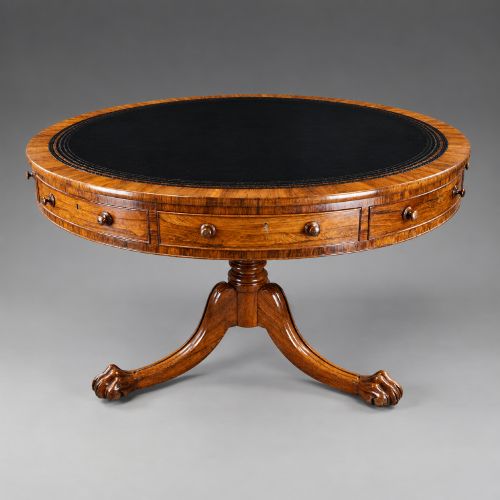
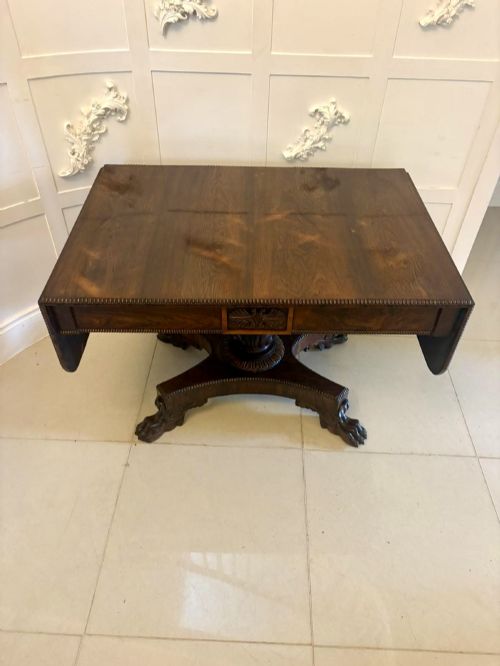
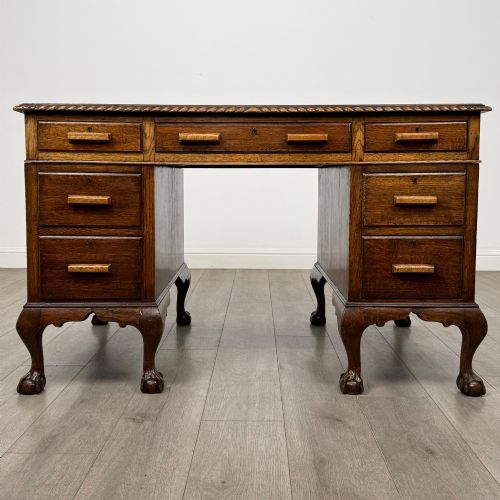
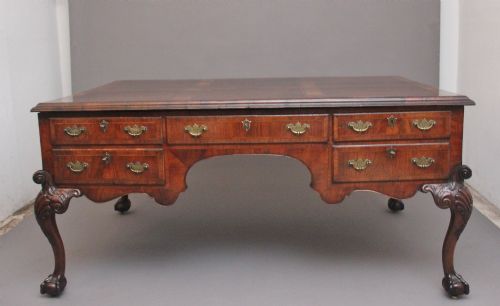
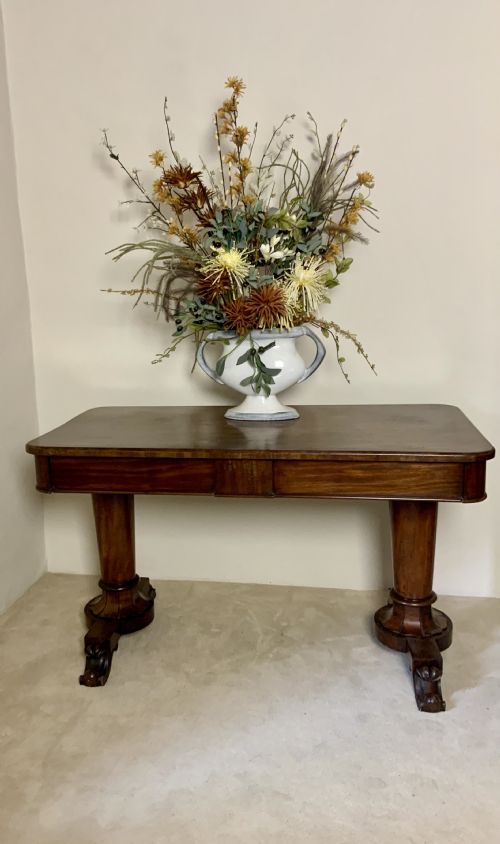
These claw foot pedestal desk pieces are substantial writing tables built to anchor a room, pairing heavy timber structures with carved supports.
Claw Foot Pedestal Desk
A claw foot pedestal desk stands as a substantial piece of furniture designed for heavy writing and library use, typically featuring twin pedestals supporting a wide top. Buyers searching for a claw foot pedestal desk encounter examples primarily from the nineteenth century, including specific iterations from the Regency, Victorian, and Georgian eras.
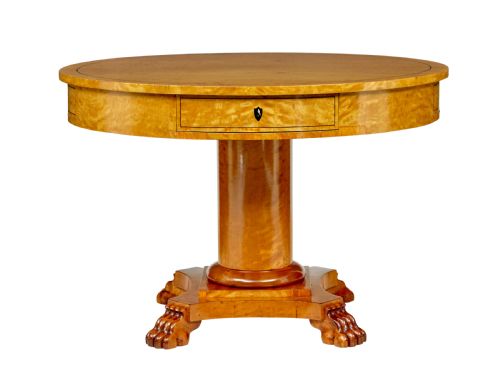
The form encompasses twin pedestals or central columns paired with carved foot supports, often incorporating rich timber grains and inset leather writing surfaces. Alongside traditional pedestal desks, the selection includes related library tables and writing tables built to similar proportions.
How they were made
Cabinet makers constructed these pieces using dense hardwoods such as mahogany and rosewood, frequently incorporating contrasting veneers of satin birch, walnut, or ebony for decorative detail. Solid timber frames provide the structural strength needed for heavy pedestals and writing surfaces.
Fine brass inlay and mounted hardware appear across select examples, punctuating dark wood surfaces with metallic warmth. Leather writing inserts are typically tooled and fitted into the top boards to create a durable surface for daily use.
Claw Foot Pedestal Desk Retail Price Guide 2026
Typical asking prices for claw foot pedestal desk among the pieces listed under this phrase on Sellingantiques today, from the lower quarter to the upper quarter. They describe what is for sale here now, not the wider market.
Materials across these listings span mahogany, rosewood, walnut, birch, satin birch, ebony, brass, and leather.
What varies in quality
Quality rests in the selection of timber figures, where rich rosewood grain and well-matched mahogany veneers elevate the visual impact of the piece. The depth and crispness of the carved feet also distinguish finer examples from simpler workshops.
Construction methods determine long-term durability, particularly in the stability of the pedestals and the precision of drawer joints. Well-executed brass inlay and finely tooled leather surfaces indicate a higher standard of original craftsmanship.
The Claw Foot Pedestal Desk Glossary
- Pedestal desk
- A heavy writing table supported by two pedestals containing drawers, usually featuring a central opening for the user.
- Library table
- A large freestanding table designed for the centre of a room, often used for reading and writing with storage drawers beneath the top.
- Regency
- A British design period spanning the early nineteenth century characterised by classical revival motifs and refined proportions.
- Veneer
- A thin layer of figured wood applied over a secondary timber base to create a decorative exterior surface.
Claw Foot Pedestal Desk: Frequently Asked Questions
Where does a pedestal desk fit?
These large writing surfaces require adequate floor space to allow movement around the pedestals and chairs. Placing them away from walls lets the finished backs and freestanding details remain visible.
Rooms with high ceilings and traditional proportions suit the visual weight of these substantial timber pieces best.
How do I clean the leather?
Maintenance of inset leather writing surfaces involves gentle dusting and occasional conditioning with appropriate leather balms. Avoiding harsh chemical cleaners prevents damage to the original tooling and colour.
Keeping the surface protected from direct sunlight preserves the tone of both the leather and the surrounding timber.
Are these desks good for daily use?
The sturdy construction and generous surface area make these tables practical for writing and administrative work. Modern equipment sits comfortably on the wide timber tops while drawers provide adequate storage.
Careful placement away from direct heat sources protects the solid woods and veneers from shrinking or cracking over time.
How do I identify Regency style?
Regency pieces draw inspiration from classical antiquity, often displaying clean architectural lines alongside rosewood or mahogany veneers. Brass inlay and subtle carved details frequently accent these designs without heavy ornamentation.
Proportions remain balanced, reflecting the architectural interests of the early nineteenth century.