


Edwardian Cast Iron Stick Stand
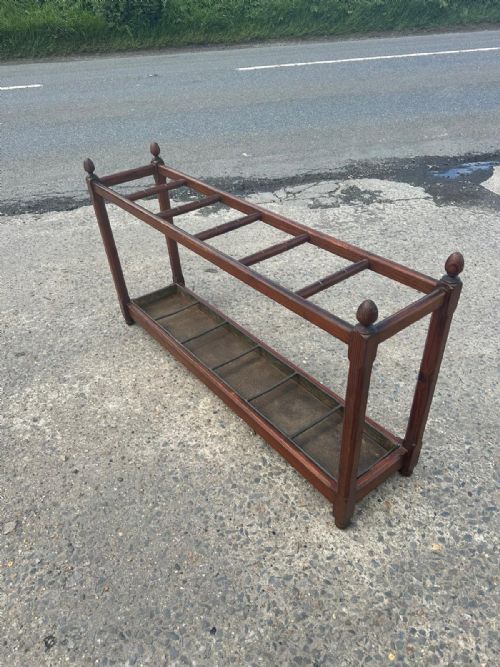
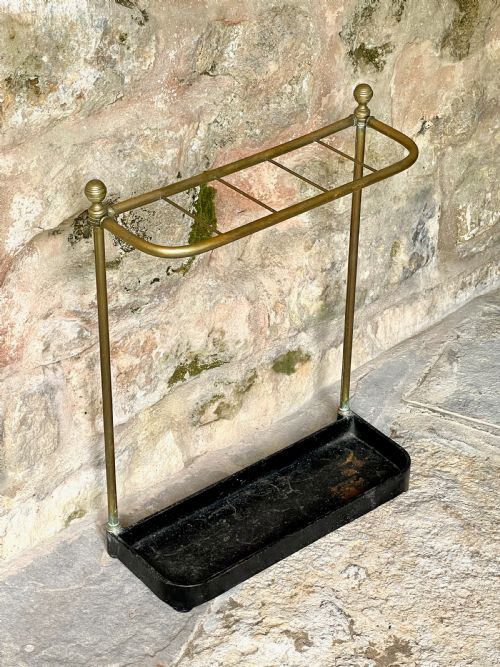
An edwardian cast iron stick stand brings structured utility and robust metalwork to a hallway, keeping umbrellas and walking sticks tidy.
Edwardian Cast Iron Stick Stand
An edwardian cast iron stick stand is a practical hall accessory designed to hold wet umbrellas and walking sticks upright. These pieces are part of a broader group of umbrella stands, stick stands, and hallstands seen across the Victorian, Edwardian, and early twentieth-century periods.
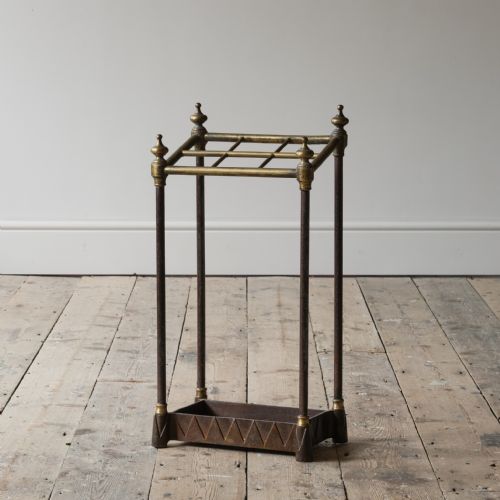
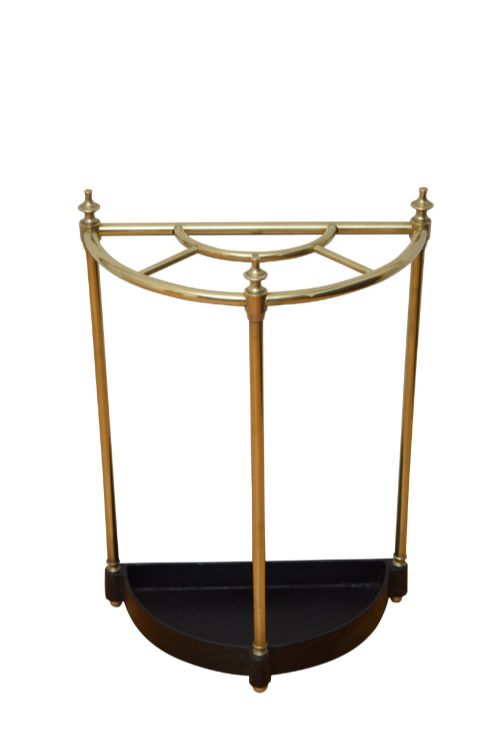
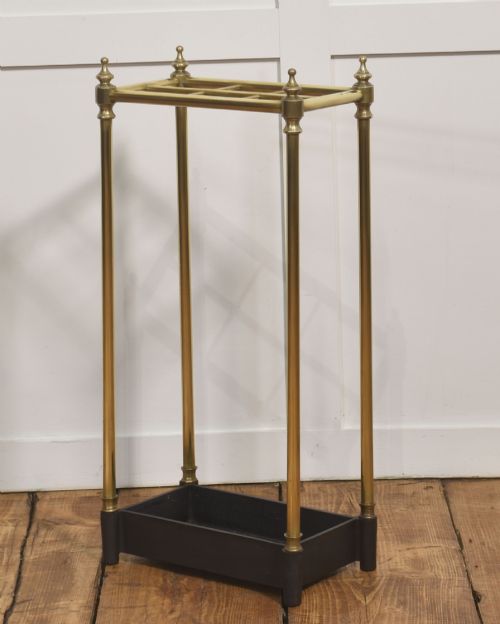
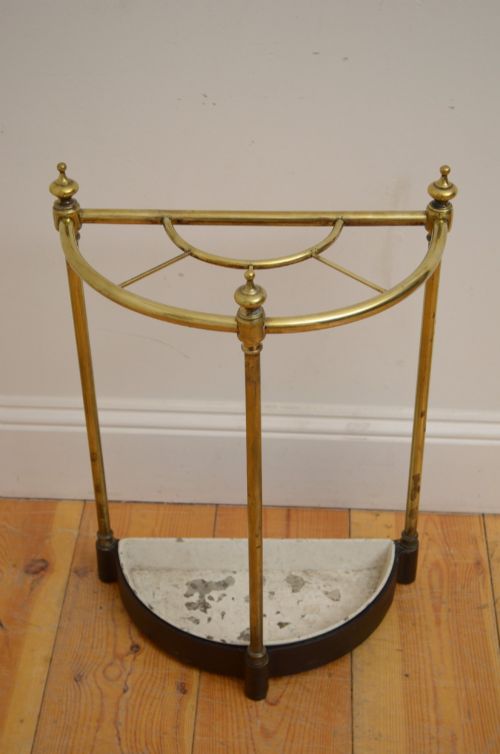
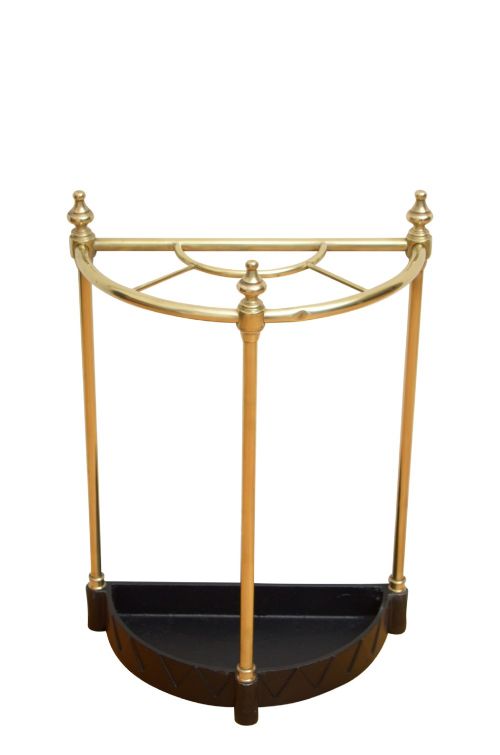
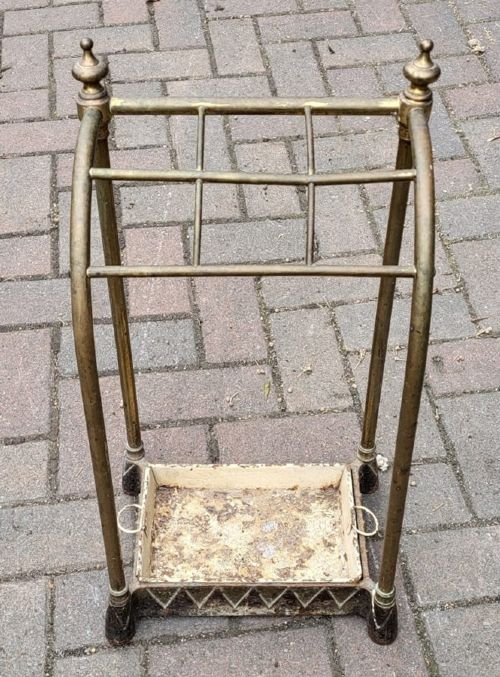
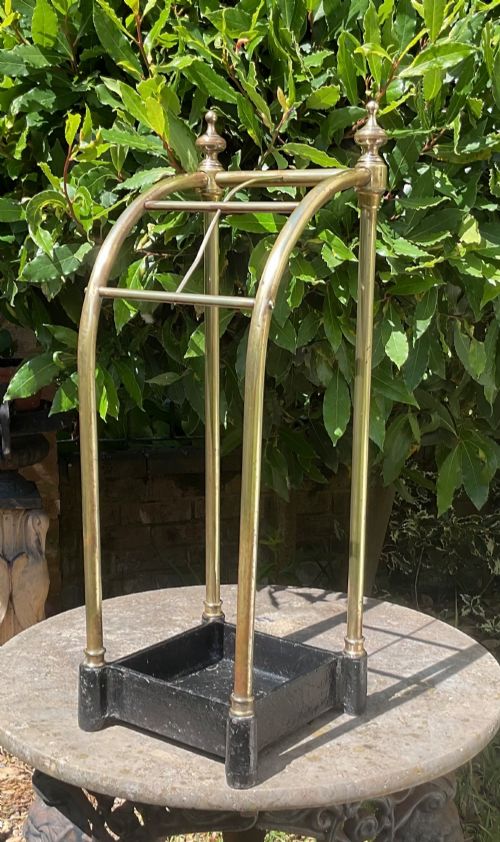
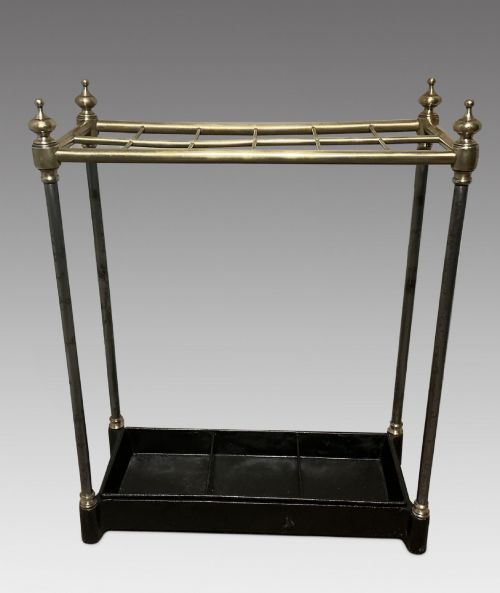
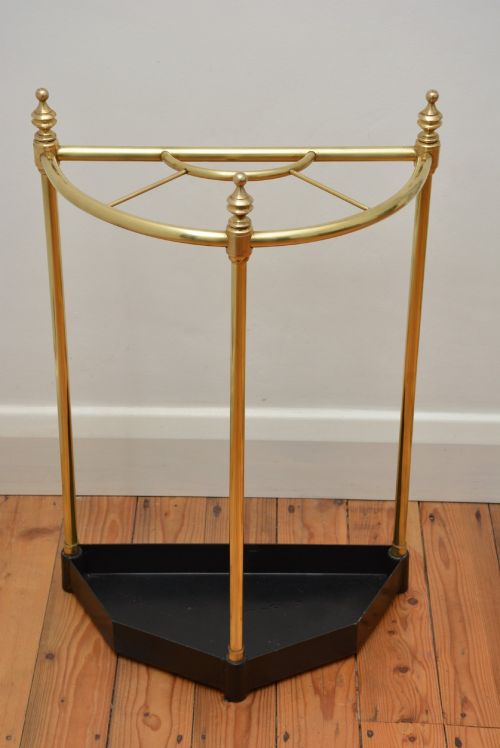
The version you are most likely to meet on this page combines a heavy cast iron frame with brass elements, often formed in a demi-lune or half-moon shape to sit flush against a hallway wall. Others appear in circular or corner configurations, reflecting the diverse layouts of period entrance halls.
How they were made
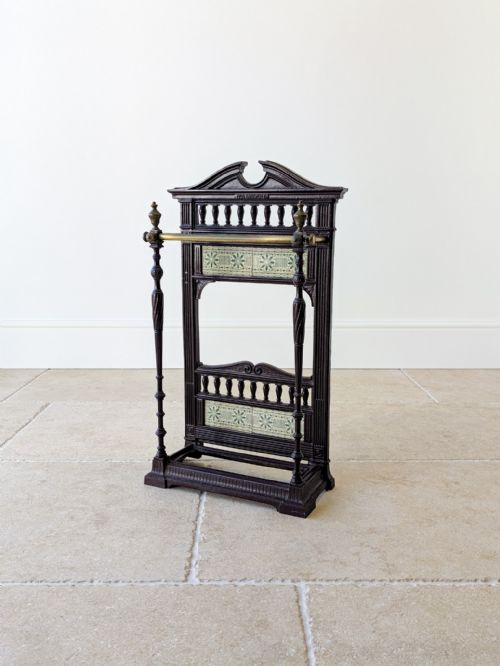
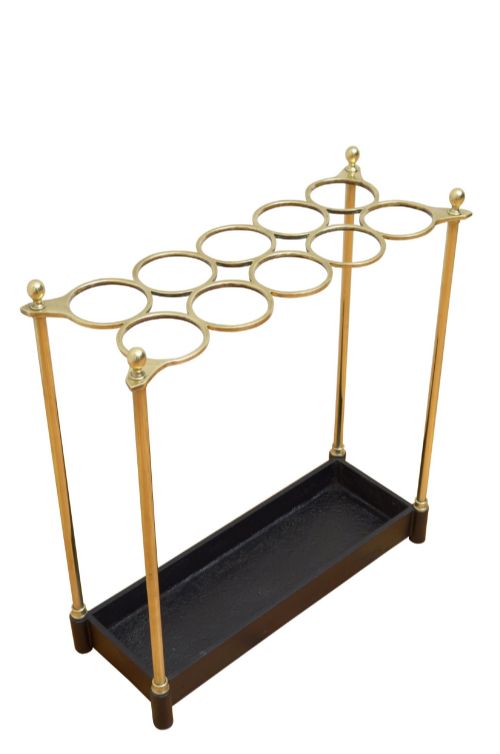
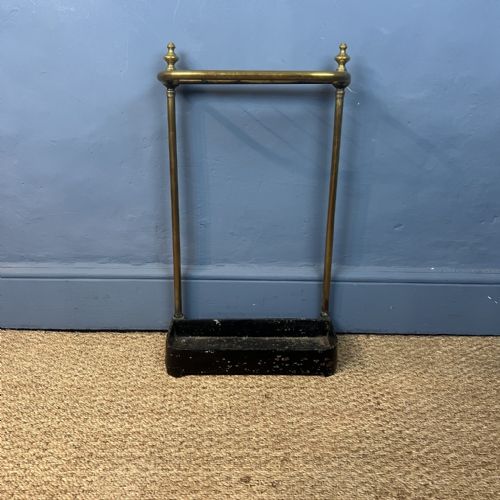
Makers utilised durable metals, combining cast iron for heavy structural weight with brass for decorative rails, finials, and drip trays. Iron components were frequently cast in moulds to create openwork scroll patterns, while ceramic inserts and enamel finishes added colour and protected the metal from standing water.
Some examples incorporated wooden elements such as pitch pine or oak alongside the metal framework, particularly in country house hallstands. Drip trays were commonly cast with dog-tooth patterns or simple rims to catch moisture from wet umbrellas.
Listings feature cast iron, brass, steel, ceramic, enamel, pitch pine, and oak across Victorian, Edwardian, and early twentieth-century periods.
What varies in quality
The distinction between standard utility items and finer examples lies in the crispness of the casting and the ambition of the design. Coalbrookdale and other prominent foundries produced detailed decorative motifs and substantial ball finials that elevate the presence of the piece.
Construction methods also set pieces apart, with heavier gauge metals and integrated drip trays representing sturdier manufacture. The inclusion of enamel or specialised stylistic influences like Art Nouveau and the Aesthetic Movement indicates a higher tier of design.
Coalbrookdale
The Edwardian Cast Iron Stick Stand Glossary
- Demi-lune
- A half-moon shape designed to fit flat against a wall. This profile allowed the stand to occupy minimal depth in narrow hallways.
- Cast iron
- An iron-carbon alloy poured into moulds to create rigid forms. It provided the necessary weight to prevent the stand from tipping.
- Drip tray
- A shallow metal or ceramic base positioned beneath the sticks to catch water. It protected floorboards and tiles from dampness.
- Finial
- A decorative terminal ornament placed on top of posts or uprights. These often took the form of decorative brass balls.
- Aesthetic Movement
- A late nineteenth-century design style emphasising visual beauty over narrative function. Pieces from this movement often display refined linear forms and stylised ornamentation.
Edwardian Cast Iron Stick Stand: Frequently Asked Questions
Where should I put a stick stand?
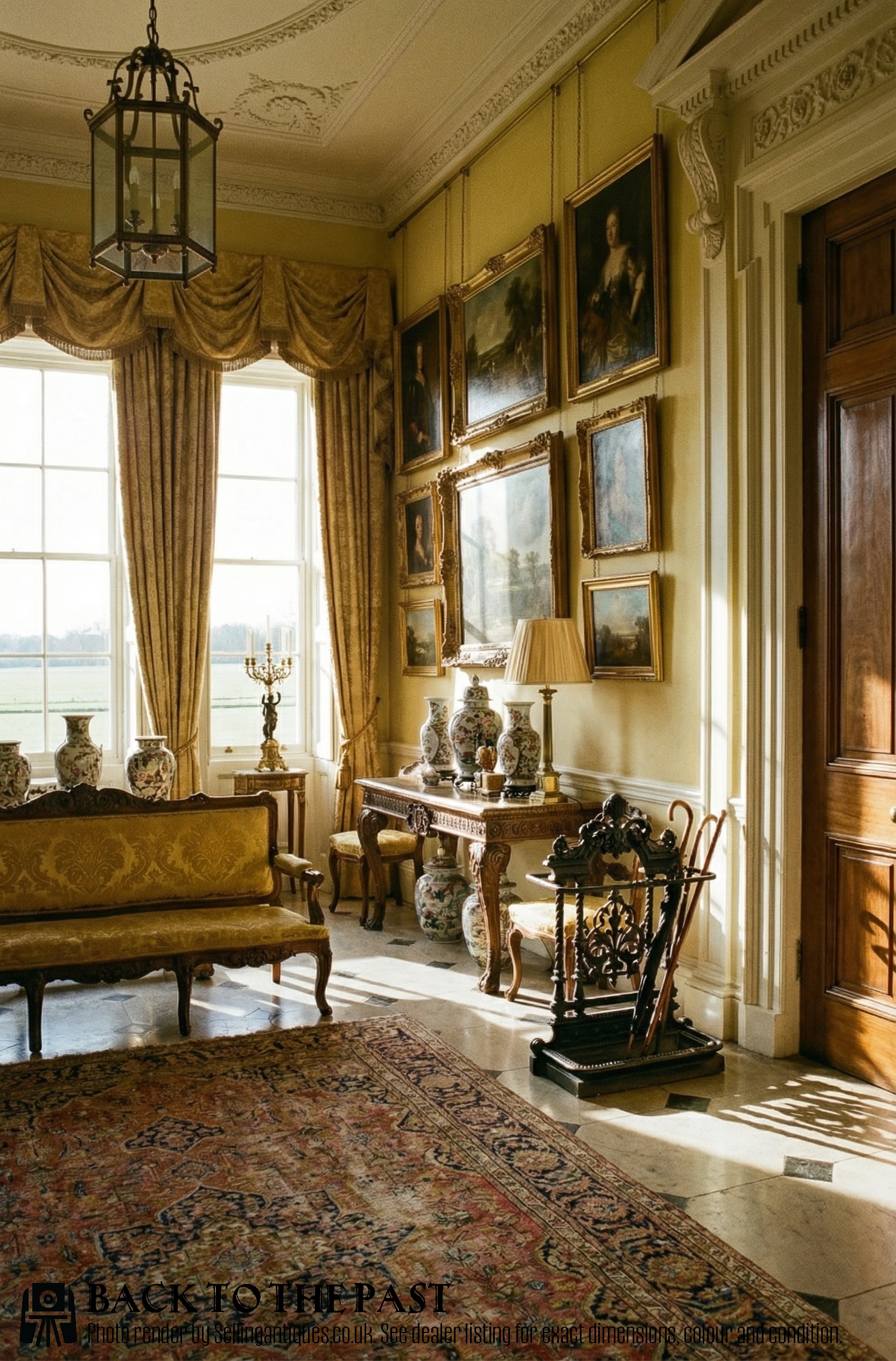
These stands belong in a hallway or entrance lobby where coats and outdoor wear are kept. Their compact footprints, particularly demi-lune and corner shapes, allow them to sit neatly against walls without obstructing doorways.
Placing the stand on a hard floor surface near the main entrance ensures that wet umbrellas can be stored immediately upon entering the house.
How do I maintain cast iron and brass?
Cast iron requires dry conditions to prevent surface oxidation, while brass benefits from occasional polishing to maintain its lustre. Regular dusting keeps the openwork scroll patterns clear of debris.
Removable drip trays should be emptied and dried periodically to stop stagnant water from marking the metal or ceramic surfaces.
Can these stands hold heavy walking canes?
The substantial weight of cast iron frames provides a stable base that easily supports heavy wooden walking sticks and sturdy umbrellas. The robust construction was originally engineered for daily household use in busy Victorian and Edwardian hallways.
Narrower rings and corner variants keep slim items upright without letting them slip through the framework.
How do I date an iron stand?
Dating relies on stylistic clues such as the flowing organic lines of Art Nouveau designs or the geometric austerity associated with Edwardian production. Archive examples and foundry marks can also help pinpoint the period of manufacture.
Materials provide further context, as the transition from heavy Victorian cast iron to lighter brass and steel combinations occurred gradually around the turn of the twentieth century.