


Edwardian Cased Cutlery Set
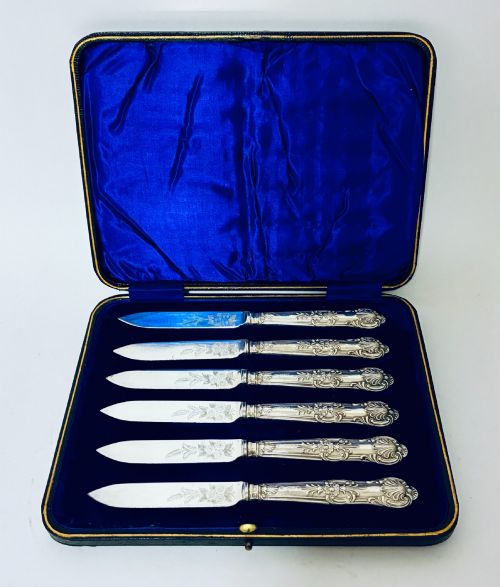
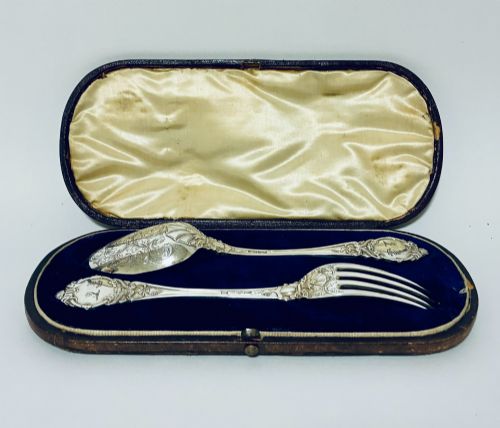
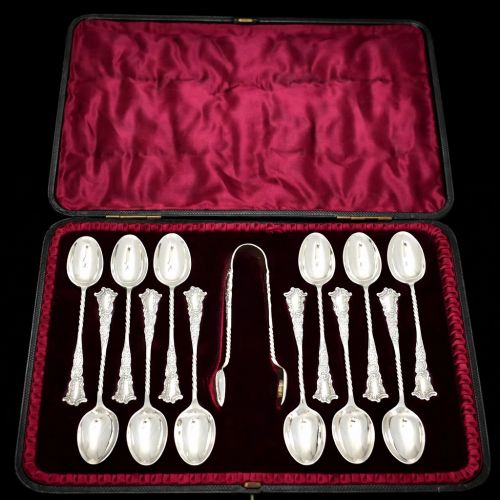
An edwardian cased cutlery set brings matched silver or plated ware straight to the dining table in its fitted velvet or silk box.
Edwardian Cased Cutlery Set
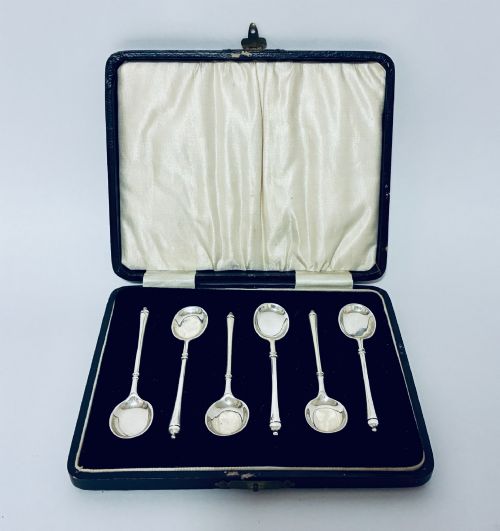
An edwardian cased cutlery set brings together coordinated eating implements housed in purpose-built storage containers. Buyers encounter sets designed for specific dining rituals, including dessert, fish, fruit, and tea.
The assortment on this page spans pieces from the late nineteenth century through the early decades of the twentieth century. Common configurations include butter knives, teaspoons, carving sets, and complete canteens.
Origins stretch across the Edwardian era, Victorian period, and into the Art Deco years. Material choices for the vessels and utensils define the visual character of each grouping.
Materials and Construction
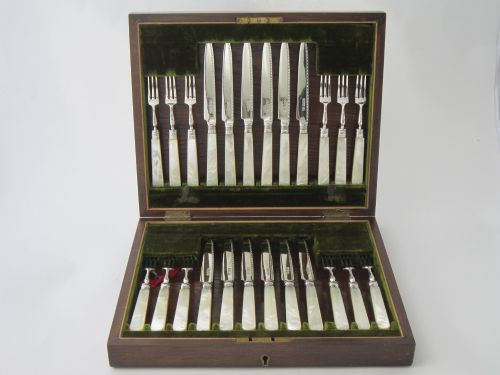
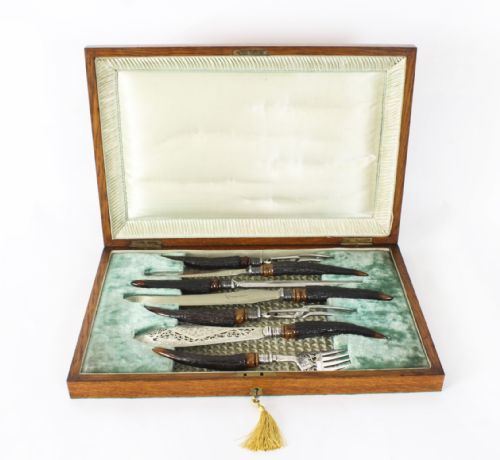
Utensils utilise sterling silver, silver plate, and silver-gilt, paired frequently with handles made of mother of pearl or antler horn. Steel appears alongside precious metals in specialised cutting implements.
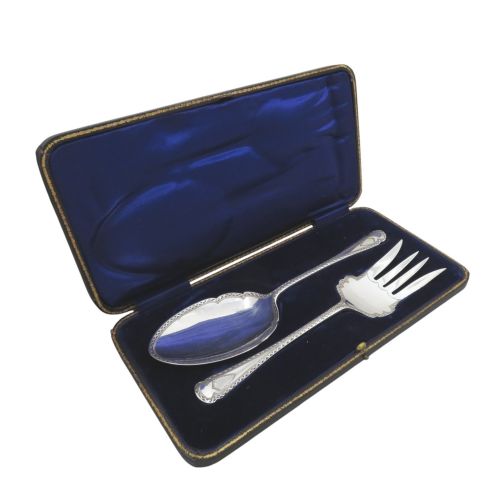
Storage boxes incorporate wood frameworks lined internally with velvet or silk. Exteriors often utilise leatherette finishes to protect the contents during storage and transport.
Listings feature sterling silver, silver plate, mother of pearl, wood, and velvet across Victorian, Edwardian, and Art Deco periods.
Factors of Quality
The standard of metalwork and the integrity of the fitted case separate standard utility sets from finer presentation examples. Sterling silver carries clear hallmarks indicating assay offices and makers.
Internal linings of silk and velvet show varying degrees of preservation, whilst exterior wooden and leatherette cases reflect the sturdiness of original construction.
Harrods·Robert Stebbings·Waring & Gillows
The Edwardian Cased Cutlery Set Glossary
- Sterling silver
- A silver alloy containing 92.5 percent pure silver by mass, widely utilised for quality cutlery sets. Hallmarks on these pieces indicate the specific assay office and year of testing.
- Silver plate
- A layer of silver applied to a base metal core through various plating techniques. This method offered a practical alternative to solid silver for larger canteens.
- Mother of pearl
- An iridescent internal layer of shells used traditionally for knife handles. It provides a smooth, tactile grip with distinctive natural patterning.
- Silver-gilt
- Sterling silver that has been coated with a thin layer of gold on the surface. This technique produces a rich golden finish seen on specialist spoons and tongs.
- Leatherette
- A simulated leather material utilised on the outer surfaces of storage cases. It protects the velvet or silk interior linings from dust and damage.
Edwardian Cased Cutlery Set: Frequently Asked Questions
What is inside an edwardian cased cutlery set?
These sets contain matched groups of dining implements tailored for specific meals such as dessert, fish, or tea. Common inclusions are teaspoons, butter knives, and fruit forks.
Every piece fits securely into custom slots inside a dedicated wooden or leatherette box lined with velvet or silk.
How do I care for silver cutlery?
Keep silver and silver-plated utensils clean by washing them gently in warm soapy water and drying them immediately with a soft cloth. Avoid harsh chemical dips that strip the natural patina.
Store the items back inside their lined cases when not in use to minimise tarnish caused by airborne sulphur.
Are these sets safe to use for dining?
Most solid silver and silver-plated sets remain entirely suitable for contemporary dining use. Care must be taken with organic handle materials like mother of pearl or antler horn, which require hand washing rather than machine dishwashing.
Older steel blades should be dried thoroughly after cleaning to prevent rust formation.
How can I date an antique cutlery set?
Metal components often feature official hallmarks stamped directly into the surface, indicating the assay office and date letter for the year of manufacture. Stylistic indicators like Art Nouveau curves or Art Deco geometry also point to specific decades.
Case construction and interior fabric choices provide further contextual clues regarding the production period.