
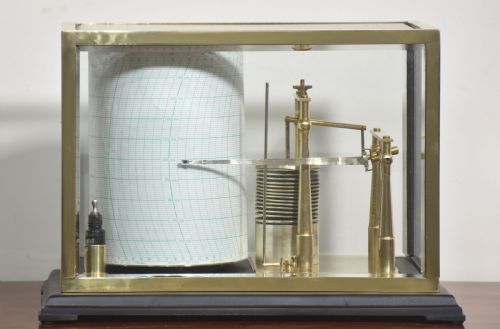
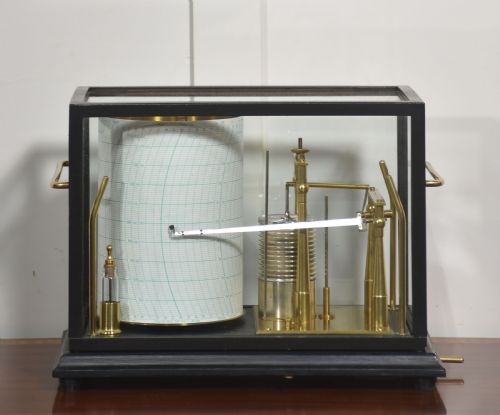


Edwardian Cased Barograph
An Edwardian cased barograph records atmospheric pressure on paper charts beneath five-glass housing, combining practical meteorology with handsome furniture.
Edwardian Cased Barograph
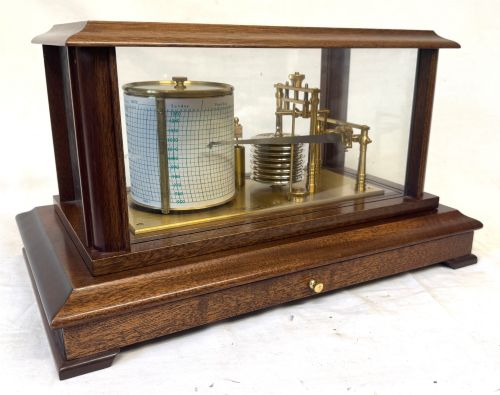
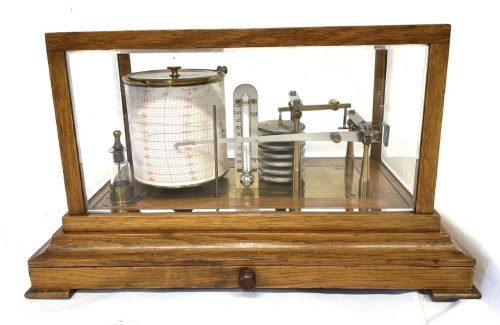
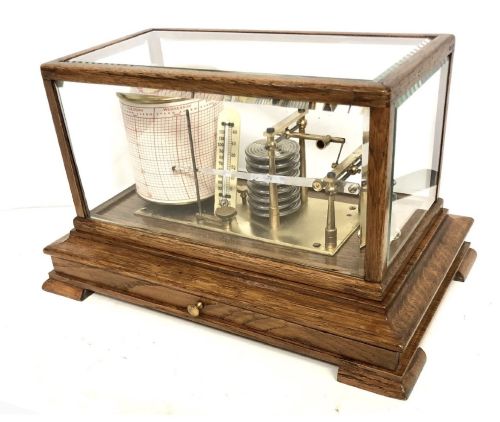
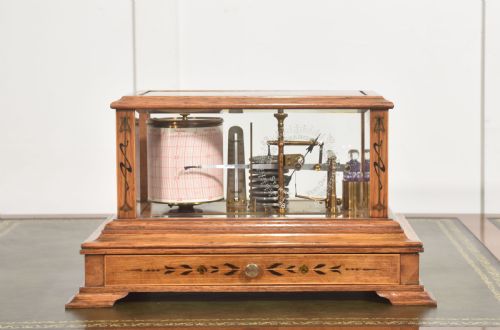
An edwardian cased barograph is a mechanical weather-recording instrument housed in a timber case with bevelled glass panels. These instruments chart barometric pressure continuously using a stack of vacuum chambers linked to an inked nib.
You will most frequently find oak or mahogany versions originating from the Edwardian period or the early twentieth century. Many include a chart drawer in the base and occasionally an attached thermometer or barometer dial.
What varies in quality
Quality rests heavily on the reputation of the maker and the precision of the brass mechanism within the case. Instruments bearing the names of established scientific firms command greater regard.
Materials seen across these listings include brass, glass, oak, mahogany, paper, steel, walnut, and metal.
Short and Mason·Negretti and Zambra·Casella London·R Fuess·Jules Richard
The Edwardian Cased Barograph Glossary
- Barograph
- A recording barometer that traces atmospheric pressure onto a revolving drum of paper. This mechanical instrument provides a continuous visual history of weather patterns.
- Aneroid
- Operating without liquid by utilising expanding and contracting metal vacuum chambers. These sensitive metallic bellows drive the recording arm.
- Five-glass case
- A glazed timber housing with glass panels on the top and all four sides. This construction allows maximum light to reach the recording movement.
- Chart drawer
- A shallow compartment built into the base of the timber case. It stores spare recording papers and spare ink bottles.
- Bevelled glass
- Pane edges ground and polished to an angled slope. This decorative glazing technique appears on better quality instrument cases.
Edwardian Cased Barograph: Frequently Asked Questions
How do you operate a barograph?
The brass drum contains a clockwork movement that rotates once every seven days. A paper chart is wrapped around this cylinder while an inked pen traces the pressure line.
Changes in air pressure expand or contract the internal metal chambers, moving the arm vertically across the rotating paper sheet.
Where should you place a barograph?
Position the instrument on a stable, level surface away from direct sunlight, drafts, and radiators. Sudden temperature changes can affect the delicate metal vacuum chambers inside.
Living rooms and studies make suitable locations where the timber case can be appreciated and weekly chart changes performed easily.
How do you change the chart paper?
Lift the glass cover and gently release the inked nib from the paper using the small lever provided. Slide the used chart off the brass drum and secure a fresh weekly sheet.
Check the ink supply on the nib, reset it against the paper at the correct time line, and wind the internal clockwork drum.
What timber cases are most common?
Oak and mahogany appear most frequently among surviving examples from the early twentieth century. Some pieces utilise walnut or feature decorative inlaid timber banding.
The woods were polished or oiled to protect them from atmospheric moisture while displaying natural grain patterns beneath the glass panels.