
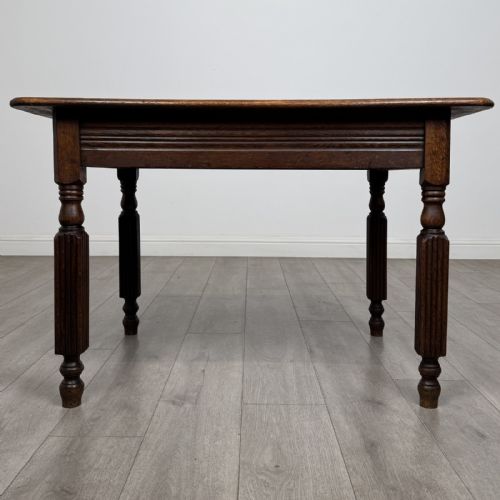
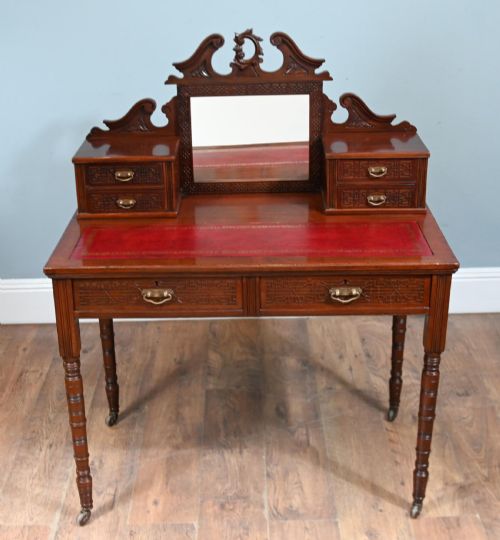
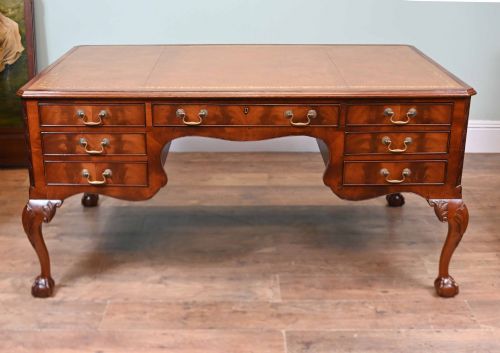
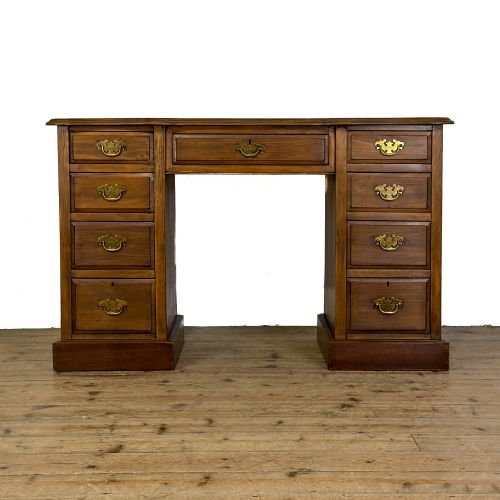
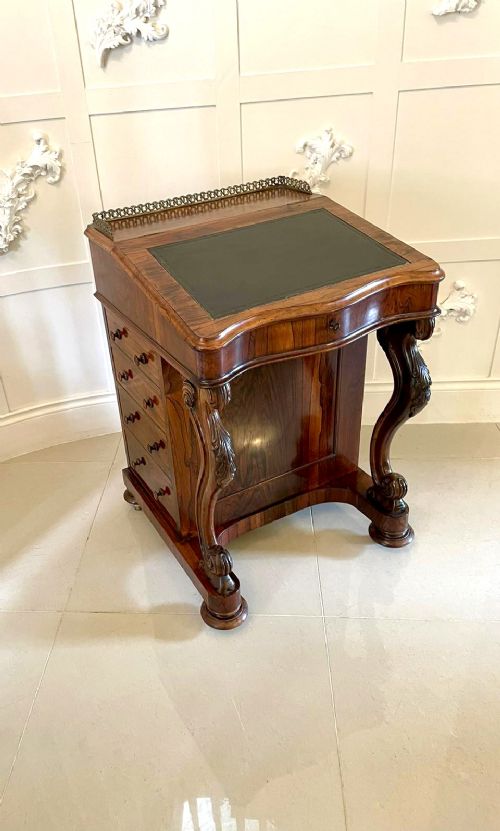
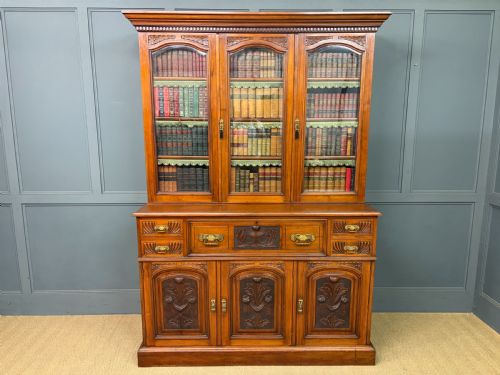

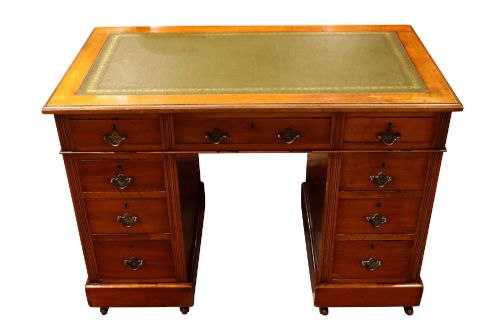
Edwardian Carved Writing Desk
An edwardian carved writing desk brings domestic solidity to daily correspondence, formed in dense timber with deliberate surface ornament.
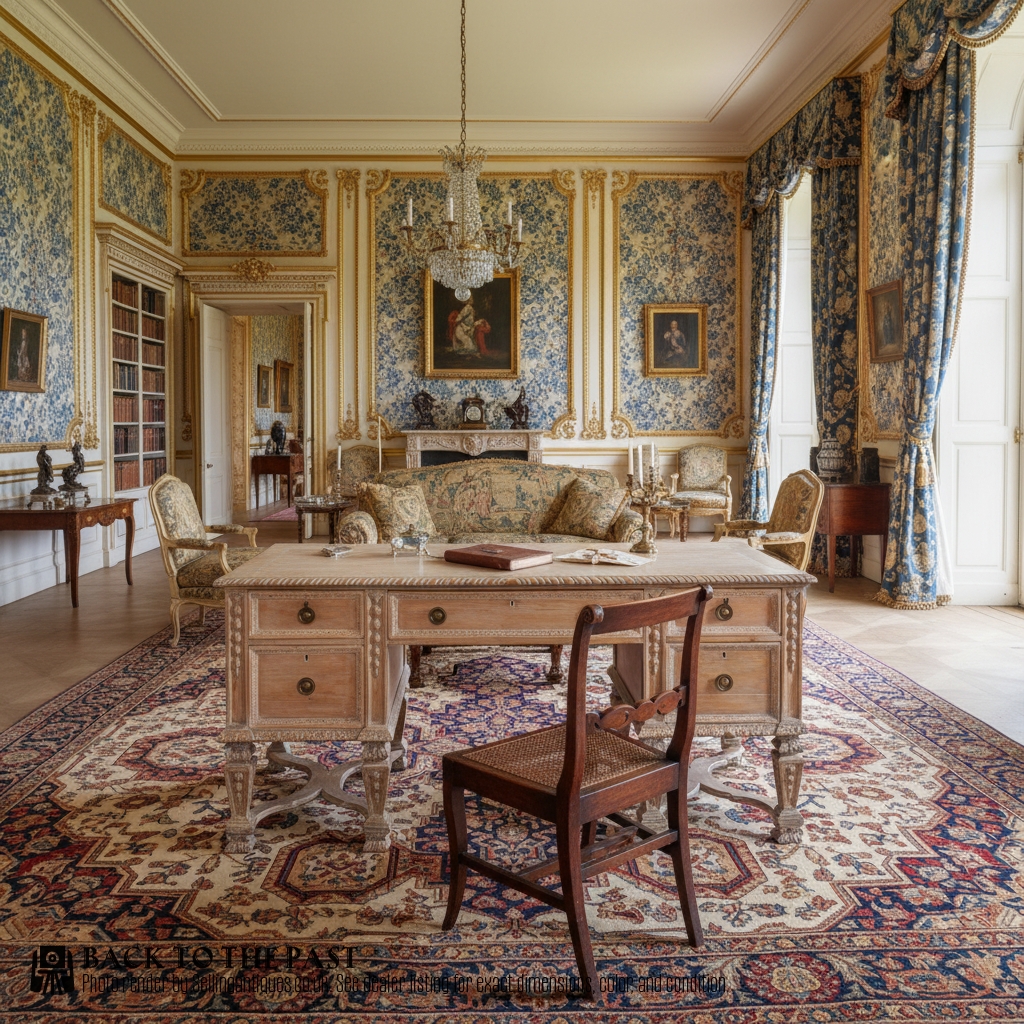
Edwardian Carved Writing Desk
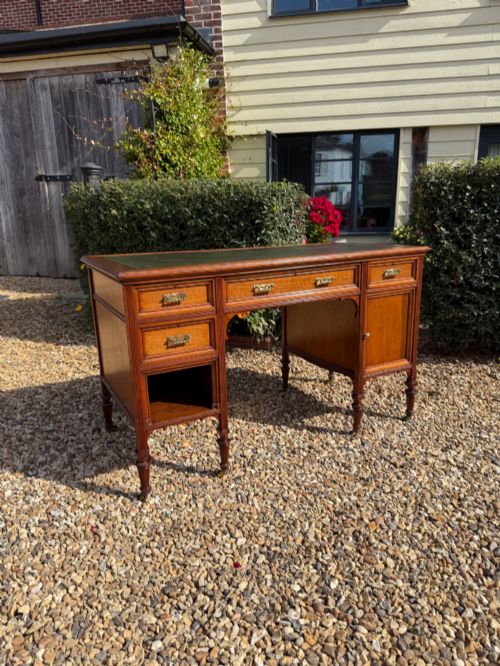
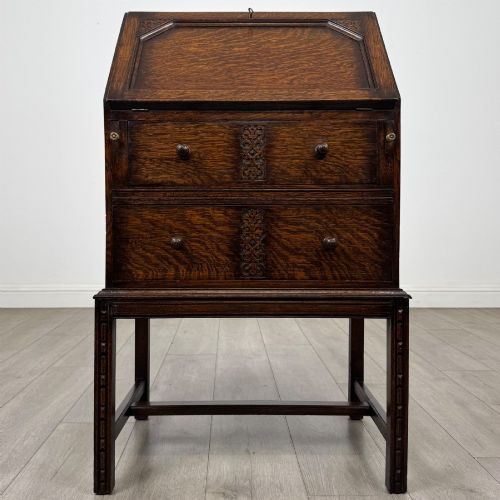
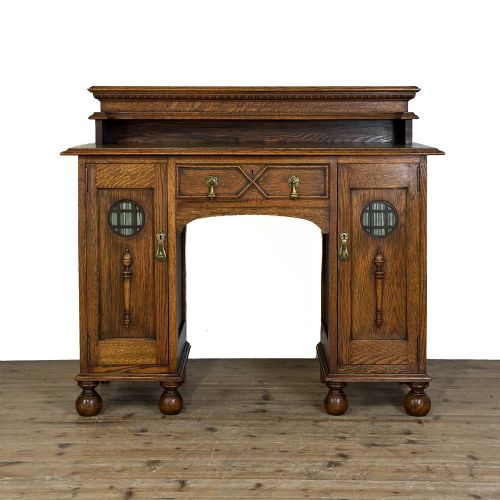
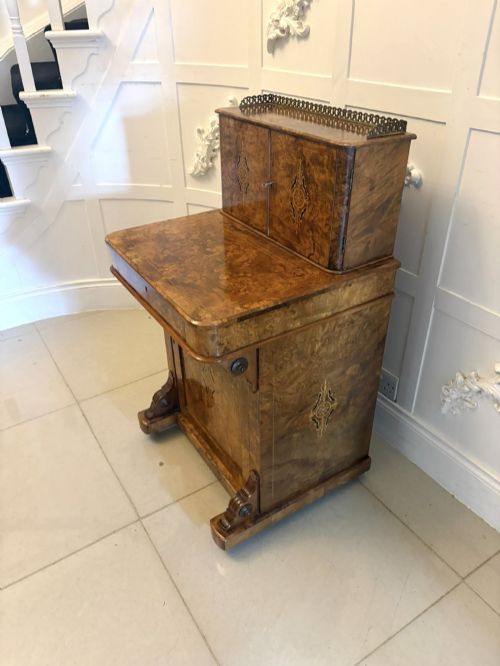
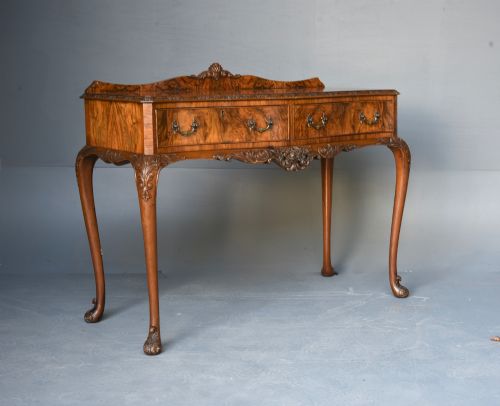
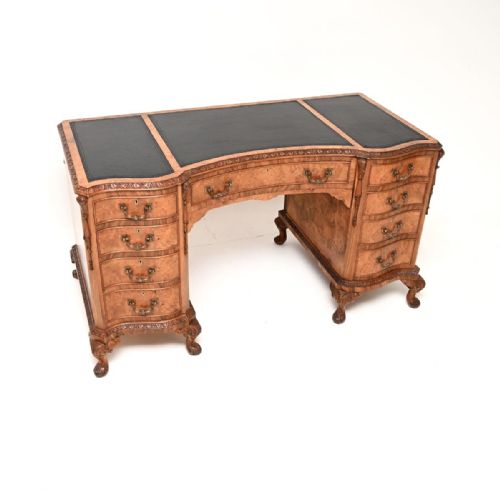
An edwardian carved writing desk appears across this selection primarily in mahogany and oak, alongside variations in walnut and burr walnut. These pieces emerge from the early twentieth century and the broader Edwardian period, often drawing on revival styles including Chippendale and Jacobean motifs.
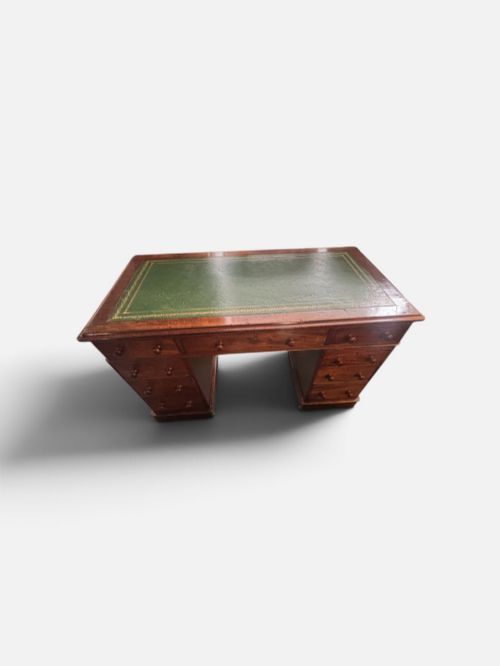
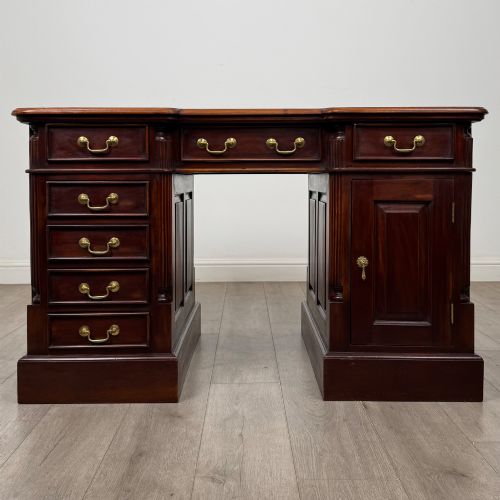
The format ranges from compact writing tables with single drawers to larger pedestal desks and upright bureaux. Makers of the era also adapted earlier Victorian proportions, supplying freestanding writing surfaces fitted with inset leather tops and carved detailing.
Judging Quality
Quality rests in the depth of timber figure, the crispness of hand-carved detail, and the integrity of internal drawer construction. Superior examples maintain original brass handles and properly fitted leather inserts rather than later replacements.
The weight of the timber and the precision of the joints distinguish standard workshop output from pieces bearing the marks of established cabinet makers. Grain alignment across drawer fronts demonstrates greater care in manufacturing.
Listings feature oak, mahogany, walnut, and rosewood across pedestal desks, writing tables, and bureaux from the Victorian and Edwardian eras.
Maple and Co·Wylie and Lochhead Glasgow·James Shoolbred and Co London·Edwards and Roberts
The Edwardian Carved Writing Desk Glossary
- Pedestal desk
- A freestanding writing table supported by two vertical banks of drawers flanking a central kneehole. This configuration provides substantial storage beneath the primary writing surface.
- Bureau
- A desk featuring a sloping fall-front lid that opens to reveal internal pigeonholes and small drawers. The writing slope folds down for use and conceals the correspondence area when closed.
- Burr walnut
- Timber taken from walnut tree growths that produces intricate, swirling grain patterns. Cabinet makers prized this veneer for principal surfaces on high-grade desks.
- Partners desk
- A large pedestal desk designed with drawers and cupboards accessible from both sides. Such tables allowed two individuals to work opposite one another.
- Marquetry
- Decorative veneer work created by fitting together thin slices of different coloured wood to form pictorial patterns. This technique adorned the tops and drawer fronts of refined writing tables.
Edwardian Carved Writing Desk: Frequently Asked Questions
How do I maintain the leather top?
Clean the leather surface using a soft, dry cloth to remove dust. Apply a neutral leather cream sparingly to preserve suppleness without damaging the surrounding timber or gilt tooling.
Avoid placing damp items or direct heat sources on the writing surface. Proper humidity control in the room prevents the leather from cracking over time.
Where were these desks placed?
These pieces sat primarily in private libraries, studies, and drawing rooms of large homes. Freestanding versions often occupied the centre of a room rather than standing against a wall.
Partners desks stood away from walls entirely to allow access from all sides. Smaller writing tables frequently stood near windows to maximise natural light for correspondence.
How to tell Edwardian from Victorian?
Edwardian pieces generally exhibit lighter proportions and simplified revival styles compared to heavier Victorian counterparts. Walnut and lighter mahogany predominate in the Edwardian period.
Victorian designs often incorporate denser carving, darker finishes, and more robust structural elements. Inset brass hardware and distinct drawer configurations also signal the manufacturing era.
Are the keys usually original?
Original brass and steel keys remain scarce on antique desks due to centuries of displacement during house moves. Many surviving locks require bespoke replacement keys if operation is desired.
The presence of a matching functional key adds interest for collectors but does not alter the core utility of the desk.