
English Carved Desk
An English carved desk brings solid craftsmanship and period character into a room, offering a practical workspace shaped by centuries of woodworking tradition.
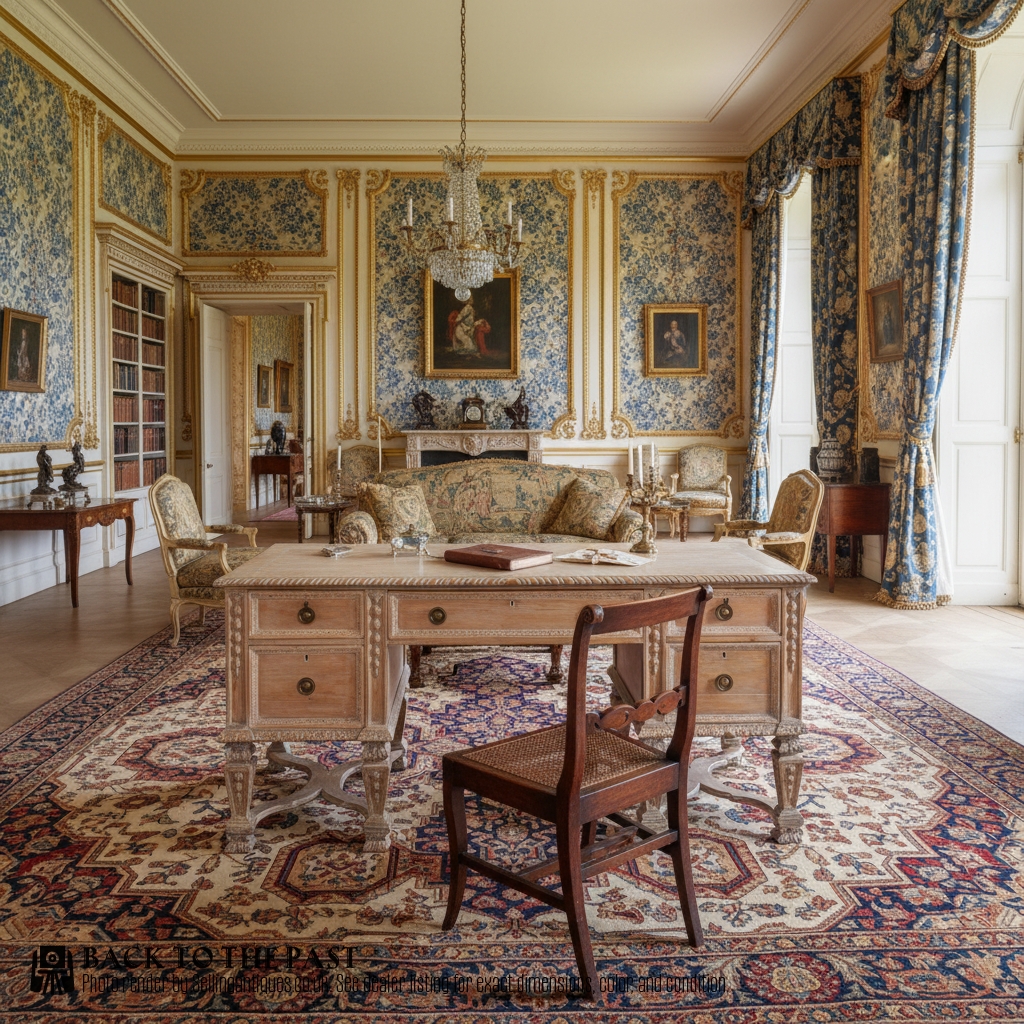
English Carved Desk
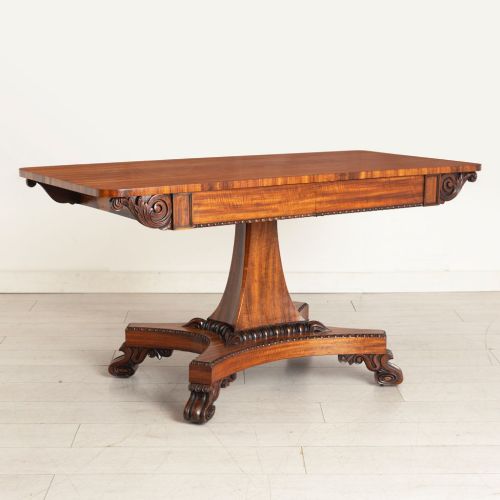
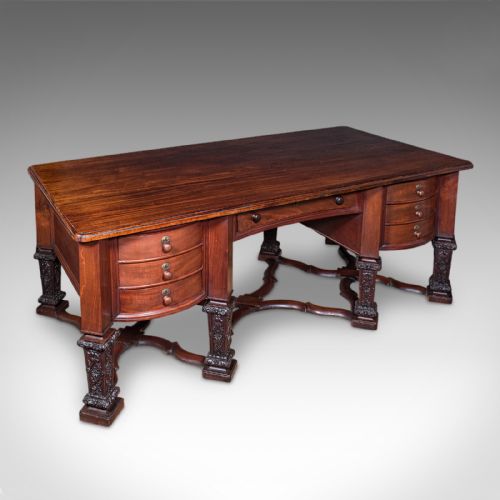
When you search for an english carved desk, you encounter substantial writing tables, bureau forms, and partner's desks spanning multiple centuries. The selection ranges from robust 17th-century oak examples to refined 18th-century walnut escritoires and ornate Victorian variations.
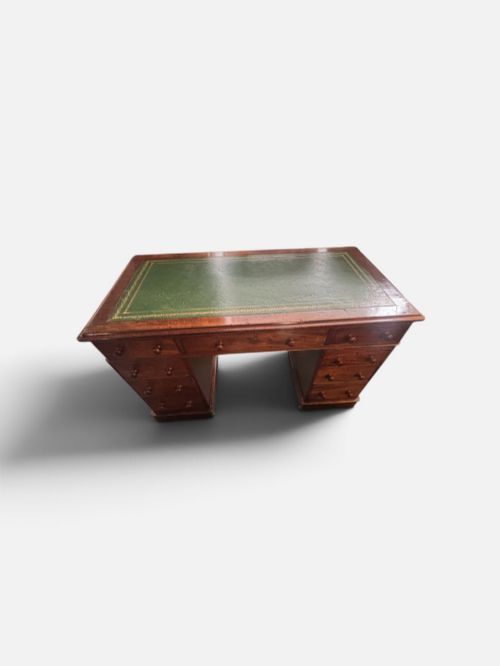
You are most likely to meet desks built from oak and mahogany, often featuring detailed surface carving or leather writing surfaces. These forms served administrative, domestic, and professional functions in period libraries, offices, and studies.
The objects combine utility with decorative motifs drawn from Georgian, Regency, Victorian, and revival styles. Their proportions reflect the functional requirements of writing and document storage across changing eras.
How they were made
Cabinet makers utilised dense hardwoods such as oak, mahogany, walnut, and pollard oak, selecting timbers for their grain pattern and structural stability. These woods were joined using traditional framing techniques and finished by hand.
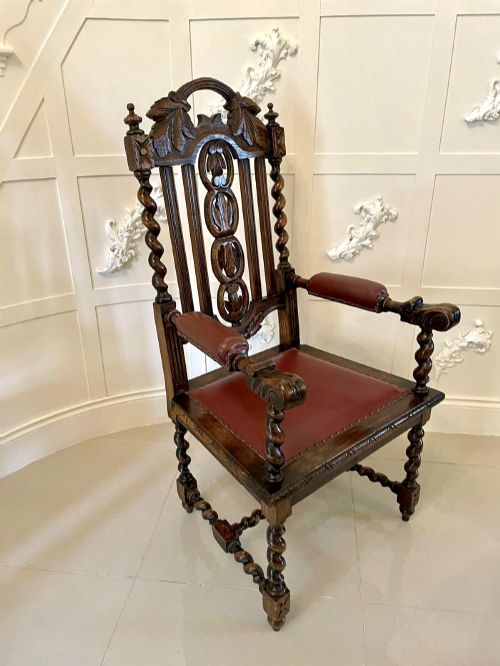
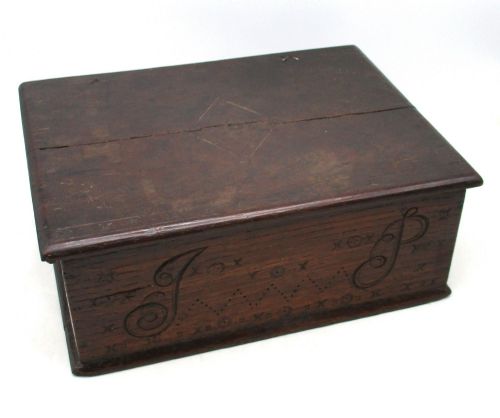
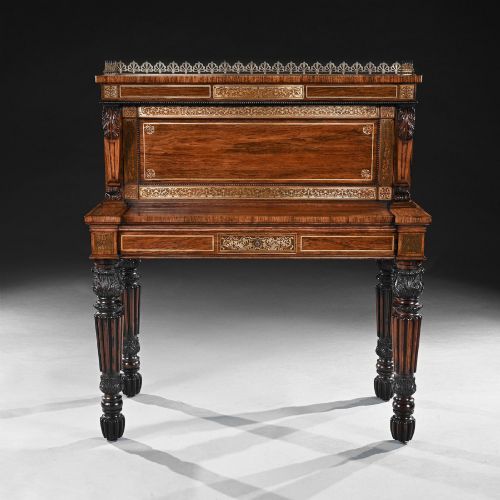
Surface ornamentation relied on chisel work to produce relief carving, blind fretwork, and decorative mouldings directly into the timber. Secondary materials like brass handles, leather inserts, and iron fixings were integrated to complete the writing surface and storage compartments.
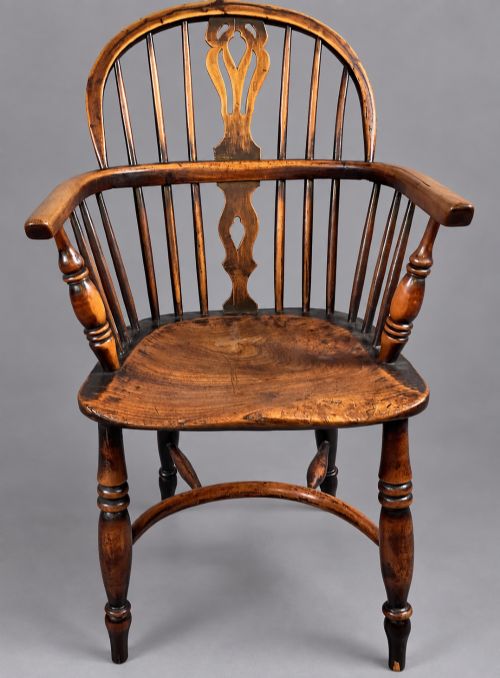
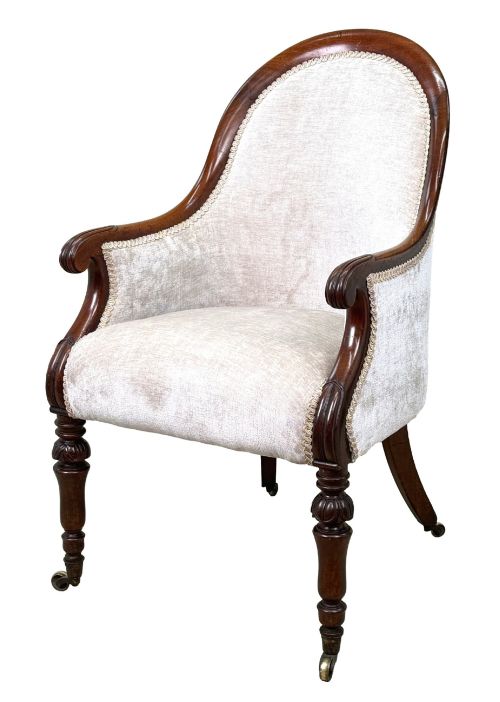
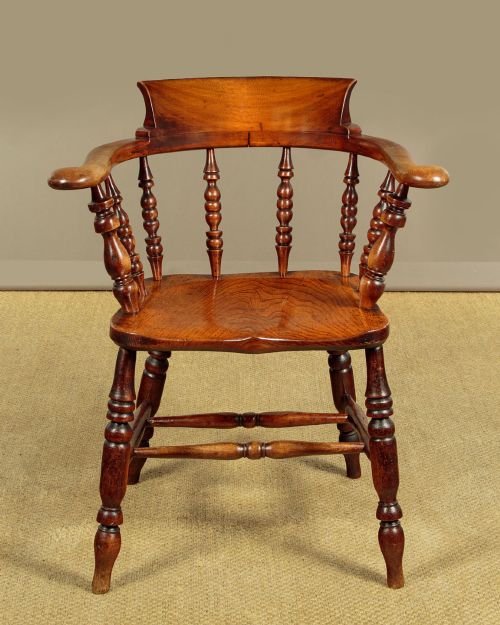
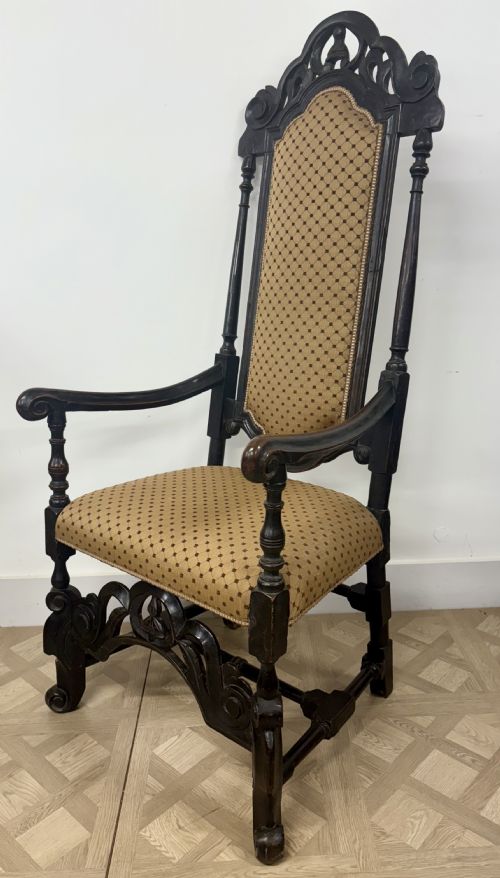
Smoker's bow armchairs frequently share space with these desks, offering a sturdy seat for contemplative letter writing.
What varies in quality
The standard of a desk depends upon the crispness of the timber carving and the selection of figured veneers. Superior examples display balanced proportions, clean joinery, and thoughtful integration of secondary woods like elm, beech, or burr walnut.
Desks attributed to notable workshops or specific cabinet-making traditions often demonstrate a higher degree of execution in their drawer construction and brass hardware. The depth and precision of the decorative carving further distinguish standard utility pieces from exceptional works.
Gillows Oxford Street Workshop·Edwards and Roberts
The English Carved Desk Glossary
- Bureau
- A slope-fronted desk that opens to reveal internal compartments and pigeonholes for correspondence. It typically rests on a chest of drawers or a dedicated frame.
- Escritoire
- A tall writing cabinet featuring a fall-front writing surface concealing a fitted interior. These pieces provide vertical storage combined with a dedicated workspace.
- Partner's desk
- A large double-sided desk designed to accommodate two people working opposite one another. They often feature banks of drawers and cupboards on both faces.
- Lowboy
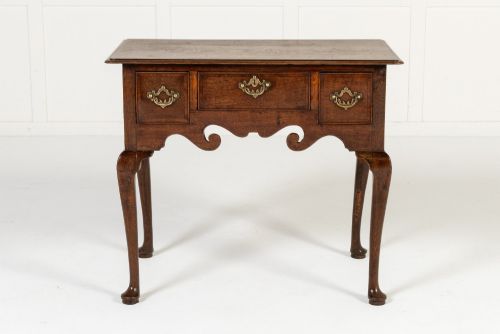
- A small side table with one or more rows of drawers beneath the top. They frequently function as compact writing tables or dressing surfaces.
- Blind carving
- Relief decoration carved directly into the face of the timber without projecting beyond the surrounding plane. This technique was popular in Chippendale and Gothic revival furniture.
- Pollard oak
- Timber taken from trees that were pollarded, resulting in a dense, knotted grain pattern with intense mottling. Cabinet makers prized this wood for decorative veneering.
English Carved Desk: Frequently Asked Questions
What is an English carved desk?
An English carved desk is a period writing surface made from hardwoods like oak, mahogany, or walnut, featuring hand-chiselled ornamentation. These pieces encompass writing tables, partner's desks, and bureau forms produced across the seventeenth, eighteenth, and nineteenth centuries.
They reflect the dominant design styles of their respective periods, ranging from austere early oak constructions to elaborate Victorian revival pieces. Each desk combines functional storage with decorative woodwork tailored for studies and libraries.
How do I identify the period?
Period identification relies on examining the timber species, construction methods, and decorative motifs present on the desk. Seventeenth-century examples typically utilise heavy oak with geometric mouldings, while eighteenth-century pieces often feature mahogany with crisp fretwork or walnut veneers.
Later Victorian desks introduce revival styles, such as Gothic or Louis XIV influences, combined with machine-assisted elements and distinct hardware. Comparing the joinery and secondary woods provides further clues to the date of manufacture.
Where were these desks used?
These desks were primarily housed in the private studies, libraries, and administrative rooms of English country houses and town residences. Large partner's desks served in commercial offices and institutional settings where two people required simultaneous workspace.
Smaller bureau forms and writing tables found placement in bedrooms, morning rooms, and drawing rooms for personal correspondence. Their physical scale and configuration directly corresponded to the social rank and professional needs of the owner.
How do I care for a wood desk?
Preserving a period wooden desk involves maintaining stable indoor humidity and avoiding direct exposure to strong sunlight or heat sources. Gentle dusting with a dry, soft cloth prevents particulate buildup without damaging the historic finish.
Leather writing surfaces benefit from occasional cleaning with specialised leather balms to prevent cracking. Avoid using modern silicone-based polishes, which can degrade antique wax and oil finishes over time.