
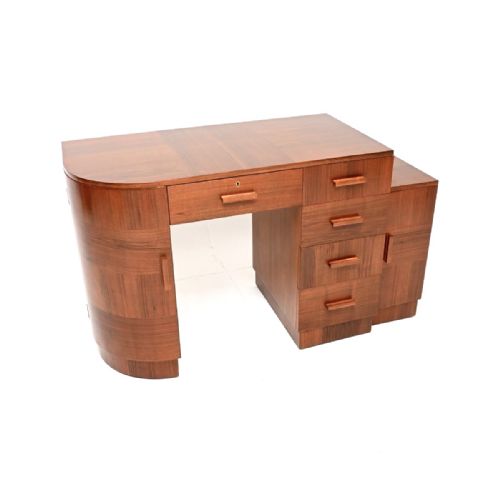
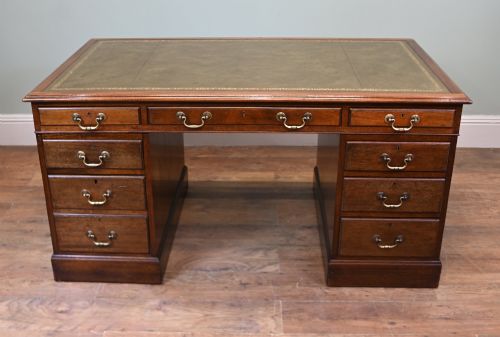
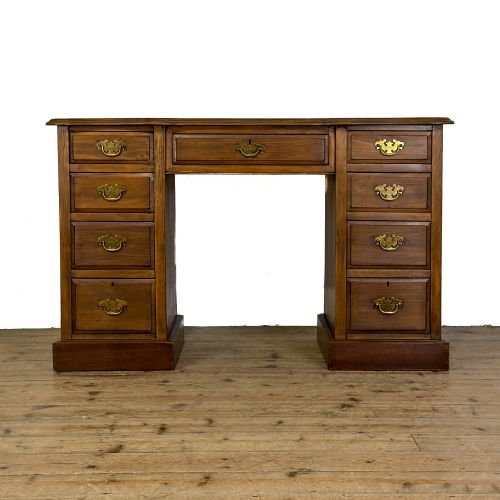
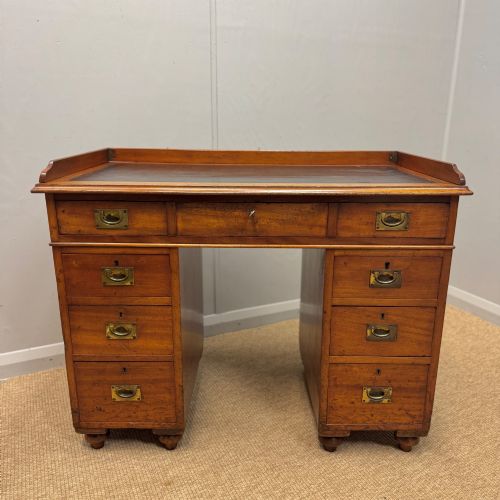
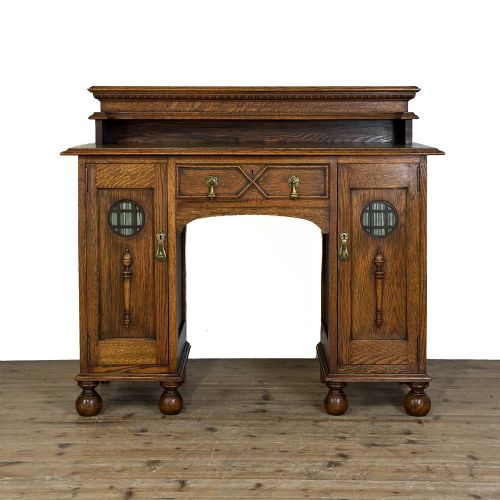
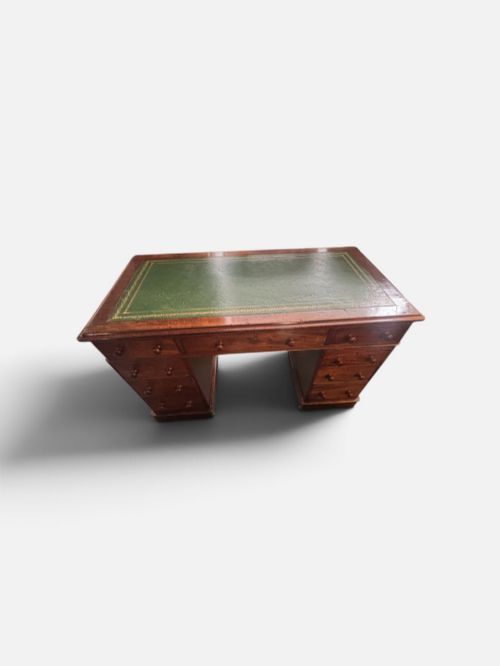
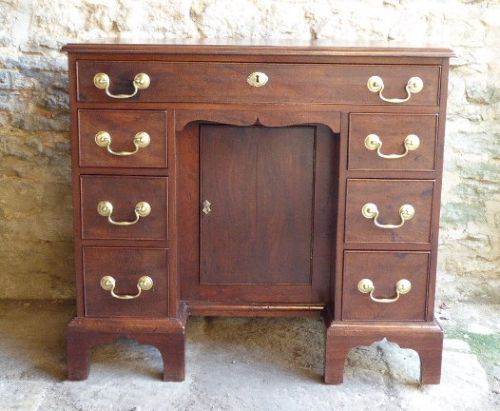
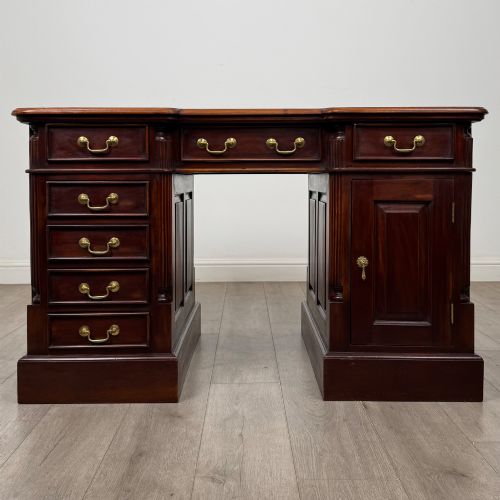
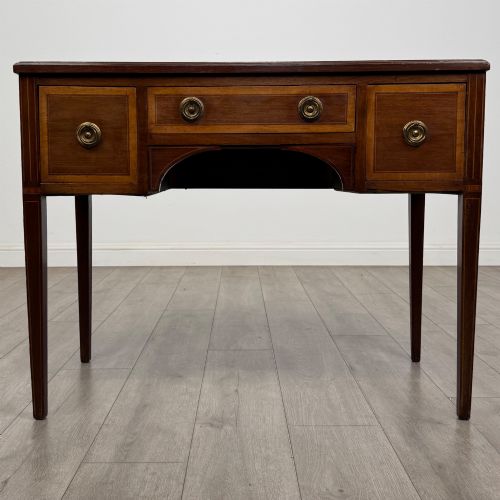
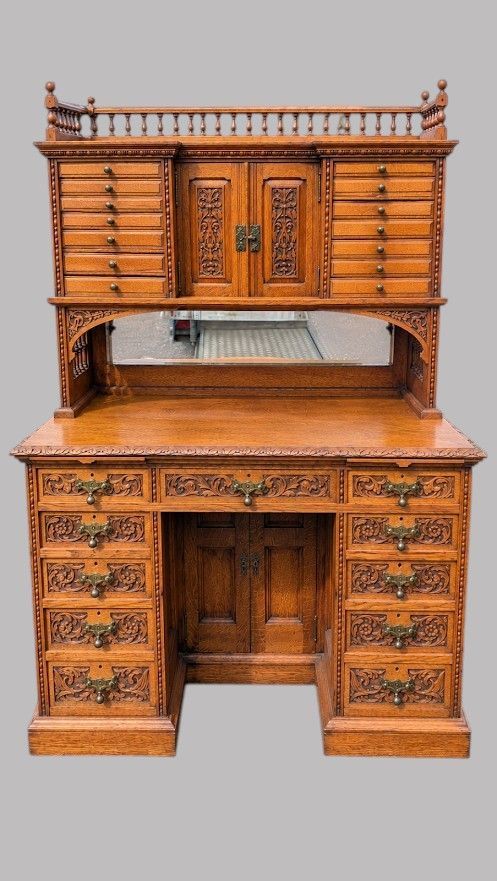


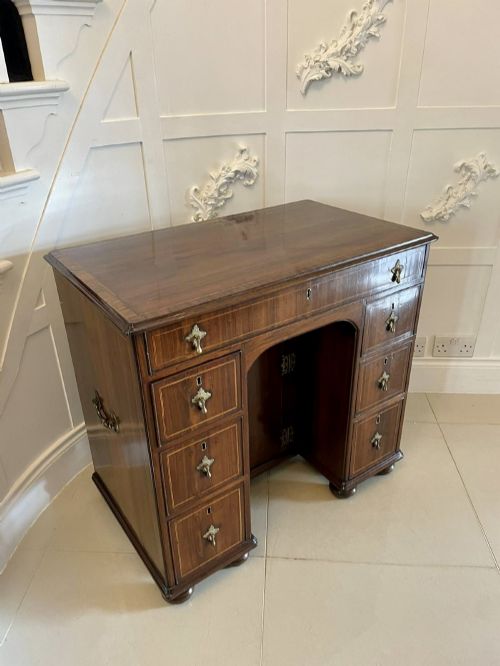
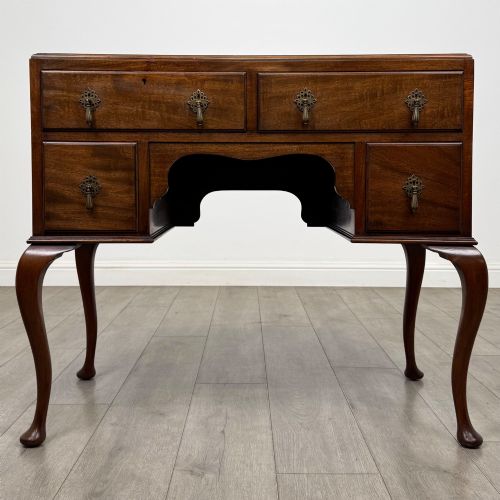
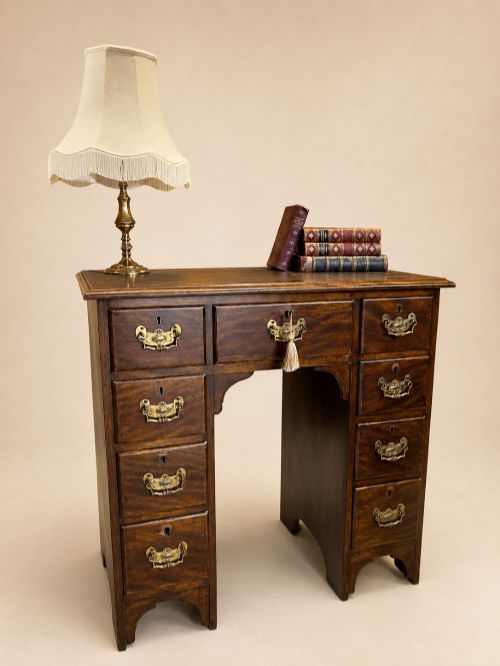
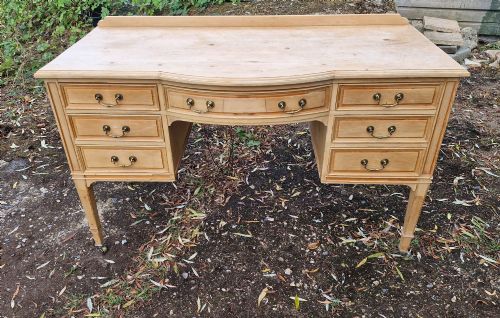
Antique Kneehole Study Desk
An antique kneehole study desk provides a central recess for the legs beneath a bank of drawers, offering a practical writing surface shaped by centuries of cabinetmaking.
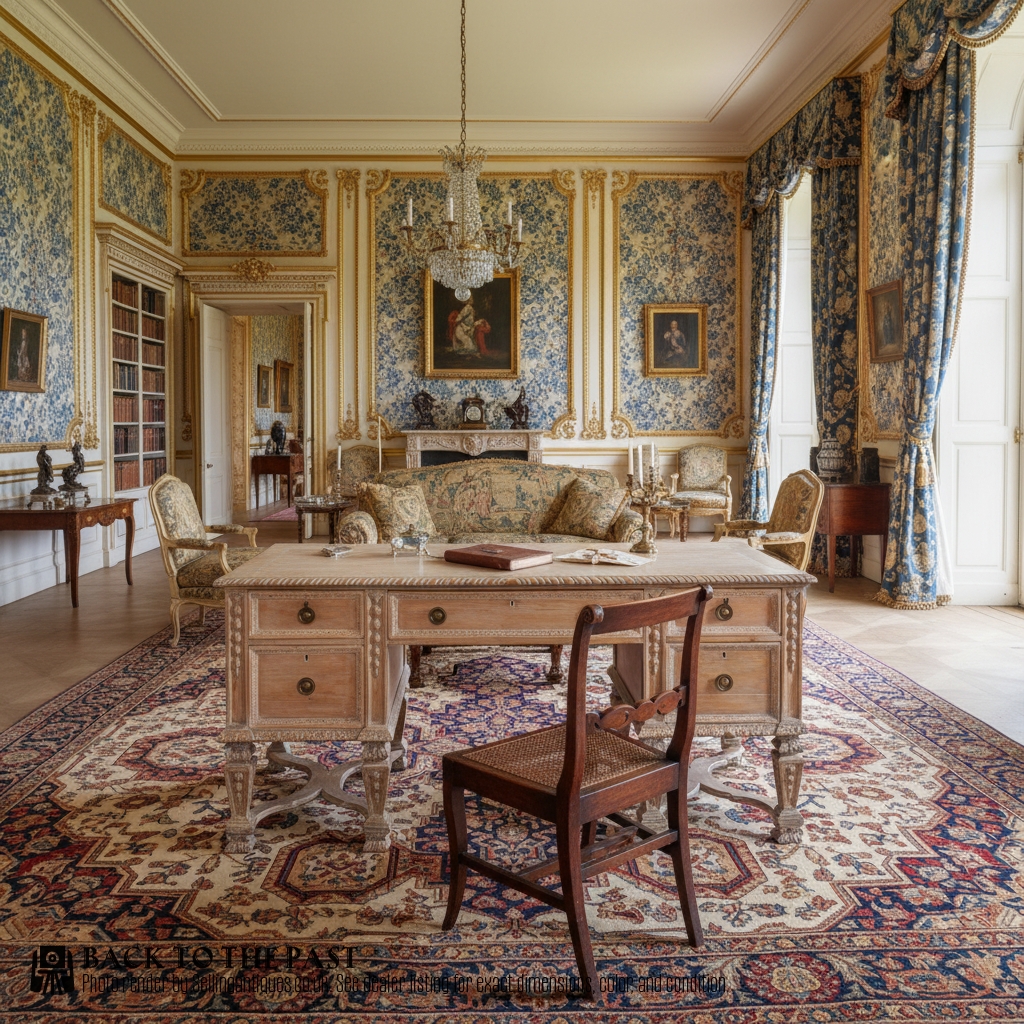
Antique Kneehole Study Desk
The antique kneehole study desk is a functional form designed for private correspondence and estate management, typically featuring a recessed central space flanked by pedestals of smaller drawers.
Examples on this page span from the eighteenth century through the Edwardian era and the art deco period, constructed in woods such as mahogany, walnut, oak, and pine.
The domestic workspace takes various shapes here, from Georgian walnut kneehole desks to Victorian mahogany pedestal desks and Edwardian writing tables.
Materials and construction methods
Cabinetmakers utilised dense timbers like mahogany and walnut for primary surfaces, often selecting figured burr veneers for visual depth on drawer fronts.
Working surfaces frequently incorporate inset tooled leather writing panels, while structural interiors rely on secondary woods such as oak and pine.
Hardware details include brass drop handles or knobs, which complement the joinery traditions of periods ranging from the Georgian era to the early twentieth century.
Periods represented include Georgian, Regency, Victorian, Edwardian, and Art Deco.
Evaluating the craftsmanship
The grade of an antique kneehole study desk depends largely on the selection of timber veneers and the precision of the underlying drawer construction.
Superior execution shows in the continuity of grain patterns across drawer fronts, the crispness of carved details in revival styles, and the integrity of the secondary timbers used in the carcase.
Trollope & Sons·Maple & Co.·Holland & Sons·Wylie & Lochhead Glasgow
The Antique Kneehole Study Desk Glossary
- Kneehole
- A recessed central space beneath a desk or dressing table designed to accommodate the user's legs. This configuration allows the writer to sit directly in front of the writing surface.
- Pedestal desk
- A heavy freestanding writing table supported by two vertical columns of drawers. The pedestals flank the central kneehole space.
- Burr walnut
- Timber taken from a tree growth or wart, producing intricate swirling patterns. Cabinetmakers prize this veneer for decorative drawer fronts and top surfaces.
- Tooled leather
- Leather decorated with blind or gold-leaf impressions applied using heated metal tools. It provides a durable writing surface inset into the desk top.
- Writing table
- A freestanding table designed primarily for correspondence rather than storage. It typically lacks the heavy pedestals of a standard kneehole desk.
Antique Kneehole Study Desk: Frequently Asked Questions
What is a kneehole desk?
A kneehole desk is a form of furniture featuring a central recess for the user's legs, flanked by banks of small drawers on either side. This design creates a compact writing station with substantial storage underneath the top surface.
Such desks evolved to serve private studies and libraries, keeping writing materials close at hand while maintaining a formal architectural appearance.
How do I care for a leather desk top?
The leather inset on an antique desk benefits from occasional dusting with a dry cloth and sparing treatment with specialised leather balms to prevent cracking. Avoiding direct sunlight helps preserve the colour and the gilded tooling.
Moisture and harsh chemical cleaners can damage the historic surface, so protective pads are recommended if the desk sees daily writing use.
How can I distinguish Georgian from Victorian desks?
Georgian desks generally exhibit simpler, restrained proportions in solid mahogany or walnut with understated bracket feet and fine brass hardware. Victorian examples often display heavier proportions, richer burr walnut veneers, and more elaborate pedestal configurations.
Construction techniques also shift over time, with machine-cut elements appearing increasingly in the later nineteenth century alongside traditional hand-cut dovetails.
Were these desks used for study?
These desks served primarily for private correspondence, estate management, and administrative work in home studies or libraries. The configuration of drawers allowed for the organisation of papers, ledgers, and writing implements.
Today, they function equally well as executive writing tables or domestic home office desks.